The Shihan
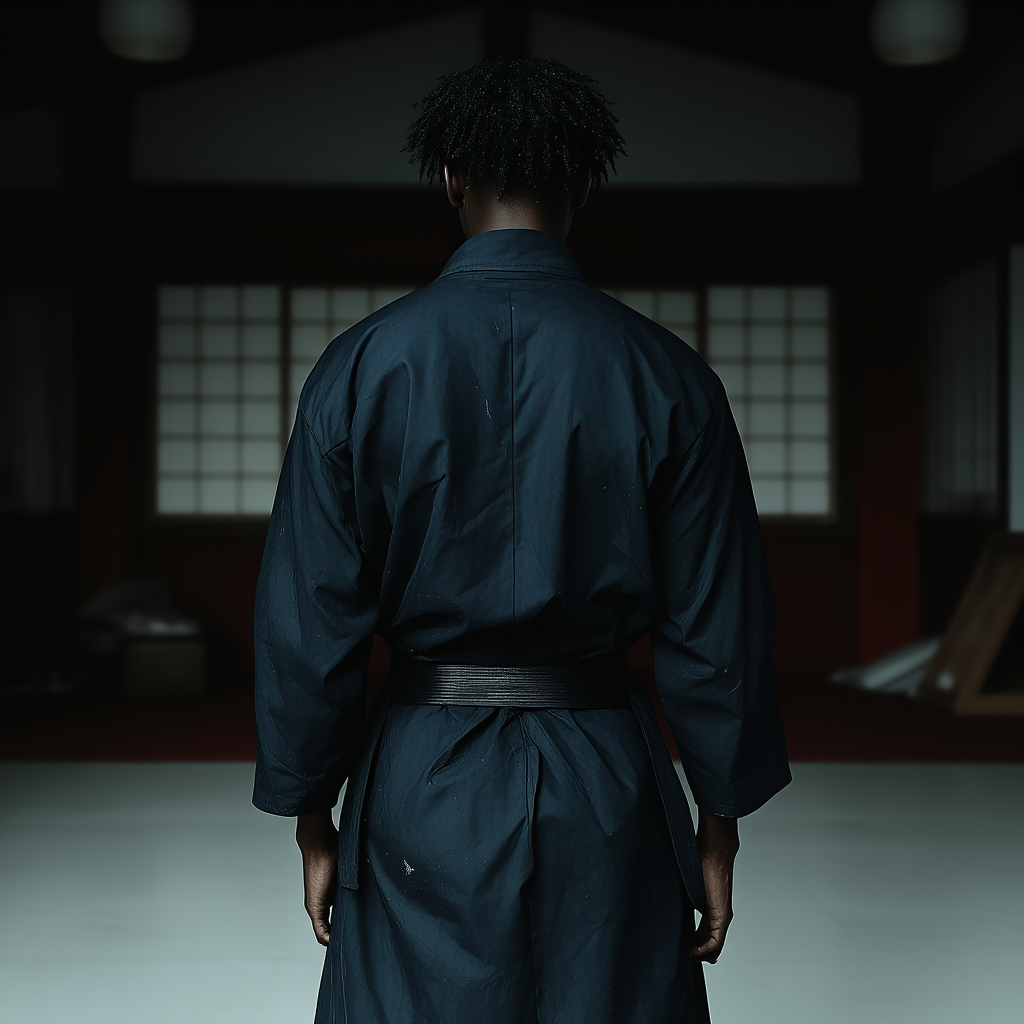
David Marshall, Jr. does not look like a dangerous man. His slight stature, nerdy black glasses, and big disarming smile accompany an open manner that does not hesitate to shake the hand of a stranger. He says the best way to handle an altercation that could turn physical is to run as fast as possible in the other direction. But in a life and death situation against an aggressor bent on harm, my bets are on David. He is a real modern-day ninja, a Judan (10th degree black belt) in the martial art of Bujinkan Budo Taijutsu, a Shihan (master instructor.) David does not talk about his rank, abilities, or the specifics of his martial art to just anyone. His skills are like a carefully guarded secret that he shares only with his students.
Often the only black man in a dojo of white students, he is quick to welcome and encourage diversity. Women do not seem drawn as often to his art, but he is thrilled when they give it a try. He wishes I would take an interest but accepts that occasional spectator is as close as this pacifist plans to come to his passion. As his wife, I support his efforts and admire his way of life. As a writer, I am intrigued. What makes a person want to spend every extra dime on swords? What makes him want to work out and teach multiple nights per week in sweaty dojos? Why does he want to travel every possible vacation to Japan to train with the masters instead of going to Hawaii or on a cruise with me? What fuels his obsession with being a ninja? Why not start a new sport or do something different for variety?
The Senseis
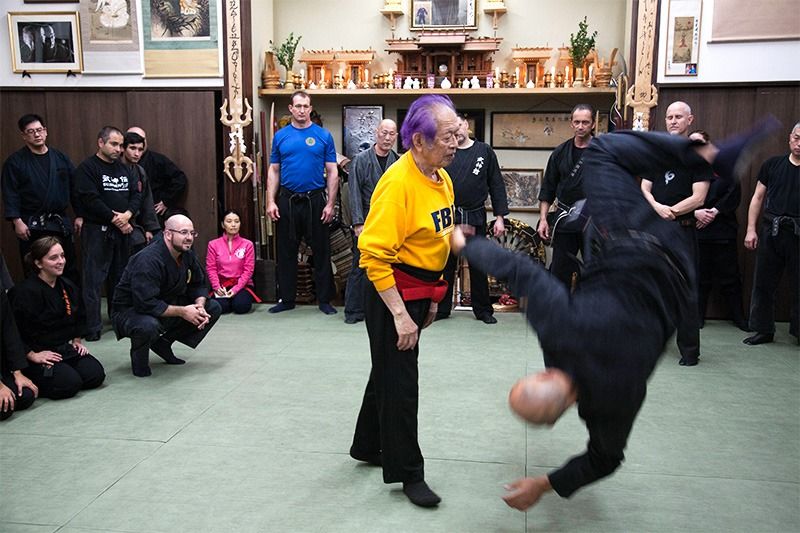
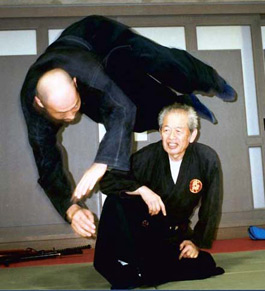
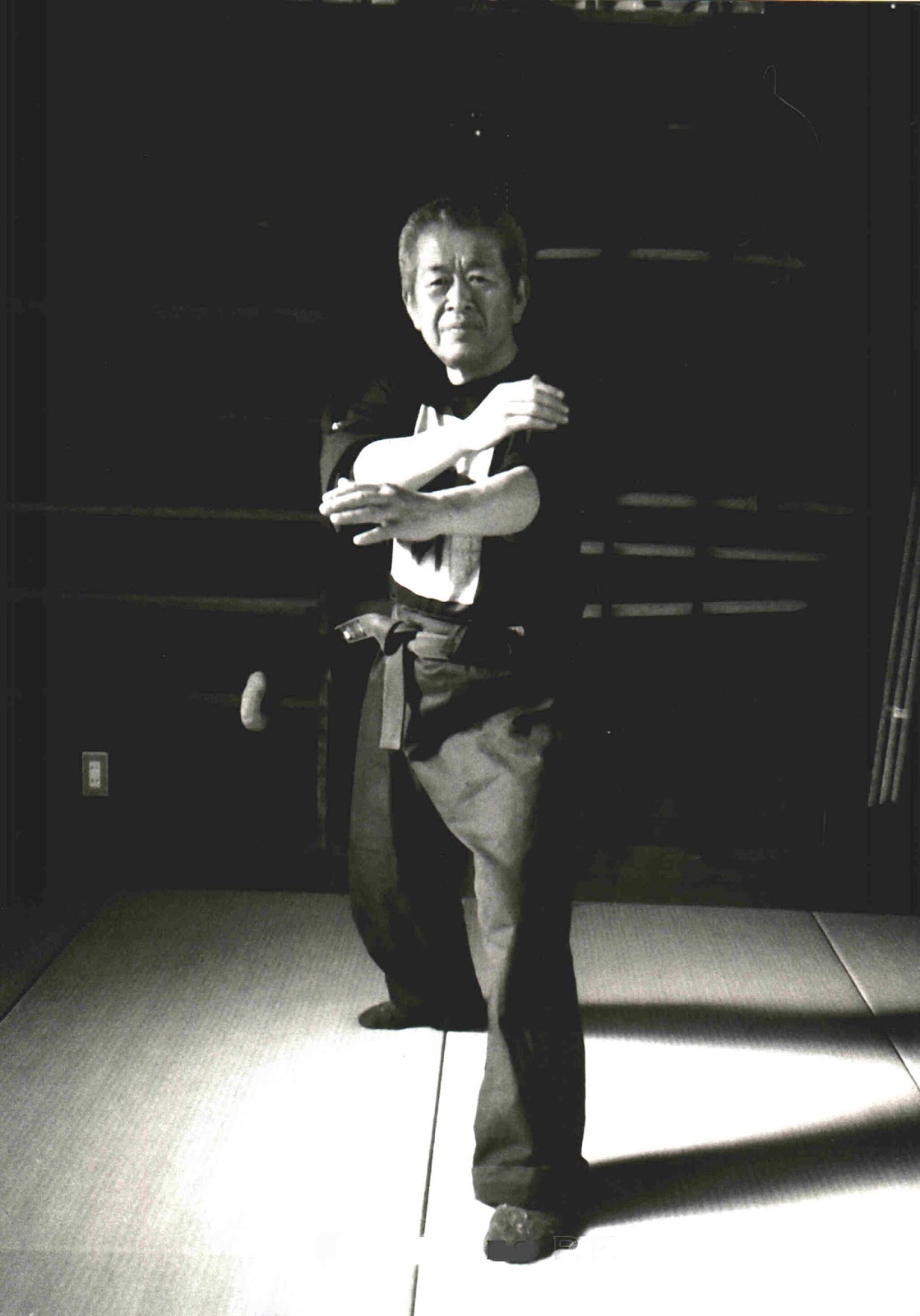
Hatsumi Sensei’s whisps of purple hair are striking for an 89-year-old man. His movements are minimal, slow, and look simple compared to the devastating affects they have on the assigned attacker. It is harder for him to get down on his knees than it once was, but he was still teaching three times per week prior to the COVID outbreak. His home dojo is in Noda, Japan, called the hombu and is the world headquarters for the Bujinkan, the name for the international martial arts organization he leads. He is Soke, the headmaster of the nine schools of martial arts he teaches (three ninja, 6 samurai.) He is a writer, an artist, a teacher, and a legend. In his early years he worked as a bonesetter.
People, including my husband David, come from all over the world to learn from him and continue the tradition that has been passed down for generations. The first time David took a class with Soke, he walked in wearing an ancient fur vest over a t-shirt. He had on socks and one foot had been wrapped with a bandage that was coming loose. David says that the entire class the bandaged sock dangled and flapped, Hatsumi Sensei doing magic without a care, as unpretentious as could be.
A writer in Black Belt magazine once described him as “wild, funny, unpredictable…a cross between Charlie Chaplin and Obi-Wan Kenobi” (Black Belt). David remembers one demonstration where Hatsumi Sensei caused a man to flip simply with a twist of a pinky. Another memory is of Hatsumi Sensei sparring with a student and both disarming him of his practice sword, then hitting him with it. The movement was so sudden, so shocking, that multiple people, including David, reported feeling the sensation of physical pain across their own stomachs, and the action resulted in both silence and stillness in the rest of the dojo.
Japan
2010 was a rough year. David lost his cousin Officer Read of the Cedar Park Police Department in a motorcycle accident on the job. Then his first serious girlfriend broke up with him. He was devasted and knew that fulfilling his dream of going to Japan was the only thing that might help him to stay afloat. His closest aunt Rosalyn was one of his strongest supporters and encouraged him to take the first step, get his passport. Through his tears, he admitted that he had no extra money right then for a passport, so she drove to his place and brought him $135.
Inspired by her push, he sent everything off the very next day and things started looking up. He got a new job, got a car, and started saving for his trip. It took about 6 months, but he finally had enough saved to buy a plane ticket and made plans to go with a fellow martial artist named Joe P. Joe had been to Japan before and knew the complicated steps involved in the process. He already had a relationship with the various teachers and was familiar with the customs and traditions. Japan is a place where slight missteps can be considered extremely offensive. Tickets were bought, itineraries planned, and lodgings negotiated. It was really happening.
Cut to March 2011 and the earthquake off the coast of Tohoku that caused a tsunami killing nearly 20,000 people. David’s trip was planned for May and was now up in the air. Was it wise to go, especially since the Fukushima Nuclear Power Plant also melted down? Joe P. cancelled. If David still wanted to brave the mayhem, he would be on his own. Once again, Aunt Rosalyn to the rescue. She weighed in and encouraged David to let nothing stand in the way of his dreams – not natural disasters, not man-made disasters, and certainly not fear. He did not have a guide, did not speak Japanese, and would have to rely on the kindness of strangers for explanations and directions. This was pre-iphones, pre-Siri, pre-GPS at your fingertips. He would have to look at paper maps and write things down the old-fashioned way.
The Shihan
David fell in love with all things ninja related when he was a young child. He watched every martial arts movie or show on television he could involving kung fu, karate, ninjas, or samurais including Chinese Connection, No Reatreat, No Surrender, Revenge of the Ninja, Karate Kid, and Enter the Ninja, basically anything with Bruce Lee, Jean-Claude van Damme, Steven Seagal, or Chuck Norris. His dad did Taekwondo and Goju-Ryu Karate, but David’s mother felt he was too young. When he was around 8 years old, he discovered Teenage Mutant Ninja Turtles and his world was rocked. His true love was Leonardo because he was the most serious of the four turtles. Leonardo cared about the artform, especially the ninjutsu, and was the most authentic warrior. It took several years of begging, but when David was around 11 years old, his mother finally agreed to let him begin his training.
For 8 blissful months, David studied Shito-Ryu Karate at a dojo close to his home in Austin, TX under the direction of Dan Coslett and his son David Coslett. David remembers learning simple striking and kicking in the basic Okinawan style that gave him a strong foundation for practicing the balance and coordination that would be crucial to a lifetime of martial arts. He was only able to earn up to the level of yellow belt before his family moved to Pflugerville, TX and he had to quit for practical adult reasons.
He continued practicing on his own, not one to let his passions disappear. Though he was unable to afford classes, he never stopped dreaming of being a ninja. Even after outgrowing turtle mania, he read books and watched movies about ninjas. As a teenager, he would hang out in the martial arts section of the books stores while his mom shopped in the mall. He came across a book by Stephen K. Hayes called The Ninja and Their Secret Fighting Art and fell in love. It tells the story of a man who travels to Japan in search of a ninja master who could teach him real ninjutsu. On his quest, he finds Hatsumi Sensei and becomes one of the first Americans to intensely study the arts taught by the Soke.
David proceeded to read everything by Hayes he could get his hands on. When he was a freshman in high school, he flipped through the yellow pages and found a Bujinkan in Austin. Bujinkan means divine warrior training hall. It was a dojo shared by many different martial arts groups like a co-op. The group he was excited to discover was run by a man named Mike Fizeseri, who David immediately called. Mike crushed David’s excitement by explaining that he only teaches adults. His students are usually young men in their 20’s. The nature of the artform is much too dangerous for children and involves weapons training. He would have to wait at least 3 years to begin his ninja training.
The Senseis
Someya Sensei is one of David’s favorite masters to take classes from in Japan. He is a long-time student of Soke and is pure technique. He teaches the moves as they are supposed to be. He is all about precision and is certain students are grounded in fundamentals before moving on to other skills. David says he always adds to his body of knowledge when he takes classes with Someya Sensei. He insists on his students writing things down and provides time during and after classes for note taking. He was also the first to end a class with hot green tea and snacks so students could ask questions and commune. David discovered a shared love of a common samurai movie with the master called Lone Wolf and Cub during one such opportunity to sit and chat.
Japan
The first time David got on a plane to Japan, he flew out of Houston, Texas on a Sunday morning. A close friend and roommate drove him from Austin to Houston on the preceding Saturday night, and his mother got him a hotel so he could rest and wait comfortably. This first trip was a big adventure and David had many people who helped him along the way. Thankfully, the 10-hour flight was uneventful, and David was even able to sleep a little.
When he stepped out of the airport in Tokyo, the air was slightly cooler than in Texas. His host had told him to buy a train ticket and then had him write down a list of which stops to switch trains at so he would end up in a little town called Noda. It is in the prefecture (similar to an American state or county) of Chiba on the central eastern part of the island of Japan. If Japan is shaped a little like a boomerang, the hombu is in the bend. Once off the train in Noda, David’s ride was a no show. He called the number to the house where he planned to stay, and some other travelers came to retrieve him.
The room he rented ended up being a little like a hostel because the man overbooked. There were four beds total and they were already taken by two Norwegians, a Swede and an Israeli come to study just like David. Last to arrive, David had to make a pallet out of cushions on the floor for two days with the Swede and Israeli men. They all spoke multiple languages including English, so David was able to hear interesting tales from all over the world. When the Swede and Israeli guys left, David had the room to himself the rest of his two-week trip.
The Shihan
David kept calling Mike Fizeseri every few months. He says he wanted to make sure the Bujinkan was still there and going strong so it would be ready for him when he was old enough. He also continued to ask to be allowed to begin his training prior to turning 18. The answer was always the same, but David was persistent. Finally, when David was 17, he wore Mike down. He offered David the opportunity to come and observe a class with a parent. His dad accompanied him. It was 22 years ago, but David still remembers exact details like the fact that they were practicing wrist locks. He absolutely loved it and told Mike so. Mike agreed to begin teaching him prior to David turning 18 if his dad would sign a parental permission form with the clear understanding that David was training in a dangerous art. David Sr. agreed and David Jr.’s mom tolerated it, especially since he was paying for it himself.
The Senseis
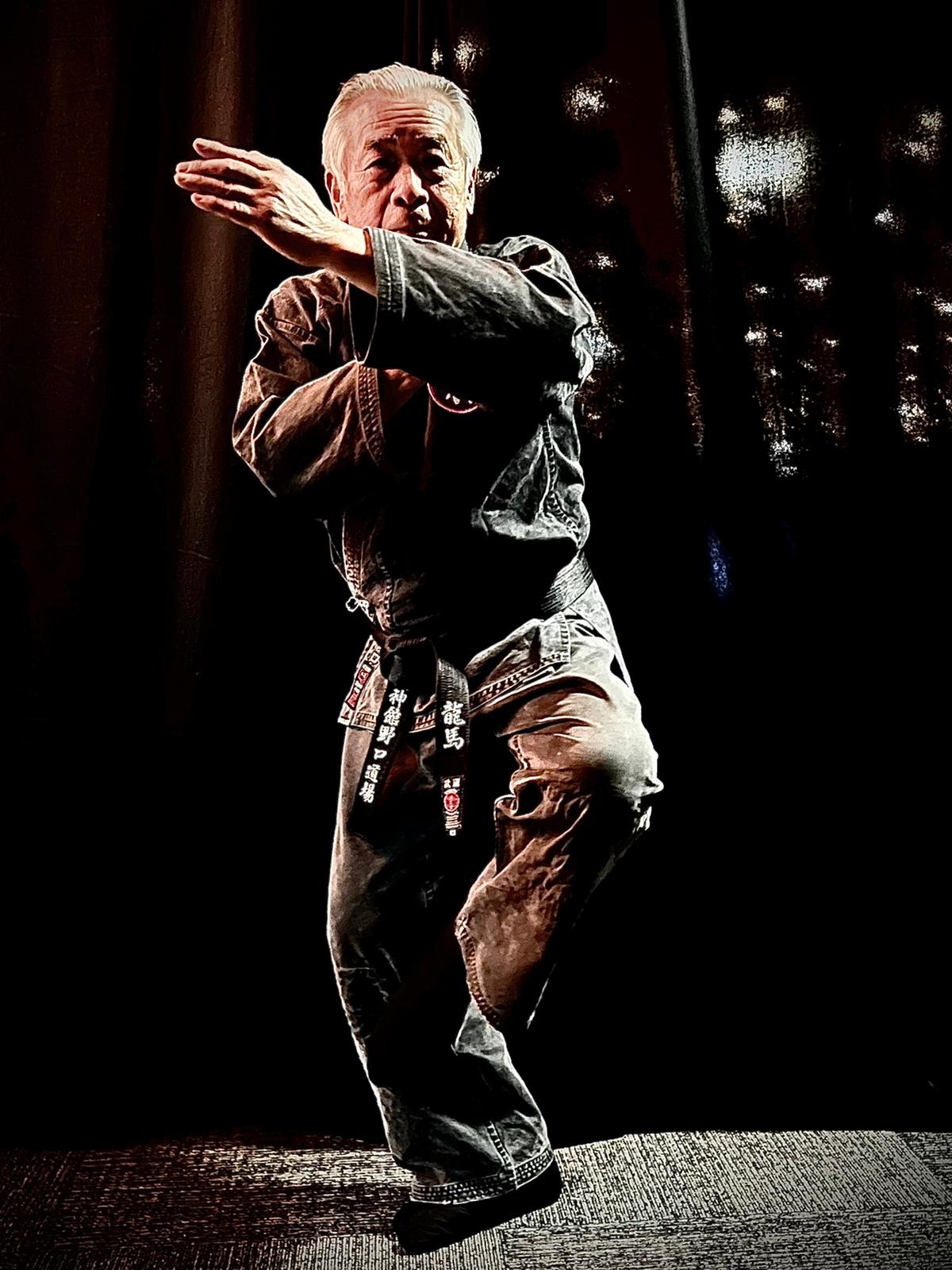
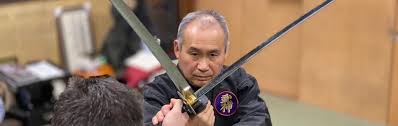
Noguchi Sensei has been training under Soke for over 48 years. He is skilled in the arts of Taijutsu, Kenjutsu, Kyojutsu, and Henka. David says he likes the fact that Noguchi Sensei shows amazing variations of every move. He will demonstrate a skill, then show thousands of variations. His versatility in the art is fascinating. He will find a student doing something he wants to tweak, demonstrate the change, laugh, then walk on to someone else. There is joy and mirth in what he does. He will invite a student to punch him, then laugh as the student fall to the ground trying. He looks at another student and laughs like they’re sharing an inside joke. He loves to place people in awkward positions that force them to fall, then giggle as they try to figure out what he did. It is a specialty of his (Budo Mentors).
Japan
When David arrived in Japan for the first time, he left Texas on a Sunday, but arrived 10 hours later on a Monday. It’s like a magic trick, but the jet lag is real. David’s very first class in Japan was with Someya Sensei on a Tuesday afternoon. He was unaware of the amount of rest needed to recover from jet lag, but his adrenaline kept him going. Then, later that evening he got to take a class with the Soke himself. It was an epic start and was about to become even more memorable.
At the end of class Hatsumi Sensei asked who needed to take the Godan test. David and one other student raised their arms. David was faltering a bit, raising his hand only halfway, so a nearby peer helped him raise it higher, egging on the courage. David was called to the front of the room and told to kneel with his back to Noguchi Sensei. The test is for yondans (4th degree black belts) only, as it is the only way to become a godan (5th degree black belt.) The student sits on his heels and waits to be whacked on the head with a practice sword that will hurt, but not harm. The idea is that the student is supposed to move away from the sword in the nick of time by sensing that they are about to be hit. Their eyes are closed, and they are waiting for the sensei to decide to strike.
David was certain he would fail. He kept wanting to move, but also didn’t want to jump the gun, feeling a jittery jerking in his brain that he hoped was not showing in his body. Then he took a deep breath and accepted that he might fail. Suddenly, he felt like a weight was pressing down on his head and quickly rolled out of the way. When he looked back, Someya Sensei held the sword to the ground, having just completed his strike. David passed the test and was told later by another student that his timing was perfect, his roll coming at the exact second the sword would have struck his head. The point of the test is to demonstrate to the Soke that a student can sense the presence of danger and avoid it. This is considered a primary survival skill in the art and proves that the student is now able to teach others and open their own Bujinkan dojo because he or she is now protected by the Guiding Spirits called the Bujin. David did not plan to begin teaching then, but he now had the option if he wanted to.
The Shihan
When David decided to go to college in Waco, TX, it meant leaving his first real Bujinkan behind. It was a tough decision, but he tried to view it as simply a break in training that would resume once he had his degree. Little did he know, the dojo was underfunded, would lose the space they rented, and fold. He would never get the chance to train there again.
As he did in his childhood days, he continued practicing alone when he could. Classes and work kept him busy, but he also made time for one of his favorite hobbies, role playing Dungeons and Dragons. He and a group of other guys would meet at a local hobby game store called Game Closet where people came to buy miniatures for tabletop war games, comic books, role-playing books, and board games. At one point in their role-playing, some of the guys started horsing around acting like they were fighting for real and a fellow named Brent D. crouched into a position called a kamae. David recognized the position as one that is only taught in Taijutsu. Sure enough, Brent was a fellow student of the art. He was able to introduce David to a group of other students who would meet on Saturdays at the rec area across from his dorm. They would practice rolls, kamae, and strikes. When he left Austin for Waco, he was a green belt 9th kyu. By the time he finished college, he had been promoted to 1st dan (1st degree black belt.)
Works Cited
“Budo Mentors.” Dayton Bujinkan Dojo Martial Arts School, http://www.daytonbujinkan.com/history-budomentors
Eastman, Kevin & Peter Laird. Teenage Mutant Ninja Turtles. Murakami-Wolf-Swenson, 1987-1996.
Hayes, Stephen K. The Ninja and Their Secret Fighting Art. Charles E. Tuttle Publishing, 1981.
Oskin, Becky. “Japan Earthquake & Tsunami of 2011: Facts and Information” LiveScience.
13 Sep, 2017, www.livescience.com/39110-japan-2011-earthquake-tsunami-facts.html
“Top Ninja Honored In Japan”. Black Belt. August 2000, Vol. 38 no. 8, Active Interest Media,

 rebekahjmarshall