TRIGGER WARNING: Mentions of violence, murder, and suicide.

Introduction
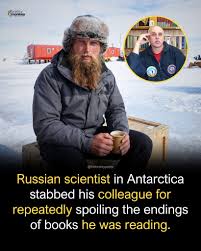
The idea for the story told in my screenplay came from a coworker who was a film major. I was picking his brain about how he came up with ideas for his screenplays, and he mentioned coming across random news articles and Wikipedia pages that he found interesting. His method resonated because of something I read in chapter 2 of Screenplay – The Foundations of Screenwriting. Syd Field writes, “An idea in the newspaper or on the TV news…can be the subject of a movie” (35). One particular topic that my coworker mentioned stuck with me. He said he came across crimes (including murders) that occurred in the Antarctic when people were stationed for long dark winter months at research facilities.
The idea germinated and led to research into the most notorious incidents. I thought it would be interesting to weave elements of real-life events and historical data into a fictional story of two characters trapped in Antarctica like the facilities mentioned online. The more I researched, the deeper I wove my way into a potential rivalry between two facilities 300 Km apart owned by Argentina and England. The fact that these countries have historically significant conflicts created perfect backgrounds for instant characters.
Peer Review Process
Because this field of writing is entirely new to me, the feedback process was crucial for my development. I was unsure and in need of support each step of the way. Dr. Johnson and my peers were kind and helpful with their suggestions and showed me ways in which my writing could be improved. The workshop of loglines, story beats, and treatments helped me to streamline the core conflict in the story. It also revealed gaps in my story arc and missing character arc elements. Dr. Johnson wrote, “Be sure we know what brought them there. And you may find you still need to simplify to fit in 15 pages. But don’t lose heart. The art of screenwriting is subtraction.” I had no idea how much subtraction would be necessary to complete the final draft, and the encouragement to not lose heart was helpful when my efforts felt fruitless at times.
My peer, Valencia wrote, “It was difficult for me to determine the protagonist’s progression, as I could not determine who was pushing the action until the finale. The ending was clear, with Alvaro killing Graham.” This specific advice guided me to hone in on the progression of my protagonist Alvaro and be sure his motivations, wants, and needs were clearer to the reader. I also appreciated that she mentioned the positive aspect of the ending making sense. It is nice to be told what is working and what still needs improvement. Another specific example of excellent feedback was from Damon who pointed out the following: “With the fantasies, you often put ‘return to present’, and each time I think I have just read a flashback…” Dr. Johnson also mentioned this and it made me realize that I needed to clarify that the scenes were happening in Alvaro’s imagination in order to help the reader understand the intention.
Slightly less helpful was feedback from peers that suggested changes based on personal opinions or preferences. However, I still appreciated their ideas and considered them as options to include or reject. For example, Damon suggested removing the tango scene in my script. He said, “…the idea of two men tangoing really doesn’t work unless some sexual tension arises.” I disagreed and decided to leave the scene in my script.
The experience of receiving feedback helped to guide my responses to my peers’ work. I strove to point out examples of quality work and suggestions for elements that could be improved. An example of pointing out quality work was when providing feedback to peer Flaxen, “…the suspenseful moments are the best…The catalyst, debate, and conflict portions are excellent. I can picture each of those as a moment that makes the audience flinch, if not jump out of their seats.” The suggestions for improvement were worded, “As far as your logline is concerned, I am wondering what the fateful decision is that the man must make. Is he contemplating suicide? I did not catch that as one of the beats. If so, you might want to include it since it would probably be a key scene just before the portal opens. Also, I suggest cutting out some of the detail from the logline.”
Analysis
The first film I analyzed was Crazy Rich Asians to create a beat sheet and logline. The process taught me the important plot points necessary to create the correct flow to a successful film. For example, the “All Is Lost” beat in Crazy Rich Asians is when Rachel finds out she is the illegitimate daughter of an adulteress; Nick’s grandmother forbids him to marry Rachel. This translated into the moment in my screenplay where Alvaro imagines himself in prison for killing Graham. This could be the moment of no return if he goes through with his murderous daydreams.
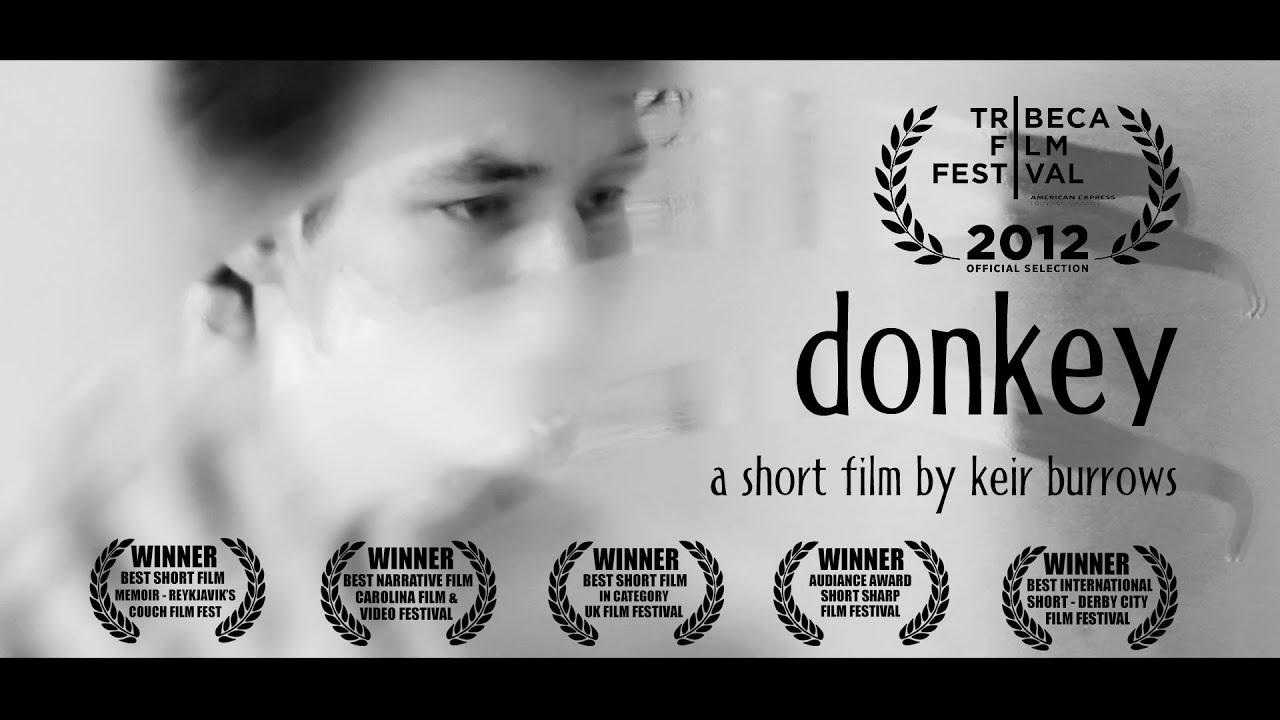
The next film I analyzed was Donkey. As part of the narrator’s character arc, he must confront his behavior and own the fact that he was a bully to Stanley when they were teenagers. I believe the writer had the end in mind before he started the script. The story seems driven to that point all along in the narrator’s storytelling and shows the pondering that the narrator does daily due to his surreal experience of knowing Stanley. This guided me to work to create a character arc showing Alvaro struggling internally in his relationship with Graham, but ultimately choosing mischief over harm.
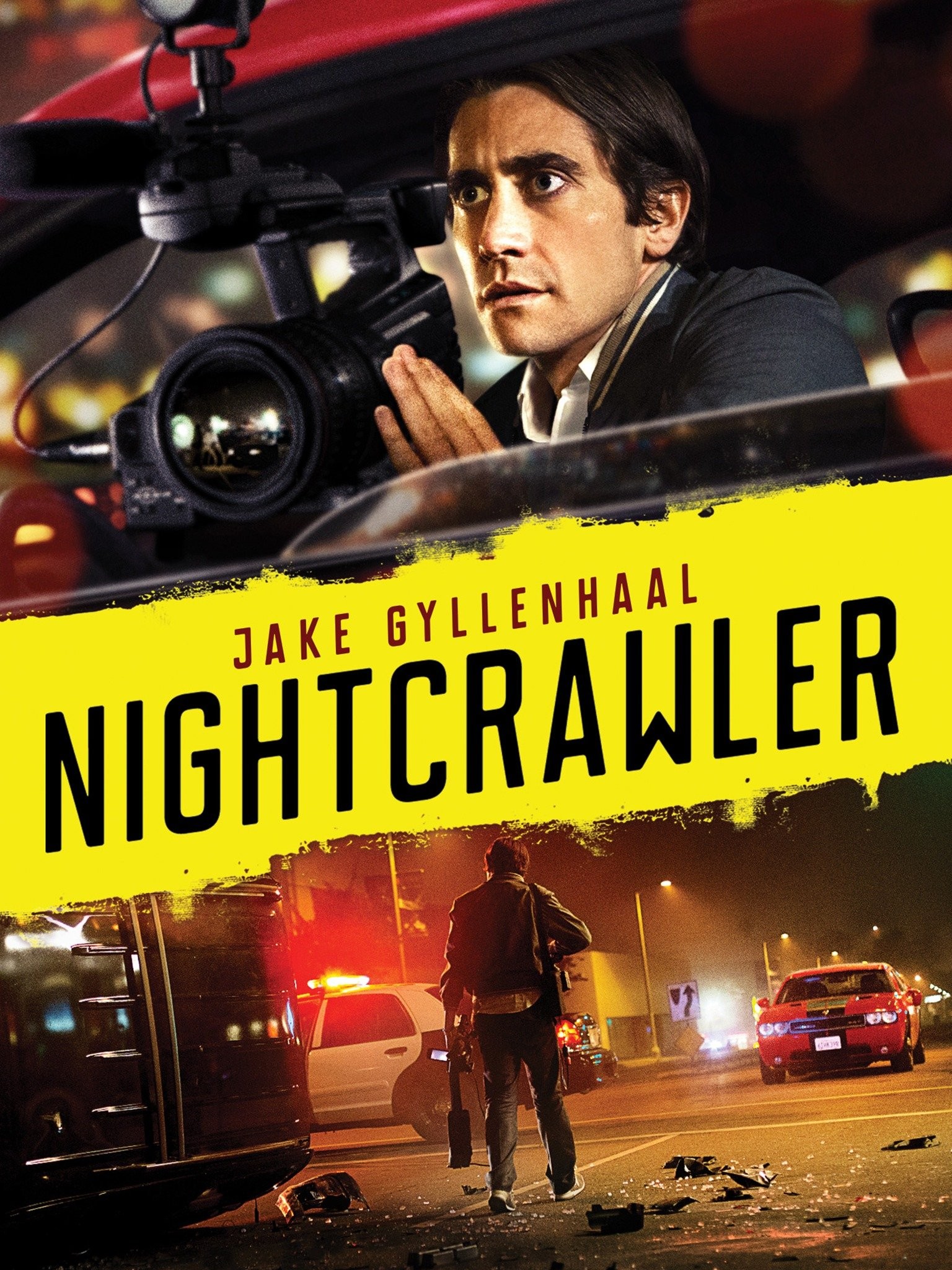
The final important screenplay I analyzed was Nightcrawler. The pacing of the screenplay shows a ratcheting of tension building each scene that I attempted to emulate in my piece. Also, the lesson uncovering the wants and needs of the character Lou was extremely revelatory. I discovered that Lou wants money, plain and simple. He will do anything he can to make money that he believes to be within his skills set. The analogy drawn visually is to a coyote, always on the lookout for his next meal. However, his need for control took over and created a monster. This analysis helped me to look closer at my characters and pinpoint their wants and needs as I was planning their character arcs. I was also fascinated by the dialogue in Nightcrawler. Lou’s speech demonstrates his attitudes, motivations, and his thinking process. To be able to get all of that across in short lines of dialogue is quite skillful. I attempted to create dialogue in my screenplay that also showed the character shining through the word choice and cadence in the lines.
There are many qualities necessary to create a marketable screenplay. One element is a well-told story that grabs the reader’s attention in the opening scene like Lou in Nightcrawler scrapping stolen metal and robbing a security guard, then happening upon a car wreck that changes his life. Another element is well-developed characters who have clear character arcs like the narrator in Donkey. A third element is believable dialogue that keeps the story moving forward like Lou’s in Nightcrawler. The story must keep the reader’s attention and motivate them to read all the way to the very end because they must know the resolution. An excellent example of this is found in my peer Damon’s screenplay Free at Last. The reader is desperate for William to stand up to his mother-in-law and have agency. Thankfully, the reader is rewarded by William throwing shackles into the ocean and literally towering over the woman until she retreats.
Conclusion
My skills as a screenwriter were nonexistent prior to this course. This is my first experience writing a screenplay. I went from being overwhelmed and uncertain, to completing a short film screenplay in 10 weeks and know that I have the beginning tools necessary to continue working in this genre. My skills as a storyteller have also improved because of the intense focus on pairing down the information to only action and dialogue necessary to move the story forward. Learning to be succinct and making nothing superfluous is extremely difficult and will help with all future writing projects I take on. I was most afraid of learning the formatting of the screenplay and mastering the vernacular. Thanks to Dr. Johnson’s guidance and recommended resources, I can now write a screenplay using Final Draft software with minimal anxiety.
It has been an honor to begin this journey of learning screenwriting in the company of so many talented writers. The role of the screenwriter is underappreciated. Without them, there is no story. They create the idea that becomes the films we know and love. Prior to this course, I did not have realistic notions of being a screenwriter. I toyed with the idea that I would like to look into screenwriting, but quite honestly, I did not understand the complexity. I write novels and thought surely novel writing was much more involved and difficult than screenwriting. Now I know that my assumptions were way off base. I underestimated the focus, effort, and revisions necessary to create a quality screenplay. To winnow a story to its barest essentials is excruciating labor that takes more work than any other form of writing I have come across. Now I am eager for the challenge. I plan to begin working on a feature length screenplay as soon as I finish this course. I hope to enter the short film screenplay I finished for this class into several competitions. A new world of writing has opened up to me, and I am excited to begin working this craft armed with all the tools I have learned in this class.
Works Cited
Burrows, Keir. Donkey. YouTube. SNHU COCE Assistive Technology, 4 Apr 2018, www.youtube.com/watch?app=desktop&v=yBJyXoSluxs+%0A
Kwan, Kevin. Crazy Rich Asians. 2013.
Nightcrawler. Written by Dan Gilroy. Open Road Films, 2014, web.archive.org/web/20160815092156/http:/gointothestory.blcklst.com/wp-content/uploads/2014/12/NIGHTCRAWLER-Dan-Gilroy.pdf
Norko, Damon. Free at Last. 2021, file:///E:/Masters%207-11-21%204pm/Screenwriting/Week%208/FAL-%20Norko.pdf


 rebekahjmarshall