FADE IN:
EXT. BLIZZARD OUTSIDE A SMALL CABIN – PERPETUAL DARKNESS OF ARCTIC WINTER
SUPER: ANTARCTICA 1986
INT. ANTARCTIC MID-WAY STATION FOR ARGENTINA/ENGLAND RESEARCH FACILITIES; COUCH AREA – 3:00PM
ALVARO FERNANDEZ, 48, Argentinian, serious expression, sits as still as a statue as he studies a chess board silently on a makeshift coffee table.
GRAHAM DAVIES, 26, British, expressive face, jittery, seems impatient.
GRAHAM
(British accent)
Why does everything take you so long?
Alvaro looks up at Graham but does not move.
GRAHAM
I can’t take much more of this.
ALVARO
(Argentinian accent)
Two more months.
Graham sighs and begins tapping his fingers on the table.
GRAHAM
It’s summertime back home. People are going to the coast.
ALVARO
Nothing better than football on the beach and a dip in the ocean.
Graham crosses his arms and exhales loudly.
GRAHAM
I bet all of you Argentinians cheat when you play football.
ALVARO
We did not cheat.
GRAHAM
(Getting louder)
Maradona used his hand. Two England players saw it with their own eyes. And Maradona practically admitted it.
ALVARO
No, he said it was la mano de Dios, the hand of God.
GRAHAM
Hand of God, my ass. I cannot believe Argentina won the world cup. You should be ashamed.
Alvaro makes a move on the chess board.
ALVARO
I will never be ashamed of Argentina.
GRAHAM
Really? Not even for starting a stupid war?
ALVARO
I am proud of my people for their foolhardy attempt to defend the Maldinas.
GRAHAM
Well, we won that match fair and square.
ALVARO
Your country had no right to stake claim to our islands.
Graham makes a move on the chess board.
GRAHAM
Haha! In your face. I stake claim to the Falklands and your bishop.
ALVARO
British Colonial occupation is at the heart of everything that is wrong with your country.
GRAHAM
At least we aren’t a dictatorship.
ALVARO
I have already explained to you that Argentina no longer has a dictatorship. I voted for President Alfonsin.
GRAHAM
Well, Margaret Thatcher already proved she could beat that guy.
ALVARO
She did not beat him. He was elected after the war.
GRAHAM
You have to admit she is impressive.
ALVARO
Impressively imperious.
GRAHAM
(pumping his fists in the air)
The Iron Lady!
ALVARO
Exactly. Shouldn’t you despise her like the poor miners who were protesting against her?
Graham shrugs and goes to the refrigerator to get a drink.
GRAHAM
I am going to drink one of my last New Cokes.
ALVARO
You said you were going to wait for a special occasion.
GRAHAM
I’ll still have one left. Plus, it is a special occasion. I’m about to beat you at chess.
Graham pops open the New Coke and sits back down at the table.
ALVARO
(shaking his head)
You have absolutely no self-control.
Graham slurps loudly with every drink, belching between sips.
ALVARO
And you’re disgusting. How do you drink that?
GRAHAM
(belches a long loud one)
You’re just jealous that you didn’t order some on the last shipment and now you have to wait until September.
ALVARO
I don’t drink soda. I prefer my tea. As a matter of fact, I’m going to make a cup after I beat you.
Alvaro makes a move on the chess board.
GRAHAM
Damnit!
Graham pounds the chess board scattering the pieces.
GRAHAM
There’s the hand of God for you!
Graham storms out of the room and ALVARO begins cleaning up the chess game, but while staring at the pieces…
DISSOLVE TO:
INT. BY THE FRONT DOOR – ALVARO’S IMAGINATION
Graham is dressed in his winter gear with measuring equipment.
Alvaro is looking at charts on the wall.
GRAHAM
I’ll be back.
ALVARO
Be sure to check the generators.
As soon as the door closes, Alvaro locks it from the inside and smiles. He sits on the couch reading a book and Graham can be heard screaming from outside, banging on the door to be let back in.
DISSOLVE TO:
INT. COUCH AREA – PRESENT 4:20PM
Graham belches from the other room and the sound brings Alvaro back to the present. He gets up and goes to the kitchen area where he puts the kettle on and stares at it.
DISSOLVE TO:
FLASHBACK – MONTAGE INSIDE CABIN – ALVARO’S IMAGINATION
Graham clips his toenails on the couch, sucks his teeth, drums on things while listening to a Walkman, slurps his soup, cracks his knuckles, chews with his mouth open, dumps his wet icy stuff by the front door, hocks loogies, talks nonstop, picks his nose…
DISSOLVE TO:
INT. KITCHEN STOVE – PRESENT 4:30PM
The tea kettle WHISTLING brings Alvaro back to the present and he makes a cup of tea.
GRAHAM
(only heard)
Ooh, I’ll take a cuppa. That sounds good.
Alvaro sighs and begins to make a cup of tea for Graham.
FADE TO:
INT. SMALL TABLE – ALVARO’S IMAGINATION
Graham LOUDLY STIRS his tea in an otherwise silent room, then begins to SLURP.
Alvaro quietly drinks his tea and stares at Graham. Then his face becomes contorted.
ALVARO
Did you hear that?
GRAHAM
What?
ALVARO
(motions behind him)
I think the rodent is back.
Graham stands and takes a step toward the shelving area to look closer.
Alvaro takes a powder from his pocket and dumps it into Graham’s tea.
GRAHAM
I don’t see anything. I’ll set more traps before bed.
Graham sits back down and begins drinking his tea, then clutches at his throat and falls to the ground in death throes.
DISSOLVE TO:
INT. SMALL TABLE – PRESENT 4:45PM
The sound of TINLKLING brings Alvaro back to the present.
Graham is LOUDLY STIRRING his tea and taking LOUD SIPS.
GRAHAM
I wish it was New Coke.
FADE TO:
INT. WORK AREA – PRESENT 5:30PM
Alvaro is looking at readings from machines.
Graham is writing in a ledger.
ALVARO
Temperature Negative 39.8 Celsius.
GRAHAM
(scribbles and imitates Alvaro’s accent)
Negative 39.8 Celsius.
ALVARO
Windspeed 70.8 Kilometers per hour.
GRAHAM
(scribbles and imitates Alvaro’s accent)
70.8 Kilometers per hour.
ALVARO
Precipitation, rain, zero millimeters.
GRAHAM
(scribbles and imitates Alvaro’s accent)
Rain zero millimeters.
ALVARO
Do you have to repeat everything I say?
GRAHAM
(mocking)
Do you have to repeat everything I say?
FADE TO:
INT. SHELVING AREA – PRESENT 6:00PM
Alvaro is organizing equipment on the shelves.
Graham is doing safety checks on gear.
GRAHAM
Why are we doing this again if we haven’t even used any of it?
ALVARO
Because it’s our job.
GRAHAM
It just seems like a waste of time.
ALVARO
Routine is important during these long winters. It helps us keep our wits about us.
CUT TO:
INT. SHELVING AREA – ALVARO’S IMAGINATION
Alvaro stares at Graham for a moment, then pulls the entire shelving unit onto him, the sharp instruments impaling Graham and he lays dying, bleeding on the floor.
DISSOLVE TO:
INT. SHELVING AREA – PRESENT 6:20PM
Graham BANGS something metal on the shelving.
GRAHAM
(holding a ski pole)
I think there is significance to the fact that my research station is named after Edmund Haley and I am here when Haley’s comet passed by.
ALVARO
Perhaps.
GRAHAM
It’s not like your station has anything magical about it. What’s Belgrano, anyway?
ALVARO
It is quite significant. General Manuel Belgrano was a libertador who fought for independence and designed our national flag.
GRAHAM
Boring.
ALVARO
(wounded)
Well, I was not very impressed by Haley’s comet. It was barely visible.
Graham clutches at his chest and feigns a heart attack.
GRAHAM
Haley Research Station also discovered the ozone hole.
ALVARO
Belgrano studies cosmic noise.
GRAHAM
I don’t even know what that is.
Alvaro walks away and turns on a radio, twisting the dial until he finds ARGENTENTIAN TANGO. He steps to the center of the room and motions for Graham to join him.
GRAHAM
(pouting)
I’m not in the mood.
Alvaro STOMPS and motions again.
Graham sighs and slowly walks toward Alvaro.
Alvaro gets into position to lead the tango and Graham becomes the follow. They begin to tango.
ALVARO
Remember your posture.
Graham corrects his posture.
GRAHAM
I’ve decided who you remind me of. You’re a cross between Edward James Olmos and Pee-Wee Herman.
ALVARO
I have heard of Olmos. Not Herman.
GRAHAM
(Pee-Wee voice)
I know you are, but what am I?
Alvaro pulls back from the dance frame enough to look at Graham quizzically.
GRAHAM
(Pee-Wee voice)
That’s my name don’t wear it out.
ALVARO
Is this a movie actor?
GRAHAM
Yes. He’s very famous.
ALVARO
Apparently not in Argentina.
GRAHAM
What movie did you see most recently?
ALVARO
La Historia Oficial, The Official Story. It is a harrowing tale about the effects of the dictatorship on one family and their adopted child.
GRAHAM
That sounds super boring. What about Rambo?
ALVARO
No.
GRAHAM
Jackie Chan?
ALVARO
Nope.
GRAHAM
Return of the Living Dead?
ALVARO
(shakes head no)
GRAHAM
Man, you are missing out.
CUT TO:
INT. WORK AREA – ALVARO’S IMAGINATION
The music comes to a dramatic end and Alvaro dips Graham so that his head hits the counter splitting open with blood flowing everywhere and Graham falls to the floor dead.
ALVARO
Oops.
DISSOLVE TO:
INT. WORK AREA – PRESENT 7:00PM
The sound of Graham GRUNTING brings Alvaro back to the present.
GRAHAM
Let me up, man.
Alvaro pulls Graham back up from the dip and both are breathless.
FADE TO:
INT. TABLE – PRESENT 8:30PM
Graham and Alvaro are putting together a puzzle.
GRAHAM
Since we’re 150 kilometers from both of our research centers, which one should I go to if something happens to you and you need emergency help?
ALVARO
What do you mean?
GRAHAM
Say you get hurt and I go for help, do I go to my people or yours?
ALVARO
We have an emergency telephone.
GRAHAM
But it goes out sometimes. If I had to make it to a station, I think I would go to Haley because they speak English.
ALVARO
There are plenty of people at Belgrano that speak English.
GRAHAM
(trying to force a piece)
You know what I mean. That last guy that had to stop here spoke very little English.
ALVARO
That’s not true.
GRAHAM
He kept turning to you for explanations and talking in Spanish.
ALVARO
That was Italian.
GRAHAM
Well, whatever it was, he kept talking to you instead of me.
ALVARO
He did not always understand your idioms and expressions, but he is fluent in Spanish, English, and Italian.
GRAHAM
Hmmmphh.
ALVARO
How many languages do you speak?
GRAHAM
Just the Queen’s English. That’s the only one I need.
ALVARO
If you spoke Italian, you would have gathered that our visitor was not in the mood for a movie. He was exhausted.
GRAHAM
I thought it would be fun to make popcorn and entertain our guest. I even offered him a New Coke.
ALVARO
It was a nice gesture, but you need to learn to read social cues.
GRAHAM
Whatever…
DISSOLVE TO:
INT. TABLE – ALVARO’S IMAGINATION
Graham’s voice fades out and Alvaro only sees his lips moving. Alvaro jumps on top of Graham, knocking his chair backward. A struggle ensues with Alvaro choking Graham to death.
DISSOLVE TO:
INT. TABLE – PRESENT 8:50PM
GRAHAM
(voice fades back in)
Popcorn sounds good right now, as a matter of fact. Let’s watch a movie.
ALVARO
(a little disoriented)
No, thanks.
GRAHAM
Come on. I don’t want to watch it by myself. You can pick.
ALVARO
We’ve seen them all.
GRAHAM
How about The Shining?
ALVARO
No, thanks.
GRAHAM
Sleepaway Camp?
ALVARO
(scrunches up face)
No.
GRAHAM
How about romance? The Blue Lagoon.
ALVARO
(louder than usual)
I said, no!
GRAHAM
Jeez. You don’t have to get your panties in a wad.
FADE TO.
INT. COUCH AREA – PRESENT 9:40PM
Graham is SHARPENING an ice axe sitting on one end of the couch with his feet on the makeshift coffee table.
Alvaro is at the other end of the couch reading a book.
A few moments pass of no sound except SHARPENING and Alvaro TURNING A PAGE of his book.
Graham stops sharpening and squints at the cover of the book Alvaro is reading.
GRAHAM
Is that one of the Agatha Christie books?
ALVARO
Mmm-hmmm.
GRAHAM
What’s it called?
ALVARO
Sleeping Murder.
GRAHAM
I think I read that one.
ALVARO
Shhh…
Graham lays the ice axe down on the makeshift coffee table and leans in closer to look at the cover of the book.
GRAHAM
Yes. This is the one where it turns out to be the doctor all along, right?
CUT TO:
INT. COUCH AREA – ALVARO’S IMAGINATION
Alvaro freezes, slowly looks up from the page, sets his book on the coffee table, and in one swift move grabs the ice axe and begins hacking at Graham. Blood splatters Alvaro’s face.
Then Alvaro sits quietly back down, picks up the book, and gets back to reading.
DISSOLVE TO:
INT. ARGENTINE JAIL CELL – ALVARO’S IMAGINATION
Alvaro sits on the lower bunk in a dirty prison jumpsuit, sweaty, with a shaved head. He is trying to read a book.
CELLMATE, 24, shaved head, wearing only underwear, doing push ups.
CELLMATE
(in Spanish; subtitled)
77, 78, 79, 80
Cellmate jumps up and begins pacing the room.
CELLMATE
I can’t take 2 more years of this, man. I’m telling you, I’m gonna snap.
Cellmate rips a piece of metal off the bunkbed and begins BANGING LOUDLY on the cell bars.
DISSOLVE TO:
INT. COUCH AREA – PRESENT 9:45PM
Alvaro is still sitting holding his book.
Graham is BANGING a piece of metal against his ice axe.
GRAHAM
(stops banging)
I think I’m going to call it a day.
ALVARO
(a bit shaken, nods)
Good night.
Graham gets up and walks toward the bedroom. Then he turns and looks at Alvaro.
GRAHAM
You should probably get some sleep, too. You’re on toilet duty tomorrow and I plan on blowing it up tonight!
Graham leaves the room chuckling to himself.
Alvaro sighs, then sets the book on the makeshift coffee table and walks toward the kitchen. He opens the refrigerator and stares into it for a few seconds.
Suddenly, a smile lights up his face. He takes the last New Coke out of the refrigerator, pops it open, and takes a sip.
ALVARO
(grimacing)
Disgusting.
Alvaro proceeds to dump the entire contents of the New Coke into the sink, looking back toward the bedroom a few times. Then he crumples the can and drops it into the sink.
ALVARO
(in Spanish; subtitled)
The hand of God.
FADE OUT.
THE END
Category Archives: Longform
Portfolio pieces including research, analysis, literary journalism, screenwriting, and longer works of a more academic nature.
Reflective Essay About Dr. Claudia Johnson’s Screenwriting Course
Introduction
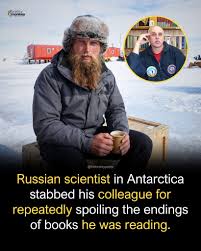
The idea for the story told in my screenplay came from a coworker who was a film major. I was picking his brain about how he came up with ideas for his screenplays, and he mentioned coming across random news articles and Wikipedia pages that he found interesting. His method resonated because of something I read in chapter 2 of Screenplay – The Foundations of Screenwriting. Syd Field writes, “An idea in the newspaper or on the TV news…can be the subject of a movie” (35). One particular topic that my coworker mentioned stuck with me. He said he came across crimes (including murders) that occurred in the Antarctic when people were stationed for long dark winter months at research facilities.
The idea germinated and led to research into the most notorious incidents. I thought it would be interesting to weave elements of real-life events and historical data into a fictional story of two characters trapped in Antarctica like the facilities mentioned online. The more I researched, the deeper I wove my way into a potential rivalry between two facilities 300 Km apart owned by Argentina and England. The fact that these countries have historically significant conflicts created perfect backgrounds for instant characters.
Peer Review Process
Because this field of writing is entirely new to me, the feedback process was crucial for my development. I was unsure and in need of support each step of the way. Dr. Johnson and my peers were kind and helpful with their suggestions and showed me ways in which my writing could be improved. The workshop of loglines, story beats, and treatments helped me to streamline the core conflict in the story. It also revealed gaps in my story arc and missing character arc elements. Dr. Johnson wrote, “Be sure we know what brought them there. And you may find you still need to simplify to fit in 15 pages. But don’t lose heart. The art of screenwriting is subtraction.” I had no idea how much subtraction would be necessary to complete the final draft, and the encouragement to not lose heart was helpful when my efforts felt fruitless at times.
My peer, Valencia Thomas wrote, “It was difficult for me to determine the protagonist’s progression, as I could not determine who was pushing the action until the finale. The ending was clear, with Alvaro killing Graham.” This specific advice guided me to hone in on the progression of my protagonist Alvaro and be sure his motivations, wants, and needs were clearer to the reader. I also appreciated that she mentioned the positive aspect of the ending making sense. It is nice to be told what is working and what still needs improvement. Another specific example of excellent feedback was from Damon Norko who pointed out the following: “With the fantasies, you often put ‘return to present’, and each time I think I have just read a flashback…” Dr. Johnson also mentioned this and it made me realize that I needed to clarify that the scenes were happening in Alvaro’s imagination in order to help the reader understand the intention.
Slightly less helpful was feedback from peers that suggested changes based on personal opinions or preferences. However, I still appreciated their ideas and considered them as options to include or reject. For example, Damon Norko suggested removing the tango scene in my script. He said, “…the idea of two men tangoing really doesn’t work unless some sexual tension arises.” I disagreed and decided to leave the scene in my script.
The experience of receiving feedback helped to guide my responses to my peers’ work. I strove to point out examples of quality work and suggestions for elements that could be improved. An example of pointing out quality work was when providing feedback to peer Flaxen Glor, “…the suspenseful moments are the best…The catalyst, debate, and conflict portions are excellent. I can picture each of those as a moment that makes the audience flinch, if not jump out of their seats.” The suggestions for improvement were worded, “As far as your logline is concerned, I am wondering what the fateful decision is that the man must make. Is he contemplating suicide? I did not catch that as one of the beats. If so, you might want to include it since it would probably be a key scene just before the portal opens. Also, I suggest cutting out some of the detail from the logline.”
Analysis
The first film I analyzed was Crazy Rich Asians to create a beat sheet and logline. The process taught me the important plot points necessary to create the correct flow to a successful film. For example, the “All Is Lost” beat in Crazy Rich Asians is when Rachel finds out she is the illegitimate daughter of an adulteress; Nick’s grandmother forbids him to marry Rachel. This translated into the moment in my screenplay where Alvaro imagines himself in prison for killing Graham. This could be the moment of no return if he goes through with his murderous daydreams.
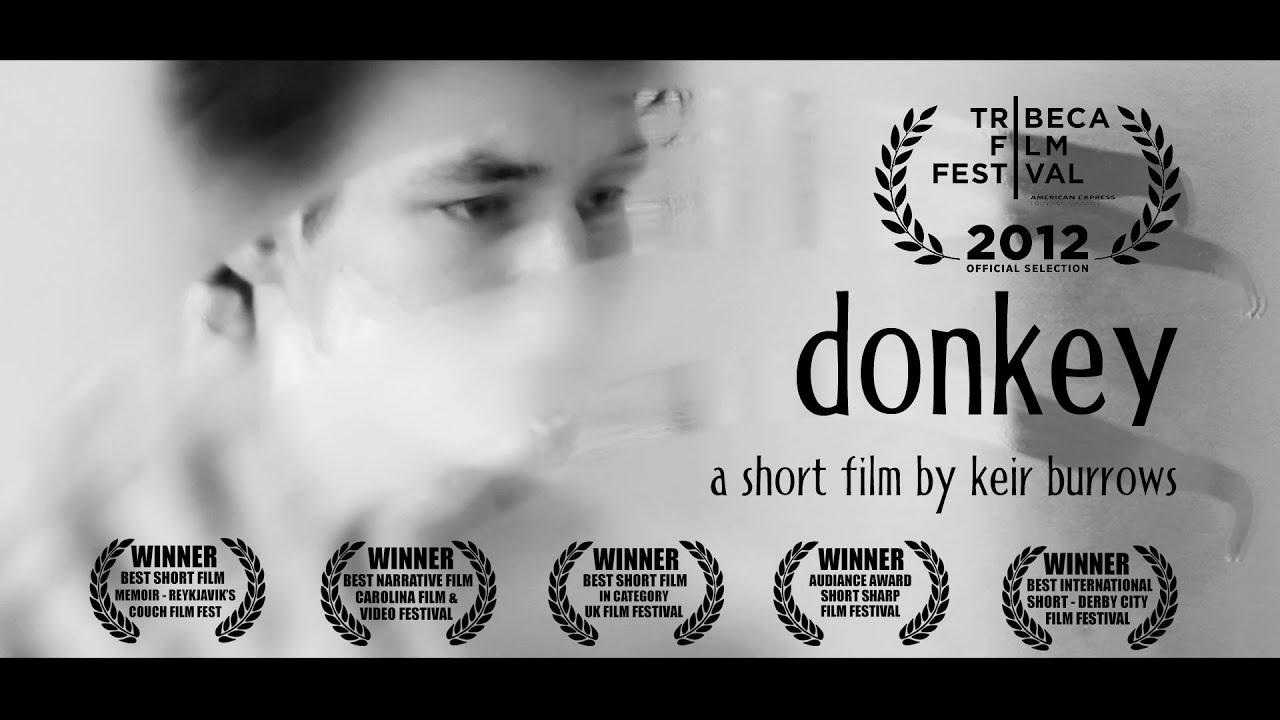
The next film I analyzed was Donkey. As part of the narrator’s character arc, he must confront his behavior and own the fact that he was a bully to Stanley when they were teenagers. I believe the writer had the end in mind before he started the script. The story seems driven to that point all along in the narrator’s storytelling and shows the pondering that the narrator does daily due to his surreal experience of knowing Stanley. This guided me to work to create a character arc showing Alvaro struggling internally in his relationship with Graham, but ultimately choosing mischief over harm.
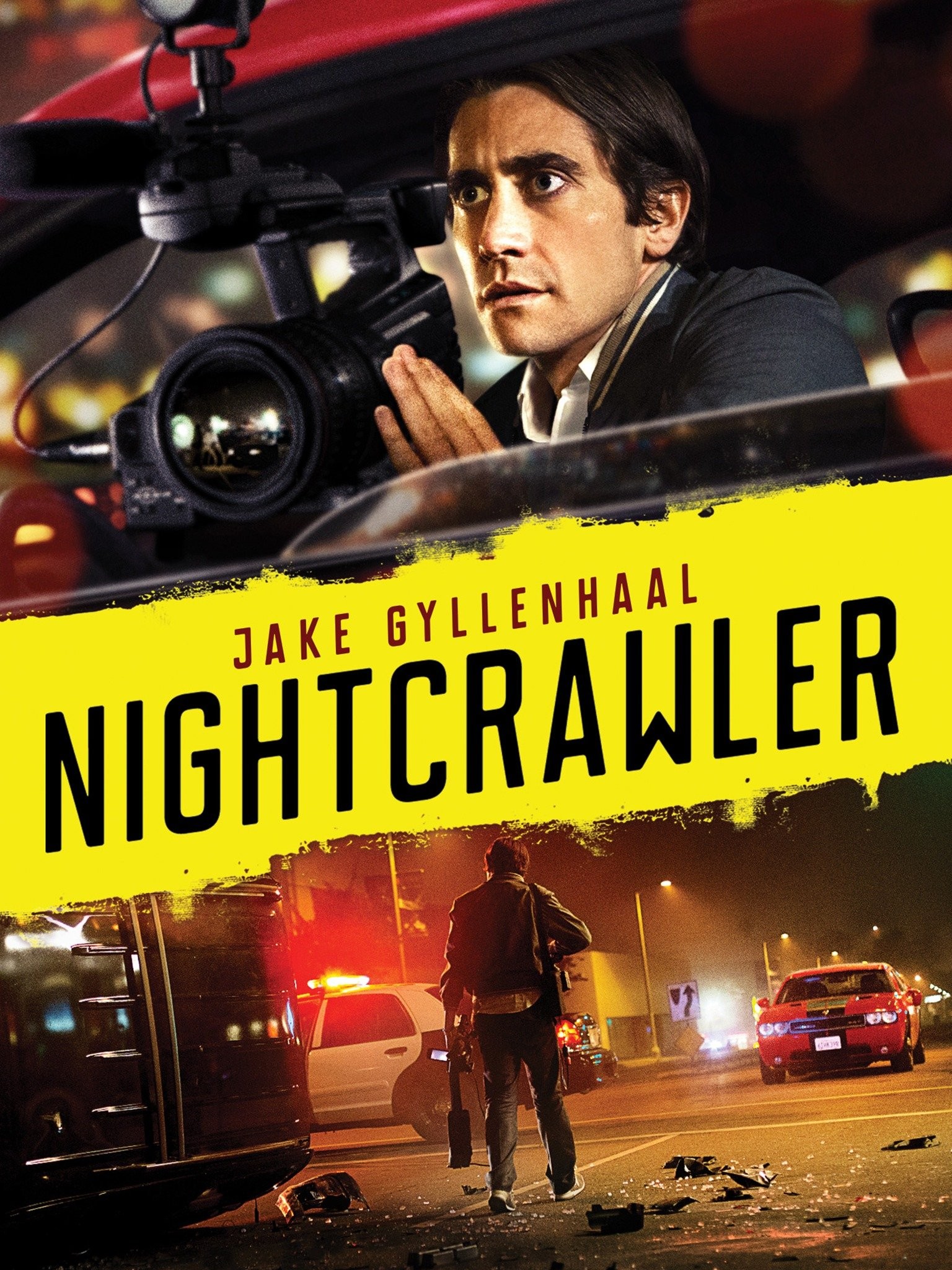
The final important screenplay I analyzed was Nightcrawler. The pacing of the screenplay shows a ratcheting of tension building each scene that I attempted to emulate in my piece. Also, the lesson uncovering the wants and needs of the character Lou was extremely revelatory. I discovered that Lou wants money, plain and simple. He will do anything he can to make money that he believes to be within his skills set. The analogy drawn visually is to a coyote, always on the lookout for his next meal. However, his need for control took over and created a monster. This analysis helped me to look closer at my characters and pinpoint their wants and needs as I was planning their character arcs. I was also fascinated by the dialogue in Nightcrawler. Lou’s speech demonstrates his attitudes, motivations, and his thinking process. To be able to get all of that across in short lines of dialogue is quite skillful. I attempted to create dialogue in my screenplay that also showed the character shining through the word choice and cadence in the lines.
There are many qualities necessary to create a marketable screenplay. One element is a well-told story that grabs the reader’s attention in the opening scene like Lou in Nightcrawler scrapping stolen metal and robbing a security guard, then happening upon a car wreck that changes his life. Another element is well-developed characters who have clear character arcs like the narrator in Donkey. A third element is believable dialogue that keeps the story moving forward like Lou’s in Nightcrawler. The story must keep the reader’s attention and motivate them to read all the way to the very end because they must know the resolution. An excellent example of this is found in my peer Damon Norko’s screenplay Free at Last. The reader is desperate for William to stand up to his mother-in-law and have agency. Thankfully, the reader is rewarded by William throwing shackles into the ocean and literally towering over the woman until she retreats.
Conclusion
My skills as a screenwriter were nonexistent prior to this course. This is my first experience writing a screenplay. I went from being overwhelmed and uncertain, to completing a short film screenplay in 10 weeks and know that I have the beginning tools necessary to continue working in this genre. My skills as a storyteller have also improved because of the intense focus on pairing down the information to only action and dialogue necessary to move the story forward. Learning to be succinct and making nothing superfluous is extremely difficult and will help with all future writing projects I take on. I was most afraid of learning the formatting of the screenplay and mastering the vernacular. Thanks to Dr. Johnson’s guidance and recommended resources, I can now write a screenplay using Final Draft software with minimal anxiety.
It has been an honor to begin this journey of learning screenwriting in the company of so many talented writers. The role of the screenwriter is underappreciated. Without them, there is no story. They create the idea that becomes the films we know and love. Prior to this course, I did not have realistic notions of being a screenwriter. I toyed with the idea that I would like to look into screenwriting, but quite honestly, I did not understand the complexity. I write novels and thought surely novel writing was much more involved and difficult than screenwriting. Now I know that my assumptions were way off base. I underestimated the focus, effort, and revisions necessary to create a quality screenplay. To winnow a story to its barest essentials is excruciating labor that takes more work than any other form of writing I have come across. Now I am eager for the challenge. I plan to begin working on a feature length screenplay as soon as I finish this course. I hope to enter the short film screenplay I finished for this class into several competitions. A new world of writing has opened up to me, and I am excited to begin working this craft armed with all the tools I have learned in this class.
Works Cited
Burrows, Keir. Donkey. YouTube. SNHU COCE Assistive Technology, 4 Apr 2018, www.youtube.com/watch?app=desktop&v=yBJyXoSluxs+%0A
Kwan, Kevin. Crazy Rich Asians. 2013.
Nightcrawler. Written by Dan Gilroy. Open Road Films, 2014, web.archive.org/web/
20160815092156/http:/gointothestory.blcklst.com/wp-content/uploads/2014/12/NIGHTCRAWLER-Dan-Gilroy.pdf
Norko, Damon. Free at Last. 2021, file:///E:/Masters%207-11-21%204pm/Screenwriting/Week%208/FAL-%20Norko.pdf
My Husband the Ninja
The Shihan
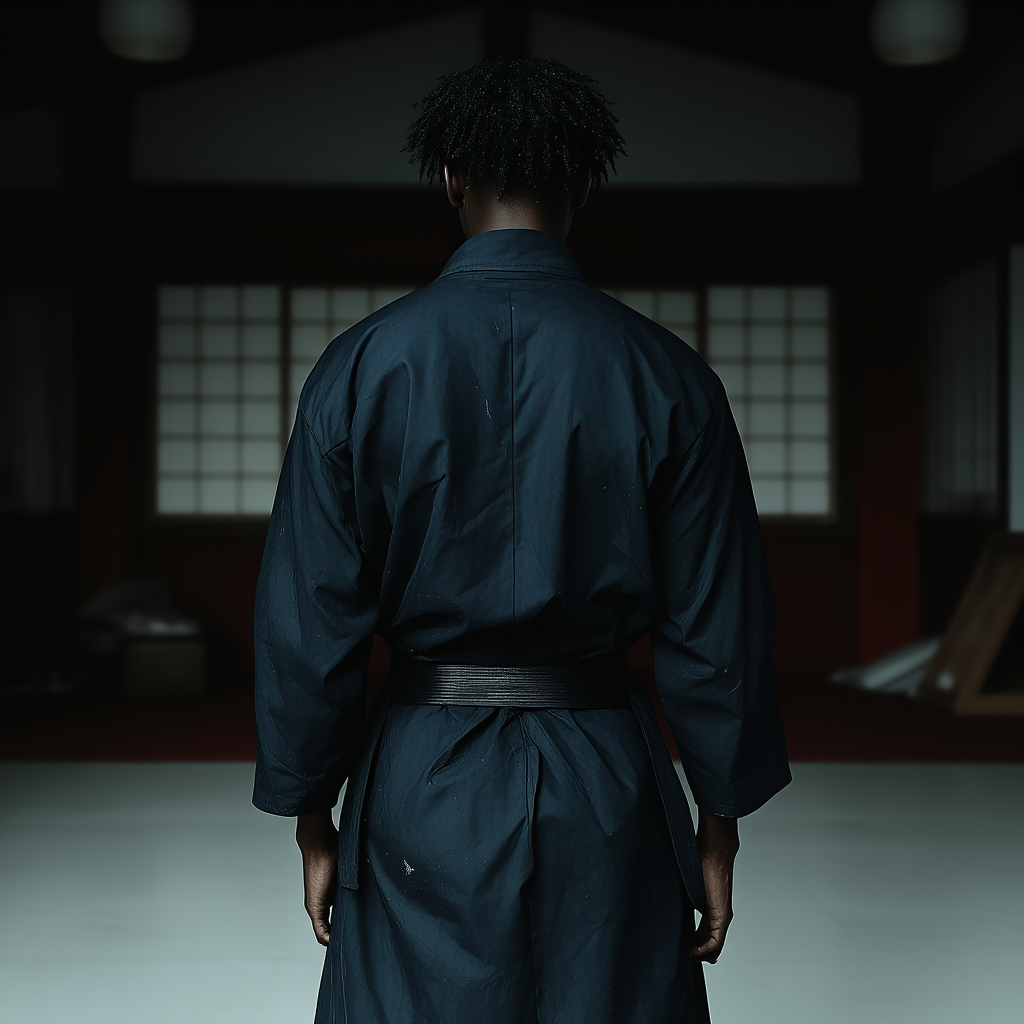
David Marshall, Jr. does not look like a dangerous man. His slight stature, nerdy black glasses, and big disarming smile accompany an open manner that does not hesitate to shake the hand of a stranger. He says the best way to handle an altercation that could turn physical is to run as fast as possible in the other direction. But in a life and death situation against an aggressor bent on harm, my bets are on David. He is a real modern-day ninja, a Judan (10th degree black belt) in the martial art of Bujinkan Budo Taijutsu, a Shihan (master instructor.) David does not talk about his rank, abilities, or the specifics of his martial art to just anyone. His skills are like a carefully guarded secret that he shares only with his students.
Often the only black man in a dojo of white students, he is quick to welcome and encourage diversity. Women do not seem drawn as often to his art, but he is thrilled when they give it a try. He wishes I would take an interest but accepts that occasional spectator is as close as this pacifist plans to come to his passion. As his wife, I support his efforts and admire his way of life. As a writer, I am intrigued. What makes a person want to spend every extra dime on swords? What makes him want to work out and teach multiple nights per week in sweaty dojos? Why does he want to travel every possible vacation to Japan to train with the masters instead of going to Hawaii or on a cruise with me? What fuels his obsession with being a ninja? Why not start a new sport or do something different for variety?
The Senseis
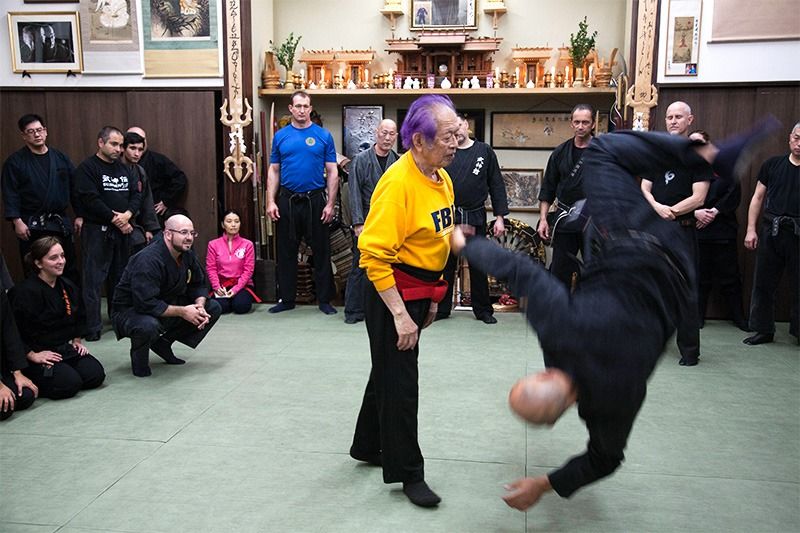
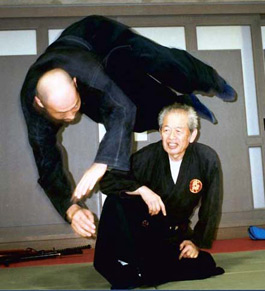
Hatsumi Sensei’s whisps of purple hair are striking for an 89-year-old man. His movements are minimal, slow, and look simple compared to the devastating affects they have on the assigned attacker. It is harder for him to get down on his knees than it once was, but he was still teaching three times per week prior to the COVID outbreak. His home dojo is in Noda, Japan, called the hombu and is the world headquarters for the Bujinkan, the name for the international martial arts organization he leads. He is Soke, the headmaster of the nine schools of martial arts he teaches (three ninja, 6 samurai.) He is a writer, an artist, a teacher, and a legend. In his early years he worked as a bonesetter.
People, including my husband David, come from all over the world to learn from him and continue the tradition that has been passed down for generations. The first time David took a class with Soke, he walked in wearing an ancient fur vest over a t-shirt. He had on socks and one foot had been wrapped with a bandage that was coming loose. David says that the entire class the bandaged sock dangled and flapped, Hatsumi Sensei doing magic without a care, as unpretentious as could be.
A writer in Black Belt magazine once described him as “wild, funny, unpredictable…a cross between Charlie Chaplin and Obi-Wan Kenobi” (Black Belt). David remembers one demonstration where Hatsumi Sensei caused a man to flip simply with a twist of a pinky. Another memory is of Hatsumi Sensei sparring with a student and both disarming him of his practice sword, then hitting him with it. The movement was so sudden, so shocking, that multiple people, including David, reported feeling the sensation of physical pain across their own stomachs, and the action resulted in both silence and stillness in the rest of the dojo.
Japan
2010 was a rough year. David lost his cousin Officer Read of the Cedar Park Police Department in a motorcycle accident on the job. Then his first serious girlfriend broke up with him. He was devasted and knew that fulfilling his dream of going to Japan was the only thing that might help him to stay afloat. His closest aunt Rosalyn was one of his strongest supporters and encouraged him to take the first step, get his passport. Through his tears, he admitted that he had no extra money right then for a passport, so she drove to his place and brought him $135.
Inspired by her push, he sent everything off the very next day and things started looking up. He got a new job, got a car, and started saving for his trip. It took about 6 months, but he finally had enough saved to buy a plane ticket and made plans to go with a fellow martial artist named Joe P. Joe had been to Japan before and knew the complicated steps involved in the process. He already had a relationship with the various teachers and was familiar with the customs and traditions. Japan is a place where slight missteps can be considered extremely offensive. Tickets were bought, itineraries planned, and lodgings negotiated. It was really happening.
Cut to March 2011 and the earthquake off the coast of Tohoku that caused a tsunami killing nearly 20,000 people. David’s trip was planned for May and was now up in the air. Was it wise to go, especially since the Fukushima Nuclear Power Plant also melted down? Joe P. cancelled. If David still wanted to brave the mayhem, he would be on his own. Once again, Aunt Rosalyn to the rescue. She weighed in and encouraged David to let nothing stand in the way of his dreams – not natural disasters, not man-made disasters, and certainly not fear. He did not have a guide, did not speak Japanese, and would have to rely on the kindness of strangers for explanations and directions. This was pre-iphones, pre-Siri, pre-GPS at your fingertips. He would have to look at paper maps and write things down the old-fashioned way.
The Shihan
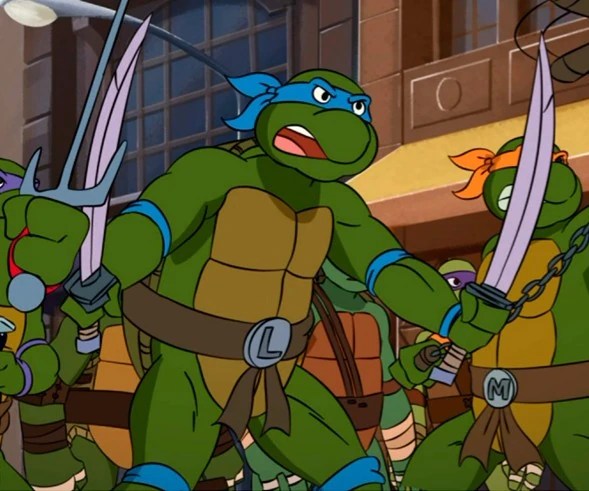
David fell in love with all things ninja related when he was a young child. He watched every martial arts movie or show on television he could involving kung fu, karate, ninjas, or samurais including Chinese Connection, No Reatreat, No Surrender, Revenge of the Ninja, Karate Kid, and Enter the Ninja, basically anything with Bruce Lee, Jean-Claude van Damme, Steven Seagal, or Chuck Norris. His dad did Taekwondo and Goju-Ryu Karate, but David’s mother felt he was too young. When he was around 8 years old, he discovered Teenage Mutant Ninja Turtles and his world was rocked. His true love was Leonardo because he was the most serious of the four turtles. Leonardo cared about the artform, especially the ninjutsu, and was the most authentic warrior. It took several years of begging, but when David was around 11 years old, his mother finally agreed to let him begin his training.
For 8 blissful months, David studied Shito-Ryu Karate at a dojo close to his home in Austin, TX under the direction of Dan Coslett and his son David Coslett. David remembers learning simple striking and kicking in the basic Okinawan style that gave him a strong foundation for practicing the balance and coordination that would be crucial to a lifetime of martial arts. He was only able to earn up to the level of yellow belt before his family moved to Pflugerville, TX and he had to quit for practical adult reasons.
He continued practicing on his own, not one to let his passions disappear. Though he was unable to afford classes, he never stopped dreaming of being a ninja. Even after outgrowing turtle mania, he read books and watched movies about ninjas. As a teenager, he would hang out in the martial arts section of the books stores while his mom shopped in the mall. He came across a book by Stephen K. Hayes called The Ninja and Their Secret Fighting Art and fell in love. It tells the story of a man who travels to Japan in search of a ninja master who could teach him real ninjutsu. On his quest, he finds Hatsumi Sensei and becomes one of the first Americans to intensely study the arts taught by the Soke.
David proceeded to read everything by Hayes he could get his hands on. When he was a freshman in high school, he flipped through the yellow pages and found a Bujinkan in Austin. Bujinkan means divine warrior training hall. It was a dojo shared by many different martial arts groups like a co-op. The group he was excited to discover was run by a man named Mike Fizeseri, who David immediately called. Mike crushed David’s excitement by explaining that he only teaches adults. His students are usually young men in their 20’s. The nature of the artform is much too dangerous for children and involves weapons training. He would have to wait at least 3 years to begin his ninja training.
The Senseis
Someya Sensei is one of David’s favorite masters to take classes from in Japan. He is a long-time student of Soke and is pure technique. He teaches the moves as they are supposed to be. He is all about precision and is certain students are grounded in fundamentals before moving on to other skills. David says he always adds to his body of knowledge when he takes classes with Someya Sensei. He insists on his students writing things down and provides time during and after classes for note taking. He was also the first to end a class with hot green tea and snacks so students could ask questions and commune. David discovered a shared love of a common samurai movie with the master called Lone Wolf and Cub during one such opportunity to sit and chat.
Japan
The first time David got on a plane to Japan, he flew out of Houston, Texas on a Sunday morning. A close friend and roommate drove him from Austin to Houston on the preceding Saturday night, and his mother got him a hotel so he could rest and wait comfortably. This first trip was a big adventure and David had many people who helped him along the way. Thankfully, the 10-hour flight was uneventful, and David was even able to sleep a little.
When he stepped out of the airport in Tokyo, the air was slightly cooler than in Texas. His host had told him to buy a train ticket and then had him write down a list of which stops to switch trains at so he would end up in a little town called Noda. It is in the prefecture (similar to an American state or county) of Chiba on the central eastern part of the island of Japan. If Japan is shaped a little like a boomerang, the hombu is in the bend. Once off the train in Noda, David’s ride was a no show. He called the number to the house where he planned to stay, and some other travelers came to retrieve him.
The room he rented ended up being a little like a hostel because the man overbooked. There were four beds total and they were already taken by two Norwegians, a Swede and an Israeli come to study just like David. Last to arrive, David had to make a pallet out of cushions on the floor for two days with the Swede and Israeli men. They all spoke multiple languages including English, so David was able to hear interesting tales from all over the world. When the Swede and Israeli guys left, David had the room to himself the rest of his two-week trip.
The Shihan
David kept calling Mike Fizeseri every few months. He says he wanted to make sure the Bujinkan was still there and going strong so it would be ready for him when he was old enough. He also continued to ask to be allowed to begin his training prior to turning 18. The answer was always the same, but David was persistent. Finally, when David was 17, he wore Mike down. He offered David the opportunity to come and observe a class with a parent. His dad accompanied him. It was 22 years ago, but David still remembers exact details like the fact that they were practicing wrist locks. He absolutely loved it and told Mike so. Mike agreed to begin teaching him prior to David turning 18 if his dad would sign a parental permission form with the clear understanding that David was training in a dangerous art. David Sr. agreed and David Jr.’s mom tolerated it, especially since he was paying for it himself.
The Senseis
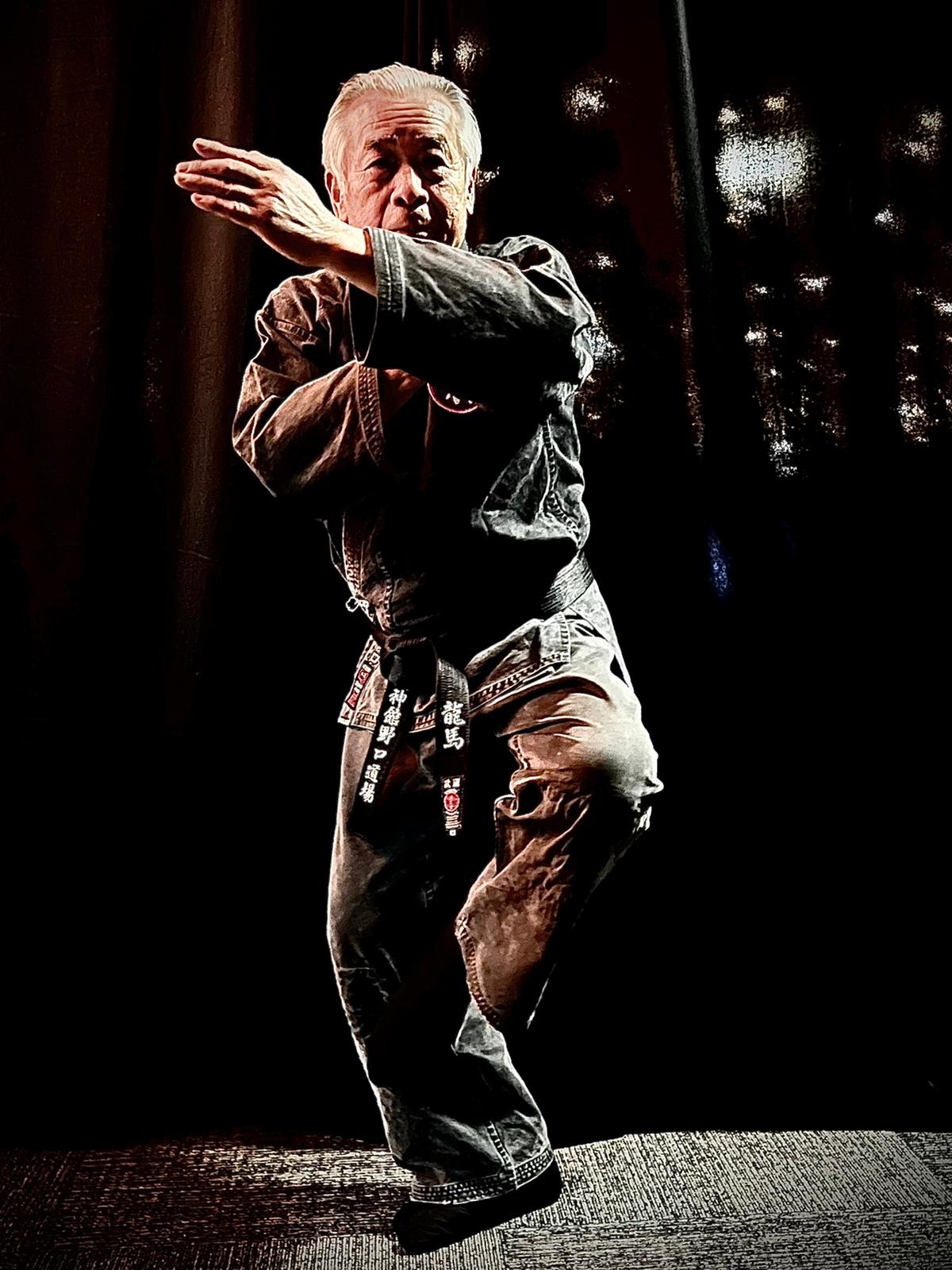
Noguchi Sensei has been training under Soke for over 48 years. He is skilled in the arts of Taijutsu, Kenjutsu, Kyojutsu, and Henka. David says he likes the fact that Noguchi Sensei shows amazing variations of every move. He will demonstrate a skill, then show thousands of variations. His versatility in the art is fascinating. He will find a student doing something he wants to tweak, demonstrate the change, laugh, then walk on to someone else. There is joy and mirth in what he does. He will invite a student to punch him, then laugh as the student fall to the ground trying. He looks at another student and laughs like they’re sharing an inside joke. He loves to place people in awkward positions that force them to fall, then giggle as they try to figure out what he did. It is a specialty of his (Budo Mentors).
Japan
When David arrived in Japan for the first time, he left Texas on a Sunday, but arrived 10 hours later on a Monday. It’s like a magic trick, but the jet lag is real. David’s very first class in Japan was with Someya Sensei on a Tuesday afternoon. He was unaware of the amount of rest needed to recover from jet lag, but his adrenaline kept him going. Then, later that evening he got to take a class with the Soke himself. It was an epic start and was about to become even more memorable.
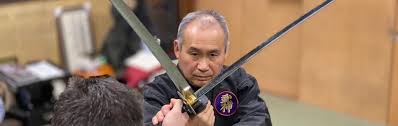
At the end of class Hatsumi Sensei asked who needed to take the Godan test. David and one other student raised their arms. David was faltering a bit, raising his hand only halfway, so a nearby peer helped him raise it higher, egging on the courage. David was called to the front of the room and told to kneel with his back to Noguchi Sensei. The test is for yondans (4th degree black belts) only, as it is the only way to become a godan (5th degree black belt.) The student sits on his heels and waits to be whacked on the head with a practice sword that will hurt, but not harm. The idea is that the student is supposed to move away from the sword in the nick of time by sensing that they are about to be hit. Their eyes are closed, and they are waiting for the sensei to decide to strike.
David was certain he would fail. He kept wanting to move, but also didn’t want to jump the gun, feeling a jittery jerking in his brain that he hoped was not showing in his body. Then he took a deep breath and accepted that he might fail. Suddenly, he felt like a weight was pressing down on his head and quickly rolled out of the way. When he looked back, Someya Sensei held the sword to the ground, having just completed his strike. David passed the test and was told later by another student that his timing was perfect, his roll coming at the exact second the sword would have struck his head. The point of the test is to demonstrate to the Soke that a student can sense the presence of danger and avoid it. This is considered a primary survival skill in the art and proves that the student is now able to teach others and open their own Bujinkan dojo because he or she is now protected by the Guiding Spirits called the Bujin. David did not plan to begin teaching then, but he now had the option if he wanted to.
The Shihan
When David decided to go to college in Waco, TX, it meant leaving his first real Bujinkan behind. It was a tough decision, but he tried to view it as simply a break in training that would resume once he had his degree. Little did he know, the dojo was underfunded, would lose the space they rented, and fold. He would never get the chance to train there again.
As he did in his childhood days, he continued practicing alone when he could. Classes and work kept him busy, but he also made time for one of his favorite hobbies, role playing Dungeons and Dragons. He and a group of other guys would meet at a local hobby game store called Game Closet where people came to buy miniatures for tabletop war games, comic books, role-playing books, and board games. At one point in their role-playing, some of the guys started horsing around acting like they were fighting for real and a fellow named Brent D. crouched into a position called a kamae. David recognized the position as one that is only taught in Taijutsu. Sure enough, Brent was a fellow student of the art. He was able to introduce David to a group of other students who would meet on Saturdays at the rec area across from his dorm. They would practice rolls, kamae, and strikes. When he left Austin for Waco, he was a green belt 9th kyu. By the time he finished college, he had been promoted to 1st dan (1st degree black belt.)
Works Cited
“Budo Mentors.” Dayton Bujinkan Dojo Martial Arts School, http://www.daytonbujinkan.com/history-budomentors
Eastman, Kevin & Peter Laird. Teenage Mutant Ninja Turtles. Murakami-Wolf-Swenson, 1987-1996.
Hayes, Stephen K. The Ninja and Their Secret Fighting Art. Charles E. Tuttle Publishing, 1981.
Oskin, Becky. “Japan Earthquake & Tsunami of 2011: Facts and Information” LiveScience.
13 Sep, 2017, www.livescience.com/39110-japan-2011-earthquake-tsunami-facts.html
“Top Ninja Honored In Japan”. Black Belt. August 2000, Vol. 38 no. 8, Active Interest Media,