TRIGGER WARNING: This essay analyzes Jewish American identity in mid-20th-century literature and includes discussion of antisemitism, cultural and gender stereotypes, prejudice, and historical references to World War II. These topics are discussed in a literary and analytical context.
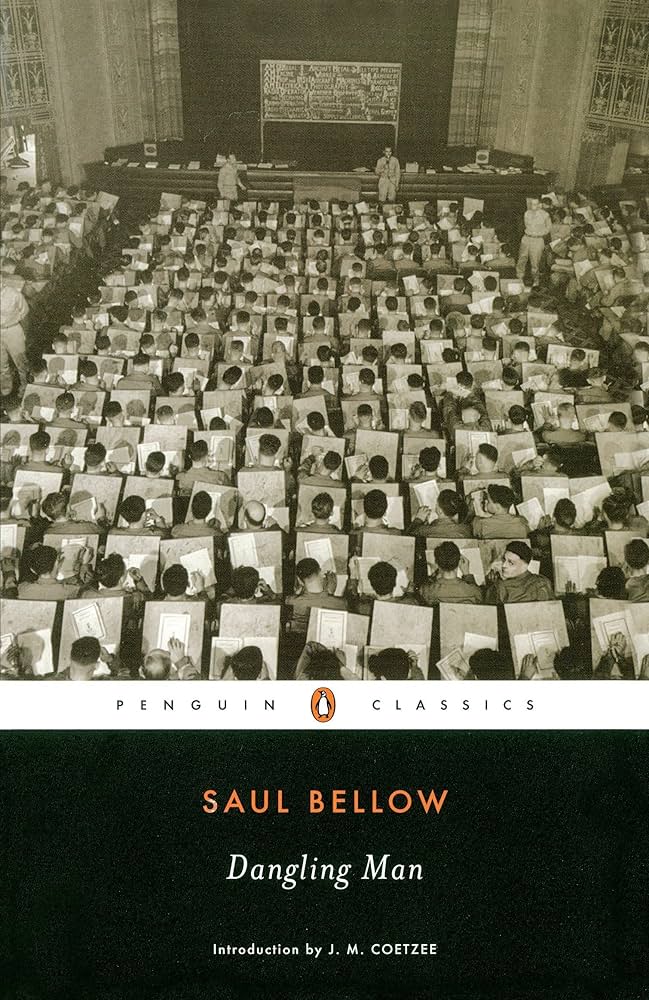
The main characters in Saul Bellow’s Dangling Man and Philip Roth’s Goodbye, Columbus react to Jewish stereotypes by challenging some and confirming others. The writers allow the characters to explore their Jewish identity within the context of the larger American culture of which they are a product.
Joseph in Dangling Man lives in early 1940’s Chicago. Antisemitism was prevalent in American culture. Jews were often characterized as greedy and dishonest. Vandalization of synagogues and Jewish cemeteries were a common occurrence. Literature spouting antisemitic rhetoric and symbols like swastikas were the norm (Freeman). Joseph does not mention any of this, but it is the reality in which he resides. He is not always honest with his wife and has an affair. His hot-headed temper gets him into trouble off and on. And his judgmental views of others reveal hypocrisy. In these ways, he upholds some stereotypes that others may have had concerning Jews. However, his pondering journal entries debate such concepts as materialism, honor, integrity, and truth, inner wrestling that defies the stereotypes of the time while he waits to be drafted to fight in WWII.
In one case he struggles with how to view the world and find his own place in it. “Joseph suffers a feeling of strangeness, of not quite belonging to the world…” (Bellow 17). He mentions the complicated nature of the world with both good and malevolence present to contend with and it bothers him when people try to simplify life to either good or bad. Yet, he has his own standards that he struggles to uphold. He endeavors to be honest with himself. He battles against his brother who wants to give him a handout. He is judgmental of his brother’s family and their materialism, viewing their desire for more than four rationed pairs of shoes per year as vanity. (Bellow 42). And he is disappointed that his wife Iva does not want to improve herself and her way of thinking to become a more enlightened person like him.
Neil in Goodbye, Columbus lives in late 1950’s Boston and is a secular Jew unsure of his position within his culture. He has definite opinions regarding what good Jews should do, like not get nose jobs to hide their Jewishness. He lived in a time “when antisemitism was at an all-time low” compared to the 1940s. However, non-Jews reported worrying about the materialism, excessive amounts of freedom, and lack of values that Jewish youth were perceived as possessing (Prell). Neil verifies that these stereotypes may have been founded concerning some of the more well-to-do Jewish families as he describes Brenda’s family’s wealth. He is amazed and seems critical of their “sporting goods trees”, housekeeper, giant home with guest bedrooms, multiple well-stocked refrigerators, and extra rooms full of outdated furniture (Roth).
This was also the time period when the Jewish American Princess began to be talked about. Brenda is the perfect example of this stereotype, the spoiled, bratty, argumentative Jewish girl who gets her way by manipulating her father. There is also a stereotype of the critical Jewish mother who is difficult to endure. Mrs. Patimkin certainly fits this description quite well. It is as though Neil is painting his experience with Brenda’s family as a lesson in all of the stereotypes Americans believed during the 1950s. Though he does not fit most of these, he is very aware of their presence and is looking in like a non-Jewish outsider observing this family as a case study.
By the end of the book, Neil returns to his world that is not connected to the Patimkins (Roth 135). Despite being the first day of Jewish New Year, he goes to work and resumes his life as the kind of Jew that does not fit into most of the stereotypes he has encountered during his previous summer romance. He may not have it all figured out, but his experience with Brenda’s family has at least provided him with an example of what he doesn’t want in his life.
Works Cited
Bellow, Saul. Dangling Man. Penguin Group, 1944.
Freeman, Lauren. “The US and the Holocaust Project Group: Antisemitism.” Dec 2003, updated H. Marcuse March 26, 2012, marcuse.faculty.history.ucsb.edu/classes/33d/projects/ usholo/LaurenAntisemPage.htm
Prell, Riv-Ellen. “Stereotypes in the United States.” Jewish Women’s Archive – Encyclopedia. jwa.org/encyclopedia/article/stereotypes-in-united-states
Roth, Philip. Goodbye, Columbus. Vintage International Edition, September, 1993.


 rebekahjmarshall