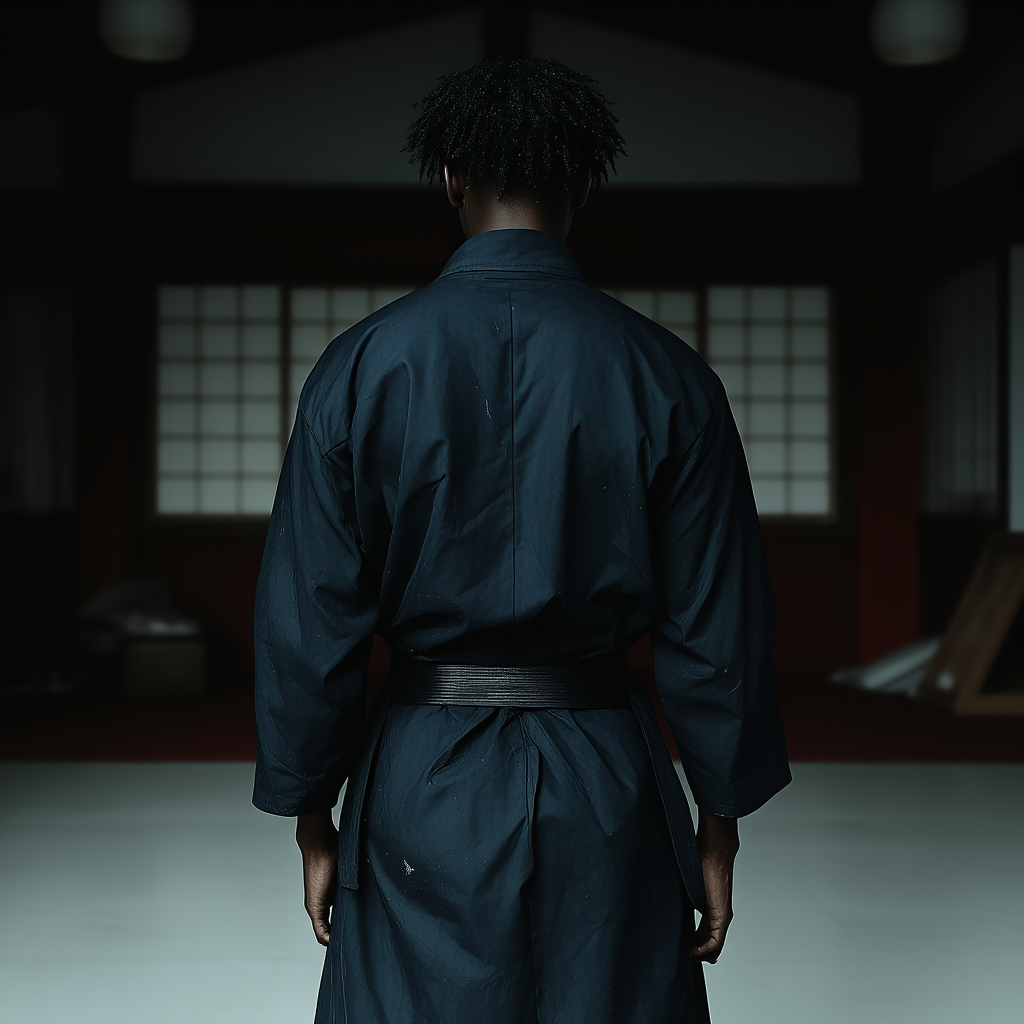
My Husband the Ninja

Image created by Rebekah Marshall’s prompt using AI on Gencraft.

The Shihan

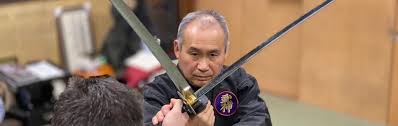
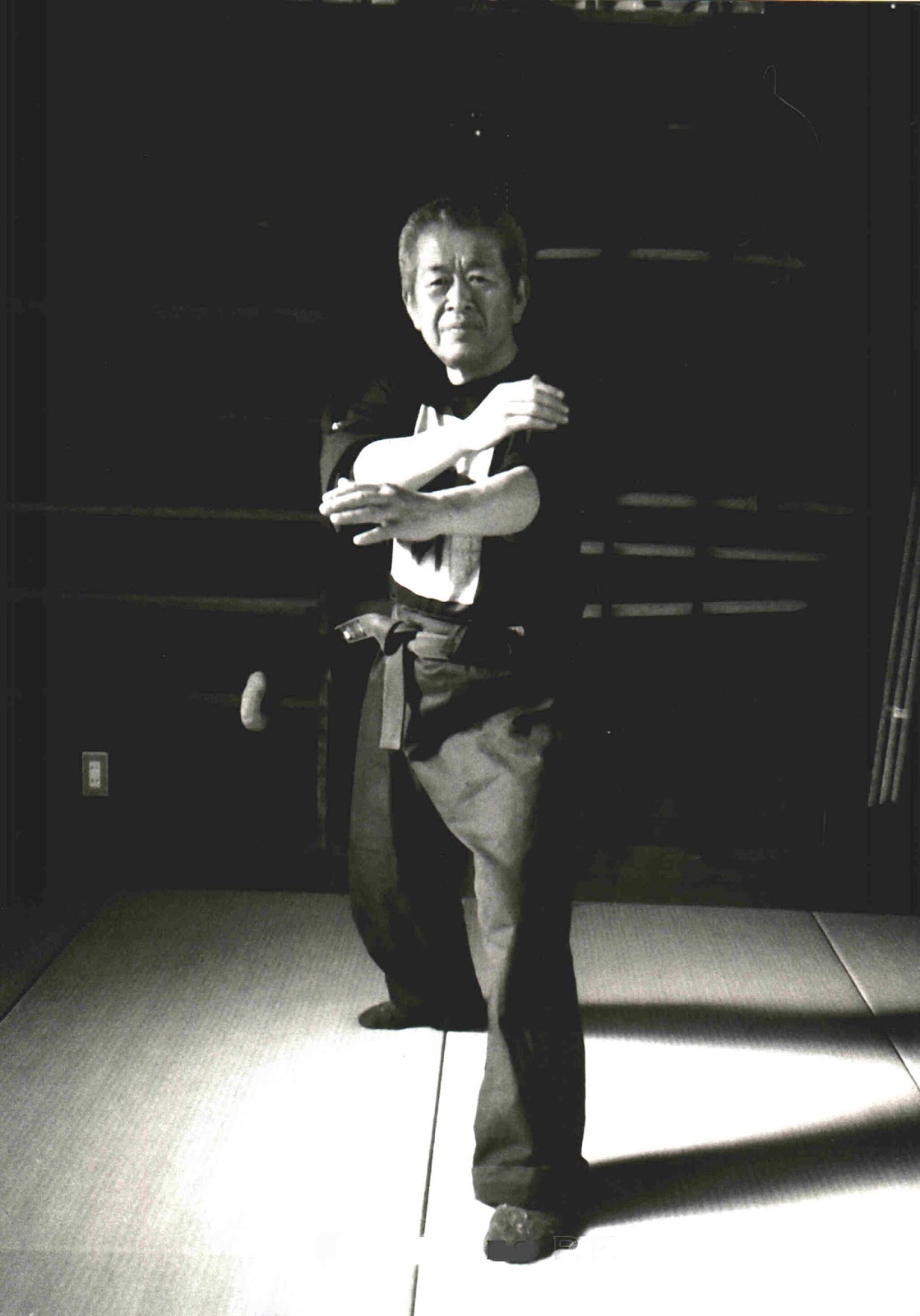
David Marshall, Jr. does not look like a dangerous man. His slight stature, nerdy black glasses, and big disarming smile accompany an open manner that does not hesitate to shake the hand of a stranger. He says the best way to handle an altercation that could turn physical is to run as fast as possible in the other direction. But in a life and death situation against an aggressor bent on harm, my bets are on David. He is a real modern-day ninja, a Judan (10th degree black belt) in the martial art of Bujinkan Budo Taijutsu, a Shihan (master instructor.) David does not talk about his rank, abilities, or the specifics of his martial art to just anyone. His skills are like a carefully guarded secret that he shares only with his students.

Often the only black man in a dojo of white students, he is quick to welcome and encourage diversity. Women do not seem drawn as often to his art, but he is thrilled when they give it a try. He wishes I would take an interest but accepts that occasional spectator is as close as this pacifist plans to come to his passion. As his wife, I support his efforts and admire his way of life. As a writer, I am intrigued. What makes a person want to spend every extra dime on swords? What makes him want to work out and teach multiple nights per week in sweaty dojos? Why does he want to travel every possible vacation to Japan to train with the masters instead of going to Hawaii or on a cruise with me? What fuels his obsession with being a ninja? Why not start a new sport or do something different for variety?

The Senseis

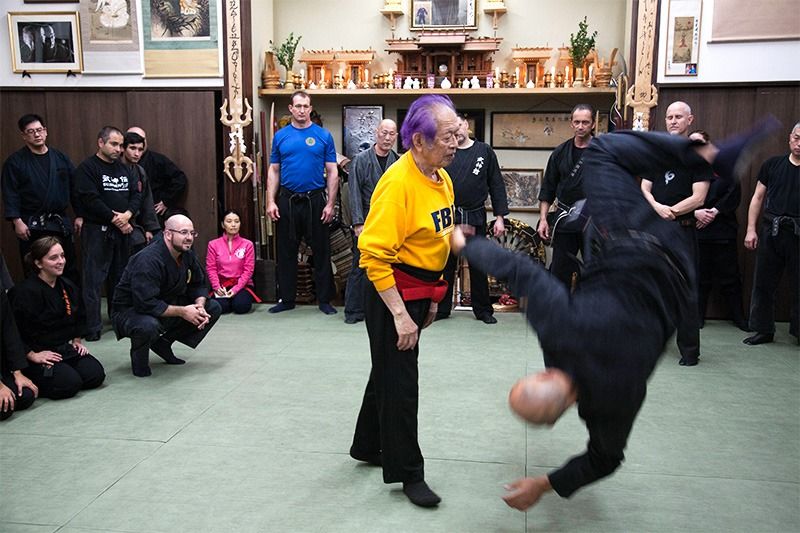
Hatsumi Sensei’s whisps of purple hair are striking for an 89-year-old man. His movements are minimal, slow, and look simple compared to the devastating affects they have on the assigned attacker. It is harder for him to get down on his knees than it once was, but he was still teaching three times per week prior to the COVID outbreak. His home dojo is in Noda, Japan, called the hombu and is the world headquarters for the Bujinkan, the name for the international martial arts organization he leads. He is Soke, the headmaster of the nine schools of martial arts he teaches (three ninja, 6 samurai.) He is a writer, an artist, a teacher, and a legend. In his early years he worked as a bonesetter.

People, including my husband David, come from all over the world to learn from him and continue the tradition that has been passed down for generations. The first time David took a class with Soke, he walked in wearing an ancient fur vest over a t-shirt. He had on socks and one foot had been wrapped with a bandage that was coming loose. David says that the entire class the bandaged sock dangled and flapped, Hatsumi Sensei doing magic without a care, as unpretentious as could be.

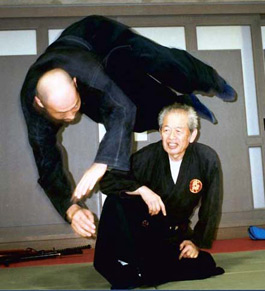
A writer in Black Belt magazine once described him as “wild, funny, unpredictable…a cross between Charlie Chaplin and Obi-Wan Kenobi” (Black Belt). David remembers one demonstration where Hatsumi Sensei caused a man to flip simply with a twist of a pinky. Another memory is of Hatsumi Sensei sparring with a student and both disarming him of his practice sword, then hitting him with it. The movement was so sudden, so shocking, that multiple people, including David, reported feeling the sensation of physical pain across their own stomachs, and the action resulted in both silence and stillness in the rest of the dojo.

Japan

2010 was a rough year. David lost his cousin Officer Read of the Cedar Park Police Department in a motorcycle accident on the job. Then his first serious girlfriend broke up with him. He was devasted and knew that fulfilling his dream of going to Japan was the only thing that might help him to stay afloat. His closest aunt Rosalyn was one of his strongest supporters and encouraged him to take the first step, get his passport. Through his tears, he admitted that he had no extra money right then for a passport, so she drove to his place and brought him $135.

Inspired by her push, he sent everything off the very next day and things started looking up. He got a new job, got a car, and started saving for his trip. It took about 6 months, but he finally had enough saved to buy a plane ticket and made plans to go with a fellow martial artist named Joe P. Joe had been to Japan before and knew the complicated steps involved in the process. He already had a relationship with the various teachers and was familiar with the customs and traditions. Japan is a place where slight missteps can be considered extremely offensive. Tickets were bought, itineraries planned, and lodgings negotiated. It was really happening.

Cut to March 2011 and the earthquake off the coast of Tohoku that caused a tsunami killing nearly 20,000 people. David’s trip was planned for May and was now up in the air. Was it wise to go, especially since the Fukushima Nuclear Power Plant also melted down? Joe P. cancelled. If David still wanted to brave the mayhem, he would be on his own. Once again, Aunt Rosalyn to the rescue. She weighed in and encouraged David to let nothing stand in the way of his dreams – not natural disasters, not man-made disasters, and certainly not fear. He did not have a guide, did not speak Japanese, and would have to rely on the kindness of strangers for explanations and directions. This was pre-iphones, pre-Siri, pre-GPS at your fingertips. He would have to look at paper maps and write things down the old-fashioned way.

The Shihan

David fell in love with all things ninja related when he was a young child. He watched every martial arts movie or show on television he could involving kung fu, karate, ninjas, or samurais including Chinese Connection, No Reatreat, No Surrender, Revenge of the Ninja, Karate Kid, and Enter the Ninja, basically anything with Bruce Lee, Jean-Claude van Damme, Steven Seagal, or Chuck Norris. His dad did Taekwondo and Goju-Ryu Karate, but David’s mother felt he was too young. When he was around 8 years old, he discovered Teenage Mutant Ninja Turtles and his world was rocked. His true love was Leonardo because he was the most serious of the four turtles. Leonardo cared about the artform, especially the ninjutsu, and was the most authentic warrior. It took several years of begging, but when David was around 11 years old, his mother finally agreed to let him begin his training.

For 8 blissful months, David studied Shito-Ryu Karate at a dojo close to his home in Austin, TX under the direction of Dan Coslett and his son David Coslett. David remembers learning simple striking and kicking in the basic Okinawan style that gave him a strong foundation for practicing the balance and coordination that would be crucial to a lifetime of martial arts. He was only able to earn up to the level of yellow belt before his family moved to Pflugerville, TX and he had to quit for practical adult reasons.

He continued practicing on his own, not one to let his passions disappear. Though he was unable to afford classes, he never stopped dreaming of being a ninja. Even after outgrowing turtle mania, he read books and watched movies about ninjas. As a teenager, he would hang out in the martial arts section of the books stores while his mom shopped in the mall. He came across a book by Stephen K. Hayes called The Ninja and Their Secret Fighting Art and fell in love. It tells the story of a man who travels to Japan in search of a ninja master who could teach him real ninjutsu. On his quest, he finds Hatsumi Sensei and becomes one of the first Americans to intensely study the arts taught by the Soke.

David proceeded to read everything by Hayes he could get his hands on. When he was a freshman in high school, he flipped through the yellow pages and found a Bujinkan in Austin. Bujinkan means divine warrior training hall. It was a dojo shared by many different martial arts groups like a co-op. The group he was excited to discover was run by a man named Mike Fizeseri, who David immediately called. Mike crushed David’s excitement by explaining that he only teaches adults. His students are usually young men in their 20’s. The nature of the artform is much too dangerous for children and involves weapons training. He would have to wait at least 3 years to begin his ninja training.

The Senseis

Someya Sensei is one of David’s favorite masters to take classes from in Japan. He is a long-time student of Soke and is pure technique. He teaches the moves as they are supposed to be. He is all about precision and is certain students are grounded in fundamentals before moving on to other skills. David says he always adds to his body of knowledge when he takes classes with Someya Sensei. He insists on his students writing things down and provides time during and after classes for note taking. He was also the first to end a class with hot green tea and snacks so students could ask questions and commune. David discovered a shared love of a common samurai movie with the master called Lone Wolf and Cub during one such opportunity to sit and chat.            

Japan

The first time David got on a plane to Japan, he flew out of Houston, Texas on a Sunday morning. A close friend and roommate drove him from Austin to Houston on the preceding Saturday night, and his mother got him a hotel so he could rest and wait comfortably. This first trip was a big adventure and David had many people who helped him along the way. Thankfully, the 10-hour flight was uneventful, and David was even able to sleep a little.

When he stepped out of the airport in Tokyo, the air was slightly cooler than in Texas. His host had told him to buy a train ticket and then had him write down a list of which stops to switch trains at so he would end up in a little town called Noda. It is in the prefecture (similar to an American state or county) of Chiba on the central eastern part of the island of Japan. If Japan is shaped a little like a boomerang, the hombu is in the bend. Once off the train in Noda, David’s ride was a no show. He called the number to the house where he planned to stay, and some other travelers came to retrieve him.

The room he rented ended up being a little like a hostel because the man overbooked. There were four beds total and they were already taken by two Norwegians, a Swede and an Israeli come to study just like David. Last to arrive, David had to make a pallet out of cushions on the floor for two days with the Swede and Israeli men. They all spoke multiple languages including English, so David was able to hear interesting tales from all over the world. When the Swede and Israeli guys left, David had the room to himself the rest of his two-week trip.

The Shihan

David kept calling Mike Fizeseri every few months. He says he wanted to make sure the Bujinkan was still there and going strong so it would be ready for him when he was old enough. He also continued to ask to be allowed to begin his training prior to turning 18. The answer was always the same, but David was persistent. Finally, when David was 17, he wore Mike down. He offered David the opportunity to come and observe a class with a parent. His dad accompanied him. It was 22 years ago, but David still remembers exact details like the fact that they were practicing wrist locks. He absolutely loved it and told Mike so. Mike agreed to begin teaching him prior to David turning 18 if his dad would sign a parental permission form with the clear understanding that David was training in a dangerous art. David Sr. agreed and David Jr.’s mom tolerated it, especially since he was paying for it himself.

The Senseis

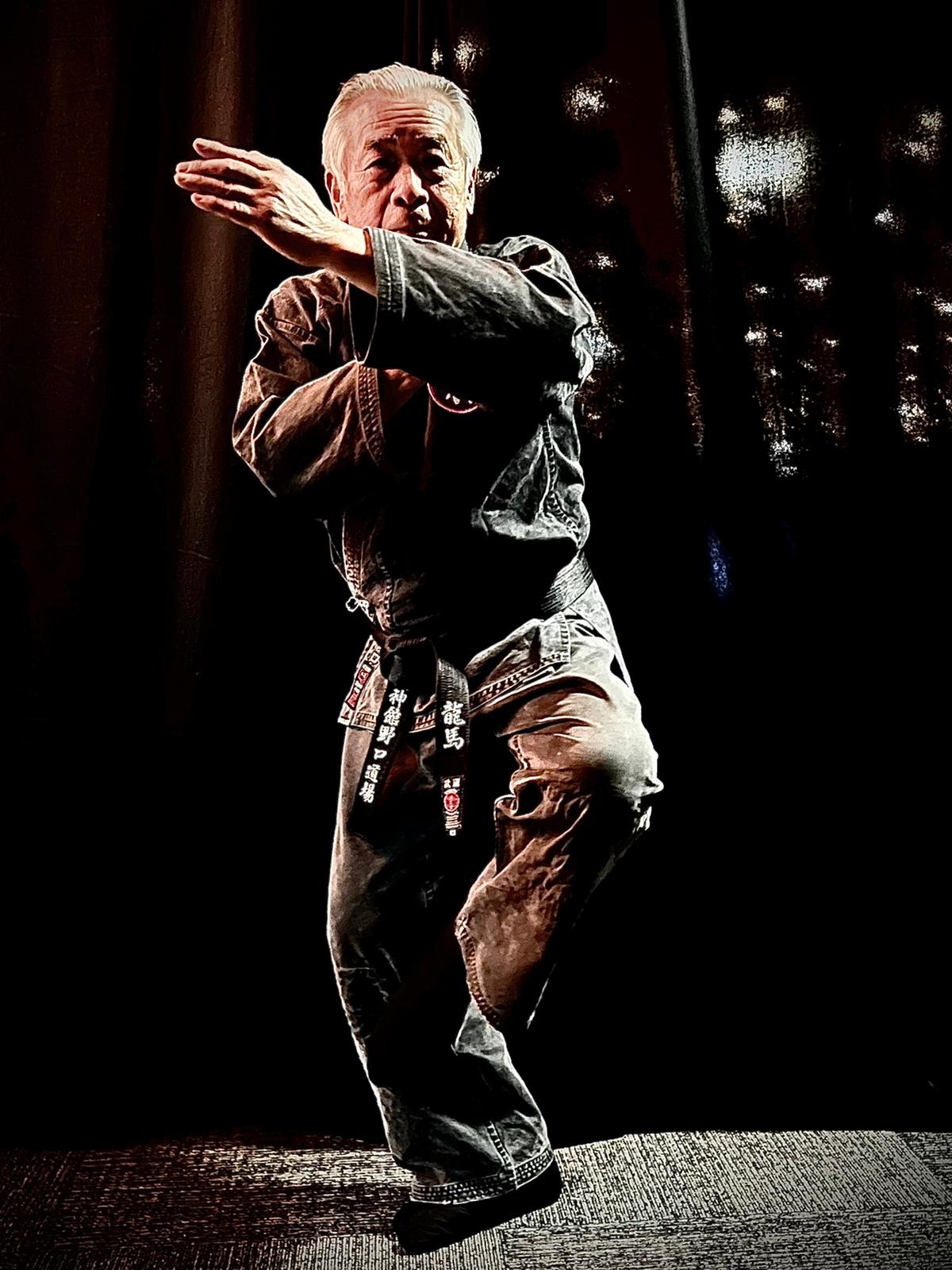
Noguchi Sensei has been training under Soke for over 48 years. He is skilled in the arts of Taijutsu, Kenjutsu, Kyojutsu, and Henka. David says he likes the fact that Noguchi Sensei shows amazing variations of every move. He will demonstrate a skill, then show thousands of variations. His versatility in the art is fascinating. He will find a student doing something he wants to tweak, demonstrate the change, laugh, then walk on to someone else. There is joy and mirth in what he does. He will invite a student to punch him, then laugh as the student fall to the ground trying. He looks at another student and laughs like they’re sharing an inside joke. He loves to place people in awkward positions that force them to fall, then giggle as they try to figure out what he did. It is a specialty of his (Budo Mentors).

Japan

When David arrived in Japan for the first time, he left Texas on a Sunday, but arrived 10 hours later on a Monday. It’s like a magic trick, but the jet lag is real. David’s very first class in Japan was with Someya Sensei on a Tuesday afternoon. He was unaware of the amount of rest needed to recover from jet lag, but his adrenaline kept him going. Then, later that evening he got to take a class with the Soke himself. It was an epic start and was about to become even more memorable.

At the end of class Hatsumi Sensei asked who needed to take the Godan test. David and one other student raised their arms. David was faltering a bit, raising his hand only halfway, so a nearby peer helped him raise it higher, egging on the courage. David was called to the front of the room and told to kneel with his back to Noguchi Sensei. The test is for yondans (4th degree black belts) only, as it is the only way to become a godan (5th degree black belt.) The student sits on his heels and waits to be whacked on the head with a practice sword that will hurt, but not harm. The idea is that the student is supposed to move away from the sword in the nick of time by sensing that they are about to be hit. Their eyes are closed, and they are waiting for the sensei to decide to strike.

David was certain he would fail. He kept wanting to move, but also didn’t want to jump the gun, feeling a jittery jerking in his brain that he hoped was not showing in his body. Then he took a deep breath and accepted that he might fail. Suddenly, he felt like a weight was pressing down on his head and quickly rolled out of the way. When he looked back, Someya Sensei held the sword to the ground, having just completed his strike. David passed the test and was told later by another student that his timing was perfect, his roll coming at the exact second the sword would have struck his head. The point of the test is to demonstrate to the Soke that a student can sense the presence of danger and avoid it. This is considered a primary survival skill in the art and proves that the student is now able to teach others and open their own Bujinkan dojo because he or she is now protected by the Guiding Spirits called the Bujin. David did not plan to begin teaching then, but he now had the option if he wanted to.

The Shihan

When David decided to go to college in Waco, TX, it meant leaving his first real Bujinkan behind. It was a tough decision, but he tried to view it as simply a break in training that would resume once he had his degree. Little did he know, the dojo was underfunded, would lose the space they rented, and fold. He would never get the chance to train there again.

As he did in his childhood days, he continued practicing alone when he could. Classes and work kept him busy, but he also made time for one of his favorite hobbies, role playing Dungeons and Dragons. He and a group of other guys would meet at a local hobby game store called Game Closet where people came to buy miniatures for tabletop war games, comic books, role-playing books, and board games. At one point in their role-playing, some of the guys started horsing around acting like they were fighting for real and a fellow named Brent D. crouched into a position called a kamae. David recognized the position as one that is only taught in Taijutsu. Sure enough, Brent was a fellow student of the art. He was able to introduce David to a group of other students who would meet on Saturdays at the rec area across from his dorm. They would practice rolls, kamae, and strikes. When he left Austin for Waco, he was a green belt 9th kyu. By the time he finished college, he had been promoted to 1st dan (1st degree black belt.)

Works Cited

“Budo Mentors.” Dayton Bujinkan Dojo Martial Arts School, http://www.daytonbujinkan.com/history-budomentors

Eastman, Kevin & Peter Laird. Teenage Mutant Ninja Turtles. Murakami-Wolf-Swenson, 1987-1996.

Hayes, Stephen K. The Ninja and Their Secret Fighting Art. Charles E. Tuttle Publishing, 1981.

Oskin, Becky. “Japan Earthquake & Tsunami of 2011: Facts and Information” LiveScience.

13 Sep, 2017, www.livescience.com/39110-japan-2011-earthquake-tsunami-facts.html

“Top Ninja Honored In Japan”Black Belt. August 2000, Vol. 38 no. 8, Active Interest Media,

A Court of Wings and Ruin (ACOTAR Book Review 3)

All images created by Rebekah Marshall’s prompts using AI on Gencraft.com website.

WARNING – SPOILERS

A Court of Wings & Ruin, the 3rd book in the ACOTAR series, held its own in the cannon. It was not my favorite of the books but was a necessary middle step to Feyre righting her life and fully coming into her own. She must make more heartbreaking decisions to save herself, save those she loves, and end things once and for all with her past relationships that keep weighing her down.

I like that the book is messy, things don’t go as planned quite often, pivots must be made, and even immortal beings must repeatedly circle back to try to fix things over and over again. It feels very human, very relatable to not have everything be an easy win as these magnificent beings battle their way to try to save the world. There are gigantic beasts, ulterior motives, dark ancient magic, impossible choices, and unlikely alliances.

Elaine (Feyer’s sister) begins to come into her own as she wrestles with her powerful gifts in this book. And her lack of interest in the being to whom fate has declared her a mate is a fascinating twist. Nesta must figure out how to live in this world she hates, and grapple with why she is strangely drawn to Cassian. I love that her character is super cantankerous. She is not very likeable, and that makes her interesting. She doesn’t seem to care about being liked. Feyre and her mate keep our hearts pounding with their love. And Mor’s secrets about her love life are a perfectly revealing piece of the puzzle.

I must say that the deaths in this book had me sobbing. I will say no more about that, so I don’t ruin anything too grievous for anyone. I will simply say that the toll of war is well-depicted and heartbreakingly devastating.

Maas, Sarah J. A Court of Wings and Ruin. Bloomsbury Publishing, 2017.

Your Subconscious Brain Can Change Your Life (Book Review)   

All images created by Rebekah Marshall’s prompts using AI on Gencraft.com website.

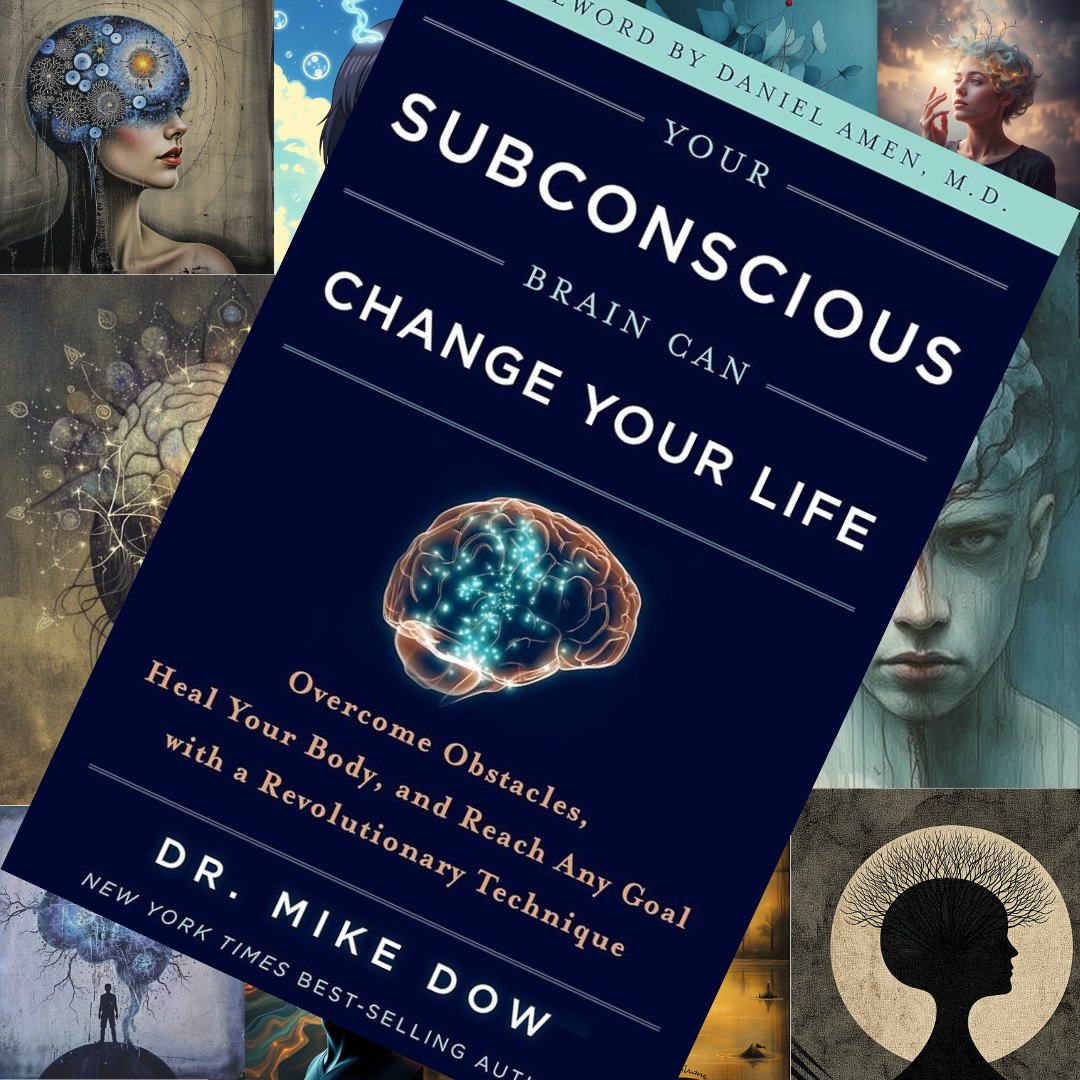
I struggled to finish Your Subconscious Brain Can Change Your Life by Dr. Mike Dow. Though the information is fabulous, and the techniques seem like valuable hypnotherapeutic practices, it felt like a medical textbook. That said, in the back of the book is a link to recorded resources for retraining the subconscious by listening to scripts. I have only just begun listening to them, but think I might have stumbled across some really helpful tools this way. Perhaps I should have listened to this book as an audio book, rather than reading it.

The practice is called Subconscious Visualization Technique and is recommended to be paired with other more traditional methods like medication, Cognitive Behavioral Therapy, etc. The author shows in study after study that SVT, when paired with other strategies, boosts recovery, decreases pain, and increases positive desired effects beyond traditional strategies only. And in some cases, SVT alone outpaces the traditional treatments.

The mind can be a very powerful ally if we learn to partner with it, train it, and set it to work on the systems that run these complex machines we live in. Though I cannot recommend the book as an enjoyable read, it is certainly an excellent resource and provides access to hypnotherapeutic recordings via links in the back that could prove invaluable. I have only listened to one so far, so the jury is still out, but I plan to continue listening to them and seeing how they help with reducing pain and inflammation, and increasing joy and contentment in my life.

Dow, Dr, Mike, Your Subconscious Brain Can Change Your Life, Hay House, Inc., 2019.

WHAT TO SAY WHEN YOU TALK TO YOUR SELF (Book Review)

All images created by Rebekah Marshall’s prompts using AI on Gencraft.com website.

I highly recommend What to Say When You Talk to Your Self by Shad Helmstetter, PhD. As a practitioner of positive self-talk for years, I was thrilled to find a book that helped to explain some of the basic reasoning behind the practice, as well as a framework with clear instructions for the most productive forms of self-talk.

The concept is outlined as such:
Programming creates beliefs.
Beliefs create attitudes.
Attitudes create feelings.
Feelings determine actions.
Actions create results.

The general idea is that we are programmed by others from the second we are born without any choice in the matter. Much of the results we are experiencing in the present are due to that programming that may or may not suit our true selves. We may not even realize that some of our deeply held beliefs, attitudes, and feelings are because of programming that might not even be accurate. We have acted on these beliefs, attitudes, and feelings building our lives, sometimes with faulty programming.

This book is about rewriting our own code through more carefully structured instructions to our subconscious that will in turn make our lives easier as we work toward outcomes that are more in line with our current ideals. I think I just really love the idea that there is something we can do to dig in deep and rewrite the underlying messages.

My first script that I began today is as follows:
I practice positive self-talk every day and make it a permanent part of my life by monitoring my thoughts and speech, editing all negative messaging, and listening to self-talk sessions a minimum of 15 minutes each day.

I’m going to experiment on myself for 90 days and see if any improvements occur in my life. I’ll do a follow-up post with anything I notice after 90 days.

Helmstetter, PhD, Shad, What to Say When You Talk to Your Self, Simon & Schuster, Inc., 1986.

A Court of Mist and Fury (ACOTAR Book 2 Review)

Starfall on the balcony – Feyre & Rhysand. All images created by Rebekah Marshall’s prompts using AI on Gencraft.com website.

WARNING – SPOILERS

A Court of Mist & Fury, the 2nd book in the ACOTAR series, far surpasses the first book in emotional depth, relationship dynamics, and character development. I was sucked in from page 1 and devoured the 600+ tome.

After the crippling life and death decisions Feyre was forced to make at the end of Book 1, she must grapple with the fall-out of those choices. Not only is she tormented by inner turmoil and grief, but her relationship with Tamlin is troubled. His controlling behaviors and unwillingness to see Feyre as an equal, spell the crumbling of their bond.

When she returns to the Winter Court to recover and rediscover her autonomy, the awakenings of power, self, and abilities are a welcome adventure. Rhysand is equal parts challenge, equal parts friend, and most of all, gives her the space she needs to find herself again. The budding friendships, fierce battles, growing romance, and discovery of abilities make for a fabulously rich world Sarah J. Maas creates in this 2nd book.

The most pleasant surprise for me (stop reading right here if you don’t want a spoiler) is Feyre’s sisters coming back into her life. I hoped there could be more to their story, potential growth or reconciliation, anything. That is still to be seen, but at least the opportunity for healing exists. The most shocking surprise for me are the betrayals at the end. I can’t bear the thought of Feyre existing in the world she has chosen, once again, out of self-sacrifice. But I must read on.

Maas, Sarah J. A Court of Mist and Fury. Bloomsbury Publishing, 2016.

Ferris Wheel Romance

All images created by Rebekah Marshall’s prompts using AI on Gencraft.com website.

holding hands in starlit silence
the slow-burn spark
of Ferris wheel romance

dizzy laughter tilt-a-whirl
electric heartbeats between
wonderstruck stolen glances

cotton candy carousels
and moon-drunk wishes
made on neon-glow stars

ring-tossed miracles spun
from sugar and candied apples
funhouse mirrors shaping reality

fairground glitter & funnel cake
calliope music & midway games
create heart-shaped memories

suspended between now & forever
hush of hope met by popcorn kisses
magic-dusted beginnings

merry-go-round of spinning lights
show silhouettes of happiness
between breaths & possibility

The Gulf of Mexico

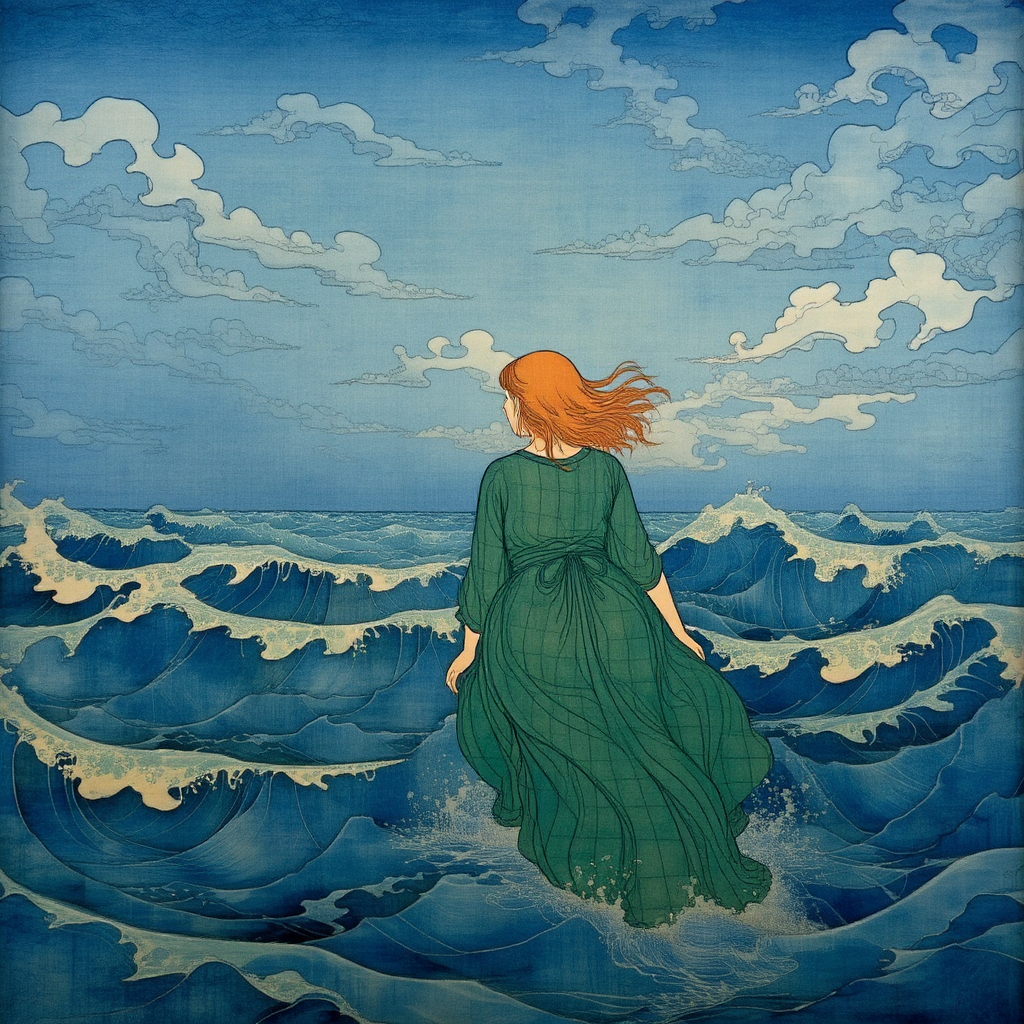
AI Generated images prompted on Gencraft.com by Rebekah Marshall.

My first time in the ocean today, I got knocked down. I was trying to get to waist deep but did not have the strength to stand against her playful nudges. She seemed surprised and almost irritated that her friendly gesture toppled me and sent several really hard slaps to push me further toward shore.

Maybe she was trying to help, trying to get me back to safety, saying, “This one’s too delicate to be out here. She won’t last a minute.”

What she didn’t know is that I’m too weak to stand up once knocked down in her waves. I must get deeper to be more buoyant to be able to stand, especially with no balance and ever-increasing frequency of waves. Trying to crawl further out to sea became impossible. She made it impossible.

“You don’t understand, tiny human. I am dangerous. Go back to your dry land!”

We were not communicating in the same languages. Mine became unstoppable laughter, hers, ever-strengthening waves bent on pushing me to shore.

Somewhere about here my husband grew concerned. He wasn’t sure if I was communing with nature or in trouble and came closer from his comfortable beach chair to see.

“Thumbs up?” he questioned.

I shook my head no and waved for him to come rescue me. I couldn’t stop laughing as he began the slow trek my way, the gulf all the more insistent I exit the way I came.

I could stand or steady myself. I could not do both. So, with his presence, I stood, then grabbed his hand to help with balance, his stable strength what I needed to walk back to shore.

It was lovely. Not scary. Not painful, beyond the usual discomfort of being upright with joint pain. I went back to watching and listening from my shaded chair, exactly where I belong. This is how the ocean and I commune best. We sing to one another and just enjoy each other’s presence. Everyone is happier with that arrangement, especially my husband.

Addendum: I went back in twice more. He had to rescue me the 2nd time, as well. But the 3rd time, I made it to waist deep and back on my own two feet and felt so very, very pleased with myself.

Book Review – The Big Leap

AI Generated image prompted on Gencraft.com by Rebekah Marshall.

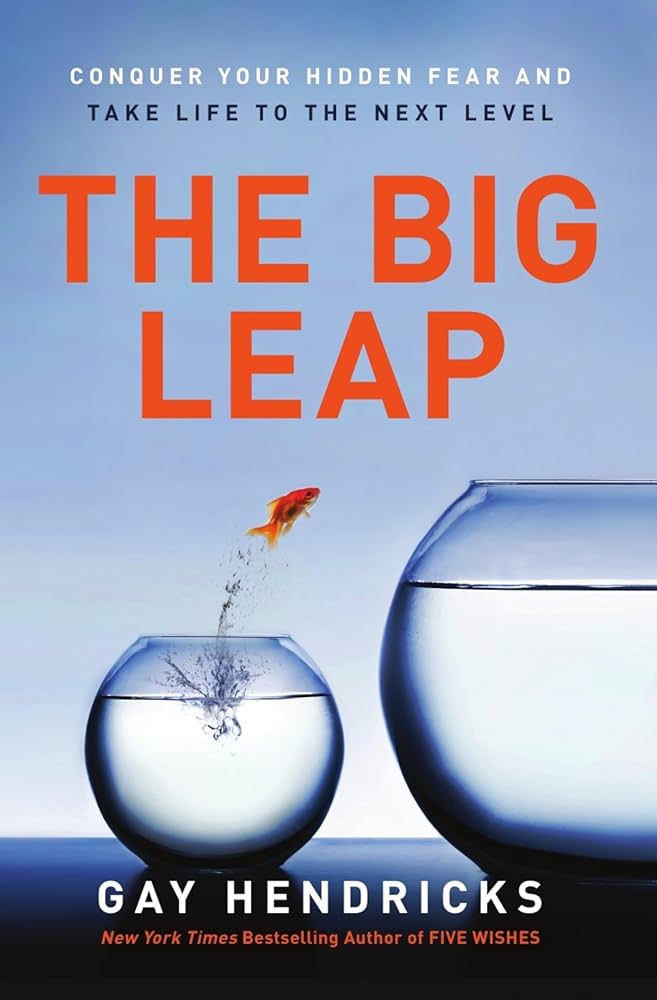
According to Gay Hendricks, PH.D., the only problem we need to solve is the Upper Limit Problem. He believes all avenues of discontent in life flow from the ways in which we limit ourselves or allow ourselves to be limited without breaking into our Zones of Genius. He posits that a universal human trait is the tendency to sabotage ourselves and others when artificial upper limits are exceeded.

The barriers we and society put in place are often unconsciously constructed by our upbringing, religion, politics, and education, but we buy into them and keep the scaffolding exactly where it’s always been. Phrases like, “She’s getting above her raising,” “He thinks he’s better than us,” “They aim too high,” “She’s greedy to want more,” “He needs to be brought down a peg,” “They didn’t do anything to earn that position,” etc. These aren’t phrases from his book, but common enough phrases in society that his hypothesis feels like commentary on most communities I know.

Whatever the complex social issues surrounding the lack of support for growth, he suggests there are ways to push beyond and live our best lives while still loving and supporting others. Instead of having a mindset of lack—lack of time, lack of money, lack of energy, lack of ideas, lack of community—we recognize that we are the creators of our realities and do our utmost to tap into our own genius.

The first step is to recognize the barriers and make conscious decisions to overcome them:

1. We are fundamentally flawed and don’t deserve success.

2. We are disloyal to expand beyond the expected norms of our families of origin.

3. We are a burden to others.

4. We must dim our brilliance, so we don’t outshine others.

Once we have expelled these faulty concepts from our thinking, we must find what our gifts are, find ways to express them, dislodge the notion that time is not on our side, and bring our best selves to the world. Only then will we be fulfilled in our relationships, our careers, our finances, and our spirituality.

I am intrigued, especially by his idea that time comes from within us, or at least the concept of time. It is only perception of time that makes each moment feel gruesome or fabulous. I’m sure he would agree that this concept does not apply in all circumstances because there are situations outside of our control and factors in this world that force time constraints on people against their will.

Disclaimers would have been appreciated that some of these deep concepts might not apply to people in the midst of horrific situations beyond their power, like war, extreme poverty, abuse, trauma, and other life-altering dilemmas that can create struggle. But given basic needs met, semi-peaceful conditions, and non-traumatic circumstances, his ideas are worth considering.

I for one commit to recognizing language of lack related to money, time, energy, etc. Instead of saying, “I can’t afford that,” or “I don’t have money for that,” I want to say, “I can buy that if I save for it,” or “I’m choosing to spend my money on something else.” It is a choice to reframe my language. Instead of saying, “I don’t have time to do that,” or “I wish there were more hours in the day,” I want to say, “I’m choosing to spend my time on other priorities,” or “I have plenty of time to do everything I am meant to do today.” The one I need to work the most on is energy. With chronic health issues, I am very aware of my energy levels and am known to complain about lack of energy. But Instead of saying, “I don’t have the energy to do this,” or “I wish I had more energy for x,y,z,” I want to say, “I have enough energy to do these things today, so I am going to prioritize them,” or “I have exactly the amount of energy I need and then I will take a nap to recharge.”

This self-development journey is fascinating. However much I learn, I always discover something more to expand my growth. The Big Leap is absolutely worth the read, but I recommend tackling it when things are at a fairly stable place in life. I would not have been willing to hear his ideas when I was at the apex of pain, in the middle of my divorce, during a crisis when my kids were teenagers, or when I was working 7 days a week to survive with no end in sight. These are concepts I am willing to consider with all bases covered and the privilege and opportunity to navel gaze and ponder things like expanding into my zone of genius.

Hendricks, Gay. The Big Leap, Harper Collins, 2009.

🌕 OK is OK

All images created by Rebekah Marshall’s prompts using AI on Gencraft.com website.

I honor steady growth over flawless results — each imperfect step is a sacred part of becoming whole.


🌱 Why This Resonates With My Journey:

  • “I honor steady growth…”
    ➤ Reminds me that showing up, even imperfectly, is what builds transformation — not polished performance.
  • “…over flawless results”
    ➤ Gently confronts my perfectionism by prioritizing the journey, not just achievement.
  • “Each imperfect step…”
    ➤ Validates every attempt, every wobble, every beginner effort — not just success stories.
  • “…is still a sacred part of becoming whole.”
    ➤ I’m not just learning skills — I’m returning to my true self, which includes grace, rest, and humanity.

(I am doing the writing exercises in the back of the book You are a Badass at Making Money by Jen Sincero, and this topic was about getting comfortable with progress versus perfection. I am also learning to trade futures, so the art is related to the charts we use to make the trades.)

🌿 Show up for Practice

All images created by Rebekah Marshall’s prompts using AI on Gencraft.com website.

I honor what strengthens me by showing up daily — not as an obligation, but as devotion to the life I’m building and the self I’m becoming.


🌞 Why This Speaks to My Truth:

  • “I honor what strengthens me”
    ➤ This puts my practices — like meditation, prayer, grounding — in the category of sacred nourishment, not optional tasks.
  • “By showing up daily”
    ➤ I’m affirming consistency, routine, and reliability.
  • “Not as an obligation, but as devotion”
    ➤ This shifts the energy from “should” to choice, from “task” to intimacy with self and spirit.
  • “To the life I’m building and the self I’m becoming”
    ➤ Connects it to my vision and my higher self — my why.

(I am doing the writing exercises in the back of the book You are a Badass at Making Money by Jen Sincero, and this topic was about showing up. I am also learning to trade futures, so the art is related to the charts we use to make the trades.)