Tag Archives: God

Hafiz – Poem 16

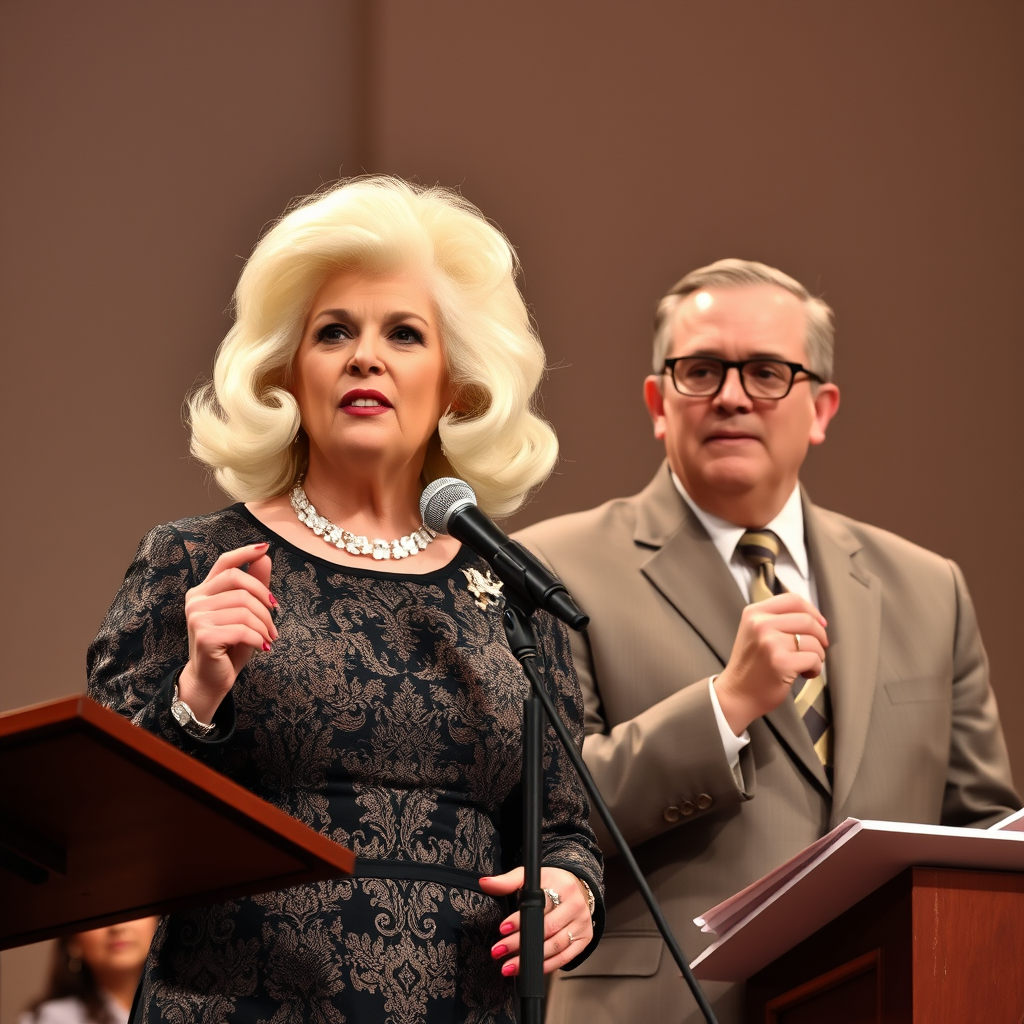
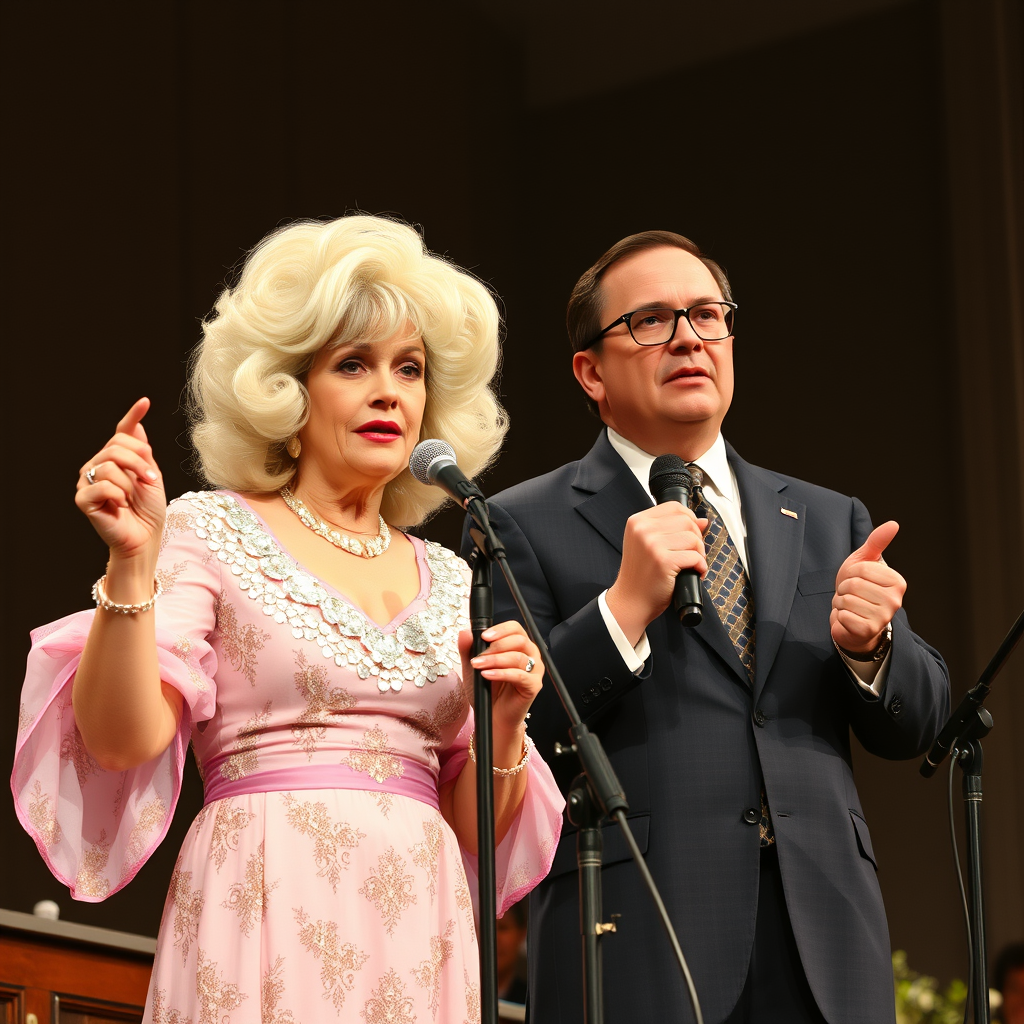
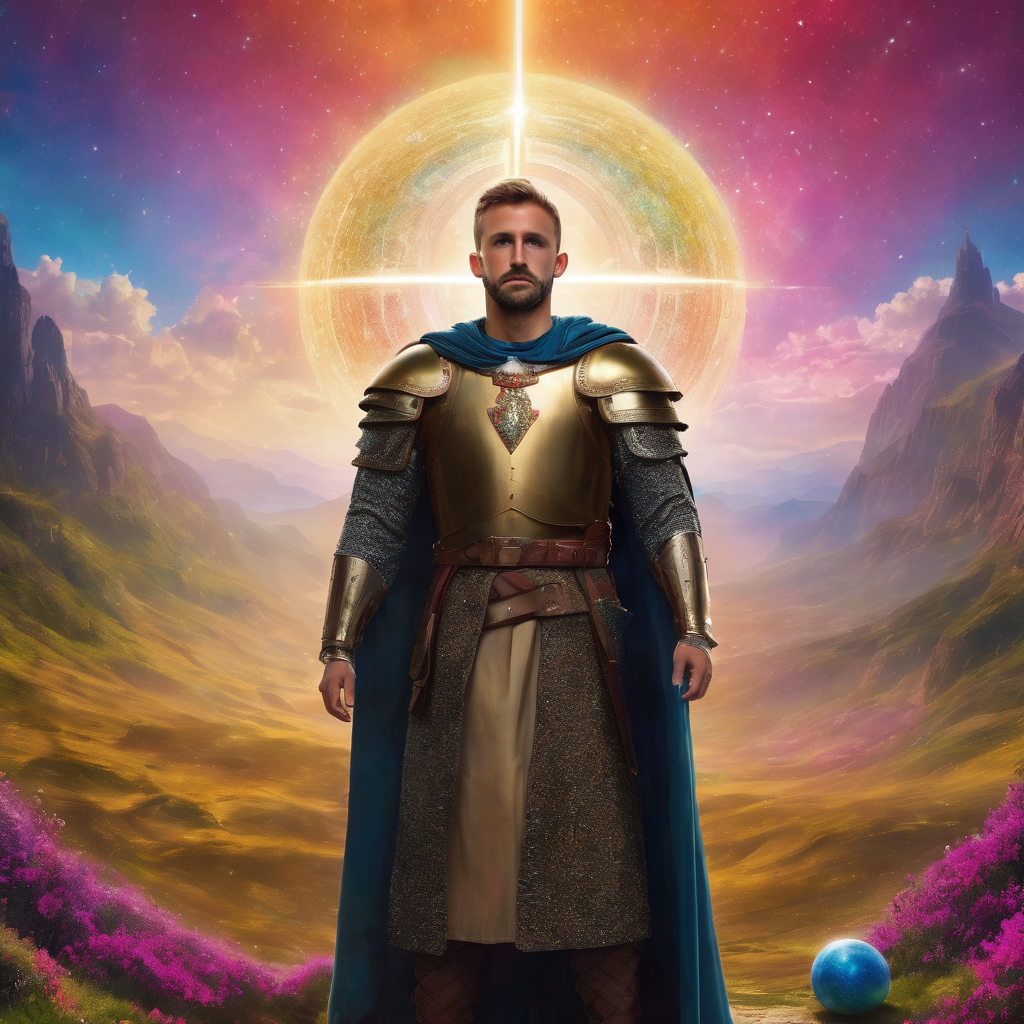
Iimages created by Rebekah Marshall’s prompts using AI on Gencraft.com website.

I am reading Hafiz’s Little Book of Life, poetry by Hafiz-e Shirazi. He is challenging me to become more comfortable with ambiguity. I will share his poem and some of my thoughts on his poem (sometimes with the help of experts when the concepts are too hard for me), followed by a poem and some art inspired by his poem.

Hafiz’s Poem 16:

Those preachers
Who appear glorious
In pulpits & on altars
Yet in private
Act totally the opposite

Some thoughts:

When I was growing up, televangelists were all the rage. It was the era of Jim and Tammy Faye Bakker and Jimmy Swaggart. Televised preachers could paint a picture of righteousness and convince millions of people to send them money. Their private lives were not so righteous. The reality was filled with scandal, corruption, and behaviors that were quite the opposite of the messages they were preaching.

I guess the platform was a newly designed sort of soap box, but the concept was nothing new. There have always been those who will profit off a public perception of holiness, but it is merely a performance. Perhaps humanity should learn not to put others on soap boxes and accept that everyone is human, faulty, and corruptible.

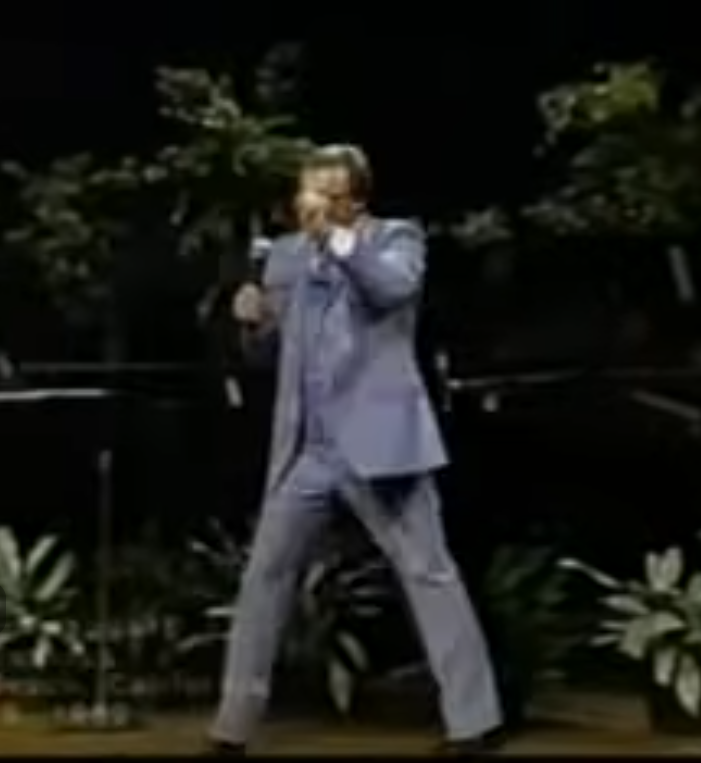
Jimmy Swaggart from YouTube video (link below.)

My Poem 16:

“Those that climb to the highest heights spiritually can fall to the lowest depths.”

In a baby blue 3-piece suit.
Pacing back and forth,
then planting himself in a wide
spread-eagle stance like
he’s doing the most powerful
power pose he can think of.

“As faulty worship caused death then, it can cause death now.”

In a sing-song, monotone,
ever-crescendoing
preacher cadence.

“You are obligated before God to walk holy and to walk righteous before an adulterous and wicked generation that’s dying and going to hell.”

The audience breaks out in applause.
Why are we clapping?
Because people are going to hell?
Because we are being obliged
to be better than them?
I’m confused.

“We just started a ball team, and I told them, I said, If girls show up on that ball diamond with shorts on, I will appreciate you and do everything I can to help you in Jesus, but I’ll send you home to get some clothes on.”

Even bigger round of applause.
Again, what are we clapping for?
Jimmy Swaggart’s admission
that he will lust after young girls
if they are wearing shorts?
What in the hell?

He speaks of himself in the 3rd person.

“Jimmy Swaggart, you’re preaching that in California? Are you out of your mind?”

He holds a Bible aloft to demonstrate
that “this doesn’t change” even if things
have changed in the rest of the world.

“You may look at me like a calf lookin’ at a new gate and preachers may get off behind my back and snicker, but I’m going to preach what this word says.”

He won’t kick you out of the church.
He’ll pray for you, sit with your sick,
wipe your brow, cry and weep for you,
but he will tell you what “thus sayeth the Lord.”

I guess the Lord says
He doesn’t like girls
on ball diamonds
wearing shorts.

“Faulty Fire, Faulty workship Jimmy Swaggart preaching on Holiness”, mdministries, YouTube, posted Jun 24, 2013, https://www.youtube.com/watch?v=dCKrCtdC2oA&list=PLrkXHJifFX4dMJIZt_26b3bwgib_EPwiD

Hafiz. Hafiz’s Little Book of Life. Translated by Erfan Mojib and Gary Gach, Hampton Roads Publishing, 2023.


The Four Loves (Book Review)

All images created by Rebekah Marshall’s prompts using AI on Gencraft.com website.

I’m not sure what I was expecting of C.S. Lewis’s The Four Loves, but I was surprised by the conversational tone. Though I did not agree with all his assertions, many of the ideas and categorizations of types of love made sense. He breaks love into the categories of Affection, Friendship, Eros, and Charity. Then he has another discussion around the Likings and Loves for the Sub-Human, like when we say we like taking naps or love cheesecake. Many examples within each of the categories also fall into what he calls Need-love vs. Gift-love. Need-love would be assigned to necessary-for-survival-type loves, like a child to a parent or water to quench thirst. Gift-love would be assigned to unnecessary-type loves, like appreciation of a beautiful piece of art or taking care of a sick person.

The reader should be prepared for strict opinions based on Lewis’s beliefs regarding gender roles, nature, science, the fall of mankind, sin, the afterlife, and other principles that Lewis views as black or white, rather than a possible spectrum of interpretation of Biblical text. If that is an accepted foundation going in, the concept of love can be the focus for analysis. I find the idea of even attempting to categorize love somewhat grandiose. However, Lewis’s arguments are well thought out. There are probably many more nuances that could be catalogued by culture, historical context, language, psychotropically induced vs. naturally occurring, gender-related, conscious v. subconscious, etc. I wonder if there are as many different types of love as there are people on the planet. That would be a much thicker book, though.

Lewis, C.S. The Four Loves, Houghton Mifflin Harcourt Publishing Company, 1960.

Hafiz – Poem 9

All images created by Rebekah Marshall’s prompts using AI on Gencraft.com website.

I am reading Hafiz’s Little Book of Life, poetry by Hafiz-e Shirazi. He is challenging me to become more comfortable with ambiguity. I will share his poem and some of my thoughts on his poem (sometimes with the help of experts when the concepts are too hard for me), followed by a poem and some art inspired by his poem.

Hafiz’s Poem 9:

      The city is in the dark

As the Eagle of Oppression

     Spreads its giant wings

Some thoughts:

I had an immediate emotional reaction to this poem. Entire cities in my country are out protesting in freezing weather because federal ICE agents are detaining, kidnapping, arresting, violating, beating, and killing human beings. Whether they have the legal imperative to do such things is irrelevant. I do not believe violence is ever the answer. Such actions are immoral, unethical, and inhumane. It is the Eagle of Oppression in the form of a regime that is trying to instill fear into vulnerable minority populations in this country. It is wrong.

Hafiz knew precarious political times only too well. In his lifetime, he lived under 5 different rulers who were all eventually killed by someone else who wanted power. One particularly violent reign that terrorized the people with cruelty and many executions, also saw the banning of science, philosophy, music, and art. Many books were burned. Hafiz protested through poetry. This ruler was eventually blinded and imprisoned by his own son.  

Oppression is not new. There have always been corrupt leaders, power-hungry forces, evil disguised as right. The names may change, but the shadow of darkness is the same.

My Poem 9:

Evil wears a mask
kills Good
and names it just.

There is no impunity
with God
no matter what they say.

The oppression of His
children
will not be forgotten.

Hafiz. Hafiz’s Little Book of Life. Translated by Erfan Mojib and Gary Gach, Hampton Roads Publishing, 2023.

Nothing

(Poem 220 for 2024 – I am writing a poem a day)

AI Generated image I prompted on Gencraft.com https://gencraft.ai/p/FPW14a

The antithesis of everything
one can logically consider,
should be nothing at all.

Casanova of Venetia would
argue that such is absurd,
as everything is one with faith.
But nothingness as a concept
of not-being is of value as a
consideration, even if nearly
impossible for us to conceive.
Even Einstein struggled to
believe something so absolute
could exist, since spacetime
renders past and future illusory.
Could it be a state of mind like
Nirvana or wu wei, or even
the permanence of Tao that
cannot be described or named?
Is it the chasm that forms if
we reject God, or the very idea
that such a thing is possible?
Calculate as we might with all
our might, we never reach zero.

@Home Studio – 220th poem of the year (After reading an article on Wikipedia about “Nothing.”)

“Nothing” Wikipedia. Page last edited 25 July, 2024, en.wikipedia.org/wiki/Nothing.

Runner ups for the Nothing photos to accompany my poem:


Lesson 18 The Way of the Wizard

(Poem 175 for 2024 – I am writing a poem a day)

“At the level of the ego, we struggle to solve our problems. Spirit sees that struggle is the problem.” – The Way of the Wizard    

AI Generated image I prompted on Gencraft.com https://gencraft.ai/p/7XIJKd  https://gencraft.ai/p/bhZDFJ

The madman who lived in a
hut deep in Camelot forest
was named Will for a reason.
He claimed to have no king,
despite Arthur ordering him
to come forth and explain.
According to his wife, grief
had walled him up after his
son died in a tragic accident.
The man named Will decided
to perish unless God himself
appeared and made plain
the reason for suffering.
Arthur sat all night speaking
with the man, who he felt
closer to than anyone else
in his kingdom, for he keenly
felt the suffering of his people
the poor, the sick, the burdened.
Arthur shared the wisdom
Merlin taught him, rather than
struggle against evil, realize
that it does not actually exist.
We create heaven and hell
with our own will, invent duality,
evil and good, light and shadow,
chase our tails to our own
detriment and create despair.
We must allow our will to be
free to choose to reject this
duality and permit unity to be
born in our hearts and minds,
rather than sealing ourselves
up in a hut deep in the woods
of grief where we await our deaths.

@Genuine Joe’s – 175th poem of the year

Chopra, Deepak. The Way of the Wizard: Twenty Spiritual Lessons for Creating the Life You Want. New York, United States of America, Harmony Books, 1995, pp.123-128.

Runner ups for the Forest Hut photos to accompany my poem: