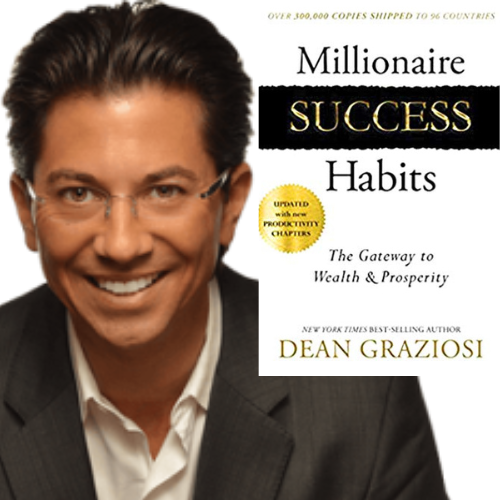
Since starting my trading journey, I have been reading many financial strategy/growth mindset-type books as part of a book club on one of my platforms. I have not been very impressed with many of them. Millionaire Success Habits by Dean Graziosi was a much more enjoyable read. Not only is it written in down-to-earth, simple language, but the anecdotes, advice, and examples are relatable and realistic. Some of his ideas are a little unconventional but make a lot of sense.
One such idea his suggests is to work on strengths rather than weaknesses. So much focus is spent on trying to improve our weaknesses in our competitive culture, but why? What if we put more of our energy into focusing on our strengths and passions? Then we can hire people to do the parts we don’t excel at. It’s a win/win. He has excellent advice on short bursts of intense focus on one task to achieve more than when we multi-task. He develops the idea that relationships with our employees and customers should be better thought out and inclusive of everyone’s needs. And he has wonderful strategies for organization, productivity, and confidence building.
His tone is authentic, experienced, and direct. There is no double-speak or confusing lingo, and each chapter provides actionable steps a person could take to improve their life. He provides insight on vanquishing the inner villain who wants to sabotage us, harnessing our inner hero who wants us to succeed, and creating one clear overarching goal or why that we are working toward. He’s the one who started the whole “What’s your Why?” that every service industry uses.
Graziosi, Dean, Millionaire Success Habits, Hay House, 2019.
All images created by Rebekah Marshall’s prompts using AI on Gencraft.com website.
I highly recommend What to Say When You Talk to Your Self by Shad Helmstetter, PhD. As a practitioner of positive self-talk for years, I was thrilled to find a book that helped to explain some of the basic reasoning behind the practice, as well as a framework with clear instructions for the most productive forms of self-talk.
The concept is outlined as such: Programming creates beliefs. Beliefs create attitudes. Attitudes create feelings. Feelings determine actions. Actions create results.
The general idea is that we are programmed by others from the second we are born without any choice in the matter. Much of the results we are experiencing in the present are due to that programming that may or may not suit our true selves. We may not even realize that some of our deeply held beliefs, attitudes, and feelings are because of programming that might not even be accurate. We have acted on these beliefs, attitudes, and feelings building our lives, sometimes with faulty programming.
This book is about rewriting our own code through more carefully structured instructions to our subconscious that will in turn make our lives easier as we work toward outcomes that are more in line with our current ideals. I think I just really love the idea that there is something we can do to dig in deep and rewrite the underlying messages.
My first script that I began today is as follows: I practice positive self-talk every day and make it a permanent part of my life by monitoring my thoughts and speech, editing all negative messaging, and listening to self-talk sessions a minimum of 15 minutes each day.
I’m going to experiment on myself for 90 days and see if any improvements occur in my life. I’ll do a follow-up post with anything I notice after 90 days.
Helmstetter, PhD, Shad, What to Say When You Talk to Your Self, Simon & Schuster, Inc., 1986.
AI Generated image prompted on Gencraft.com by Rebekah Marshall.
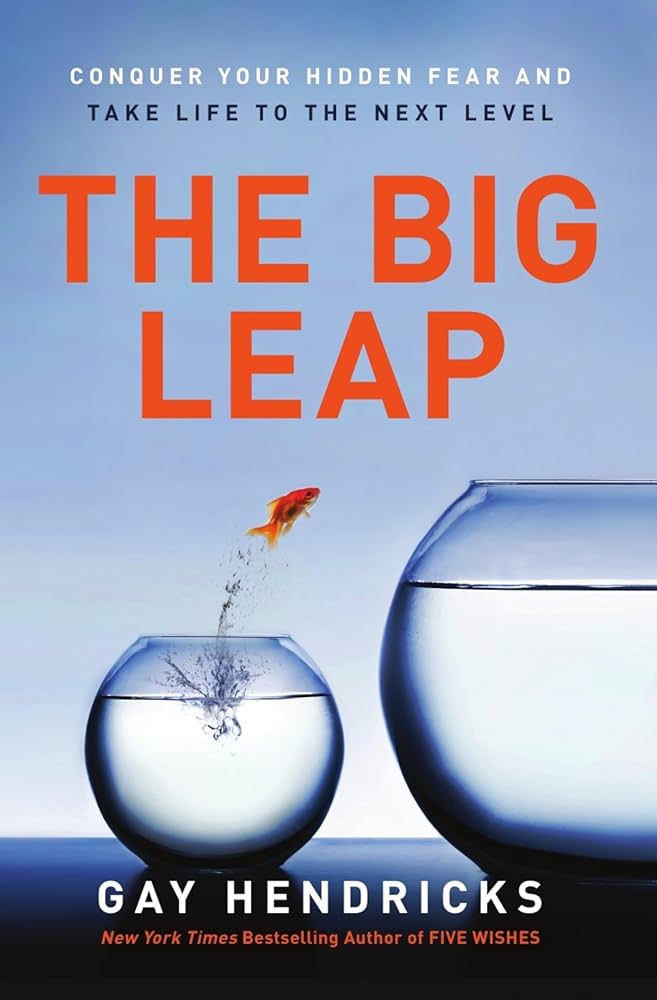
According to Gay Hendricks, PH.D., the only problem we need to solve is the Upper Limit Problem. He believes all avenues of discontent in life flow from the ways in which we limit ourselves or allow ourselves to be limited without breaking into our Zones of Genius. He posits that a universal human trait is the tendency to sabotage ourselves and others when artificial upper limits are exceeded.
The barriers we and society put in place are often unconsciously constructed by our upbringing, religion, politics, and education, but we buy into them and keep the scaffolding exactly where it’s always been. Phrases like, “She’s getting above her raising,” “He thinks he’s better than us,” “They aim too high,” “She’s greedy to want more,” “He needs to be brought down a peg,” “They didn’t do anything to earn that position,” etc. These aren’t phrases from his book, but common enough phrases in society that his hypothesis feels like commentary on most communities I know.
Whatever the complex social issues surrounding the lack of support for growth, he suggests there are ways to push beyond and live our best lives while still loving and supporting others. Instead of having a mindset of lack—lack of time, lack of money, lack of energy, lack of ideas, lack of community—we recognize that we are the creators of our realities and do our utmost to tap into our own genius.
The first step is to recognize the barriers and make conscious decisions to overcome them:
1. We are fundamentally flawed and don’t deserve success.
2. We are disloyal to expand beyond the expected norms of our families of origin.
3. We are a burden to others.
4. We must dim our brilliance, so we don’t outshine others.
Once we have expelled these faulty concepts from our thinking, we must find what our gifts are, find ways to express them, dislodge the notion that time is not on our side, and bring our best selves to the world. Only then will we be fulfilled in our relationships, our careers, our finances, and our spirituality.
I am intrigued, especially by his idea that time comes from within us, or at least the concept of time. It is only perception of time that makes each moment feel gruesome or fabulous. I’m sure he would agree that this concept does not apply in all circumstances because there are situations outside of our control and factors in this world that force time constraints on people against their will.
Disclaimers would have been appreciated that some of these deep concepts might not apply to people in the midst of horrific situations beyond their power, like war, extreme poverty, abuse, trauma, and other life-altering dilemmas that can create struggle. But given basic needs met, semi-peaceful conditions, and non-traumatic circumstances, his ideas are worth considering.
I for one commit to recognizing language of lack related to money, time, energy, etc. Instead of saying, “I can’t afford that,” or “I don’t have money for that,” I want to say, “I can buy that if I save for it,” or “I’m choosing to spend my money on something else.” It is a choice to reframe my language. Instead of saying, “I don’t have time to do that,” or “I wish there were more hours in the day,” I want to say, “I’m choosing to spend my time on other priorities,” or “I have plenty of time to do everything I am meant to do today.” The one I need to work the most on is energy. With chronic health issues, I am very aware of my energy levels and am known to complain about lack of energy. But Instead of saying, “I don’t have the energy to do this,” or “I wish I had more energy for x,y,z,” I want to say, “I have enough energy to do these things today, so I am going to prioritize them,” or “I have exactly the amount of energy I need and then I will take a nap to recharge.”
This self-development journey is fascinating. However much I learn, I always discover something more to expand my growth. The Big Leap is absolutely worth the read, but I recommend tackling it when things are at a fairly stable place in life. I would not have been willing to hear his ideas when I was at the apex of pain, in the middle of my divorce, during a crisis when my kids were teenagers, or when I was working 7 days a week to survive with no end in sight. These are concepts I am willing to consider with all bases covered and the privilege and opportunity to navel gaze and ponder things like expanding into my zone of genius.
Hendricks, Gay. The Big Leap, Harper Collins, 2009.
All images created by Rebekah Marshall’s prompts using AI on Gencraft.com website.
What I look for, I amplify — so I choose to seek joy, possibility, and proof that life is working in my favor.
💡 Why This Speaks to My Intention:
“What I look for, I amplify” ➤ This highlights the power of attention and how my brain filters reality based on what I expect to see.
“So I choose to seek joy, possibility…” ➤ Affirms my power to choose a hopeful, abundant lens.
“…and proof that life is working in my favor.” ➤ Replaces old scarcity narratives with a belief in support, ease, and flow — especially with money and the economy.
(I am doing the writing exercises in the back of the book You are a Badass at Making Money by Jen Sincero, and this topic was about Seeking the Reality I Choose. I am also learning to trade futures, so the art is related to the charts we use to make the trades.)
I do work that I feel confident doing. It stretches me and can be a complicated puzzle that feels unsolvable at times, but I am fully cognizant of my abilities, able to slow my pulse, take a deep breath, and start at the very beginning because Julie Andrews says that’s a very good place to start, and she knows things.
Old dogs can learn new tricks, though they might need some accommodations to help them master the same skills. Honestly, whomever thought to suggest phrases like neutral face and thinking-face when hovering above emojis not only blessed those of us who struggle to read faces, but those of us unaccustomed to reading little circular yellow faces as part of our regular workday because we grew up with rotary phones, and being able to metaphorically clutch my pearls by clicking on a gasp emoji might come in quite handy someday.
My grandmother worked in the tech sector via telecommunications back when switchboard operators used call signs like Capital 5 instead of area codes and you could call an actual human to ask for the time of day.
She never imagined she would add butterfly emojis as her call sign in messages she would send to her great-great- granddaughter someday, and I never imagined I would be helping AI improve her reasoning skills, but I come from a long line of women who know how to adapt, are not afraid of exploring the unknown, and will learn what we need to learn to take care of this next generation of forward thinkers.














 rebekahjmarshall