Tag Archives: literary analysis

Reflections on The Woman Warrior by Maxine Hong Kingston

TRIGGER WARNING: This essay discusses patriarchal oppression, gender-based violence and punishment, sexual shaming, social ostracism, and cultural trauma. These topics are examined in a literary and analytical context.

The Woman Warrior by Maxine Hong Kingston paints a picture of harsh expectations placed upon Chinese/Chinese American women. Though the narrator rejects some of the notions and attempts to forge her own path, she still feels duty-bound to uphold some of the traditions. Each section of the book focuses on a different woman and explores the expectations placed upon her specific to the time and place where that portion of the story is set.

For instance, No Name Woman lives in a village in China early in the 20th Century. She is expected to remain “pure” (no sex) until her husband’s return from war. Her sexual desires are not a consideration and her ensuing pregnancy is punished by shaming the family and destroying their crops, livestock, and stored foods. The family then disowns her and never speaks her name again, ensuring she would “suffer forever, even after death” (16). There is no mention of the man who must have impregnated her on the part of the villagers or her family. She must bear the full weight of the “crime” of having sex and becoming pregnant.

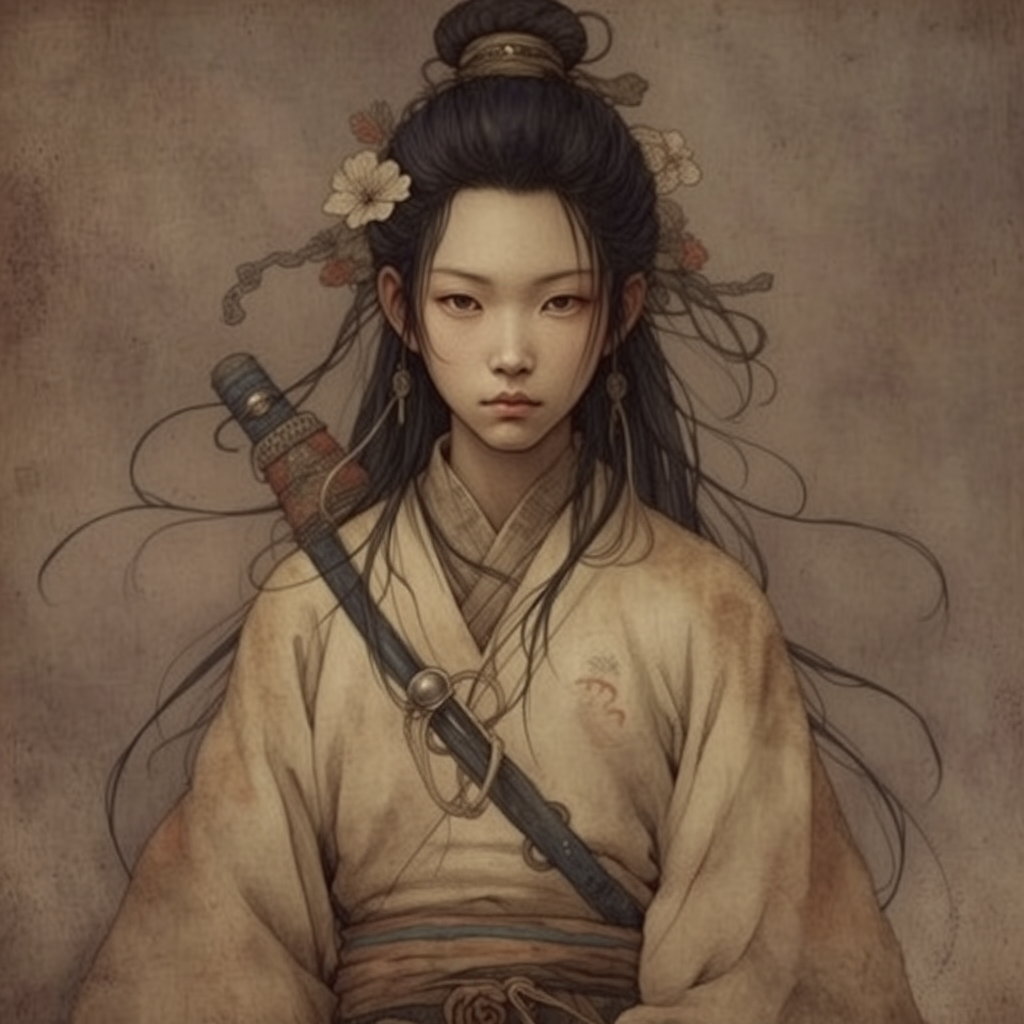
Fa-Mulan in the “White Tigers” section of the book becomes the greatest hero in the land saving her family, her village, and her country from evil rulers. She is a warrior, savior, and leader who has trained for 14 years to become the best hero possible. Yet, once her mission ends, she is expected to return to the “appropriate” role of wife, daughter-in-law, mother. There is no option for leadership in her world. This character is thought to have lived sometime around the year 500 in China. Women were not supposed to use their brains or their brawn, except in service to men. Any woman who attempted to pass as male enter the military or school would be executed, “no matter how bravely they fought or how high they scored on the examinations” (19).

The “Shaman” section about Brave Orchid shows the variety of domestic expectations placed on Chinese women. Brave Orchid lives the first half of her life in China and the second half in America spanning the 20th Century. She works as a medical practitioner in China and then in the family laundry business in America. Besides working long hours, she picks tomatoes as a part-time job to make more money, does all the cooking and cleaning, and manages all aspects of the household. She is also expected to carry on the traditions of the culture by keeping the rituals, ceremonies, and talk story alive so that it will pass on to the next generation. She must also protect everyone’s souls by calling them back when they have forgotten their way home. Brave Orchid’s eyes fill with tears as she tells her adult daughter, “I work so hard” (103). Chinese women are unrealistically expected to do more than their fair share of the work.        

The section “At the Western Palace” highlights the way Chinese women in the past had little power in marital situations. Their partners were chosen for them and husbands might take multiple wives. The women were expected to tolerate and support these traditions without question. When Moon Orchid comes to America in the 1950’s, she is confronted by a different reality in which women have more rights and her husband rejects their marriage. She is expected to accept his continued financial support without living as his wife. Chinese American women seem to still have parents attempting to meddle with selecting their potential suitors according to the narrator.

In the final section “A Song For a Barbarian Reed Pipe” the narrator implies that a “good” Chinese American girl in America in the 1950’s should be able to speak fluent English and Chinese. She should attend Chinese school and American school. It is an interesting note that “good manners…is the same word as traditions” in Chinese (171). To please the Chinese, she should be obedient and demure, soft-spoken, and graceful, domestically competent – able to cook, clean, serve, and heal, and pleasant in interactions while not making eye contact, use opposites to confuse evil spirits, keep all Chinese traditions, send money to family members in China, lie to Americans so no one can trap her or deport her or trick her somehow, and remember that men are valued more highly than women. To please the Americans, she should be assertive and firm of voice, intelligent, sexy, able to defend herself, and independent making strong eye contact, speaking from a place of science and logic rather than any mention of evil spirits, creating a comfortable lifestyle that is America-focused, be a patriot, and believe that women and men are equal. A Chinese American woman is expected to do all of this and figure out how to be healthy, happy, and prosperous without driving herself crazy over the paradoxes such disparate expectations create. 

Works Cited

Kingston, Maxine. The Woman Warrior – Memoirs of a Girlhood Among Ghosts. Vintage Books, New York, 1975.

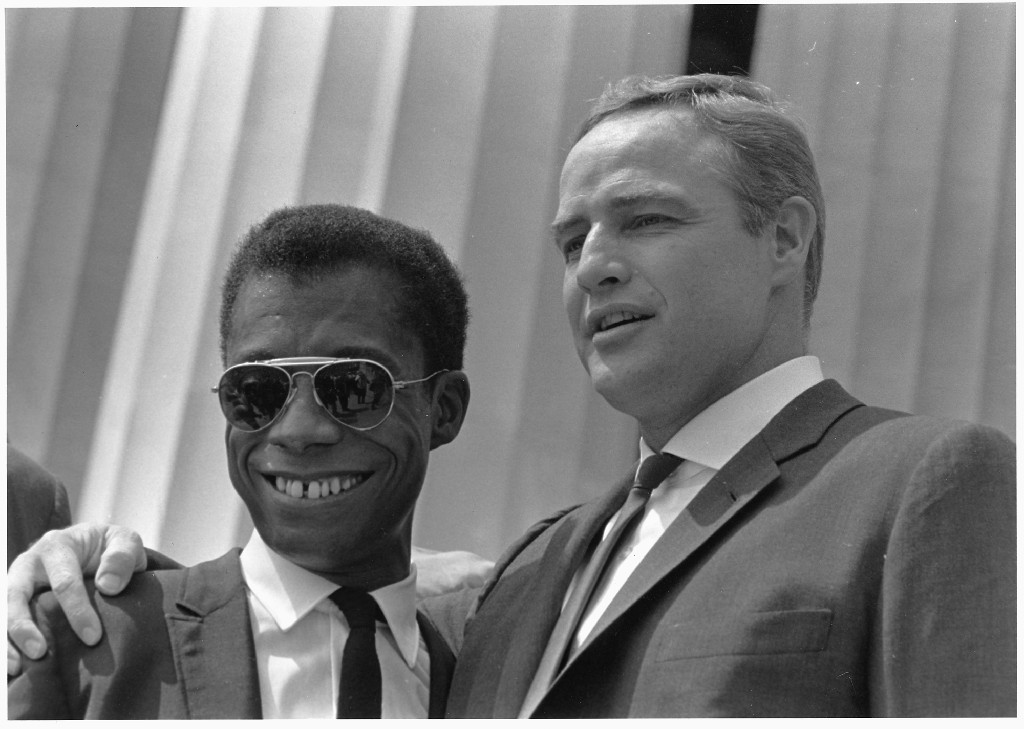
Letters Everyone Should Read: James Baldwin & Ta-Nehisi Coates

TRIGGER WARNING: This essay contains discussion of racism, police violence, death, and racial trauma in a critical and literary context.

James Baldwin’s letter to his nephew is both personal and national in appeal as a publicly published letter to inspire black Americans and scold white. Likewise, Ta-Nehisi Coates’s letter to his son reveals extremely personal details that may encourage black Americans and spur white Americans to pick up the mantle of struggle alongside their darker brothers. Both letters speak to the lack of equality present for black Americans and the need for white mindset change for improvement to occur.

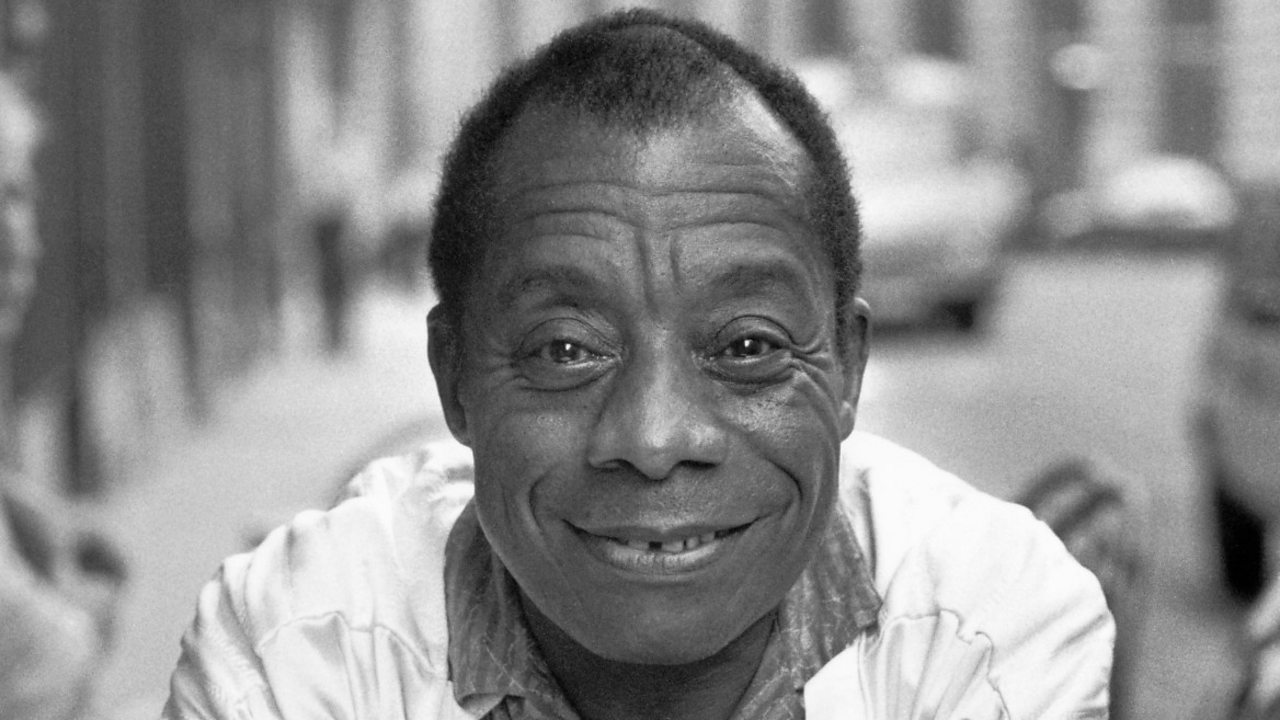
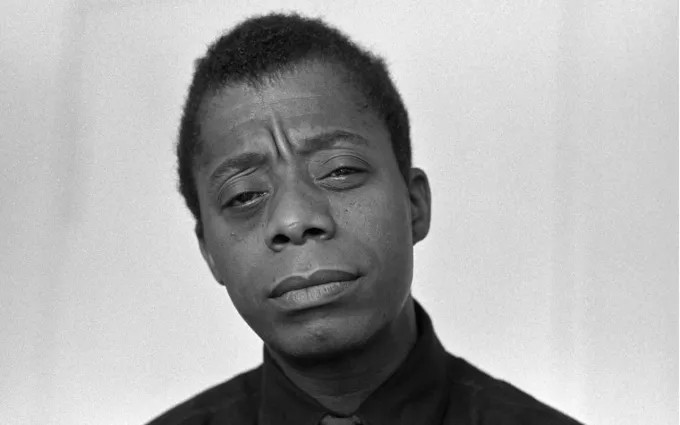
In “A Letter to my Nephew”, Baldwin moves chronologically through his life telling the tale of his nephew’s origins. He weaves into the personal story of his family’s tale, the historical context that affects them all including the results of geographic constraints, political, economic, legal, etc. that make life harder for African Americans. For example, Baldwin writes, “This innocent country set you down in a ghetto in which, in fact, it intended that you should perish.” He goes on to attempt to explain the thinking of the white “countrymen” that would permit such unfair treatment of their brothers. “They are in effect still trapped in a history which they do not understand and until they understand it, they cannot be released from it.” This calling out of uninformed white people is the way Baldwin throws down his gauntlet. It is up to everyone to become informed and prepare for change. The rest of the letter is encouragement to his nephew to be brave and loving as he continues the fight. And near the end he makes the inclusive statement, “We cannot be free until they are free” (Baldwin). He flips the idea of oppression on its head. The oppressor is the one who is in chains due to their refusal to educate themselves and grow with the changes that terrify them.

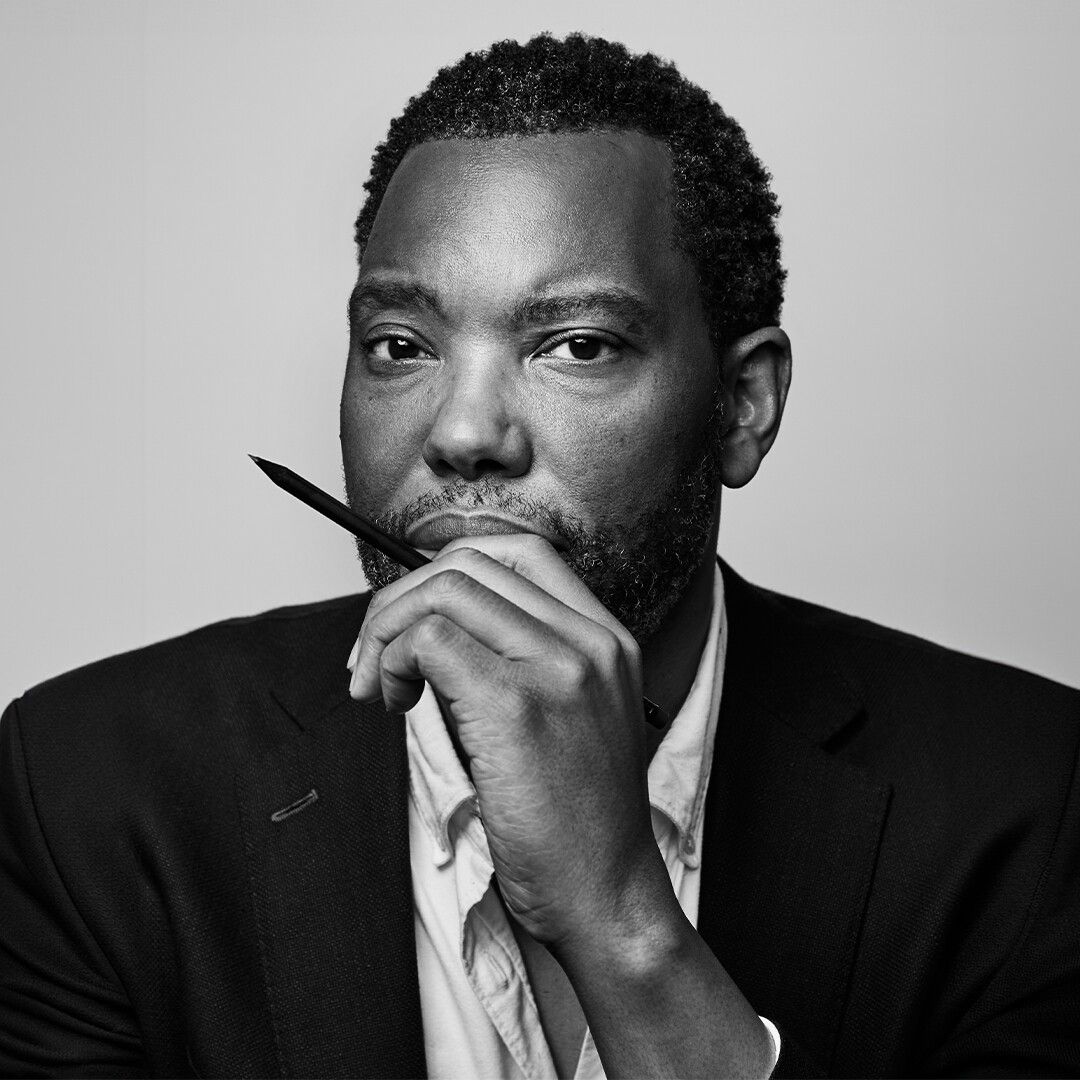
Coates’s Between the World and Me tells the tale of significant points in his life, including the birth of his son, but it is not strictly chronological. He jumps around in time, beginning with a recent interview and meanders through different time periods throughout the book. Coates weaves historical incidents like police shootings of unarmed black people, redefines terms to his preferences – terms like race and racism, dreamers, and white – glorifies black culture including music, art, literature, and fashion, and includes interviews with mothers who lost children to police violence. His letter feels at once even more personal in connection to his son and, at the same time, even more broadly an accusation of all Americans complicit in the conspiracy to oppress black people.

As Coates meanders through white on black oppression, he addresses his own fear that grew out of living while black. He admits that he does not want to raise his son with the same fearful perspective but also recognizes that fear might be what has helped him stay alive. He tells stories showing that constant awareness of potential danger is necessary for safety. He also admits that hyper-sensitivity to danger sometimes removes the ability to live in the moment and enjoy the present. Using so many resources to remain in fight or flight mode steals reserves that could have been used for learning, experiencing, connecting, and joy. These are the things that make him angry, that make him feel hopeless and make him realize that there is still much struggle left for all to endure. He encourages his son to struggle but does not seem to call him to love the same as Baldwin. He encourages him to endure but does not provide the same hopeful outlook as Baldwin. It seems like a public shaming of white America. They have continued to oppress, even in the face of countless opportunities to change. Perhaps Coates is hoping to guilt them into an awakening. Coates’s letter ends with witnessing the same crumbling infrastructure that has been the setting for so many black lives – “and I felt the fear” (Coates 152).

Works Cited

Baldwin, James. “A Letter to My Nephew.” The Progressive. 1 Dec, 1962, progressive.org/magazine/letter-nephew/

Coates, Ta-Nehisi. Between the World and Me. Spiegel & Grau, 2015.

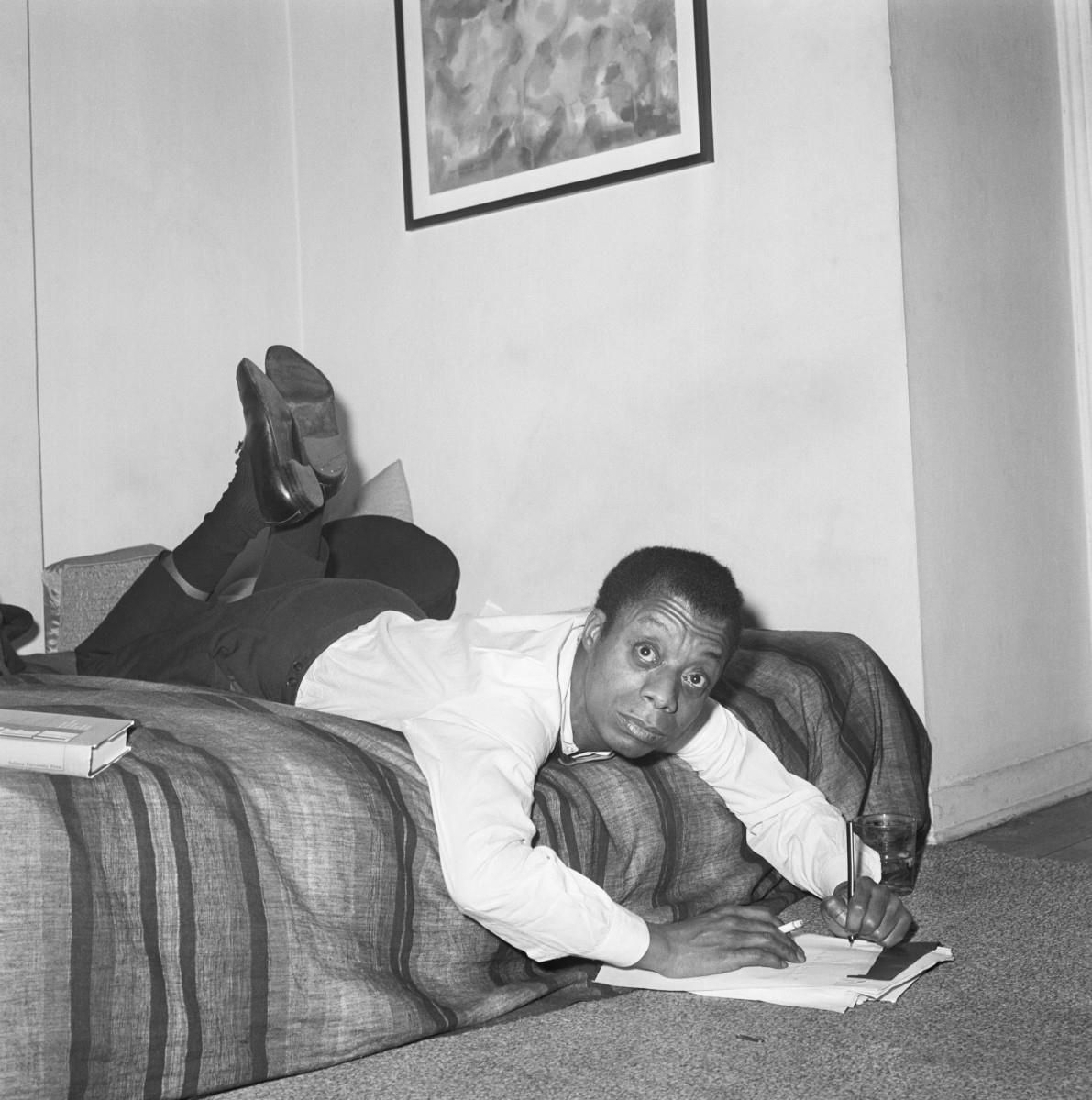
Reflections on James Baldwin’s Appeal to the Possibility of Relationship

TRIGGER WARNING: This essay contains discussion of racism, racial violence, police brutality, and psychological trauma in a literary context.

Baldwin’s writings seem to assert that all people deserve the opportunity to be understood, and barring that, at least given a fair shake to make their way in the world. A self-proclaimed witness to the treatment of his people, he uses story to persuade others to open themselves to the possibility of relationship, or at least the ability to visualize the other. In “Previous Condition”, the main character is a black man having an affair with a white woman. She grew up in poverty and argues with him when he implies that only black people have it hard economically. The argument sounds as though it could have been heard on YouTube with its layers of race, class, gender, and privilege still such hot current issues. However, Ida the white woman, does not get kicked out of a dwelling simply because of the color of her skin, as is the case for the black actor she is debating. Even more horrible is the description in “Sonny’s Blues” of white men running over and murdering Sonny’s uncle just for the fun of it. Evil breeds hatred. Sonny’s father “never really did get right again. Till the day he died he weren’t sure but that every white man he saw was the man that killed his brother” (Going 118). These are examples of the ways in which people as individuals interact in his stories showing the depth of conflict created by race in relationships.

In “This Morning, This Evening, So Soon” Baldwin paints the scene of a black man who has forgotten how to play the game of pacifying the white police officers as is so often necessary to ensure minority safety. The main character says, “I had once known how to pitch my voice precisely between curtness and servility…” (Going 163). He’s been in France so long and interacted with white people under a different social contract for so long that he has forgotten the tricks he used to know to keep himself safe around white people with power who hate him. This speaks to the “armies” of whom Baldwin speaks. The police represent the powers that be and are an ever-present menace to the black characters in his books. In “Going to Meet the Man,” the main character is a white police officer who truly believes he is simply enforcing rules God himself established. He says it wasn’t his fault the black people “fight against God and go against the rules laid down in the Bible” (Baldwin Going 235). This is an example of the way church gets mixed up in all the oppression in people’s minds. All these systems interact to create menaces of themselves.

Yet, somehow, despite all the horrors Baldwin witnessed and wrote about, he continually returns to the theme of love. He seems to believe that love can prevail. I am in awe of his optimism. In “A Letter to My Nephew,” he writes, “love shall force our brothers to see themselves as they are, to cease fleeing from reality and begin to change it” (Baldwin Letter). I hope and pray that he is right.

Works Cited

Baldwin, James. “A Letter to My Nephew.” The Progressive. 1 Dec, 1962, progressive.org/magazine/letter-nephew/

Baldwin, James. Going to Meet the Man. Vintage International, 1948.

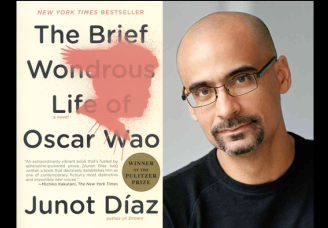
Oscar’s Lack of Dominican Machismo in Juno Diaz’s The Brief Wondrous Life of Oscar Wao

TRIGGER WARNING: This essay discusses gender roles, sexuality, cultural expectations, and references to violence and death in a literary context.

Oscar de Leon, the main protagonist of Juno Diaz’s The Brief Wondrous Life of Oscar Wao, is woefully terrible with the ladies. “His lack of game” is noticed by everyone around him and he often cries “in the bathroom where nobody could hear him” over “his love of some girl or another” (Diaz 23-24). A pickup line he actually uses is, “If you were in my game I would give you an eighteen Charisma” (Diaz 174). Though many people offer advice including Yunior, his uncle, and Lola, none of it sticks. Yunior says “he tried to get him to stop hollering at strange girls on the street…” but Oscar insisted that “nothing else has any efficacy, I might as well be myself” (Diaz 174).

When Oscar finally falls for a woman who seems to accept him, Ybon, she is the wrong woman according to Dominican culture. She is too old, too promiscuous, too “claimed-by-a-cop” already. However, he perseveres and gets himself killed in the process. Whether that is stubbornness, machismo, or crazy (maybe all three) it is certainly along the lines of grabbing “a muchacha, y meteselo” like his uncle advised (Diaz 24). And when he finally gets Ybon to himself for a week, it sounds as though he makes the most of his time enjoying sexual exploits like the best of them. However, even then, what he really loves are the little unanticipated intimacies like “combing her hair”, the way she would “sit on his lap”, or “watching her walk naked to the bathroom” (Diaz 334). He is well-rounded in his appreciation of the entire experience, which is more admirable than simply enjoying the sex. At the end when he says, “The beauty! The beauty!” it sounds like a counter to Conrad’s Heart of Darkness “The horror! The horror!” (Diaz 334, Conrad 12). To him, the sacrifice is worth it.

If the willingness to face violence or defend women against violence is any part of machismo, then Oscar qualifies as a Dominican male at least a few times in his life. He takes a gun and is willing to confront Manny in order to defend Ana (Diaz 47). Thankfully, Manny does not show up and Oscar gets to remain a lover, not a fighter. He knows he could be beaten, but continues spending time with Ybon right up until he is beaten near to death (Diaz 298-299). And he knows he will be killed for his determination to be with Ybon in the end. He faces his death with the fervor of “a hero, an avenger”, and tells his killers he will be waiting for them on the other side (Diaz 320). That takes some guts.

To the degree that the American ideal is “all men are created equal”, Oscar’s lack of “Dominicanness” makes him more American. But, suffice it to say, America does not do a great job with equality either. Both cultures still have a long way to go toward treating all people with the decency and kindness that humans deserve despite gender, sexual orientation, ethnicity, etc. Perhaps that is why Yunior talks about Oscar’s niece Isis as the future hope of breaking the curse. The beginnings of the end of the fuku were in Oscar’s rebellion. But if the original curse was put in place by a machismo man whose ultimate power over women caused death and evil, then a woman will be needed to end it once and for all. Who better than someone named after Isis, the goddess who protected the dead and invented marriage? Nice job, Diaz.

Works Cited

Conrad, Joseph, and D.C.R.A. Goonetilleke. Heart of Darkness. Peterborough, Ont: Broadview, 1999.

Diaz, Junot. The Brief Wondrous Life of Oscar Wao. Riverhead Books, New York, 2007.

Tyldesley, Joyce. “Isis.” Britannica. Dec. 3, 2020, http://www.britannica.com/topic/Isis-Egyptian-goddess

Appearance Reflections from Juno Diaz’s The Brief Wondrous Life of Oscar Wao

TRIGGER WARNING: This essay discusses fatphobia, body shaming, bullying, racial and ethnic stereotyping, and includes quoted ableist and homophobic language from the source text.

Oscar, the main character in Juno Diaz’s novel The Brief Wondrous Life of Oscar Wao, is less concerned about his appearance than everyone around him, especially the narrator Yunior. If others could accept his size, color, eyes, and nerdy persona, things might go a little better for the protagonist. Alas, such is not to be in poor Oscar’s world populated by people who demand that stereotypes be enacted and maintained in order for the world they understand to continue to turn on its carefully constructed axis. In high school Oscar was the “fat, lonely, nerdy kid” who weighed “260 when he was depressed, which was often” (Diaz 19). He wore his “semikink hair in a Puerto Rican afro”, maintained a non-stylish mustache, had thick black-rimmed glasses, behind which eyes too “close-set…made him look retarded” (Diaz 20). Yunior says of him that he “wore his nerdiness like a Jedi wore his light saber…couldn’t have passed for Normal if he’d wanted to” (Diaz 21). The way Yunior (Diaz’s narrator) words it, Oscar didn’t want to hide his nerdiness. It was who he was, and he was ok with that.

The fact that girls don’t love him back seems to be what most makes Oscar feel unattractive. When he falls in love with Ana and is still hoping she might love him, too, Oscar “wakes up feeling like he’d been unshackled from his fat” (Diaz 40). He seems to simply want others to accept him as he is, but they refuse. The white kids think he’s black because of his skin color; the “kids of color” can’t accept him as Dominican because of the way he speaks and moves. He does not fit into any of their versions of who he should be. Even the narrator, especially the narrator, Yunior, can’t accept Oscar’s size. As he writes about him, he calls him “the fat loser”, “some fat kid I roomed with”, “the gordo”, “that fat homo Oscar Wilde” (which is of course where he gets the nickname Oscar Wao), “his monstro-ness”, and “fatboy” to name a few (Diaz 176-181). Yunior goes on a mission to change Oscar into a more acceptable version and fails miserably, damaging their relationship in the process. Oscar shuts him down in no uncertain terms and firmly remains himself.

So I don’t spoil the ending, I will reserve the comments about self-acceptance I was planning to mention. I simply would like to point out that Oscar is fine with who he is and the consequences of his choices by the end of the novel. I am not arguing that his mindset is necessarily the mentally healthy or smart path to take, but he does not seem concerned with his appearance at all by the end of the book. And perhaps that is a bit of the humanity that Yunior needed to learn in the process of writing this book. (Yes, I know the real author is Diaz, but I’m going with the story here of Yunior as author and life lessons learned from Oscar being a thing.)

Works Cited

Diaz, Junot. The Brief Wondrous Life of Oscar Wao. Riverhead Books, New York, 2007.

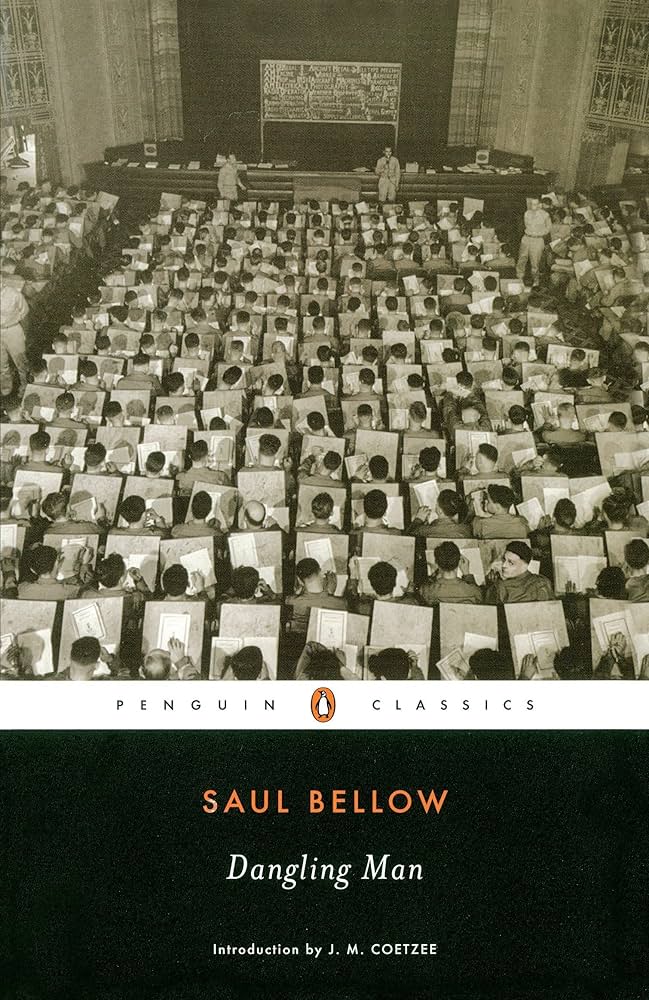
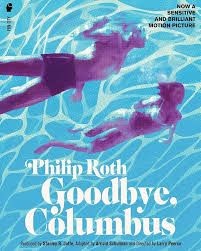
Jewish American Identity in Saul Bellow’s Dangling Man and Philip Roth’s Goodbye, Columbus

TRIGGER WARNING: This essay analyzes Jewish American identity in mid-20th-century literature and includes discussion of antisemitism, cultural and gender stereotypes, prejudice, and historical references to World War II. These topics are discussed in a literary and analytical context.

The main characters in Saul Bellow’s Dangling Man and Philip Roth’s Goodbye, Columbus react to Jewish stereotypes by challenging some and confirming others. The writers allow the characters to explore their Jewish identity within the context of the larger American culture of which they are a product.

Joseph in Dangling Man lives in early 1940’s Chicago. Antisemitism was prevalent in American culture. Jews were often characterized as greedy and dishonest. Vandalization of synagogues and Jewish cemeteries were a common occurrence. Literature spouting antisemitic rhetoric and symbols like swastikas were the norm (Freeman). Joseph does not mention any of this, but it is the reality in which he resides. He is not always honest with his wife and has an affair. His hot-headed temper gets him into trouble off and on. And his judgmental views of others reveal hypocrisy. In these ways, he upholds some stereotypes that others may have had concerning Jews. However, his pondering journal entries debate such concepts as materialism, honor, integrity, and truth, inner wrestling that defies the stereotypes of the time while he waits to be drafted to fight in WWII.

In one case he struggles with how to view the world and find his own place in it. “Joseph suffers a feeling of strangeness, of not quite belonging to the world…” (Bellow 17). He mentions the complicated nature of the world with both good and malevolence present to contend with and it bothers him when people try to simplify life to either good or bad. Yet, he has his own standards that he struggles to uphold. He endeavors to be honest with himself. He battles against his brother who wants to give him a handout. He is judgmental of his brother’s family and their materialism, viewing their desire for more than four rationed pairs of shoes per year as vanity. (Bellow 42). And he is disappointed that his wife Iva does not want to improve herself and her way of thinking to become a more enlightened person like him.

Neil in Goodbye, Columbus lives in late 1950’s Boston and is a secular Jew unsure of his position within his culture. He has definite opinions regarding what good Jews should do, like not get nose jobs to hide their Jewishness. He lived in a time “when antisemitism was at an all-time low” compared to the 1940s. However, non-Jews reported worrying about the materialism, excessive amounts of freedom, and lack of values that Jewish youth were perceived as possessing (Prell). Neil verifies that these stereotypes may have been founded concerning some of the more well-to-do Jewish families as he describes Brenda’s family’s wealth. He is amazed and seems critical of their “sporting goods trees”, housekeeper, giant home with guest bedrooms, multiple well-stocked refrigerators, and extra rooms full of outdated furniture (Roth).

This was also the time period when the Jewish American Princess began to be talked about. Brenda is the perfect example of this stereotype, the spoiled, bratty, argumentative Jewish girl who gets her way by manipulating her father. There is also a stereotype of the critical Jewish mother who is difficult to endure. Mrs. Patimkin certainly fits this description quite well. It is as though Neil is painting his experience with Brenda’s family as a lesson in all of the stereotypes Americans believed during the 1950s. Though he does not fit most of these, he is very aware of their presence and is looking in like a non-Jewish outsider observing this family as a case study.  

By the end of the book, Neil returns to his world that is not connected to the Patimkins (Roth 135). Despite being the first day of Jewish New Year, he goes to work and resumes his life as the kind of Jew that does not fit into most of the stereotypes he has encountered during his previous summer romance. He may not have it all figured out, but his experience with Brenda’s family has at least provided him with an example of what he doesn’t want in his life.

Works Cited

Bellow, Saul. Dangling Man. Penguin Group, 1944.

Freeman, Lauren. “The US and the Holocaust Project Group: Antisemitism.” Dec 2003, updated H. Marcuse March 26, 2012, marcuse.faculty.history.ucsb.edu/classes/33d/projects/ usholo/LaurenAntisemPage.htm

Prell, Riv-Ellen. “Stereotypes in the United States.” Jewish Women’s Archive – Encyclopedia. jwa.org/encyclopedia/article/stereotypes-in-united-states

Roth, Philip. Goodbye, Columbus. Vintage International Edition, September, 1993.

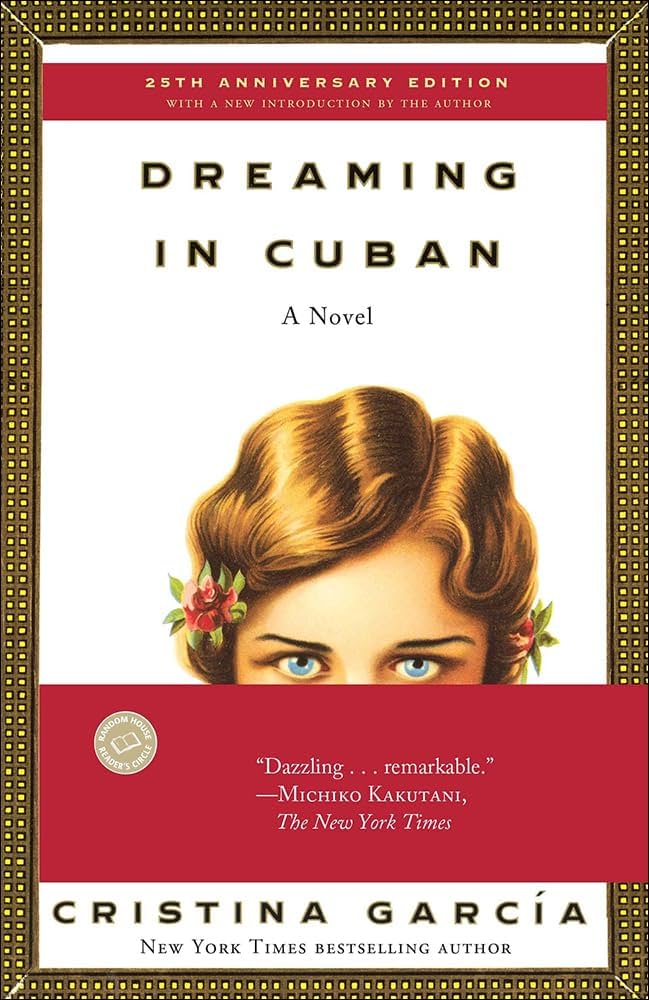
Reflections on Cristina Garcia’s Dreaming in Cuban

Cristina Garcia’s novel Dreaming in Cuban paints a portrait of two different Cuban American women and the way exile has helped to shape their identities as American citizens. Lourdes is a wife and mother at the time she flees to America to escape Fidel Castro’s Cuba. She leaves behind her parents and siblings to build her new life with her husband and daughter. Her American ideal is the stuff of movies and 50’s sitcoms. She has no patience for non-believers in the American dream and goes about creating her new identity from scratch. Pilar is a toddler when she leaves Cuba and it is not by choice. She is ripped from the arms of her grandmother and must accompany her parents to the U.S. She is torn between Cuba and America throughout her childhood due to her memories of her grandmother and a yearning to be reconnected with her. She resents the patriotism and blind faith her mother Lourdes places in the American dream and rebels against her mother’s ideals.

Lourdes owns a chain of Yankee Doodle Bakeries and is proud of the business she is building. She is a volunteer for the police force who patrols the neighborhood and believes it to be her “civic duty” (Garcia 136). She does things she believes to be distinctly American like she makes “Jello-O molds with miniature marshmallows” and “barbecues anything she can get her hands on” (Garcia 137). She attends the Thanksgiving Day parade on Fifth Avenue and watches the Rose Parade for New Year’s on television. For the American bicentennial, she plans to sell “tricolor cupcakes and Uncle Sam marzipan” (Garcia 136). She openly opposes anything that hints of communism or Cuban patriotism. “She’s convinced she can fight Communism from behind her bakery counter” (Garcia 136). Her daughter thinks she dreams of sponsoring her own float someday, “maybe a huge burning effigy of El Lider” (Garcia 137).

She only begrudgingly returns for a visit to Cuba in 1980 at the request of her daughter and is miserable the entire time arguing with the locals, complaining about the poor accommodations, criticizing the economy, etc. Garcia shows the contrast of Lourdes’s praise and pride in America with her disdain for Cuba. When she comes within killing distance of El Lider, Lourdes fantasizes about assassinating him, and her final act on the island is helping her nephew escape. She becomes a patriotic American whose love for her new country is partially a reaction to her escape and hatred of her old country. Her exile is her salvation and she is proud of her choice.

In contrast, Pilar struggles to figure out her identity. She takes for granted the country she grows up in because she did not have negative experiences in Cuba. She longs for a return to the island to see her grandmother and views those who bar her way as obstinate for no good reason. Pilar is a product of American society. She is drawn to the rebellious punk culture and uses her art to protest societal norms. She says she likes to “confront people” and that her art says, “Hey, we’re here too and what we think matters!” (Garcia 135). It is not until she returns to Cuba for a visit to her grandmother that she is confronted with the reality of the social, political, and economic unrest of her birthplace. Though she loves Cuba, she belongs in New York. “I know now it’s where I belong – not instead of here, but more than here” (Garcia 236). Her exile becomes real to her and that is when Pilar truly chooses America as her own, ready to claim it as part of her identity.

Works Cited

Garcia, Cristina. Dreaming in Cuban. New York, Ballantine Books, 1992.

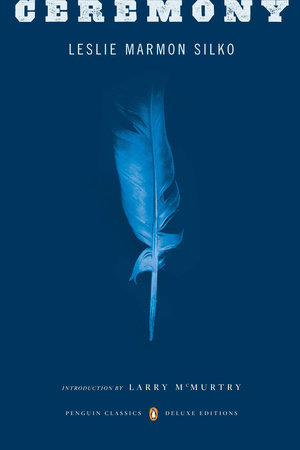
Healing the Whole Person – in Leslie Marmon Silko’s Ceremony

Introduction

Leslie Marmon Silko’s Ceremony follows the healing journey of a man named Tayo who has been devasted by a lifetime of abuse, neglect, and discrimination, and is now a surviving WWII prisoner of war. Silko addresses an important idea about healing that can be applied to many suffering from trauma. People need healing that touches mind, body, soul, relationships, nature, and society. Each strand is like a string of a spider web. Navajo tradition teaches that the world was created in part by a spider spinning a web of thoughts into existence. Tayo’s web strands become entangled due to evil influences and must be carefully untangled. Silko creates a variety of characters who help Tayo along his journey and is asserting that there is no one right way to heal. Tayo must reject the techniques that do not work and continue to search for methods that will bring peace, healing, and wholeness to his life. Integral to his healing will be the recognition of archetypes necessary to unify his self.

Literature Review

Many scholars have addressed different aspects of healing in Silko’s Ceremony, including Kristin Czarnecki’s focus on psychological healing in “Melted Flesh and Tangled Threads…” The trauma of being orphaned, mistreated for his mixed heritage, confused about his loyalty and pride in being Native American when others around are ashamed, and suffering from PTSD after returning home from WWII where he saw his cousin killed are carefully addressed in this piece (Czarnecki). Jude Todd addresses the physical healing Tayo must experience in his essay “Knotted Bellies and Fragile Webs…” Though the illness cannot be explained, it is very real for the protagonist. “Tayo’s ailment…he vomits repeatedly…if he continues this way he will die…”(Todd). Others focus on the spiritual/soul healing that needs to happen for Tayo’s health including Anthony Obst’s “Ceremony Found…” (Obst) and Jin Man Jeong’s “How and What to Recollect…” (Jeong). Gloria Bird explains that Christianity does not work for Tayo in her essay “Towards a Decolonization” (Bird). And others focus on the relationships that must be strengthened or severed, depending on how healthy they are to Tayo. Kurt Caswell addresses those that need to be released in “The Totem Meal…” (Caswell) and Jeong points out the people that should be remembered and embraced (Jeong). Still others focus in on the need to heal the land and claim a rightful place in society that is not subservient to colonial influences. Aaron Derosa’s “Cultural Trauma” (Derosa), Ana Brigido-Corachan’s “Things which don’t grow…” (Brigido), and Martin Premoli’s “His sickness…” (Premoli) are a few that analyze these aspects of healing that are larger than any one individual person. With so many elements necessary for Tayo’s healing, it is clear that there is no one right way to achieve that end. He must search and persevere through as many modalities as necessary until he finds the help and healing he needs. I will also show that part of that process is uncovering the conscious and subconscious archetypes present in his psyche so that he can unify his self.

Theoretical Model

The healing journey Tayo experiences can be viewed through a psychoanalytic lens due to the multiple layers of collective unconscious that he must sift through to find the images that work for him. Carl Jung theorizes that people wear a mask that is an outward representation of self, but must grapple with the shadow that is the inner darker self. Jung’s theories focus on myth, religion, and ritual as well as archetypes that for Tayo show up as people and creatures from his cultural stories. It is only by healing and unifying the disparate parts of himself that Tayo can become whole again and be a true self, which is the term Jung uses to define a whole, healthy human being.

Archetypes are like prototypes or symbols that represent common ways of thinking, behaving, or believing among people. People hold within their unconscious beings multiple archetypes that present themselves in different situations or as the need arises for that particular archetype’s qualities or strengths to be utilized. Jung believed that archetypes “are continually…reproduced in all cultures in all ages” (Mackey-Kallis). Because the stories recorded by humans throughout time have consistently utilized these archetypes, it is believed that they are a part of the collective unconscious for all humans, hardwired like instinct into the human psyche. To have a healthy self, people must find balance between their unconscious and conscious realities. Because Tayo is struggling with this unification, he is unwell, and his personality is fractured. He must embark upon a journey to unify his unconscious and conscious realities while uncovering the strengths of his innate wisdom found in each of his archetypes.

The main archetypes he will access are as follows: the child, the hero, the hunter, the shadow, and the anima. He will also interact and learn from archetypes that affect him including the father, the trickster, the mother, and the wise old man. It is through these various experiences and interactions that Tayo will be able to heal and unify the different aspects of his consciousness so he will no longer be a fractured self.

Analysis – Healing the Mind and Body

In the beginning of Ceremony, Tayo cannot stop throwing up. He is unable to function and remains bedridden most of the time because of overwhelming nausea. Western medicine in the form of medication, sedation, talk-therapy, and hospitalization have been unable to help him get a grip on his illness. The doctor from the military says “No Indian Medicine” but back home on the reservation, his family decides to call in a healer from their community (Silko 31). Silko shows that accepting help from within the community may be crucial in times of crisis. Ku’oosh is called in and reminds Tayo of the rattlesnakes who slither on their bellies near the cave that goes so deep it “enters into the very belly of the earth” (Todd). This memory makes Tayo’s stomach feel slightly better and Ku’oosh can go on to try to heal Tayo the old traditional way, reserved for warriors who have killed. Tayo has not killed anyone whose eyes he could see and cannot find words to explain to Ku’oosh the way modern warfare works, “…white warfare—killing across great distances without knowing who or how any had died” (Silko 33). Yet, he seems to feel better after the healing and keeps down some food. It is one step in his healing, though only the beginning.

He must also heal from the emotional trauma he has suffered throughout his life and especially recently in war time that has created mental anguish in the form of PTSD. Tayo has attempted to self-medicate with alcohol, like the other young veterans on the reservation, but his body often throws up the liquid and it is not the panacea for him that others experience. Silko seems to be addressing the issue with alcoholism that is prevalent in native communities, but does not decide to make that the focus of Tayo’s problems. He finds an unconventional healer Betonie who talks him through the trauma he experienced when the Japanese soldiers were executed in front of him and he saw his uncle Josiah as one of them. Betonie reassures Tayo that he is right and explains it in a way that works with his culture and the stories of his people, showing the collective unconscious that exists for humanity (Silko 114).  

Through his interactions with Betonie, Tayo becomes influenced by the archetype of the wise old man. He learns from Betonie and accepts the help he has to offer. Because something deep in his instinct recognizes the wise old man in Betonie, he is finally willing and able to accept that help unlike when it was offered before by others. Not only is the advice in line with what Tayo senses as true to his circumstances, but he follows through with the suggestions of Betonie showing that he develops trust in his ways.

Beonie’s rituals and ceremonies have an impression on Tayo’s healing. An article by Ted Kaptchuk analyzes ways in which Navajo rituals for healing affect the sick. It is couched in the scientific realm of placebo studies that compares rituals, acupuncture, and biomedical healing. After examining multiple ritual healings in which many participants reported improvement of their symptoms, conclusions were drawn that rituals can be affective. “Patient improvement…represents changes in neurobiology…Specific areas of the brain are activated and specific neurotransmitters and immune markers may be released” (Kaptchuk). Also, just as Tayo had to find a healer that was affective for him, the study showed that “different healers can have different effects on patients” (Kaptchuk). Even though Tayo engages in the ceremony and hopes that it will help, he is not completely convinced until he reaches the end and experiences healing. The same study reports that “when engaged in a ritual, patients do not abandon practical sensibilities. Hope, openness and positive expectancy are tempered with uncertainty and realistic assessment” (Kaptchuk). According to the science perspective, or as Silko might label it, the white man’s perspective, “ritual effects are examples of how environmental cues and learning processes activate psychobiological mechanisms of healing” (Kaptchuk).

Over time and through many days of adventures, Tayo begins to build his strength and improve his stamina. By the time he arrives at the apricot tree to encounter Ts’eh, he can keep down food more consistently. She cooks chili with corn and venison, and he eats. They make love and he sleeps peacefully having pleasant dreams. Each of these is a sign that he is improving, healing, gathering the pieces of himself to himself. When he awakens the next morning, he remembers the ritual of singing for the sunrise. His memories are coming alive and he is reconnecting with his people. He is now ready for the most rigorous portion of his adventure.

Analysis – Healing the Soul and Relationships

Tayo has been told terrible things about his mother his entire life. His aunt resents raising him, so he does not receive the motherly love that a child needs. When he returns to the makeshift village on the banks of the muddy river where he lived as a child, he is overcome by memories of pain, starvation, and neglect. His healing cannot begin until he recognizes the wounded child archetype within himself. He must relate to the people who continue to struggle for survival in much the same way he did as a child. The painful memories are nurtured when he gives spare change to several destitute people begging for money. Silko allows each piece of the healing to unfold naturally, as part of a journey or process that cannot be rushed or forced. Tayo also welcomes the reassurance from Betonie that part of his big story is the fact that he is a combination of cultures. Betonie is also mixed blood and is unconventional because he takes imagery and samplings of medicine from different cultures, “the ultimate collector and recycler of Western refuse” (Brigido). He is not afraid to adapt the methods to the person and the changing culture that accompanies the situation. He recognizes that without change, the ways of his people will die. These are lessons that Tayo must learn as well, in order to heal. It is through the ceremonies Tayo experiences that he realizes fully his spiritual place is with the native traditions, not Christianity. He needs the mother he never had, which he can only find in native stories, not Christianity. “Christianity separated the people from themselves…Jesus Christ was not like the Mother who cared for them as her children…” (Silko, Bird). Silko does not shy away from depicting the influence of Christianity as a negative force for the native community.

Tayo also has the opportunity to fall in love with a woman who brings him great comfort and help in his time of need. By embarking on the journey Betonie helps him to begin, he opens himself to the experience and is able to love and be loved in a way that has never happened for him before. The love that Tayo receives from Ts’eh shows him the archetype of the mother.  Her archetype provides comfort, is reassuring, and makes Tayo feel secure. Her presence is a key element in the final resolution of Tayo’s healing by helping him to capture the missing cattle he has been searching for and giving him a mission to plant the seeds that will rejuvenate the land. By passing on the task of planting, preservation, and regeneration, Ts’eh is awakening Tayo’s anima archetype. He will now show growth by presenting feminine qualities in a balanced way that was not available to him before. Tayo is only able to experience these things because he decides to accept help from the people who have his best interests at heart including “Old Grandma, Ku’oosh, Betonie,…Night Swan, Ts’eh, and Josiah” (Caswell).

Tayo must come to the realization that Josiah represented the father archetype for him. For years he receives advice, comfort, and companionship from Josiah. Tayo works the land with Josiah, chases the cattle with him, and protects Josiah’s secrets. He struggles with Josiah’s loss more than he can bear and needs help coming to terms with that loss. Because he must come to recognize the father archetype in Josiah, he is unable to heal until he makes right the loss of cattle and plight of the family’s farm. He must take ownership of his part in healing the financial and subsistence aspects of the family.

There are relationships Tayo must sever so he can heal. He can no longer cavort with his war buddies if he hopes to be healthy. Not only do their behaviors lead to negative outcomes regularly for Tayo, but they truly intend evil for him. Silko weaves myth into their final act, which is a ceremonial scene of witchery where two people are murdered. Tayo is the originally intended victim, and he is nearly pulled into the plot by the desire to save one of the victims. It is only after realizing that his involvement would result in a needless sacrifice or in him murdering another that he stays hidden and removed from further traumatizing himself with their evil. Tayo recognizes the trickster archetype in Emo as they are preparing the ceremony to kill the human sacrifice. Only once he sees the trickster for who he really is can he free himself from acting on his instincts. “The witchery had almost ended the story according to its plan…He would have been another victim” (Silko 235). This also required that Tayo recognize his own shadow archetype. He wants to ram the screwdriver he is holding into Emo’s head. He is trembling with the anticipation of being the savior turned martyr of the scene. Knowing he will kill, which will fulfil the witchery and make him implicit in the evil is what stops him from carrying out the murder.  In the terms of his cultural stories, he does not participate in the ceremony and thwarts evil’s desire to consume him. This releases the bond he shared with them and will no longer pull him from the healthy path he has embarked upon. After Silko shows Tayo avoiding the evil ceremony, she carefully constructs another ceremony for Tayo to participate in that shows the people he has decided to align himself with. He sits with the Laguna elders and tells “his story of healing” which “counters the witch’s story of destruction” (Caswell). With these people, he breaks bread and drinks healthy water, not alcohol (Silko 239). He is once again the hero archetype. He has broken the cycle of evil and good may bloom.

Analysis – Healing the Land and Society

Tayo’s pain is tied up in the plight of his people after white culture has stolen their resources (including uranium to make their atomic bombs), fenced off their grazing and hunting lands, and contributed to the “degradation of the…landscape” (Premoli). In order to begin to reconnect with the land, Tayo must spend time in nature. Silko uses the movement of Tayo’s journey to undo the curse of witchery by following the sunwise cycle (Swan). He must use his knowledge of the land and the ways of animals to track the cattle, a form of amends to his Uncle Josiah. His experiences observing the stars, clouds, weather patterns, herbs and plants used for healing, animal tracking, and geography remind him of his roots and further his healing. Silko shows the “boundarylessness” that should be when she has him cut open the fencing that white people used to slice up the land. During the scalp ceremony, Tayo first feels this lack of boundaries and realizes that it will take a long time for this type of healing to reach the entire world. Silko opens the door to that possibility, however, and implies that more tellings of stories that bring healing are the way to a future that is no longer bent on destruction.

As Tayo endures the difficulties of inclement weather, exhaustion, physical pain, and fear necessary to track the cattle he is determined to reclaim, he relies on instinct and ritual. When he thinks he can go no farther he receives help in the form of a mountain lion. He has collapsed beneath a tree in the pine needles overwhelmed by fatigue. He is sure his search is over until a mountain lion shows him the direction he needs to go to find the cattle. His rituals teach him that the mountain lion is the helper of the hunter. He sprinkles “yellow pollen into the four footprints” of the mountain lion in honor of the guidance with which he has been blessed (Silko 182). Once he finds the cattle, his instincts tell him that they will follow the fence line and head south. He hopes that their collective consciousness will drive them toward Mexico as their ancestors have always done. His instincts are relying on their instincts and he is right to do so. The animals do exactly as he hopes, and his patience pays off. He reclaims the cattle who have been unjustly stolen from Josiah and strengthens his own hunter archetype in the process.

The story Silko tells of Tayo’s pain demonstrates in one character the ways society has damaged an entire group of people. In English public schools, the native language is discouraged, their religious views and traditional ways of looking at the world are argued to be merely superstition, and the model for a future is to leave the reservation and make something of yourself elsewhere in white society. Tayo must fight back against the lies he has been told throughout his childhood of white superiority, shame for his appearance, language, and culture, and resentment at being used for violence in war by that same culture. He remembers a time in a science class when the teacher presented dead frogs for a lab. They were “bloated with formaldehyde, and the Navajos all left the room” (Silko 181). The teacher does not respect the traditions of the Navajos and is not even apologetic once he understands the offense. Rather, he laughs so hard he cries and makes fun of the children. He tells them their beliefs are “stupid” (Silko 181). These types of interactions occur throughout Tayo’s life. As an adult returned from war, he is told by the army doctors that his beliefs are merely “superstitions” (Silko 181). 

When Tayo is caught by the white cowboys for trespassing on a white man’s property, he is treated like a thief. They assume he is poaching deer or trying to steal a cow so he can have beef. Though Tayo does not confirm or deny their accusations, they decide to let him go so they can try to track the mountain lion. Once again, the mountain lion helps the hunter. They believe they have put him in his place and taught him a lesson. The Texan says, “These…Indians got to learn whose property this is” (Silko 188). They do not understand that they are the ones trespassing on Indian land, that they are the ones partitioning with fencing, hindering the natural grazing lands and flow of nature, the hunting grounds for all. When they finally leave, “he lay there and hated them” (Silko 189). He imagines tracking and killing them the way they are planning to harm the mountain lion. They do not understand the significance of the graceful cat they hope to kill. The more Tayo ponders his hatred of the white people, he comes to the realization that “it was the white people who were suffering as thieves do, never able to forget that their pride was wrapped in something stolen.” He comes to understand that the “destroyers had sent them to ruin the world” (Silko 189). He says that the white people had been tricked by the destroyers just as the Indians had. He cannot blame them for succumbing to the very same evil that his own people had.

Rather than devolve into a place of hatred toward white society or trying to figure out who to blame for all the evil, Tayo determines that witchery is the root cause of the evil unleashed on the world. He chooses to believe that people’s trickster archetypes and shadow archetypes have come to the fore. Silko seems to be saying through her text that rather than spend time seeking vengeance, people should put their energies into figuring out how to heal.

Results and Conclusion

The ending of Silko’s novel implies that Tayo has unified his self archetype and will be able to call upon the strengths of each of his archetypes as needed. If he is to heal the land and raise the cattle, he may need to call upon the nurturing of his anima (mother) archetype. If he needs to lead his family in tandem with Robert, he may need to call upon the father archetype (whether his aunt likes it or not.) He will need to continue to be the hero archetype so that he can help to heal his tribe and his family from the pain they have endured. Tayo probably has more healing to continue participating in, as creating a healthy life can take a lifetime, but he is on the right path. His journey is a model for anyone desiring to bring healing into their own lives.

Silko has created a model for analyzing which portions of a journey are ours, which portions belong to others, and which portions are a shared experience. Some aspects of Tayo’s journey are his alone to deal with. He must recognize that he gave his power over to the white government when he signed up to take part in World War II. He reveled in being treated like a war hero when in uniform and liking the way white women wanted him. He tried to escape with alcohol, self-pity, and sleep. He must come to terms with the fact that he survived when his cousin did not. These are his parts in the healing journey that he can take ownership of. The areas that are not his to own occurred at the hands of others. He cannot bear the guilt of his mother’s lifestyle that brought him into the world. He cannot bear the shame of his aunt’s negativity toward him because of his bi-racial genetics. He cannot take on the oppression he suffered at the hands of both Indians and white people who would not accept him as he was. Other people did these acts causing him to be a victim of those circumstances. Tayo must take part in a shared process of healing when it comes to his community, his family, and his relationships. He must be willing to work with his family to keep them provided for and functioning. He must be willing to work with the religious leaders in his community to strengthen their rituals and grow as a people. Ultimately, he must be vulnerable and giving if he hopes to love and be loved in the future.

This is the same for all humans. If we hope to heal from trauma, engage in meaningful relationships, and be part of the community in which we find ourselves, we will have to become empowered to experience a journey much like Tayo. Silko has written a myth and a parable that

is both inspiring and powerful because it examines the pain and recovery that is possible for anyone willing to face their shadow archetypes. If we are willing to examine our own archetypes and see those of others, we can unify our divided selves. Only then can we take responsibility for the ways we and our ancestors have harmed others and begin to rectify those evils.

Works Cited

Bird, Gloria. “Towards a Decolonization of the Mind and Text 1: Leslie Marmon Silko’s Ceremony.” Wicazo Sa Review. Vol. 9, No. 2 (Autumn, 1993), pp. 1-8, www-jstor-org.ezproxy.snhu.edu/stable/1409177?seq=1#metadata_info_tab_contents

Brigido, Anna. “’Things which don’t shift and grow are dead things’: Revisiting Betonie’s Waste-Lands in Leslie Silko’s Ceremony.” Alicante Journal of English Studies. 27(2014): 7-23, eds-a-ebscohost-com.ezproxy.snhu.edu/eds/pdfviewer/pdfviewer?vid=22&sid=280ec025-fedb-4ba3-9945-98d3d1a25659%40sdc-v-sessmgr03

Caswell, Kurt. “The Totem Meal in Leslie Marmon Silko’s Ceremony.” Interdisciplinary Studies in Literature and Environment. 15(2): 175-183; Association for the Study of Literature and Environment (ASLE), 2008, 1 July 2008, eds-a-ebscohost-com.ezproxy.snhu.edu/ eds/pdfviewer/pdfviewer?vid=3&sid=e07b3eb9-ba2a-4fa5-bac1-05895319b975%40sdc-v-sessmgr01

Causey, Tara. “The Only Cure Is a Dance – The Role of Night Swan in Silko’s Ceremony.” Western American Literature. 1 Oct, 2015, eds-b-ebscohost-com.ezproxy.snhu.edu/eds/ pdfviewer/pdfviewer?vid=1&sid=97020738-c912-40a7-9306-bc301c837a14%40pdc-v-sessmgr02

Czarnecki, Kristin. “Melted Flesh and Tangled Threads: War Trauma and Modes of Healing in Virginia Woolf’s Mrs. Dalloway and Leslie Marmon Silko’s Ceremony.” Woolf Studies Annual, 1 Jan. 2015, eds-a-ebscohost-com.ezproxy.snhu.edu/eds/pdfviewer/pdfviewer? vid=1&sid=a9b0de2e-ed92-4a23-8cb3-d88432b7baa9%40sdc-v-sessmgr03

Derosa, Aaron. “Cultural Trauma, Evolution, and America’s Atomic Legacy in Silko’s Ceremony.” Journal of Literary Theory. 1 Jan., 2012, eds-a-ebscohost-com.ezproxy.snhu.edu/eds/pdfviewer/pdfviewer?vid=2&sid=134fbcaa-3dea-454f-8b07-8dbbf22bd7d0%40sdc-v-sessmgr03

Jeong, Jin Man. “How and What to Recollect: Political and Curative Storytelling in Silko’s Ceremony.” Mosaio: An Interdisciplinary Cricial Journal. Vol. 49, No. 3 (September 2016), pp. 1-17, www-jstor-org.ezproxy.snhu.edu/stable/44030746?seq=1#metadatainfo_tab_content

Kaptchuk, Ted. “Placebo studies and ritual theory: a comparative analysis of Navajo, acupuncture and biomedical healing.” Philosophical Transactions of The Royal Society Biological Sciences. Volume 366, Issue 1572, 27 June 2011, doi-org.ezproxy.snhu.edu/10.1098/rstb.2010.0385

Mackey-Kallis, Susan. “Jungian archetypes and the collective unconscious.” Salem Press Encyclopedia of Health, 2019, eds-a-ebscohost-com.ezproxy.snhu.edu/eds/detail/detail? vid=1&sid=fab8f0e6-92c3-49d0-a751-9410de786517%40sdc-v-sessmgr01&bdata=JnNp dGU9ZWRzLWxpdmUmc2NvcGU9c2l0ZQ%3d%3d#AN=93872068&db=ers

Obst, Anthony. “Ceremony Found: Sylvia Wynter’s Hybrid Human and Leslie Marmon Silko’s Ceremony.” as/peers – emerging voices in American studies. www.aspeers.com/2019/obst?fulltext

Phillips, Bernard. “Jung and Sociological Theory: Readings and Appraisal – Review.” Contemporary Sociology. 48, 5, journals-sagepub-com.ezproxy.snhu.edu/ doi/pdf/10.1177/0094306119867060pp

Plaut, Alfred. “Freud’s ‘id’ and Jung’s ‘self’ as aids in self-analysis.” The Journal of Analytical Psychology. 1 Feb., 2005, eds-a-ebscohost-com.ezproxy.snhu.edu/eds/pdfviewer/ pdfviewer?vid=14&sid=b9e8529d-0d1c-4a49-be56-d08f263dfddc%40sdc-v-sessmgr03

Premoli, Martin. “’His sickness was only part of something larger’: Slow Trauma and Climate Change in Leslie Marmon Silko’s Ceremony.” American Imago, Volume 77, Number 1, Spring 2020, Johns Hopkins University Press, muse-jhu-edu.ezproxy.snhu.edu/article/753067

Silko, Leslie Marmon. Ceremony. Penguin Group, 1977.

Swan, Edith. “Healing Via the Sunwise Cycle in Silko’s Ceremony.” American Indian Quarterly. Vol. 12, No. 4 (Autumn, 1988), pp. 313-328, University of Nebraska Press, www-jstor-org.ezproxy.snhu.edu/stable/1184404?seq=1#metadata_info_tab_contents

Todd, Jude. “Knotted Bellies and Fragile Webs: Untangling and Re-spinning in Tayo’s Healing Journey.” American Indian Quarterly. Spring95, Vol. 19 Issue 2, p 155-170. 16p. muse-jhu-edu.ezproxy.snhu.edu/article/753067

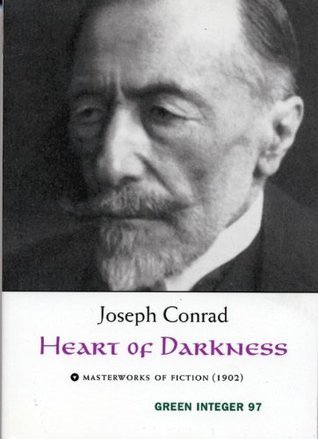
Joseph Conrad’s Heart of Darkness: Feminist v. Deconstructionist Analysis

A feminist v. deconstructionist analysis of Heart of Darkness by Joseph Conrad reveals differing concepts relevant to the ideologies inherent in the worldview of the author. Because so few women are present in the text, a deconstructionist perspective is the more productive methodology for analysis; however, the few mentions of females exhibit misogynistic leanings.

Marlowe gets desperate for a job fitting his dreams and turns to a woman for help. “Then—would you believe it?—I tried the women. I…set the women to work—to get a job.” His comments reveal that he is ashamed of sinking to the level of someone who would need a woman’s help to procure employment, but her involvement works and successfully lands him the job he desires. He pays her a visit before heading for the jungle and is once again internally demeaning when she says, “You forget, dear Charlie, that the labourer is worthy of his hire.” He thinks, “It’s queer how out of touch with truth women are. They live in a world of their own… It is too beautiful altogether, and if they were to set it up it would go to pieces before the first sunset” (Conrad). Marlowe thinks women are unable to fathom the realities of his hard man’s world and create a nicer imaginary version with which to soothe their fragile nerves.

Kurtz seconds this mentality when he is quoted as saying, “Girl! What? Did I mention a girl? Oh, she is out of it—completely. They—the women, I mean—are out of it—should be out of it. We must help them to stay in that beautiful world of their own, lest ours gets worse” (Conrad). He implies that the separateness of their worlds somehow keeps the men less barbaric than they might become if the women join in on the mayhem, or perhaps holding on to the illusion that women are treasures to strive for helps the men to keep their sights on something more than the horrors of their realities. This form of sex segregation and defense of female virtue is similar to the reasoning that led to lynchings in the American South because white women needed protection (Jordan 568). 

After Kurtz’s death, Marlow speaks to the girl who had to be left “out of it” and a deconstructionist lens shows a binary of illusion/reality. “’Who was not his friend who had heard him speak once?’ she was saying. ‘Yes, I know,’ I said with something like despair in my heart, but bowing my head before the faith that was in her, before that great and saving illusion that shone with an unearthly glow in the darkness…’ ‘And of all this,’ she went on mournfully, ‘of all his promise, and of all his greatness, of his generous mind, of his noble heart, nothing remains—nothing but a memory. You and I—’ ‘We shall always remember him,’ I said hastily” (Conrad). She does not realize the level of absurdity to which her words rise when speaking of Kurtz’s ability to win friends. He inspires devotion through fear and intimidation as far as the natives are concerned. She clings to the illusion that her love was a great man who was noble and generous. The meaning behind Marlowe’s insistence that he will remember Kurtz holds a completely different connotation than the mourner’s illusory memories. She mourns a man she thought she knew or knew when the man was in polite society surrounded by creature comforts and minimal moral dilemmas to face. Marlowe knew the man Kurtz became when thrust into the harsh environs of the jungle, left to discover his basest desires, with no moral arbiter to keep him in check.

A paradox arises from the different realities the two speakers experienced related to Kurtz. It is the dimension Plato invites us to analyze “of a pure becoming without measure, a veritable becoming‐mad, which never rests. It moves in both directions at once. It always eludes the present, causing future and past, more and less, too much and not enough to coincide in the simultaneity of a rebellious matter…The paradox of this pure becoming, with its capacity to elude the present, is the paradox of infinite identity” (Deleuze).  This slippery reality can be traced through every scene in Heart of Darkness.

Works Cited

Conrad, Joseph. Heart of Darkness. The Project Gutenberg EBook. 2 March 2018, www.gutenberg.org/files/219/219-h/219-h.htm

Deleuze, Gilles. “What is Becoming.” Rivkin, Julie; Ryan, Michael. Literary Theory: An Anthology, 3rd edition. Wiley Blackwell.

Jordan, Emma. “Crossing the River of Blood Between Us: Lynching, Violence, Beauty, and the Paradox of Feminist History.” The Journal of Gender, Race & Justice, Georgetown University Law Center, pp.568, January 2010, scholarship.law.georgetown.edu/cgi/viewcontent.cgi?article=1117&context=facpub

Joseph Conrad’s Heart of Darkness: Psychoanalytic v. Feminist Reading?

A psychoanalytic reading of Joseph Conrad’s Heart of Darkness reveals the inner journey of a man immersed in the horrors of human evil. In one scene Marlowe connects with the natives who are fending off a supposed attack by creating a ruckus. “They howled and leaped, and spun, and made horrid faces; but what thrilled you was just the thought of their humanity—like yours—the thought of your remote kinship with this wild and passionate uproar. Ugly. Yes, it was ugly enough; but if you were man enough you would admit to yourself that there was in you just the faintest trace of a response to the terrible frankness of that noise, a dim suspicion of there being a meaning in it which you—you so remote from the night of first ages—could comprehend” (Conrad part II). He admits that somewhere within his subconscious there is a sense of recognition of the self, a primordial collective consciousness (Ivonin). When he realizes that the cannibals in his employ are probably getting hungry, he looks at the people through their eyes. “I perceived—in a new light, as it were—how unwholesome the pilgrims looked, and I hoped, yes, I positively hoped, that my aspect was not so—what shall I say?—so—unappetizing: a touch of fantastic vanity which fitted well with the dream-sensation that pervaded all my days at that time” (Conrad part II). Cannibalism falls into the category of taboos in western culture that may be forbidden partly because “we have a deep and primitive desire to do it” (Schutt). It is interesting that Marlowe is hoping he looks more appetizing, perhaps revealing an inner need to be desired that has not been fulfilled as some sort of displacement mechanism (Freud).

A feminist reading of these same passages reveals completely different possibilities. When Marlowe hears the natives howling in the jungle, he does not even conceive of the fact that women might be a part of that great cacophony. It is a plea from one man to another, a negotiation between men. From Marlowe’s patriarchal perspective, no women would be a part of that age-old discussion because he envisions women on the sidelines in their huts caring for their children. The reality is that any of those cries could be resounding from women or men; he has no way of knowing (Tyson). The “wild and passionate uproar” is as much a female cry as male (Conrad part II). As concerns the cannibals, women are once again left out of the discussion, but Marlowe has been away from any female sexual attention for a long time at this point. Perhaps any attention would be welcome, even from male cannibals. It could be that Marlowe is subconsciously forgetting gender assignments for a moment and thinking simply as a human (Rich). He may not even realize how desperately he wishes for someone to want him in this terrifying jungle.

It seems on a cursory reading that a psychoanalytic reading would reveal the most information because Marlowe is sharing his inner thoughts and opening the door to deep digging into his psyche. There is little mention of women in the piece, so most of the feminist critique will come from a place of absence. However, what little is said of women is prime for analysis because Marlowe’s observations are so clearly dismissive and fearful of women in a way that would be interesting to flay.      

Works Cited

Conrad, Joseph. Heart of Darkness. The Project Gutenberg EBook. 2 March 2018, www.gutenberg.org/files/219/219-h/219-h.htm

Freud, Sigmund. “The Interpretation of Dreams.” Rivkin, Julie; Ryan, Michael. Literary Theory: An Anthology, 3rd edition. Wiley Blackwell.

Ivonin, Leonid; Chang, Huang-Ming; Diaz, Marta; Catala, Andreu; Chen, Wei; Rauterberg, Matthias. “Traces of Unconscious Mental Processes in Introspective Reports and Physiological Responses.” Plos One. 13 April 2015, doi.org/10.1371/journal.pone.0124519

Lois Tyson – Critical Theory Today: A User-Friendly Guide, 2nd ed., 2006.

Rich, Adrienne. “Compulsory Heterosexuality and Lesbian Existence” Onlywomen Press, 1980, users.uoa.gr/~cdokou/RichCompulsoryHeterosexuality.pdf

Schutt, Bill. Eat Me: A Natural and Unnatural History of Cannibalism. Welcome Collection, 2019.