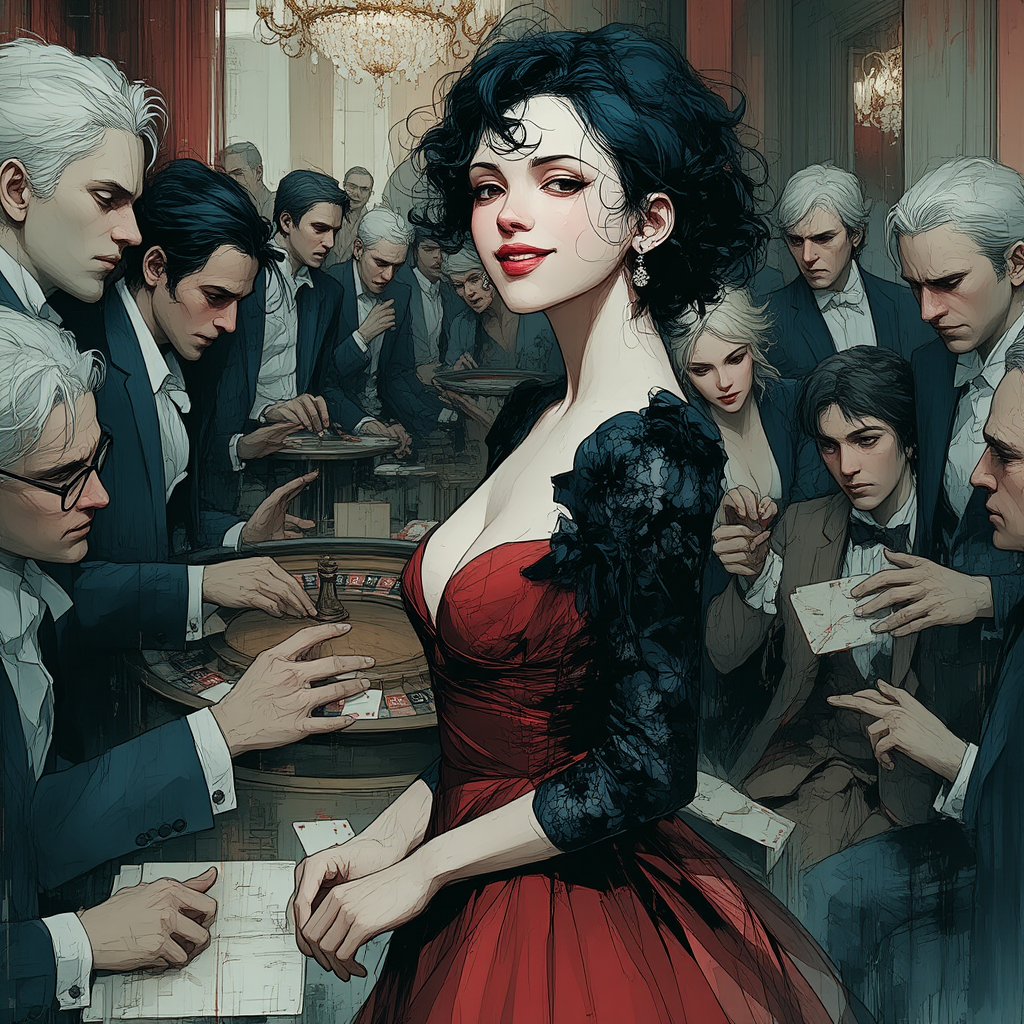
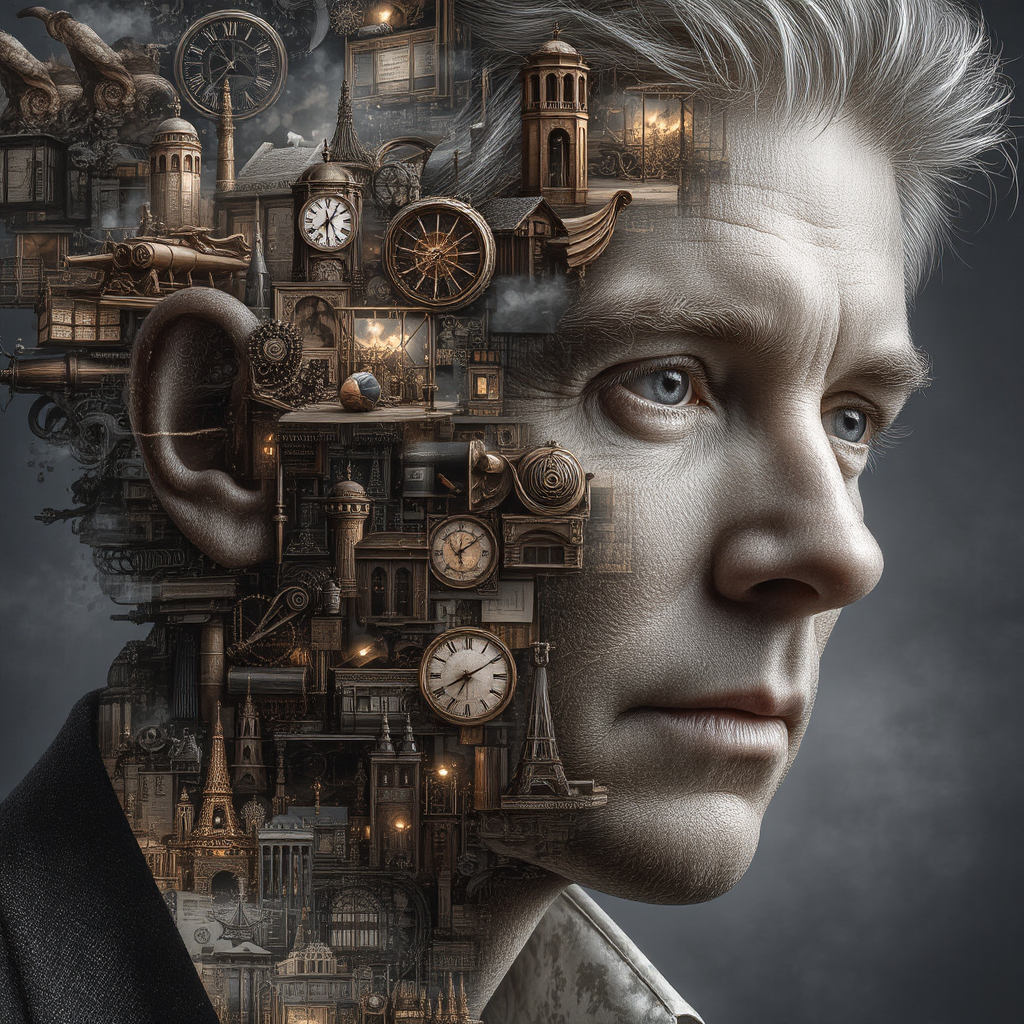
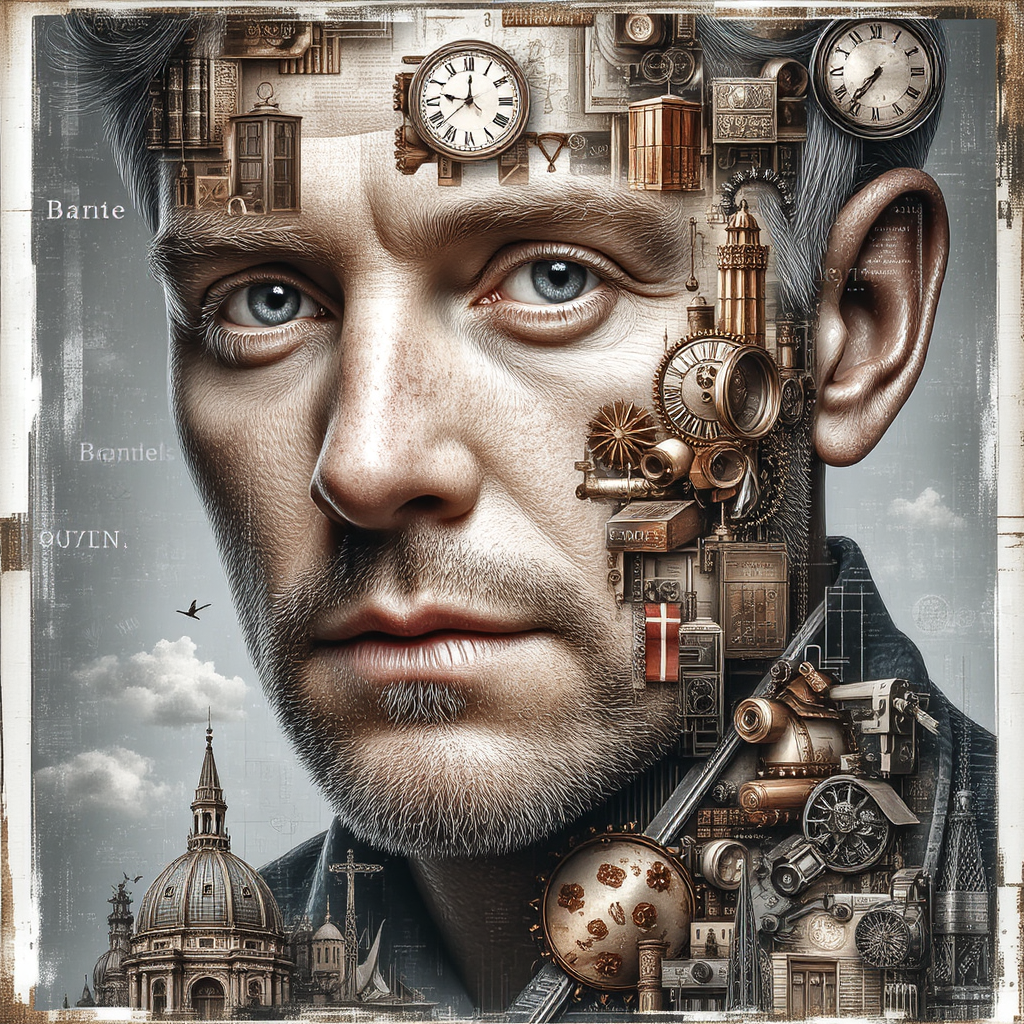
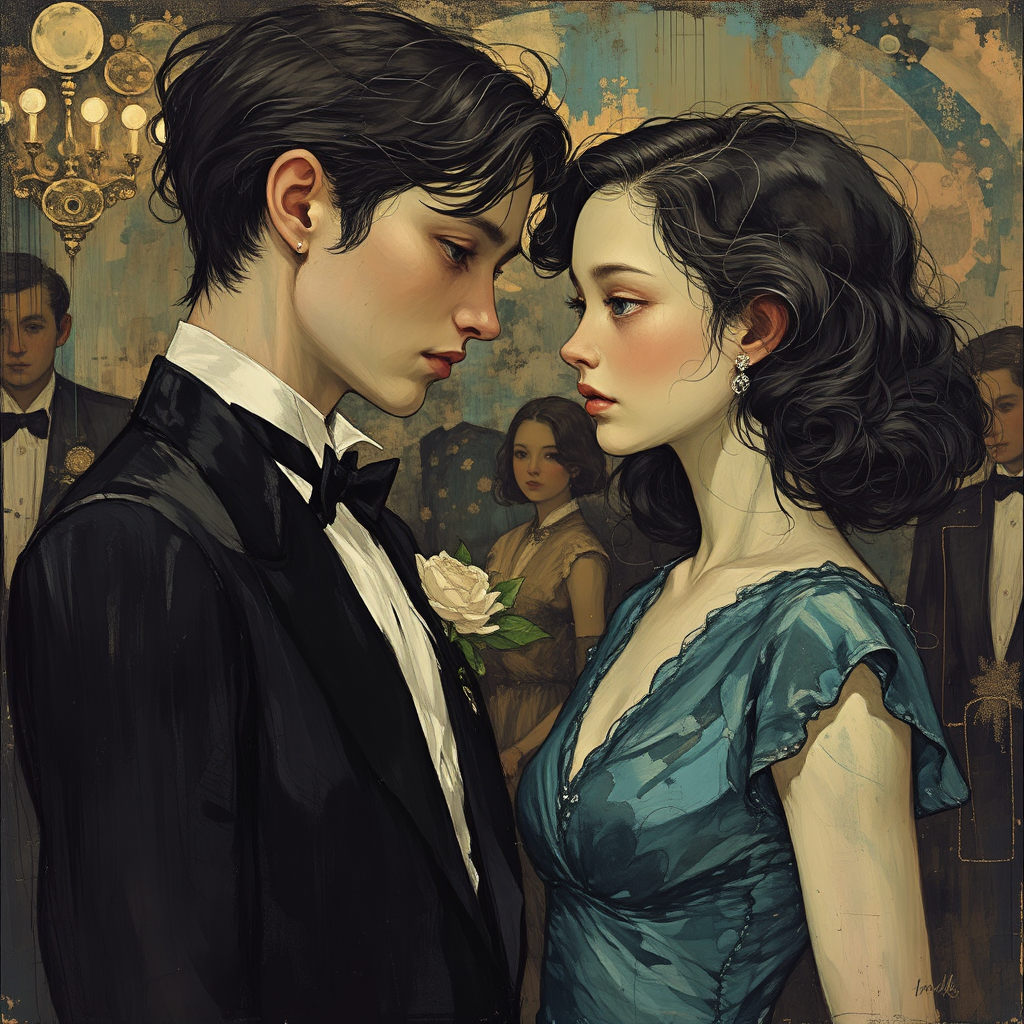
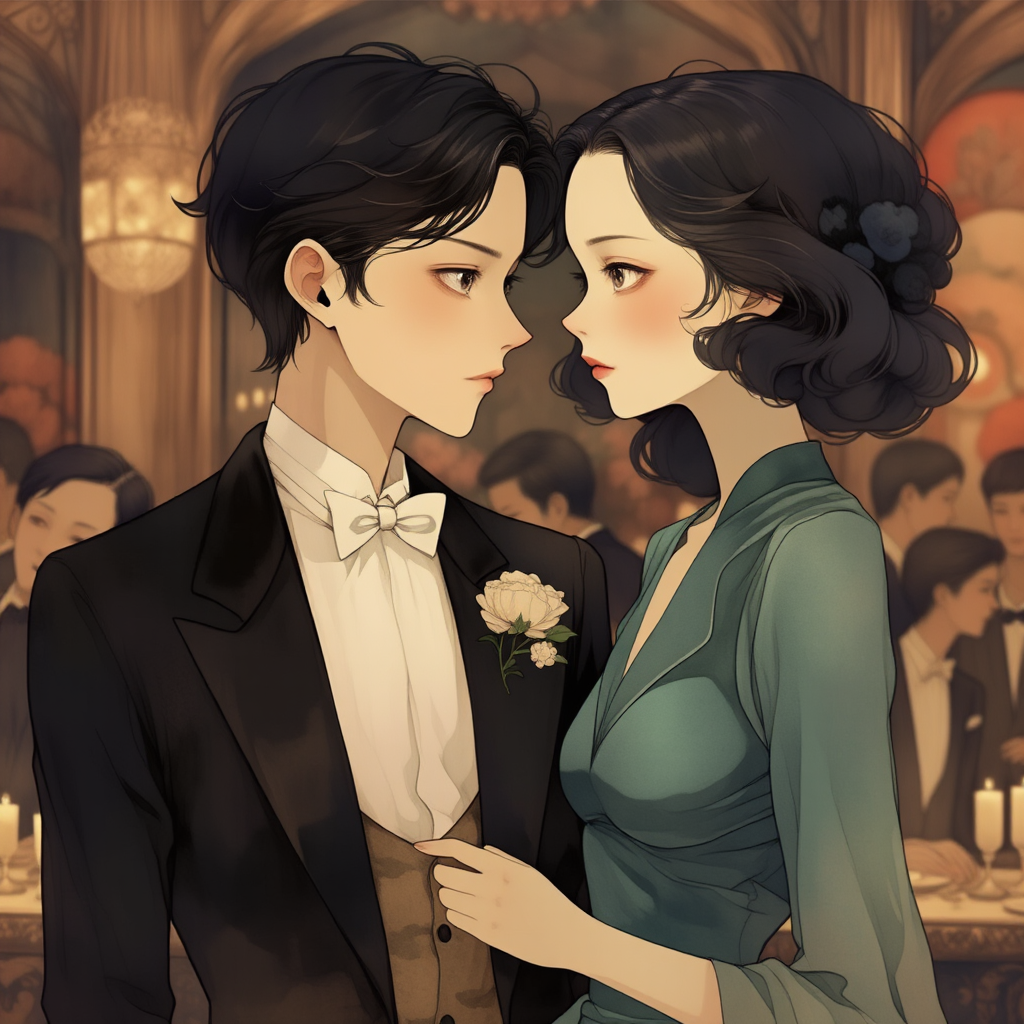
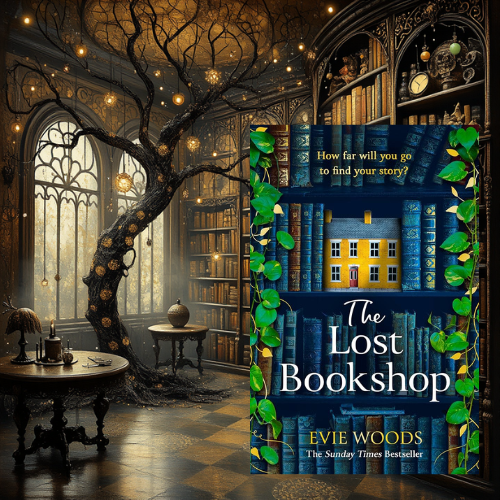
These images created by Rebekah Marshall’s prompts using AI on Gencraft.com website.
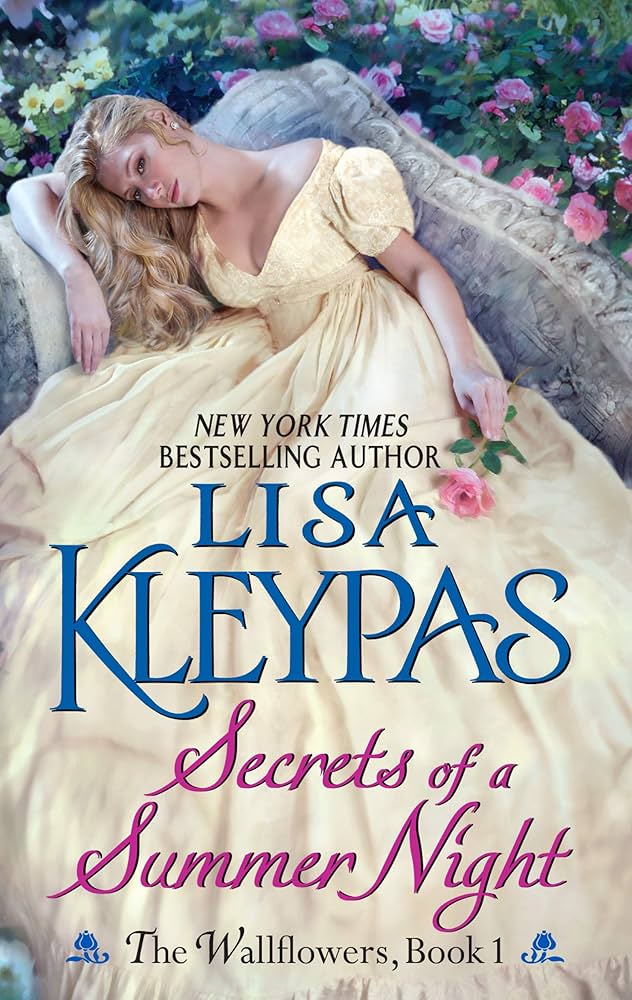
In London, 1843, it is most egregious to be a young lady out in society if you don’t check all the boxes considered desirable for marriage. Four young ladies find themselves on the wrong side of the marriage market, sitting alone together and decide to form an alliance, calling themselves The Wallflowers. They make pacts to help each other snag husbands and form fierce friendships along the way. And what, pray tell, are their crimes? One has fallen on hard times and does not have as much money as she used to because her father passed away and left more debt than wealth. Oh, and she’s old, a whopping 25 years old. Another has a stutter. And two are from America, for shame.
They decide to start with Annabelle because her situation is the direst, this being her last season due to her aged decrepitness of 25 years and near spinsterhood. And to her chagrin, the only male sniffing around her is Simon Hunt, a brash, outspoken, not-very-gentlemanly, non-noble, annoying man who grates on her nerves. He is fascinated with Annabelle and has even suggested that he will take her on as a mistress if she gets desperate enough. Needless to say, she is not impressed by his offer. The ensuing tale is delightful, playful, and full of twists and turns. There are even several extremely climactic and traumatic events near the end that kept me flipping pages late into the night.
I will give away that Annabelle’s situation is satisfactorily resolved, but that means we have three more Wallflowers to marry off. I can’t wait for their books. And hints have already been given throughout Secrets of a Summer Night by Lisa Kleypas as to who the next pairing might be.
Kleypas, Lisa. Secrets of a Summer Night, Avon Books, 2004.
Set in a rural town in Oregon in the 1890s, Fancy Free by Catherine Anderson is a charming tale of hijinks gone wrong, misunderstandings galore, and a literal shotgun wedding that throws a nearly blind young lady into a household of eight males. In her attempts to keep her blindness hidden for fear of rejection, Rachel scorches the clothes, puts salt in the pies, and trips over everything, leading to many wacky scenarios. And just as true love seems to be blossoming, another woman arrives on the scene to throw a kink in the works. I quite enjoyed this novella and could totally see it as a successful film. I would watch it in a heartbeat.
The Mad Earl’s Bride by Loretta Chase
The novella The Mad Earl’s Bride by Loretta Chase was my favorite of the four stories in this collection. It is set in the late 1820s in Dartmoor, Devon, England, with the dangerous bogs of the open moors playing a part in the storyline. The story centers around a mother and son who seem to experience similar symptoms of a brain disorder that has no cure. The young heroine of the story is a medical student who will not give up on researching the problem and refuses to kowtow to the opinions of most of the medical experts of the day. Her open-minded, science-obsessed, driven nature makes her a perfect match for the man who has lost all hope of survival, let alone comfort or peace. The romance is fabulous, and the peak inside the medical world of the early 1820s is fascinating.
Promises by Lisa Kleypas
I dedicated an entire review to this novella set in London because it went with the cannon of stories I was reading in The Gamblers of Craven’s Series. See “Promises (Novella Review)” for full details.
The Kiss by Kathleen E. Woodiwiss
This is the shortest of the four novellas in the book and by far the most unsettling. This one takes place near Charleston, South Carolina, around the turn of the 19th century, and addresses themes of human trafficking. A 19-year-old woman from London is being sold by her good-for-nothing uncle to some sleazy older man and escapes long enough to run into a tall, handsome, rich stranger, who just happens to be a very eligible bachelor. You can imagine where the story goes from here. Black servants in the home are mentioned, and the author makes a terrible attempt at dialect. There might be a reason this book is out of print. I will say that there is some good chemistry between the characters. I would not have chosen to end with this novella, but no one asked for my input.
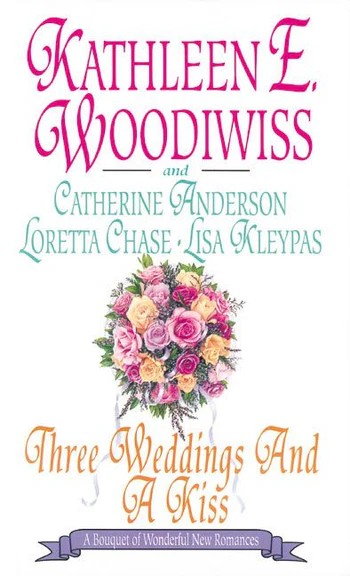
Anderson, Catherine; Chase, Loretta; Kleypas, Lisa; Woodiwiss, Kathleen E., Three Weddings And A Kiss, Avon Books, 1995.
Red dress images created by Rebekah Marshall’s prompts using AI on Gencraft.com website.
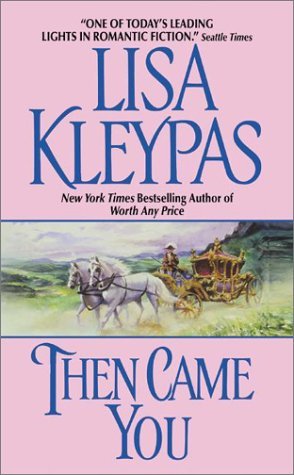
I love romances that contain the enemies to lovers trope, with a splash of danger, dramatic irony, and breaking of social conventions. Then Came You by Lisa Kleypas delivers on each of these qualities and more. There is gambling, kidnapping, bear rescues, fox hunts, and a scheming heroine who defies as many social conventions as she can as she fights to save her family.
There are more steamy scenes than I was expecting for a piece of historical fiction set in 1820s London, that’s for sure. But I was fascinated by the fickle gossip that could make or break reputations, ruin lives, and restore order in the uber-rich circles of the aristocratic elite, as seen in Regency-era novels and shows like Bridgerton. This is the first of 23 books and stories in this world and/or family lineage that I plan to read by this author. I was excited to discover Ms. Kleypas through a BookToker/ fellow reader/ TikTok account I follow.
Some parts of the story felt a bit reminiscent of Shakespeare’s Taming of the Shrew, but there were even more layers, with our “shrew” Lily having her own complicated past to manage. Plus, she is a much more likeable character from start to finish than that of Kat in Taming of the Shrew. I could totally see this as a fabulous movie with Holly Earl playing Lily and someone like Charlie Hunnam or Theo James as the love interest. And I can’t wait to read the next book because I bet it is going to focus on the owner of the casino, who we only get brief glimpses of in this novel, but is obviously a multi-faceted character with an ocean’s deep story ready for the telling.
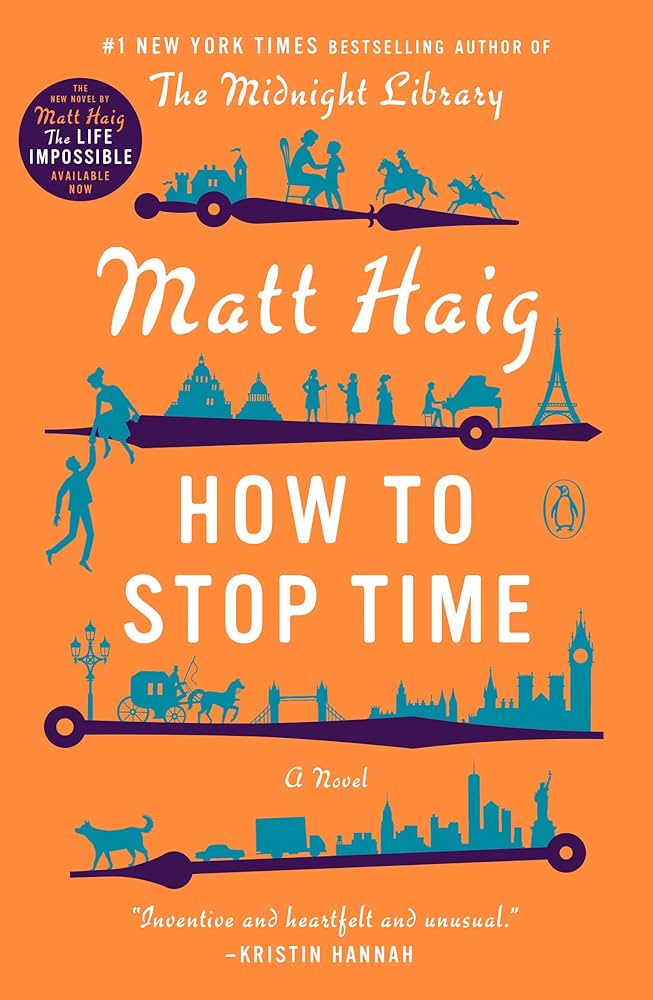
I can think of few premises more horrible than that of Matt Haig’s novel How to Stop Time. It is a world where some among us age painstakingly slower than average. The protagonist appears to be in his early 40s but has been alive on this earth for over 400 years. From French aristocracy to quaint village life in old England, from the dangerous streets of Shakespeare’s London to the London of the 21st Century, we are swept along with his story almost against our will. If life is a serious of tragedies with bright spots in between, imagine the tragedies of more than 5 lifetimes. The body still has aches and pains, the mind battles ups and downs, depression, anxiety, but with the added fears of being discovered, labeled a witch, a modern miracle, or a danger.
There are networks built to “protect” these long-living humans, but there are also organizations bent on finding and studying them like lab rats to enhance the lifespan of the rest of humanity. Staying hidden from both is nearly impossible, especially as modern technology advances to the point of photography, video, then internet and cell phones, and eventually social media. And how is one to love, to open the heart to vulnerability, knowing you will outlive any partner, child, grandchild, or friend? Oh, living with the pain of loss would be most unbearable for someone like me. I don’t even enjoy pondering this fictional concept any longer than I must.
But Mr. Haig has masterfully pondered these question and more in his tribute to family, humanity, love, and ode to living in the present. If nothing else, this book has made me thankful that my time here is brief in comparison. It is a good reminder to appreciate what we have and take no one we care about for granted. Change and death are inevitable constants that we must learn to accept; the alternative being the illusion of stagnation until the day we die.
Haig, Matt. How to Stop Time, Penguin Books, 2017.
All the rest of these images created by Rebekah Marshall’s prompts using AI on Gencraft.com website.
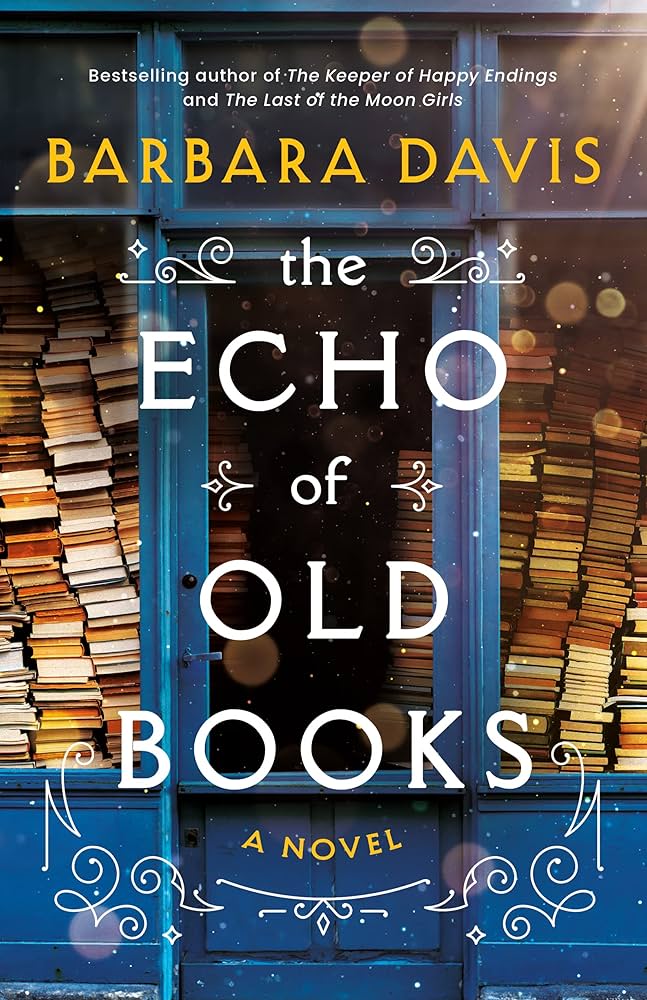
I love stories where loose ends are tied up, wrongs are righted, and resolutions are satisfying. I will not give away which elements of this tale adequately meet my criteria, so as not to spoil the ending for anyone, but I will say that I was sufficiently pleased. The Echo of Old Books by Barbara Davis spans the 1940s to the 1980s. The technology of those worlds is so different from today that we forget how differently life was lived until we are placed back in those settings. No social media, no internet, no Googling, no cell phones. Newspapers, books, telephones, and eventually micro phish.
There are layers of intrigue surrounding the uber-rich, pre-WWII antisemitism, psychiatry as a weapon against women (especially the act of having women committed to asylums), and societal shame surrounding children born out of wedlock. But my favorite parts are of course, the tragic romance threaded throughout both the books and the decades. The world seems to always have a problem with letting people who love one another be together, whether because they are the wrong nationalities, colors, classes, genders, ages, or religions. Add family rivalry, childhood loss, and war, and the chances of happily ever after go way down.
At least four generations are affected by the racism, classism, and evil perpetrated by several characters in this story. And the question of whether it is safe to open the heart, heal from the past, and give love a second chance, must be answered by multiple characters, each in their own time and place. Though the specifics of this tale are rooted in one family, the concept is universal. If people are unwilling to face truth, have the hard conversations, and find a safe home where they can be vulnerable, there can be no hope of reconciliation.
Davis, Barbara, the Echo of Old Books, Lake Union Publishing, 2023.
TRIGGER WARNING: This novel contains themes related to immigration challenges, economic hardship, race and class dynamics, and complex family relationships. It also touches on substance use and addiction, overdose, and instances of domestic conflict and violence. Some readers may find these topics emotionally intense.
All the rest of these images created by Rebekah Marshall’s prompts using AI on Gencraft.com website.
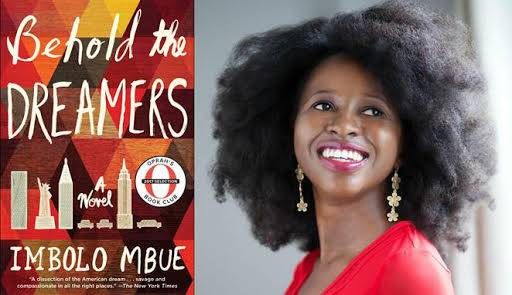
Behold the Dreamers by Imbolo Mbue provided a peek into the lives of some families quite unfamiliar to me—those of immigrants from Cameroon living in New York, trying to make a living in less than ideal conditions, and those of the privileged Wall Street rich executives with fancy cars and vacation homes in the Hamptons. I found the descriptions and complex relationships between the characters fascinating and believable.
The character I connected with the most was Neni, the wife of Jende, who follows her husband to New York from Cameroon with their toddler in tow when she is able. She is hard-working, persistent, hopeful, and resourceful. She jumps into every challenge with grit and is determined to become a pharmacist to help support her family. In one scene, she finally finishes her chores at midnight and must now study until at least 3:00 AM. Her toil is such a different pace in America than when she lived in Cameroon. I felt such empathy with her plight.
“She rested her head in her right hand, closed her eyes, and exhaled…Her mind was always active, it seemed—what needed to be done, by when, how long it would take to get done. Even when she sang during her chores, she was mindful of the next chore. And the one after that. Life in America had made her into someone who was always thinking and planning the next step.”
If only life could be different for all of us. Why must every step forward be two steps back, no matter how hard people try? So many in this world are giving the best they have to offer of their hearts, minds, and bodies, but all the wishful thinking, determination, prayer, and planning in the world does not always bring about success. There are no perfect answers or happily ever afters in this novel, but the spirit of survival, family, learning from our mistakes, and perseverance are inspiring nonetheless. And it is a wonderful reminder to treat everyone we meet as though they could be an angel, like the weary men Abraham offered hospitality to in the Bible. What a wonderful world we would live in if that were our perspective.
Mbue, Imbolo, Behold the Dreamers, Penguin Random House, 2016.
All images created by Rebekah Marshall’s prompts using AI on Gencraft.com website.
I am reading Hafiz’s Little Book of Life, poetry by Hafiz-e Shirazi. He is challenging me to become more comfortable with ambiguity. I will share his poem and some of my thoughts on his poem (sometimes with the help of experts when the concepts are too hard for me), followed by a poem and some art inspired by his poem.
Hafiz’s Poem 29:
Along the Way of Love
Worldly rule is A parasite
Some thoughts:
I had to ponder this one a while and use resources to check my ideas against. “Along the Way of Love” feels like it is talking about our path or spiritual journey throughout life. My husband’s martial art talks about “Budo,” which means roughly, “The Martial Way.” Some spiritual practices call it “The Walk” or “The Straight and Narrow Path” or “The Hero’s Journey.” Common threads in all of them are ideas of practice, movement, alignment, and surrender. In the Tao Te Ching, Dao is “The Way” and is the underlying current shaping our reality or the natural flow of our existence. The Bible depicts Jesus as “The Way” and a life patterned after his love, sacrifice, and humility is the ideal for Christians. In Hinduism, Marga is the path and Dharma is “cosmic order, right action, and duty aligned with one’s nature.” In Buddhism, The Noble Eightfold Path includes right speech, right action, right livelihood, and right mindfulness. Many Indigenous traditions speak of “Walking in Balance”, in beauty, right relationship, and balance with the land, ancestors, community, and spirit.
Any of these examples works perfectly with the rest of the poem because it is saying that, essentially, any outside force that tries to control “The Way” does so by feeding on us. Outside powers like governments, religious authorities, ego, systems that dominate, or hierarchies that control need someone to rule over. They survive by draining the life and spirit of their hosts. They cannot exist independently from us. Power that depends on control is a parasite. They require dominance, fear, maintaining an image, etc. If we are truly traveling The Way, we are striving for equality, love, surrender, vulnerability, and humility, all things that are opposites of ego-driven constructs.
On a more personal level, if we are trying to walk The Way of Love, it is not in alignment to act parasitic. Are we trying to control people around us? Are we trying to control outcomes, narratives, opinions, or events? Love does not try to control others. Love flows freely. Do we try to dominate conversations when we want to get our way instead of letting the conversation be fair and two-sided? Do we use our emotions to bully others into doing what we want, rather than keeping ourselves balanced and in check and recognizing that we are using manipulation as a tactic? Control clings, fears, threatens, traps, insists, interferes, and demands. Nothing that tries to control is love.
My Poem 29:
The plasmodium falciparum is the deadliest parasite for humans, as far as we know.
Over 600,000 people die every year from malaria caused by these tiny little one-celled creatures who fly through the air on winged mosquito ladies from one human host to another, multiply in our livers, then burst open our red blood cells, which we would prefer were kept intact.
Their feasting and multiplying is incongruous with our well-being, their only goal multiplication.
For them the glorious bursting of our cells is like fireworks, celebratory blasts releasing new generations into the river of life (our bloodstream) where they hope to be a lucky chosen one that will be sucked into the sky and helicoptered to a new host, where their descendants will begin again.
Hafiz. Hafiz’s Little Book of Life. Translated by Erfan Mojib and Gary Gach, Hampton Roads Publishing, 2023.
I loved the ideas and interwoven timelines that crossed generations, countries, and realities in The Midnight Library by Evie Woods. It is magical, mythical, fairy tale-ical (I made up that word), and beautiful. It is so beautiful that my main complaint is that I wanted more. The first half of the book is deeply fleshed out, letting us into the characters detailed inner lives and minute by minute adventures. The second half of the book feels rushed, almost like it should have been several more books in a series so the author could have gone deeper into the story lines and better tied together the threads she was so masterfully weaving.
I want to know so much more about the eccentric elderly woman Martha works for. Martha’s childhood is left untapped, so much potential for background to show how she might find herself trapped in such a terrible marriage. Her mother signs and does not speak, which opens the door to so many questions that could be answered and scenes that could be elaborated on. The events that occur around the World War II timeline are barely mentioned and could be so many chapters of fascinating detail. Giant chunks of time are skipped over that could be filled with story. And some of the puzzle pieces like the tattoos, living bookshelves, missing manuscripts, and love affairs feel like fragments that could be such an epic saga were we to have their stories told in many more chapters.
It would make a fabulous series on a streaming service, especially if they fleshed out more of the characters, their backgrounds, motivations, and dynamic growth. One thing is for certain; Woods does a great job of creating protagonists I want to root for, women who never give up no matter how many times they get knocked down.
Woods, Evie, The Lost Bookshop, Harper Collins Publisher, 2023.
All images created by Rebekah Marshall’s prompts using AI on Gencraft.com website.
Astrophysics for People in a Hurry by Neil deGrasse Tyson was simplified enough that I could almost begin to fathom parts of it. The grand scale of the universe or multiverse or whatever hugeness is out there seems like a great imaginary tale. My little, tiny reality does not mesh with the vastness of trillions of miles as a measurement or billions of galaxies, our Milky Way being only one little spiral among many. Tyson says scientists think the gigantic, galactic, humongous universe, as we know it, was at one time smaller than one-trillionth the size of the period at the end of this sentence. It might as well be a magical fairy tale.
Some fascinating science-y things I learned:
Helium was detected in the sun’s corona in the 1800s before it was ever discovered on Earth.
Planets don’t really fly through space orbiting the sun but are carried across the fabric of space-time.
Iridium is the densest element we know of—2 cubic feet of it weighs as much as a car.
Pluto is not a planet. I have finally released my hold on the poor thing. It turns out, this mistake has been made before. Two other “planets” were discovered in the 1800s named Ceres and Pallas. We eventually figured out they were asteroids and now know Pluto is a comet. Sigh. I think we hung on so long because it was the first planet discovered by an American.
About 1,000 tons of Martian rocks rain down on earth each year. Possibly a similar amount reaches us from our Moon. When meteors and asteroids hit them, they send debris flying our way. When we pick up a rock and put it in our pocket, it could be from Mars or the Moon.
Tyson, Neil deGrasse, Astrophysics for People in a Hurry, W.W. Norton & Company, Inc., 2017.
All images created by Rebekah Marshall’s prompts using AI on Gencraft.com website.
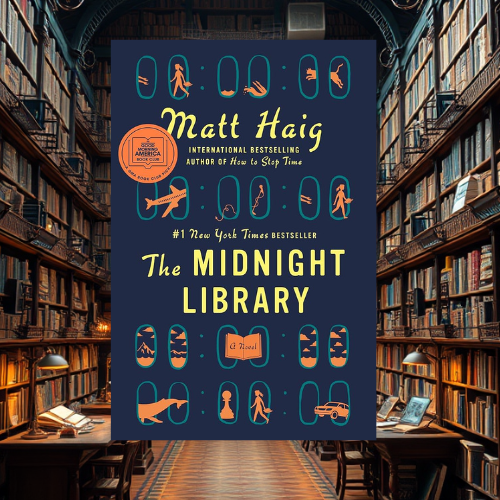
The Midnight Library by Matt Haig is a lovely reality check for anyone struggling with wishing their life could be different. Some quantum theorists think every alternative reality possible happens simultaneously. In one reality, I’m here writing this book review. In another, I’m still in the middle of reading the book. In another, no one gave me this book as a gift, so I haven’t read it at all. And in yet another, heaven forbid, I don’t even like reading fiction.
Our protagonist has reached such a state of melancholy in the beginning of the novel that she cannot see past midnight. She decides to end her life and finds herself in a library containing all the books of every variation of her that exists. It is the chance to see how different versions of life could be if various choices changed the trajectory of her past. It is an adventurous dive into the world of what ifs. I have enjoyed such thought experiments on myself. What if I had not gone into teaching, but had chosen a more lucrative profession? What if I had not married my first husband nor had children? What if I had moved away from Texas and was living somewhere cooler up north?
It is sometimes easy to get lost in those alternate wishful versions of ourselves and forget to appreciate all the little things that make up the lives we are living in the here and now. Though there were many poignant, sad, discouraging revelations in her journey, I was satisfied with the lessons she learned. I recommend this book for anyone who could use a reminder to feel a little more grateful or who sometimes wishes they would have made different choices in life.
Haig, Matt, The Midnight Library, Penguin Books, 2020.