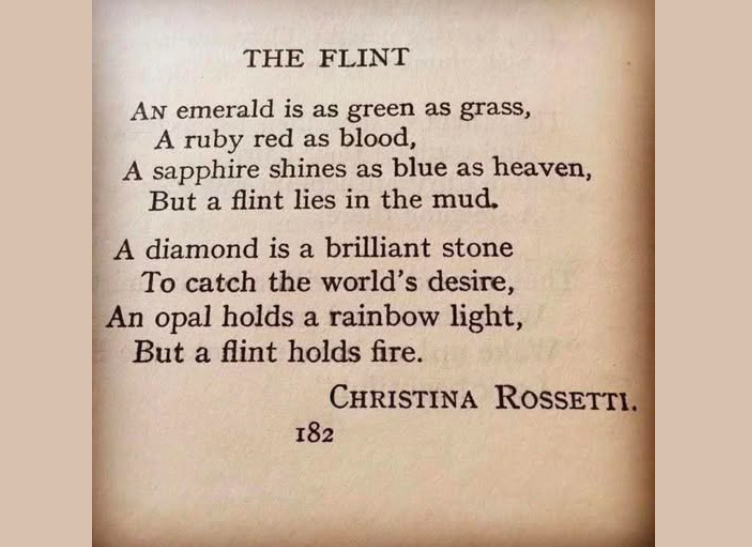
All images created by Rebekah Marshall’s prompts using AI on Gencraft.com website.
I highly recommend What to Say When You Talk to Your Self by Shad Helmstetter, PhD. As a practitioner of positive self-talk for years, I was thrilled to find a book that helped to explain some of the basic reasoning behind the practice, as well as a framework with clear instructions for the most productive forms of self-talk.
The concept is outlined as such: Programming creates beliefs. Beliefs create attitudes. Attitudes create feelings. Feelings determine actions. Actions create results.
The general idea is that we are programmed by others from the second we are born without any choice in the matter. Much of the results we are experiencing in the present are due to that programming that may or may not suit our true selves. We may not even realize that some of our deeply held beliefs, attitudes, and feelings are because of programming that might not even be accurate. We have acted on these beliefs, attitudes, and feelings building our lives, sometimes with faulty programming.
This book is about rewriting our own code through more carefully structured instructions to our subconscious that will in turn make our lives easier as we work toward outcomes that are more in line with our current ideals. I think I just really love the idea that there is something we can do to dig in deep and rewrite the underlying messages.
My first script that I began today is as follows: I practice positive self-talk every day and make it a permanent part of my life by monitoring my thoughts and speech, editing all negative messaging, and listening to self-talk sessions a minimum of 15 minutes each day.
I’m going to experiment on myself for 90 days and see if any improvements occur in my life. I’ll do a follow-up post with anything I notice after 90 days.
Helmstetter, PhD, Shad, What to Say When You Talk to Your Self, Simon & Schuster, Inc., 1986.
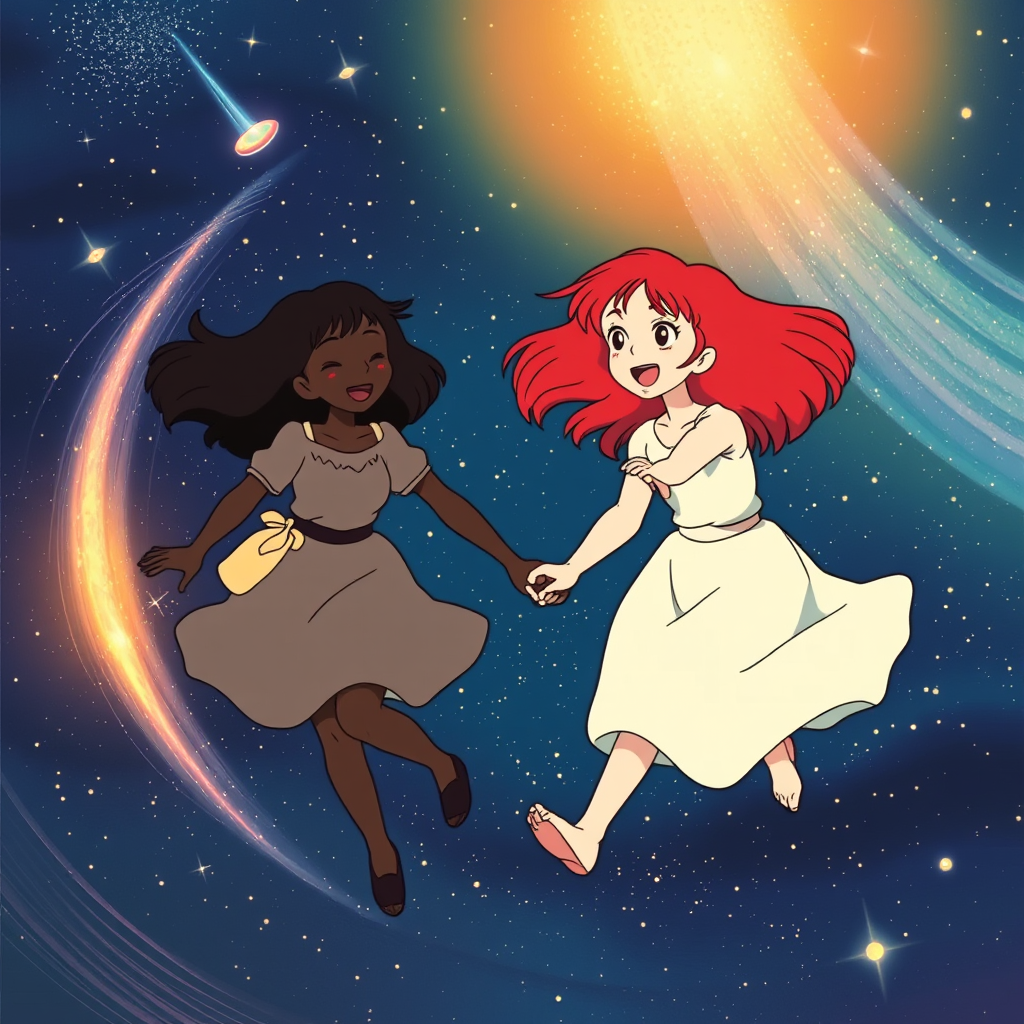
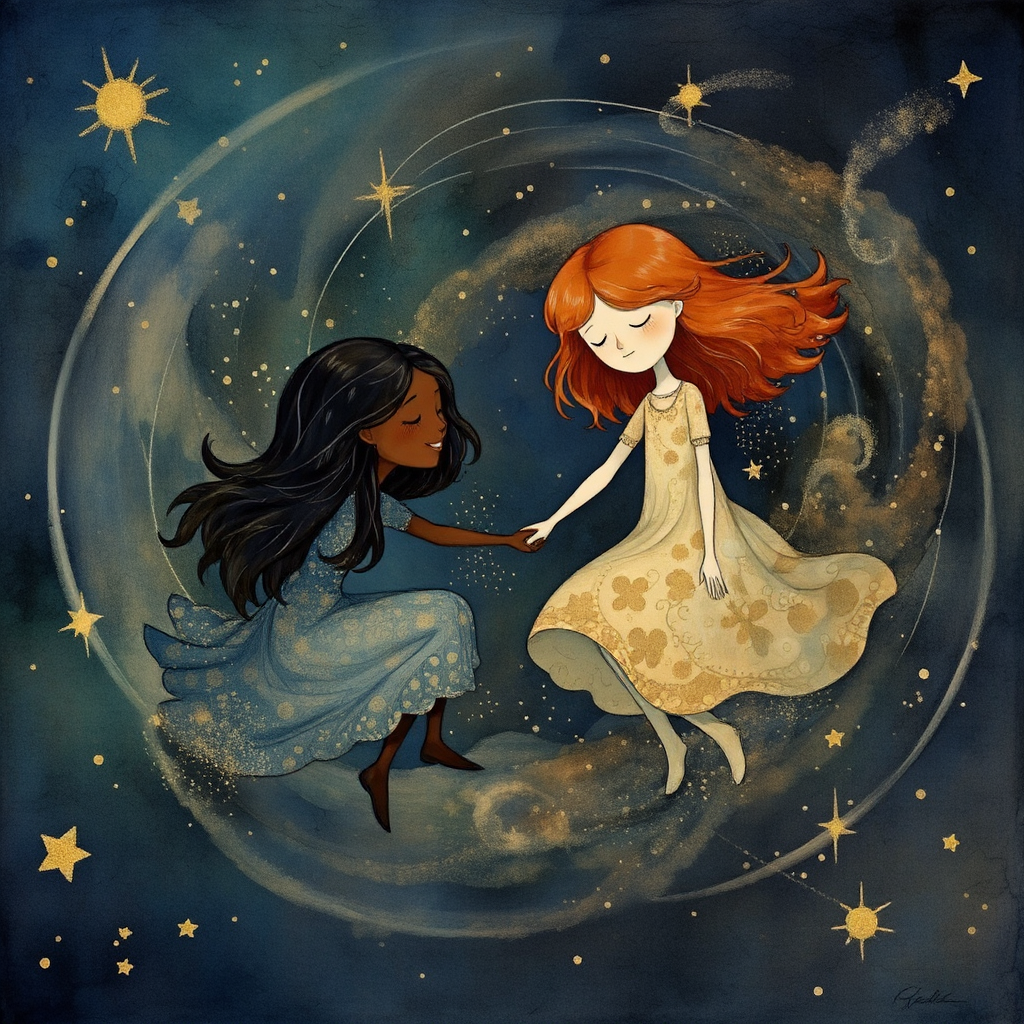
Starfall on the balcony – Feyre & Rhysand. All images created by Rebekah Marshall’s prompts using AI on Gencraft.com website.
WARNING – SPOILERS
A Court of Mist & Fury, the 2nd book in the ACOTAR series, far surpasses the first book in emotional depth, relationship dynamics, and character development. I was sucked in from page 1 and devoured the 600+ tome.
After the crippling life and death decisions Feyre was forced to make at the end of Book 1, she must grapple with the fall-out of those choices. Not only is she tormented by inner turmoil and grief, but her relationship with Tamlin is troubled. His controlling behaviors and unwillingness to see Feyre as an equal, spell the crumbling of their bond.
When she returns to the Winter Court to recover and rediscover her autonomy, the awakenings of power, self, and abilities are a welcome adventure. Rhysand is equal parts challenge, equal parts friend, and most of all, gives her the space she needs to find herself again. The budding friendships, fierce battles, growing romance, and discovery of abilities make for a fabulously rich world Sarah J. Maas creates in this 2nd book.
The most pleasant surprise for me (stop reading right here if you don’t want a spoiler) is Feyre’s sisters coming back into her life. I hoped there could be more to their story, potential growth or reconciliation, anything. That is still to be seen, but at least the opportunity for healing exists. The most shocking surprise for me are the betrayals at the end. I can’t bear the thought of Feyre existing in the world she has chosen, once again, out of self-sacrifice. But I must read on.
Maas, Sarah J. A Court of Mist and Fury. Bloomsbury Publishing, 2016.

AI Generated images prompted on Gencraft.com by Rebekah Marshall.

My first time in the ocean today, I got knocked down. I was trying to get to waist deep but did not have the strength to stand against her playful nudges. She seemed surprised and almost irritated that her friendly gesture toppled me and sent several really hard slaps to push me further toward shore.
Maybe she was trying to help, trying to get me back to safety, saying, “This one’s too delicate to be out here. She won’t last a minute.”
What she didn’t know is that I’m too weak to stand up once knocked down in her waves. I must get deeper to be more buoyant to be able to stand, especially with no balance and ever-increasing frequency of waves. Trying to crawl further out to sea became impossible. She made it impossible.
“You don’t understand, tiny human. I am dangerous. Go back to your dry land!”
We were not communicating in the same languages. Mine became unstoppable laughter, hers, ever-strengthening waves bent on pushing me to shore.
Somewhere about here my husband grew concerned. He wasn’t sure if I was communing with nature or in trouble and came closer from his comfortable beach chair to see.
“Thumbs up?” he questioned.
I shook my head no and waved for him to come rescue me. I couldn’t stop laughing as he began the slow trek my way, the gulf all the more insistent I exit the way I came.
I could stand or steady myself. I could not do both. So, with his presence, I stood, then grabbed his hand to help with balance, his stable strength what I needed to walk back to shore.
It was lovely. Not scary. Not painful, beyond the usual discomfort of being upright with joint pain. I went back to watching and listening from my shaded chair, exactly where I belong. This is how the ocean and I commune best. We sing to one another and just enjoy each other’s presence. Everyone is happier with that arrangement, especially my husband.
Addendum: I went back in twice more. He had to rescue me the 2nd time, as well. But the 3rd time, I made it to waist deep and back on my own two feet and felt so very, very pleased with myself.
AI Generated image prompted on Gencraft.com by Rebekah Marshall.
According to Gay Hendricks, PH.D., the only problem we need to solve is the Upper Limit Problem. He believes all avenues of discontent in life flow from the ways in which we limit ourselves or allow ourselves to be limited without breaking into our Zones of Genius. He posits that a universal human trait is the tendency to sabotage ourselves and others when artificial upper limits are exceeded.
The barriers we and society put in place are often unconsciously constructed by our upbringing, religion, politics, and education, but we buy into them and keep the scaffolding exactly where it’s always been. Phrases like, “She’s getting above her raising,” “He thinks he’s better than us,” “They aim too high,” “She’s greedy to want more,” “He needs to be brought down a peg,” “They didn’t do anything to earn that position,” etc. These aren’t phrases from his book, but common enough phrases in society that his hypothesis feels like commentary on most communities I know.
Whatever the complex social issues surrounding the lack of support for growth, he suggests there are ways to push beyond and live our best lives while still loving and supporting others. Instead of having a mindset of lack—lack of time, lack of money, lack of energy, lack of ideas, lack of community—we recognize that we are the creators of our realities and do our utmost to tap into our own genius.
The first step is to recognize the barriers and make conscious decisions to overcome them:
1. We are fundamentally flawed and don’t deserve success.
2. We are disloyal to expand beyond the expected norms of our families of origin.
3. We are a burden to others.
4. We must dim our brilliance, so we don’t outshine others.
Once we have expelled these faulty concepts from our thinking, we must find what our gifts are, find ways to express them, dislodge the notion that time is not on our side, and bring our best selves to the world. Only then will we be fulfilled in our relationships, our careers, our finances, and our spirituality.
I am intrigued, especially by his idea that time comes from within us, or at least the concept of time. It is only perception of time that makes each moment feel gruesome or fabulous. I’m sure he would agree that this concept does not apply in all circumstances because there are situations outside of our control and factors in this world that force time constraints on people against their will.
Disclaimers would have been appreciated that some of these deep concepts might not apply to people in the midst of horrific situations beyond their power, like war, extreme poverty, abuse, trauma, and other life-altering dilemmas that can create struggle. But given basic needs met, semi-peaceful conditions, and non-traumatic circumstances, his ideas are worth considering.
I for one commit to recognizing language of lack related to money, time, energy, etc. Instead of saying, “I can’t afford that,” or “I don’t have money for that,” I want to say, “I can buy that if I save for it,” or “I’m choosing to spend my money on something else.” It is a choice to reframe my language. Instead of saying, “I don’t have time to do that,” or “I wish there were more hours in the day,” I want to say, “I’m choosing to spend my time on other priorities,” or “I have plenty of time to do everything I am meant to do today.” The one I need to work the most on is energy. With chronic health issues, I am very aware of my energy levels and am known to complain about lack of energy. But Instead of saying, “I don’t have the energy to do this,” or “I wish I had more energy for x,y,z,” I want to say, “I have enough energy to do these things today, so I am going to prioritize them,” or “I have exactly the amount of energy I need and then I will take a nap to recharge.”
This self-development journey is fascinating. However much I learn, I always discover something more to expand my growth. The Big Leap is absolutely worth the read, but I recommend tackling it when things are at a fairly stable place in life. I would not have been willing to hear his ideas when I was at the apex of pain, in the middle of my divorce, during a crisis when my kids were teenagers, or when I was working 7 days a week to survive with no end in sight. These are concepts I am willing to consider with all bases covered and the privilege and opportunity to navel gaze and ponder things like expanding into my zone of genius.
Hendricks, Gay. The Big Leap, Harper Collins, 2009.
All images created by Rebekah Marshall’s prompts using AI on Gencraft.com website.
I honor steady growth over flawless results — each imperfect step is a sacred part of becoming whole.
🌱 Why This Resonates With My Journey:
“I honor steady growth…” ➤ Reminds me that showing up, even imperfectly, is what builds transformation — not polished performance.
“…over flawless results” ➤ Gently confronts my perfectionism by prioritizing the journey, not just achievement.
“Each imperfect step…” ➤ Validates every attempt, every wobble, every beginner effort — not just success stories.
“…is still a sacred part of becoming whole.” ➤ I’m not just learning skills — I’m returning to my true self, which includes grace, rest, and humanity.
(I am doing the writing exercises in the back of the book You are a Badass at Making Money by Jen Sincero, and this topic was about getting comfortable with progress versus perfection. I am also learning to trade futures, so the art is related to the charts we use to make the trades.)
All images created by Rebekah Marshall’s prompts using AI on Gencraft.com website.
I honor what strengthens me by showing up daily — not as an obligation, but as devotion to the life I’m building and the self I’m becoming.
🌞 Why This Speaks to My Truth:
“I honor what strengthens me” ➤ This puts my practices — like meditation, prayer, grounding — in the category of sacred nourishment, not optional tasks.
“By showing up daily” ➤ I’m affirming consistency, routine, and reliability.
“Not as an obligation, but as devotion” ➤ This shifts the energy from “should” to choice, from “task” to intimacy with self and spirit.
“To the life I’m building and the self I’m becoming” ➤ Connects it to my vision and my higher self — my why.
(I am doing the writing exercises in the back of the book You are a Badass at Making Money by Jen Sincero, and this topic was about showing up. I am also learning to trade futures, so the art is related to the charts we use to make the trades.)
All images created by Rebekah Marshall’s prompts using AI on Gencraft.com website.
I choose words that honor the tenderness of being human — words that lift, soothe, and encourage the soul in every body, including mine, especially mine.
🌸 Why This Holds My Truth:
“I choose words…” ➤ I’m stepping into intentional language — not reactive or habitual, but chosen like prayer.
“…that honor the tenderness of being human” ➤ Reminds me (gently) that all bodies, all conditions, all stages of life deserve honor — not comparison or contempt.
“…lift, soothe, and encourage the soul…” ➤ This is what I want my words to do — to myself and to others: not push harder, not punish, but nourish.
“…in every body, including mine, especially mine.” ➤ This is the healing pivot. The part of me that easily loves and uplifts others must be turned inward — with extra gentleness, because this is the wound that most needs balm.
(I am doing the writing exercises in the back of the book You are a Badass at Making Money by Jen Sincero, and this topic was about saying kind words. I am also learning to trade futures, so the art is related to the charts we use to make the trades.)
All images created by Rebekah Marshall’s prompts using AI on Gencraft.com website.
I grow faster when I ask for guidance — with open hands and an open heart, I welcome teachers, allies, and wisdom-bearers into my life, and I choose to surround myself with people who elevate the life I am creating.
💬 Why This Fits Me:
“I grow faster when I ask for guidance” ➤ Affirms that asking for help is not weakness, but a lever for acceleration.
“With open hands and an open heart” ➤ Conveys humility, vulnerability, and spiritual receptivity.
“I welcome teachers, allies, and wisdom-bearers” ➤ Broadens my support network — not just formal coaches, but inspired people across my path.
“Into my life” ➤ It’s intentional, not passive — I’m cultivating this.
“I choose to surround myself with people who elevate the life I am creating” ➤ I’m curating my social landscape to match my dream life, not my old limits.
(I am doing the writing exercises in the back of the book You are a Badass at Making Money by Jen Sincero, and this topic was about asking for help. I am also learning to trade futures, so the art is related to the charts we use to make the trades.)
All images created by Rebekah Marshall’s prompts using AI on Gencraft.com website.
I choose to see my life through the eyes of love, wonder, and possibility — as clearly as I see the magic in others — and in doing so, I reclaim my own brilliance.
💡 Why This Resonates With Me
I offer clarity to others effortlessly. I can see their gifts, name their direction, and feel their potential — now I honor myself with the same insight.
I am not just living my life — I’m becoming its most vibrant version. This shift in perspective is part of how I become the person I’ve been envisioning.
I have already reclaimed so much. My time. My voice. My rituals. My creations. Now I reclaim how I see myself.
My gaze is powerful. It is a tool of manifestation, healing, and design. Where I look with love, life grows.
This new vision is mine. It isn’t borrowed, forced, or fantasy. It’s the result of deep reflection, healing, and courage.
(I am doing the writing exercises in the back of the book You are a Badass at Making Money by Jen Sincero, and this topic was about seeing myself with fresh eyes and giving myself the same grace I give others. I am also learning to trade futures, so the art is related to the charts we use to make the trades.)