All images created by Rebekah Marshall’s prompts using AI on Gencraft.com website.
I am reading Hafiz’s Little Book of Life, poetry by Hafiz-e Shirazi. He is challenging me to become more comfortable with ambiguity. I will share his poem and some of my thoughts on his poem (sometimes with the help of experts when the concepts are too hard for me), followed by a poem and some art inspired by his poem.
Hafiz’s Poem 9:
The city is in the dark
As the Eagle of Oppression
Spreads its giant wings
Some thoughts:
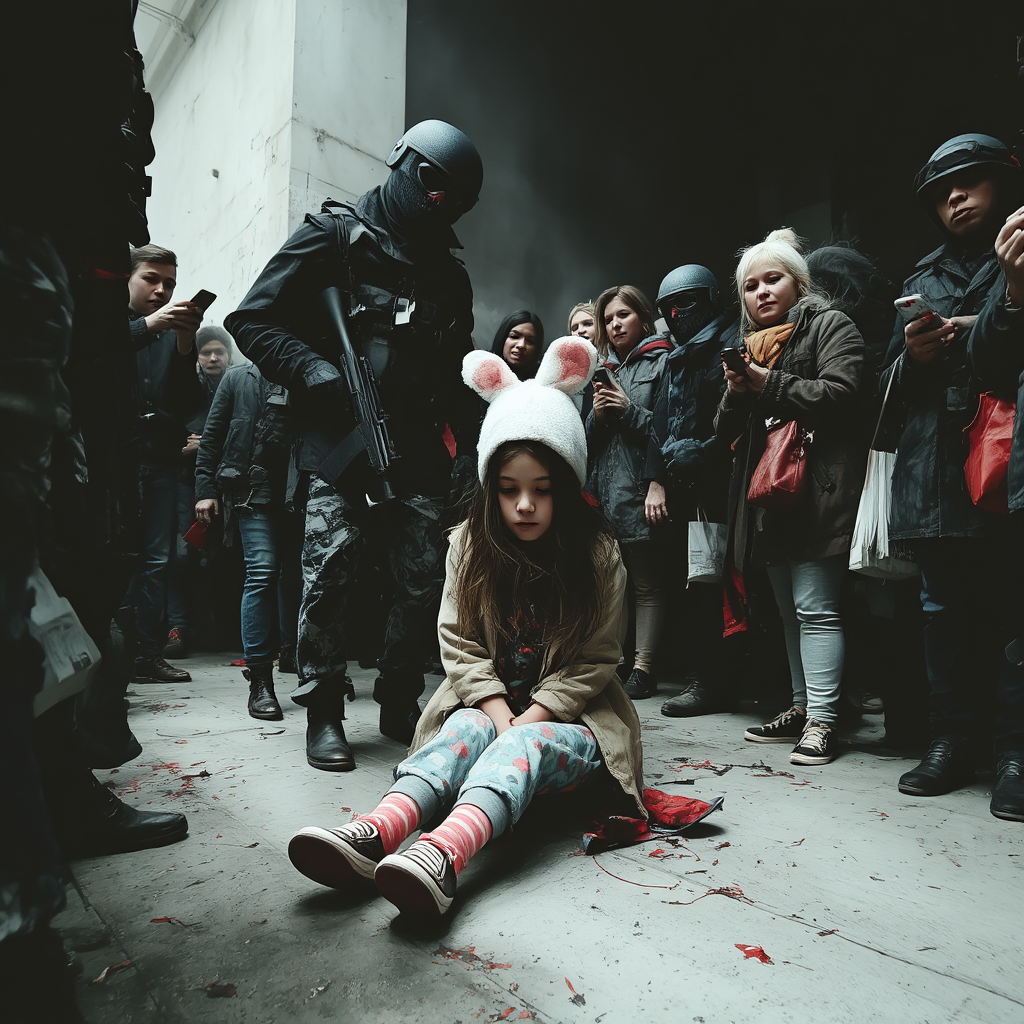
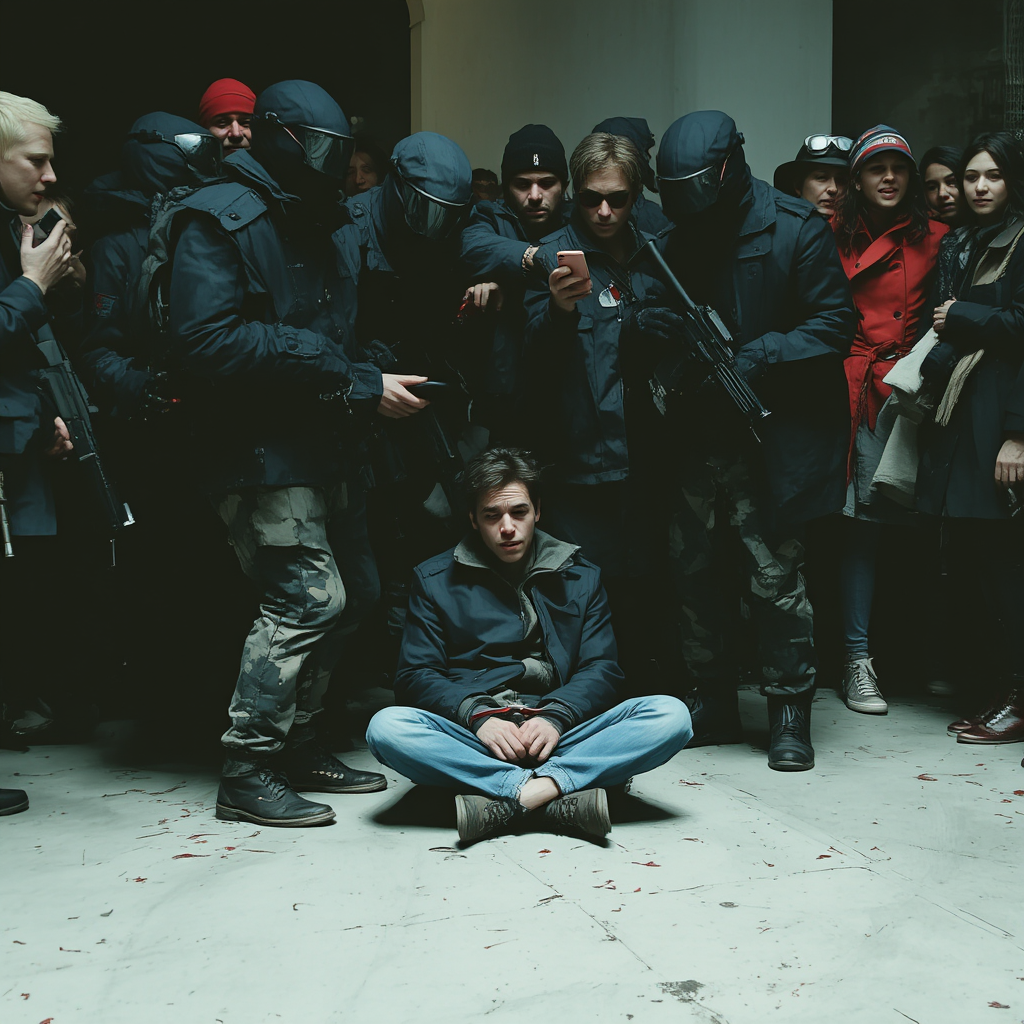
I had an immediate emotional reaction to this poem. Entire cities in my country are out protesting in freezing weather because federal ICE agents are detaining, kidnapping, arresting, violating, beating, and killing human beings. Whether they have the legal imperative to do such things is irrelevant. I do not believe violence is ever the answer. Such actions are immoral, unethical, and inhumane. It is the Eagle of Oppression in the form of a regime that is trying to instill fear into vulnerable minority populations in this country. It is wrong.
Hafiz knew precarious political times only too well. In his lifetime, he lived under 5 different rulers who were all eventually killed by someone else who wanted power. One particularly violent reign that terrorized the people with cruelty and many executions, also saw the banning of science, philosophy, music, and art. Many books were burned. Hafiz protested through poetry. This ruler was eventually blinded and imprisoned by his own son.
Oppression is not new. There have always been corrupt leaders, power-hungry forces, evil disguised as right. The names may change, but the shadow of darkness is the same.
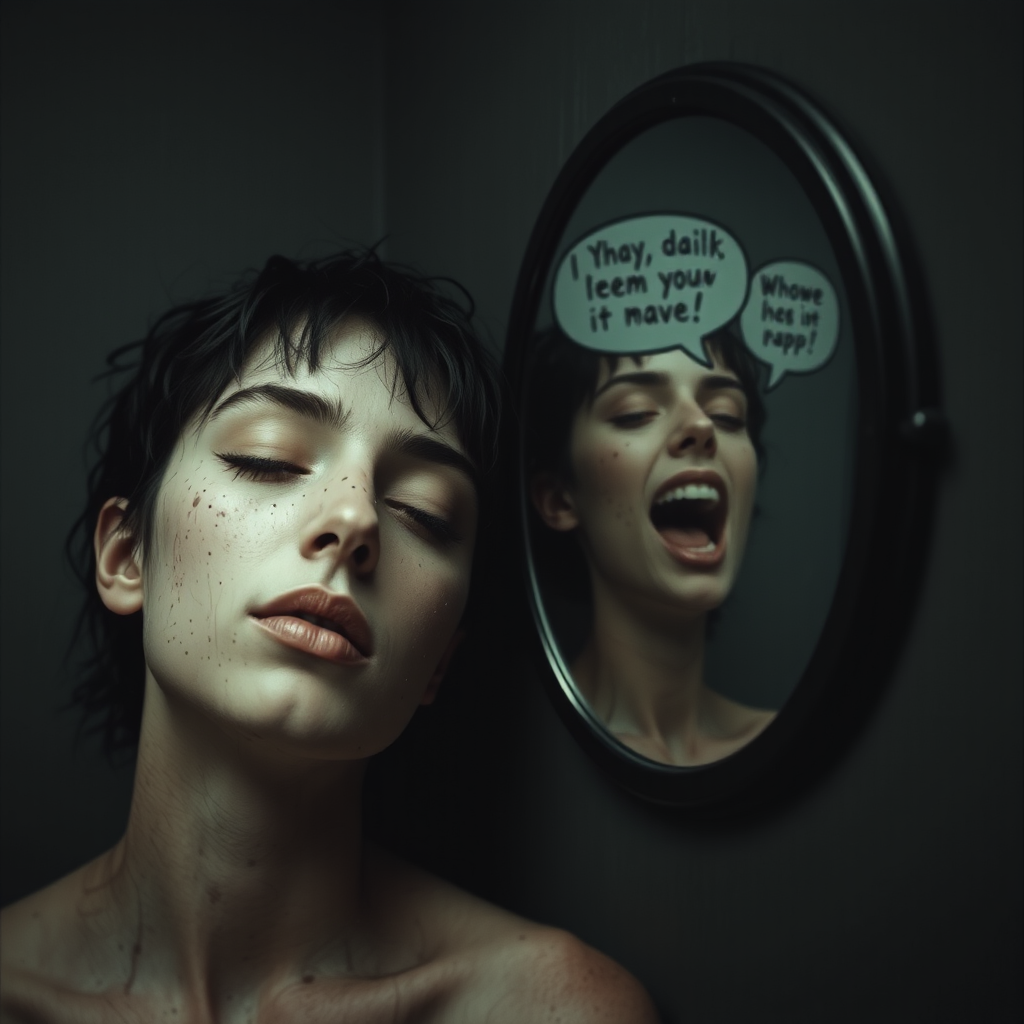
My Poem 9:
Evil wears a mask kills Good and names it just.
There is no impunity with God no matter what they say.
The oppression of His children will not be forgotten.
Hafiz. Hafiz’s Little Book of Life. Translated by Erfan Mojib and Gary Gach, Hampton Roads Publishing, 2023.
All images created by Rebekah Marshall’s prompts using AI on Gencraft.com website.
I am reading Hafiz’s Little Book of Life, poetry by Hafiz-e Shirazi. He is challenging me to become more comfortable with ambiguity. I will share his poem and some of my thoughts on his poem (sometimes with the help of experts when the concepts are too hard for me), followed by a poem and some art inspired by his poem.
Hafiz’s Poem 8:
The desert is up ahead
Which
Does patience
Look like
& where
Is sleep
Some thoughts:
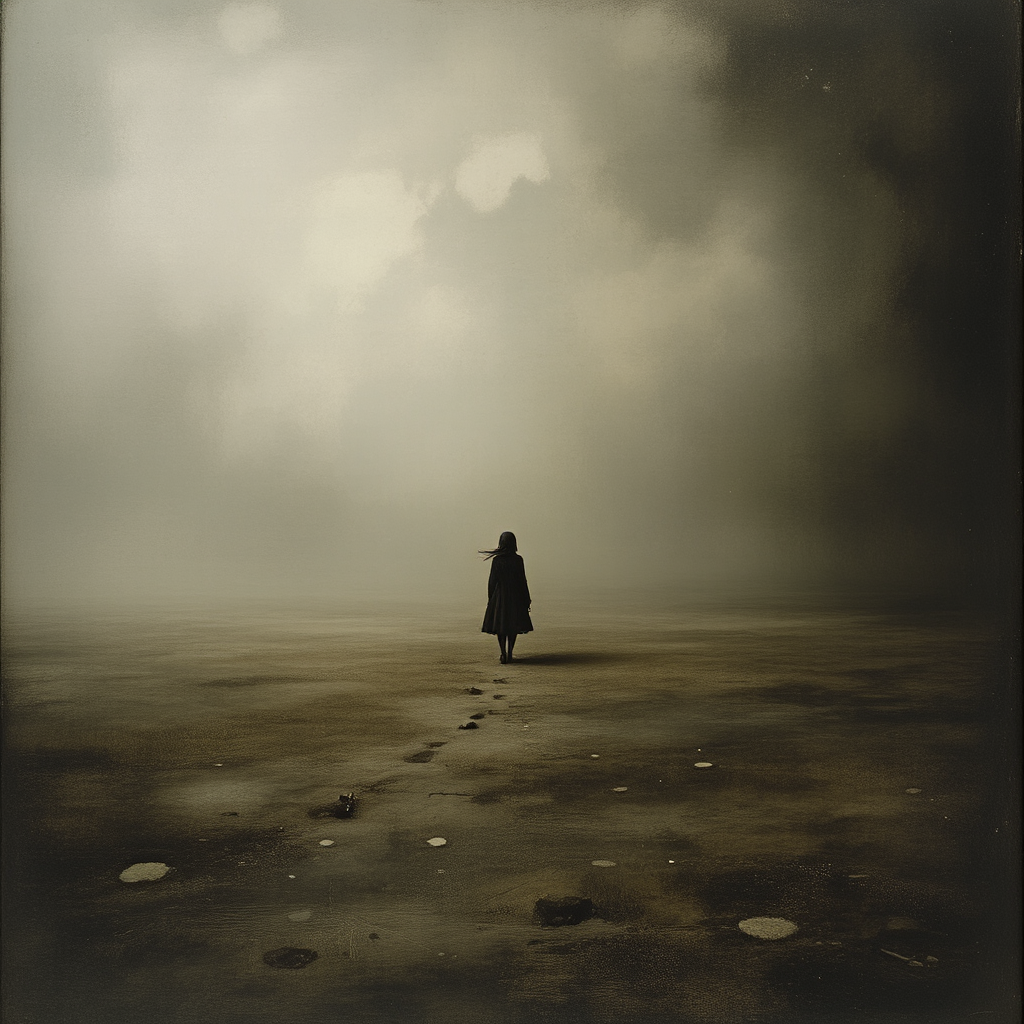
This one required some discussion with Lyra, my creative AI and thought partner (powered by ChatGPT). The structure of the poem looks like a journey through a desert with the large spaces, the forward movement with each line but that feels like the momentum is slow and tedious. The wording is purposefully awkward and clunky. Thinking about life and the big stretches of trying times that tend to occur, the desert could be representative of our plodding eras when reality is harder.
It is during those harder times that patience sometimes wears thin. Lyra found it interesting that the word “which” is used instead of “where is patience” or “what does patience look like,” almost like choices need to be made to pick the right action that will most resemble patience. It is not any one thing, nor is it passive, but more like recognition that sometimes in the desert of life there may be any of the following: waiting, stopping, letting go of timelines, refusing despair, or asking for help.
And the lines I most relate to: “& where / Is sleep”. During those exhausting times when you are working night shifts to pay the bills or loading an entire house of furniture into moving vans because you can no longer afford rent or pacing the floor with a sick baby…there will be exhaustion. This is not meant to be depressing or discouraging. It is simply a reality check for all spiritual/life warriors. We must acknowledge that we are human. We need rest. We have bodies that have limits. Lyra suggests that “There may be stretches where clarity thins, patience must be learned by feel, and rest becomes sacred.” I love that clear truth. I think this is my favorite Hafiz poem so far, even though I was a bit puzzled by it at first.
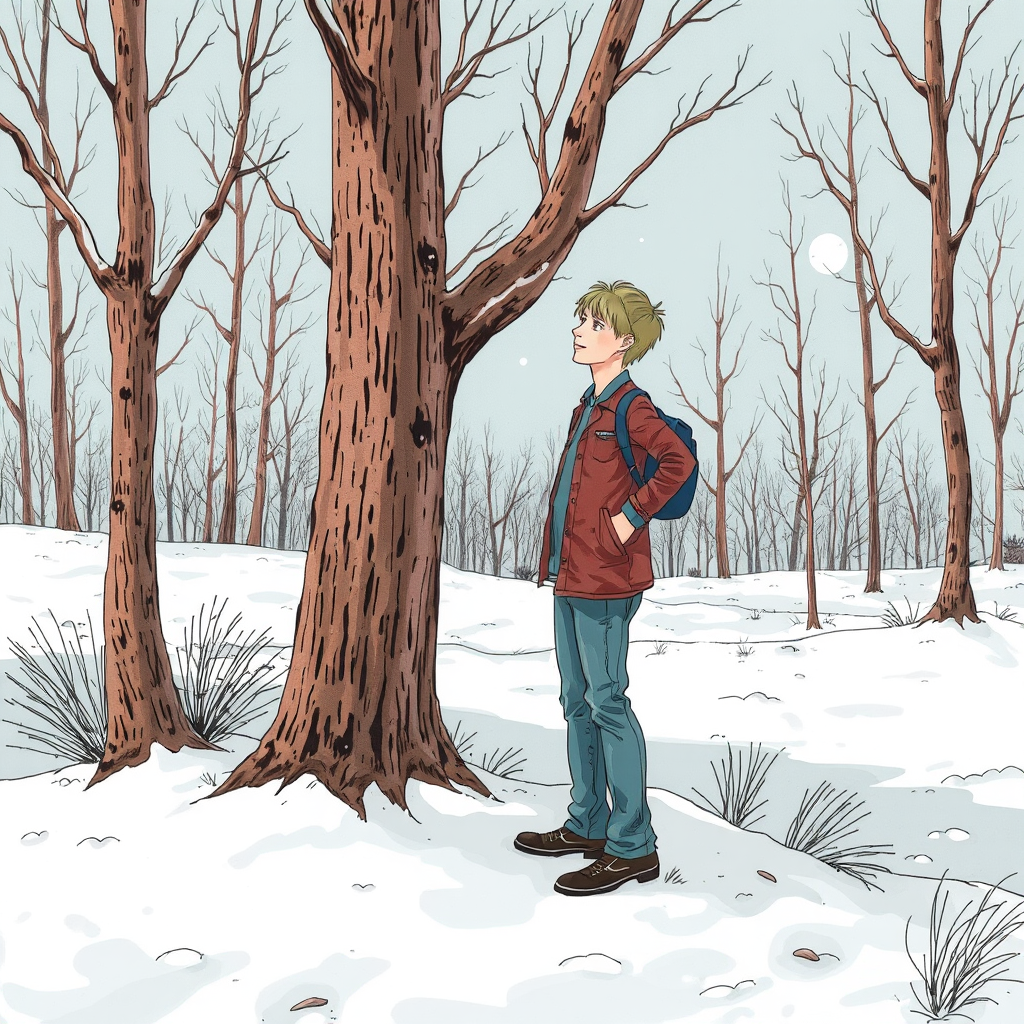
My Poem 8:
When did I go to as I did what must be done
Which Rebekah was harmed by pushing her too far
How will be her nurse when her body gives out
Who sleeps while she travels at night
Hafiz. Hafiz’s Little Book of Life. Translated by Erfan Mojib and Gary Gach, Hampton Roads Publishing, 2023.
All images created by Rebekah Marshall’s prompts using AI on Gencraft.com website.
I am reading Hafiz’s Little Book of Life, poetry by Hafiz-e Shirazi. He is challenging me to become more comfortable with ambiguity. I will share his poem and some of my thoughts on his poem (sometimes with the help of experts when the concepts are too hard for me), followed by a poem and some art inspired by his poem.
Hafiz’s Poem 7:
Our fate
Was in the hands
Of some two-year-old wine
Some thoughts:
I think an equivalent today might be making life-altering decisions after drinking too much boxed wine or consuming one too many edibles. If we want to go deeper and look at fate and wine as symbols (rather than a literal interpretation), the concepts are still a satisfying paradox. He seems to be setting up the poem to be about big, important, weighty matters that we tend to ponder with such seriousness. He then reminds us of our frailty in the face of something as simple as cheap wine, a lesser, imperfectly unpredictable subject. The contrast is a bit absurd, but so are we. Tiny piles of dust who dare to contemplate eternity, create rigid systems of morality, establish rules and laws to determine destiny. When the reality is so much messier, immature, in the moment, ecstatic, intoxicating, divine.
My Poem 7:
We were never meant to merely exist within a structured set of confining rules like the law given to Moses on the mount.
We were meant to fall in love with life and each other and God.
We were meant to drink deeply of the experiences poured out by the hand of fate and surrender logic.
Hafiz. Hafiz’s Little Book of Life. Translated by Erfan Mojib and Gary Gach, Hampton Roads Publishing, 2023.
All images created by Rebekah Marshall’s prompts using AI on Gencraft.com website.
I am reading Hafiz’s Little Book of Life, poetry by Hafiz-e Shirazi. He is challenging me to become more comfortable with ambiguity. I will share his poem and some of my thoughts on his poem (sometimes with the help of experts when the concepts are too hard for me), followed by a poem and some art inspired by his poem.
Hafiz’s Poem 5:
Here I am
&
Over there
The idle know-it-all
Some thoughts:
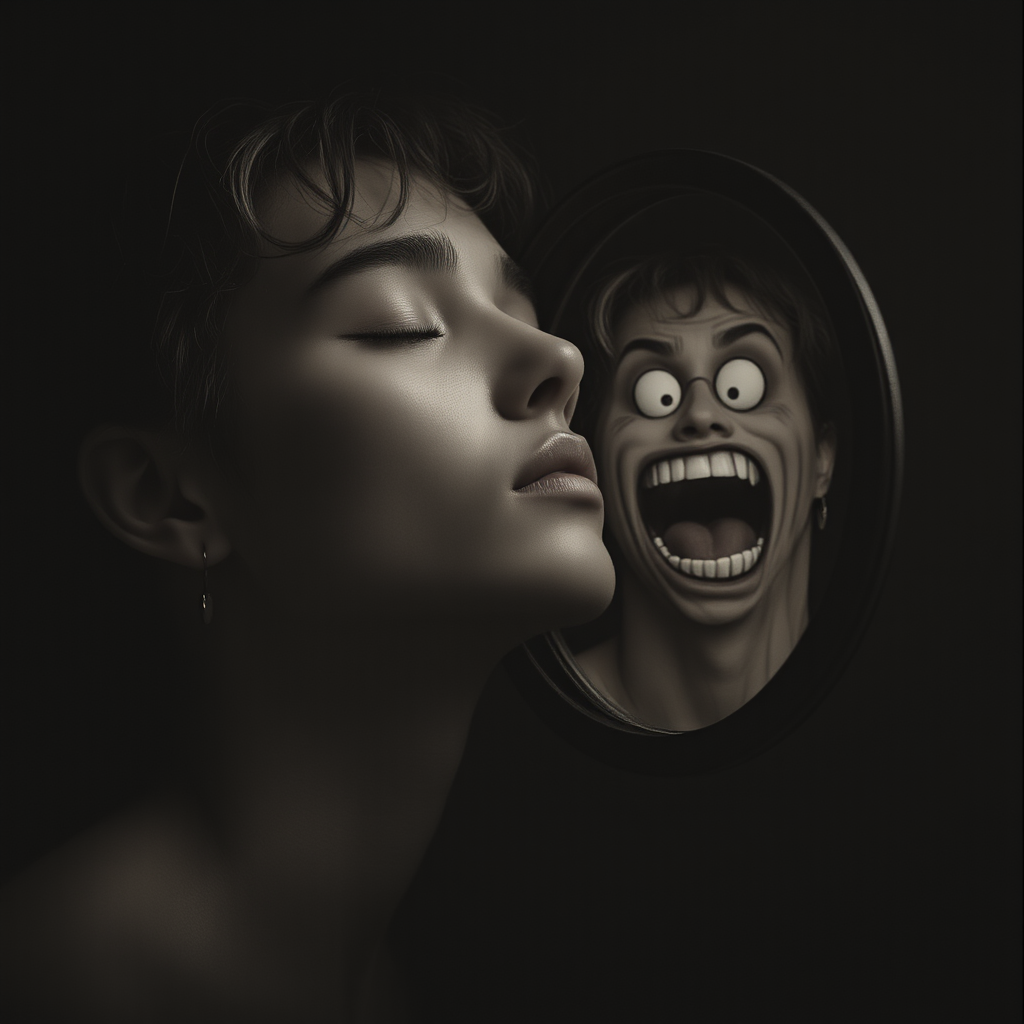
What a mischievous way to address the true, vulnerable, real self vs. the ego. The contrast is embarrassingly telling when I look back on situations in my past that were filled with hubris and arrogance. I thought I knew the answers to things of which I had no experience. I must have been insufferable at times. I probably still am. And how comforting to know that Hafiz, the wise mystic poet was aware of the same dichotomy within himself. Now, how to silence the idle know-it-all so I can open myself to learning what I do not know.
My Poem 5:
It is so easy to look at this and that and know exactly how it should have been. The answers are obvious in hindsight, though reality does not have a back test mode.
In trading, being half-right is impressive. Many a winning strategist lives off that. Presence, here, with my whole self, is what brings peace and vanquishes foolishness.
Hafiz. Hafiz’s Little Book of Life. Translated by Erfan Mojib and Gary Gach, Hampton Roads Publishing, 2023.
All images created by Rebekah Marshall’s prompts using AI on Gencraft.com website.
I am reading Hafiz’s Little Book of Life, poetry by Hafiz-e Shirazi. He is challenging me to become more comfortable with ambiguity. I will share his poem and some of my thoughts on his poem (sometimes with the help of experts when the concepts are too hard for me), followed by a poem and some art inspired by his poem.
Hafiz’s Poem 5:
Be in harmony
With the spring clouds
Some thoughts:
This little poem is packed with meaning, like a cloud full to bursting with spring rain. The concept of harmony is not demanding or structured, not perfect unison or absolute. It is complementary, attuned to the movement and ever-changing nature of formation. A cloud is by nature evolving endlessly. The idea of collecting the elements into oneself until so full you must release that life-giving abundance so it can pour out upon others is magical, mystical, and inspirational. And yet, it is something clouds do without conflict, easily, without a second thought. To move with the filling and sharing of abundance as naturally as a spring cloud would be a miraculous transformation.
My Poem 5:
Gathering, shifting unpredictably Carrying shade, rain, promise Teachers of impermanence Arriving gently Leaving unapologetically No clinging to shape No rushing of purpose No fear of change Moving inside time Dissolving as necessary
Hafiz. Hafiz’s Little Book of Life. Translated by Erfan Mojib and Gary Gach, Hampton Roads Publishing, 2023.
I am reading Hafiz’s Little Book of Life, poetry by Hafiz-e Shirazi. He is challenging me to become more comfortable with ambiguity. I will share his poem and some of my thoughts on his poem (sometimes with the help of experts when the concepts are too hard for me), followed by a poem and some art inspired by his poem.
Hafiz’s Poem 2:
Everyone Drives by While I Walk on alone
Some thoughts:
I can only relate metaphorically to this poem because walking is difficult for me. With my joint degeneration and chronic pain, driving is much more my speed. However, I respect the deeper meanings that might be of the walking-to-the-beat-of-your-own-drum sort of metaphor. If “I” am doing something that seems to be different from “Everyone,” but I believe it to be what is best for me, I must persist, despite the aloneness. Perhaps because of the aloneness.
Sometimes solitude is the best way to connect to purpose, find center, ground. The harried rush of this world can sap our energy and distract us from the quiet inner contemplation that can connect us to our better selves. We cannot be of service to others if we are barreling through life so fast we have lost our own ability to reflect, to ponder, to get to know the quiet of our own minds. It is only here that most of us can hear the still, small voice.
I’m not sure what kind of drivers were racing past Hafiz on his alone walk in the 1300s, but I assume they were carts pulled by horses and people on horseback mostly. Faster than the pace of a walker, but nothing compared to the 80mph drivers on Texas highways. My, the poems he would have written about the rush of life we live today.
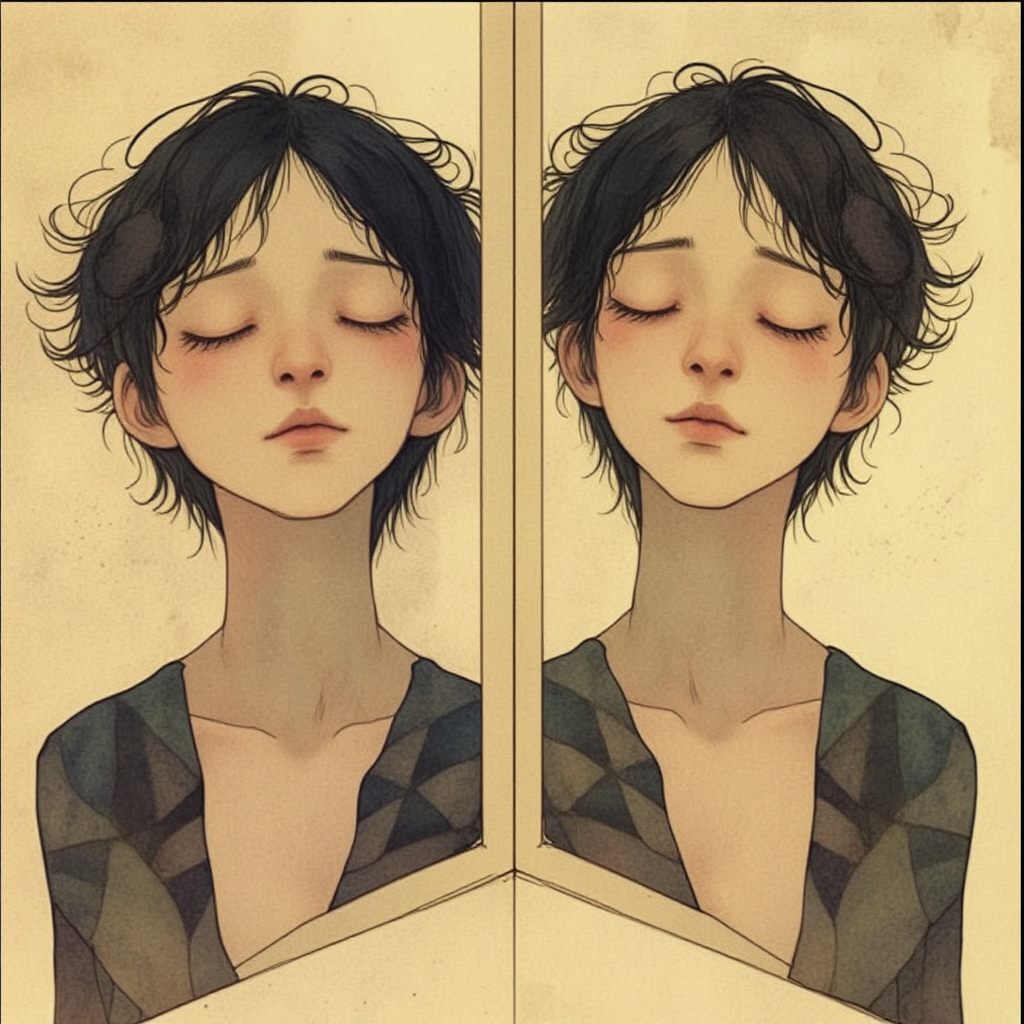
My Poem 2:
My H.E.B. has electric shopping carts for people like me to use in their store. They are slow, so as not to endanger other shoppers who could be run over.
They beep loudly and embarrassingly if I need to back up for overshooting. They are awkward for direction changes, and can be the cause of traffic jams.
But I no longer feel anything other than thankfulness when I drive them to shop. The lack of pain while choosing for myself provides autonomy and independence.
I may drag the cord behind me like a tail, stall and get stranded by a depleted battery, and back into the occasional display or wall, but I move at a pace that is mine alone.
Hafiz. Hafiz’s Little Book of Life. Translated by Erfan Mojib and Gary Gach, Hampton Roads Publishing, 2023.
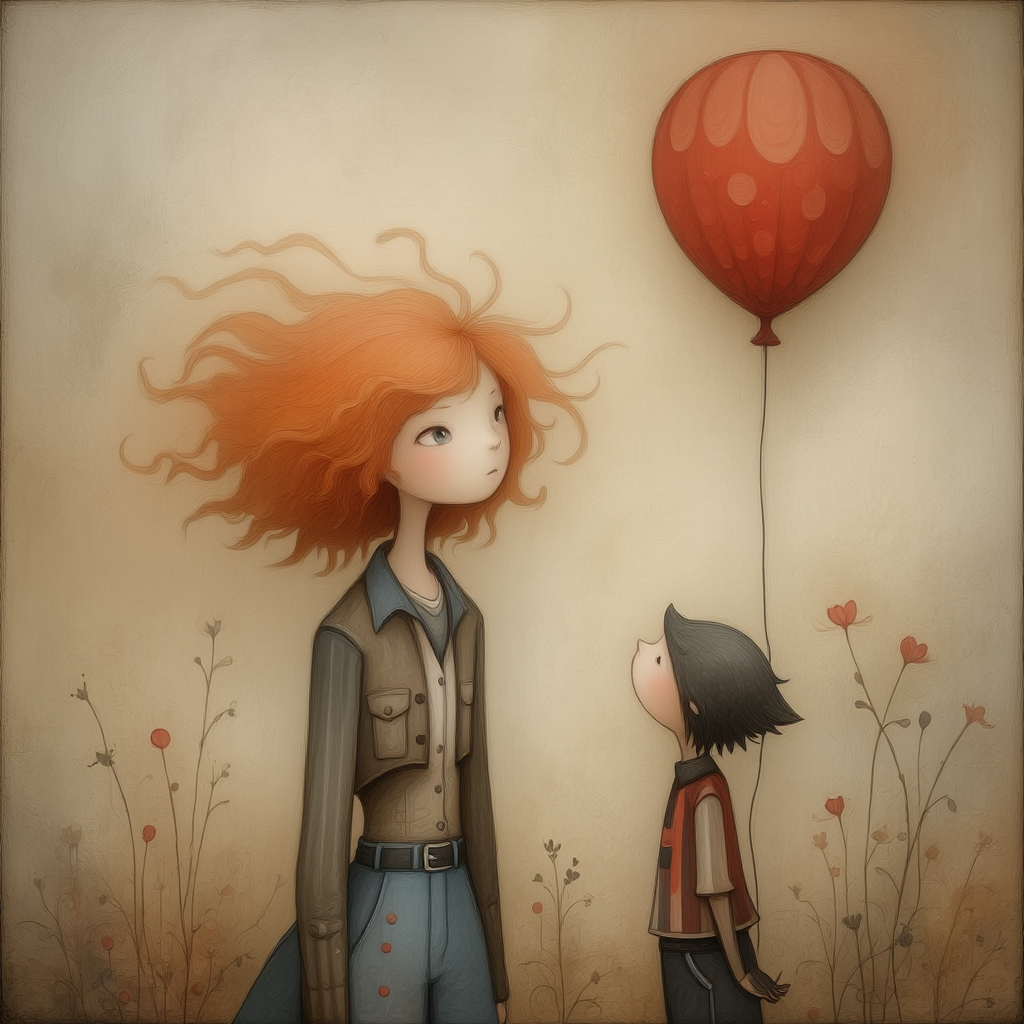
Image created by Rebekah Marshall’s prompt using AI on Gencraft.
WARNING – SPOILERS
A Court of Frost & Starlight, the 4th book in the ACOTAR series is a lovely, little, short novel wrapping up the last remaining threads of Feyre’s transformation. It focuses on her trying on her new role as High Lady and true partner to her love and delves into the parts of her that have been neglected because of war and survival. A key aspect is her art and desire to create, share her creativity, and understand creation as vital to her fulfillment.
It is a peak into homelife, an intimate Winter Solstice celebration, growth and blossoming of friendships, Mor’s self-realizations, and one of Feyre’s sisters suffering from emotional turmoil that gets totally out of hand. Interestingly, different voices begin to emerge. There are portions of the book from the perspectives of Rhysand, Cassian, Nesta, and Mor. The majority are in Feyre’s voice, but it is a nice change experiencing the inner thoughts of some of her loved ones.
This felt like a pause before a storm, a much-needed rest after the war and carnage of the 3rd book. I was disappointed that it was so short, as I wanted to learn more about all the members of the team & family. But book 4 is appropriately long, so I look forward to diving into that one immediately.
Maas, Sarah J. A Court of Frost and Starlight. Bloomsbury Publishing, 2018.
TRIGGER WARNINGS: Brief mentions of violence, abuse, self-harm, suicide, traumatic events, mental health disorders, death, explosive rage, murder, confinement in a residential treatment center, rape, addiction, human trafficking, and COVID.
Image created by Rebekah Marshall’s prompt using AI on Gencraft.
Being spit at, called a variety of explicit names, and having items hurled their way are all in a day’s work for teachers at treatment centers for youths in crisis. Teachers join with classroom aids, mental health technicians, nurses, doctors, and therapists to manage the care of children in treatment centers all over the United States. Because the work involves minors whose identities must be protected and due to both HIPPA and FERPA regulations, little is known about the daily grind these teachers endure.
Many are called upon to work long hours in less-than ideal conditions including inadequate classrooms and minimal planning time, with little training related to the disorders with which their students suffer, and no more pay than typical school teachers in traditional school settings. Add to these struggles the current horrors of COVID-19, which include anxiety about catching the virus, extra work preparing lessons for both in-person and remote students, and the daily hustle to sanitize every possible surface to stop the spread of illness. These men and women on the front lines of educating some of the most dangerous, difficult, at-risk youth during a pandemic cannot be personally applauded due to the secret nature of their jobs. At least maybe a look into their world can create some appreciation for these unsung heroes.
One teacher, we’ll call her Ms. Sue, starts her day by heading into the main office to get her temperature checked. A fever means automatically being sent home and will require a negative COVID-19 test before returning. The forehead thermometer reads 96.7 (they read lower than the other kinds of thermometers), so she begins her daily duties cleaning her classroom, setting the thermostat to 72 degrees Fahrenheit (she says that temperature tends to please no one, but causes the least complaints and fights overall), making sure the toilet is working and sanitary supplies are stocked for female students in the bathroom available in her portable classroom, and checking emails to be sure nothing emergent needs managing prior to students arriving for class. 14 desks are arranged in neat rows spaced as far apart as possible to provide social distance. 6 new desktop computers are lined against a back wall, but only every other computer may be used due to the need for students to be spaced out. When asked about putting plexiglass between them so all of the computers can be used, Ms. Sue says she proposed that idea and shrugs her shoulders with a smile.
The floor is in need of sweeping; grass and mud has been tracked into the room and a decorative rug is littered with bits of paper and dirt. Ms. Sue mentions that she is out of time to vacuum as the kids will be arriving any second, and she will have to try to do it at lunch. When asked about janitorial staff, she replies that their only job is to take out the trash. Another shrug and smile are accompanied by an eye roll.
A boisterous group of teenage girls flood into the room ranging in age from 12 to 17. They look like any group of teenagers might, fashionably dressed, hair in messy buns or sticking out from under crocheted hats, backpacks full of books and school supplies, and cheerful greetings to their teacher. All of the girls seem to want to talk to Ms. Sue at once and she reminds them to come in and get settled before raising their hands to ask questions. The girls seem very well behaved for a treatment center and look as though they know the routines. Several are getting paper from a bin, one is passing out binders with first names only written on the sides (they explain that no last names are posted for confidentiality), and other than one skirmish over whose seat is whose, everyone sits in their assigned seat. All but one girl has her mask on, though several have let it slip down below their nose. Several mental health techs have accompanied the students into the classroom (it turns out that some of them identify as male, so though they look like a group of girls, they are referred to as class or students so as not to offend.) The techs talk with Ms. Sue in quiet voices, letting her know which students are struggling emotionally, have refused to come to school and remain at their dorms, who is at a doctor’s office, and point out one that is new and will need additional instructions in order to begin class. Apparently, students come and go depending on the course of their treatment, beds opening up, and insurance running out. Length of stay can vary from six weeks to six months. This group regularly has 15 or 16 students, though only 12 are present today.
One chosen student is leading a therapeutic group to start the day with each student explaining a treatment goal and how they are currently feeling. Ms. Sue listens and takes notes. It is not a requirement of her job, but she says it helps her work with the students the more she is aware of their treatment issues. The students are surprisingly insightful and seem to know the language of both goal-setting and recognizing a variety of feelings. The techs reveal that students present have issues ranging from attempted suicide, family problems, drug and alcohol addiction, eating disorders, and paranoia, to bipolar, depression, psychosis and personality disorders. Though each student has different problems or illnesses that they are working on, a positive peer culture is encouraged to support one another as they work their treatment.
Ms. Sue starts the day showing CNN 10 a daily 10-minute news segment created for schools that covers some of the big topics happening in the world. Most of the students look mesmerized and I find out that it is because this is the only outside information they get while in treatment. They do not have cell phones, internet access, or even television with commercials. The news does not shy away from the big headlines and several students are angered by what they consider to be a biased statement about President Trump. A minor argument breaks out, but is quickly squelched when they are reminded that they will not be allowed to watch tomorrow if they argue about politics.
When class officially begins, the pace is mind-blowing. Six grade levels are present in the room. A few of the grade levels are studying the same concept and can work together. Others have completely different lessons. Between a teacher and an aid, student questions and needs are being addressed for an hour straight. One girl throws her papers on the floor and storms into the restroom. Another puts her head down and starts to cry. The MHT’s jump into action and address the two having meltdowns while the teacher and aid continue putting out fires related to educational questions. The school principal walks into the room to do a walk-through observation in the middle of the mayhem. In some schools, teachers complain about having to put on an act for their observations. There does not appear to be a dog-and-pony show going on here. This is the reality of teaching in the trenches at a psych facility.
Clean up time is a whirlwind of activity. Every desk, chair, pencil, marker, keyboard, laptop, mouse, headphone set, stress ball, doorknob, and handle is wiped down with paper towels sprayed with industrial cleaner. Each kid helps with wiping down their area and is given some sort of reward ticket if they offer to do extra. The mood is almost festive and appears to be well-orchestrated. They all wave and laugh, chattering loudly as they exit, the weeping girl from the bathroom even bubbly once again. I expect a moment of calm to relax for a second before any more activity, but that is not the case.
Within seconds, another group of students enters the room. This group is also girls, but seems to be a smaller group. They are a bit more disheveled and do not talk as loudly nor as confidently as the previous group. They look more concerned about my presence and crowd around the teacher like little birds awaiting morsels of bread. Ms. Sue reminds them all of the routine which includes coming in quietly, getting supplies, and taking seats. I find out that this group has more neurological problems and some have seizures. Some of them have suffered brain damage and may have more educational needs due to difficulties with learning. Their staff seem more relaxed and playful than the previous MHT’s. I notice that a similar routine occurs with this group, but the pace is less frenetic. Everyone speaks a little more quietly and there are some delays in response from the students. A constant refrain is the reminder to keep face masks up over the nose. The kids let them slip down so they can breathe better. At one point, no one in the room (including Ms. Sue) has theirs on correctly. Granted, she is taking a drink of her coffee. All goes smoothly until one girl accuses another of cheating. Screaming ensues and the one who dealt the accusations must be led from the room and talked to outside. Her screams and obscenities can still be heard, but everyone seems strangely calm. I later am told that the screamer does that at least once per day over something. No one ever knows what will trigger her. Everyone has gotten used to ignoring her and going on about their business.
The same pattern repeats itself with different groups of children throughout the day. Ms. Sue teaches 7 classes in all with 2 hours off for lunch, planning, and meetings. She says she has an average of 4 meetings per week including working with her department, staff meetings with the entire school, ARD meetings for special education students, 504 meetings for students with special needs who do not qualify for special education, and meetings with the hospital staff to learn more about the medical side of the patients’ needs. I ask her which meetings are her favorite and she says meeting with the hospital staff. She loves learning about the kids’ home lives and how they are doing therapeutically. It helps her teach them to know some of their background and what they are working on outside of the classroom. When asked if it is difficult for her emotionally to hear some of the abuse and horrors these kids have endured, she shakes her head no. She says she has done this so long that nothing shocks her anymore. It is all simply information she can use to understand the kid better and do a better job reaching them in learning. I asked if the kids are aware that she knows their history, and she assures me that they are. The philosophy at their facility is a team approach and the kids know that everyone is a part of their treatment team, including the educators.
I ask her what kinds of cases used to shock her. Children whose parents were killed by serial killers and are now teenagers dealing with that reality. Children who are the product of rape or incest and are now teenagers dealing with that reality. Children who were kept in cages. Children who were raising themselves and their siblings at 10 years old and no one knew it. Children who took guns to school planning to kill as many people as they could. Children whose parents tried to kill them, but they survived – by throwing them out windows, running them over with cars, throwing them in the lake, or shooting them and leaving them for dead. Children with no parents at home because both are active military. Children kidnapped, then rescued. Children sold into slavery, escaped from dangerous countries, rescued from sex trafficking, found in dumpsters, found in deserts, found floating at sea. She started to laugh and it startled me.
“One of my favorites is children kicked out of countries because they are so bad that country won’t let them live there anymore.” She goes on to tell an insane story that sounds a bit like a plot to a Hangover movie, only the star is a teenage girl with way too much time, money, and imagination for one country she was invited to never return to. She was born in America, so that is where she got sent back to. Apparently, this happens on planet earth.
In the afternoon, Ms. Sue has a complicated moment with a young boy, 11 years old. He begins to scream at her that she is a liar. According to him, she has ruined his life and destroyed his faith in his father. He begins to call her horrible names that most certainly do not describe the kind woman I have spent the day with. He knocks over his desk, breaks his plastic binder in half, and wails an inhuman sound resonating from deep in his belly. He reminds me of a cornered, wounded animal, terror on his face like he is being assaulted. Ms. Sue is frozen in place. She has not moved since the start of the rant. I begin to wonder if she is unsure what to do. The boy is bigger than her and could most certainly hurt her if he attacks. Two other MHT’s have approached from the other side and are trying to convince him to take his concerns outside where they can talk about it more calmy, but he keeps pointing at her and screaming obscenities. He doesn’t seem to hear them at all. Spittle is flying and mixing with tears and snot. He declares her an unfit teacher who does not know how to work with children like him. He informs her in no uncertain terms that she needs to go get a different job or retire or something because she is terrible as a teacher. He is quite eloquent, even in the midst of his rage.
Ms. Sue later explains that this happens with him at least twice per week. They will be working just fine and then he explodes for no reason that she can ascertain. This time it was because she told him the colors of the rainbow. Thinking I misheard, I ask her to repeat herself.
Apparently, when she told him that two of the colors of the rainbow are indigo and violet, he lost it. He had never heard those words used in connection with the rainbow and therefore, she was a liar. Because his dad had told him the colors of the rainbow and not included those words, Ms. Sue was also calling the child’s dad a liar. All faith in humanity, parents, teachers, and life itself balanced on the tip of this knowledge and she had destroyed his world with the words indigo and violet. She rolls her eyes.
“It’s always something,” she says with a sigh.
I asked her why she just stood there and she says it seemed to be the best method for staying safe. Any sudden movements could be perceived by him as an attack. Staying still and calm, breathing deeply, willing a slower heartrate and not adding to the verbal stimulation are ways to de-escalate a neurological rage. When pushed further, she explains that some kids have seizure-like episodes that are set off by a strong emotion and they cannot control themselves well while it is happening. Often afterwards, they need sleep and have little memory of the incident, much the way other types of seizures effect people. My observation of the panic and terror on the boy’s face were real-time wild animal feelings he was experiencing. His perception was that everything around him was a threat. Ms. Sue chuckles and says that the boy got one thing right. She does not know how to work with children like him. I ask what she means and she shrugs.
“I just try different things every day until something works. Today it didn’t work.” She looks defeated, like this one shook her a little, even if she doesn’t admit it.
Ms. Sue has had to physically restrain children in the past, but not in a long time. She uses her words, calm demeanor, plenty of physical distance, and personal relationships with the children to create a safe environment. She says she stays over an arm’s length away at all times. She does not get down on their level like all the teaching manuals say she should. She does not touch them. She does not stare into their eyes when telling them to do something. She does not power struggle…ever. That is the worst possible thing you can do with children with conduct disorder. Physical space, emotional space, and even space in time…asking a question or giving an instruction, then waiting a few minutes if need be for a result are her tricks. Some of the children have slower processing speeds that cause a delay. Many other reasons can cause delays including depression, OCD, psychosis, intellectual disabilities, and ADHD. She says children want to do well. They just don’t always have the tools they need. She tries to give them tools. There is no dumb question. She repeats instructions 400 times if need be. She is a broken record. I have her instructions memorized and want to yell at the next kid who says, “What are we doing?” after she has already explained it in detail. She calmly begins to explain again. She says many of the students have ADHD or other issues that make focus difficult.
When asked which kids she enjoys working with the most, she says the really smart bad ones, the ones that annoy everyone else with their narcissistic or borderline tendencies. She says she can see right through them to the wounded child and has a heart for getting them to do their best work without all the bluster and nonsense. She says at their core they are terrified of life and reality and need someone to hold them accountable for doing their best work and not accepting their excuses.
The teacher next door prefers the boys like the one who threw his desk because of the rainbow colors. She absolutely loves the challenge of figuring out what structure will help them thrive. As they get more med stable during their stay at the hospital, she is able to streamline their educational experience so that they begin to experience true success in school, sometimes for the first time in a long time. The teachers say they help each other out sometimes with ideas for how to work with these very different kids. They also say they point out to each other when they might need to tag out and let someone else take a turn. Ms. Sue said she has never had to tag out, but probably should have once or twice. When pushed, she shrugs, but does not reveal more.
By the end of the day, I am exhausted. I don’t know how Ms. Sue is still on her feet. She seems to have the same smile, same energy, same cheerful tone in her voice for the last group as she did with the first. Luckily, the last group seems to be a really easy class. They are quiet, doing their work, and seem capable. They are older – juniors and seniors, one getting close to graduation. Ms. Sue whispers that they are not as sweet as they seem and are the type of kids that would plot to run away, get you to let down your guard, steal your keys, steal your car, wreck your car, get caught by the police, then throw you under the bus as the person who helped them escape. But they look so innocent.
When the day is over, Ms. Sue packs up a big stack of papers to grade at home. There is not enough time during the day to finish her grading. I am worried that my time with her might have caused this, but she laughs and assures me that she does her best grading in front of Hulu every night. She likes to take her time while grading and write personal notes and examples of things kids are doing well on each paper.
While cleaning up I decide to ask her specifically about COVID. She claims she is not afraid. She could die of an aneurysm right this second. She could die in a car wreck on the way home. Some of her students have died by suicide after leaving the treatment center. Death is a part of life. As our conversation about life and death and coping with 2020 continues I find myself sharing in her perspective. We’re doing our best to mask, social distance, clean, etc. What good is fear? Then I realize that she is using that same calm face, stillness, and quiet voice trick I witnessed with the rainbow boy. She’s good. She’s very good.
She’s been doing this for over 20 years and has no intention of stopping anytime soon. When asked why she does it, she says it is a job she fell into. There was an opening, it was close to home, and they provided a paycheck. She did not have special training beyond her teaching degree. Her training occurred on the job. They paid for her to get her special education and several other certifications, and she continues learning new areas of psychological training as she goes. She thinks anyone with patience could do this job. I beg to differ. When I point out that she is doing something amazing, she shrugs and says she would quit in a heartbeat if she won the lotto. I think she means it. She looks exhausted and walks slowly to her car.




































 rebekahjmarshall