I loved the ideas and interwoven timelines that crossed generations, countries, and realities in The Midnight Library by Evie Woods. It is magical, mythical, fairy tale-ical (I made up that word), and beautiful. It is so beautiful that my main complaint is that I wanted more. The first half of the book is deeply fleshed out, letting us into the characters detailed inner lives and minute by minute adventures. The second half of the book feels rushed, almost like it should have been several more books in a series so the author could have gone deeper into the story lines and better tied together the threads she was so masterfully weaving.
I want to know so much more about the eccentric elderly woman Martha works for. Martha’s childhood is left untapped, so much potential for background to show how she might find herself trapped in such a terrible marriage. Her mother signs and does not speak, which opens the door to so many questions that could be answered and scenes that could be elaborated on. The events that occur around the World War II timeline are barely mentioned and could be so many chapters of fascinating detail. Giant chunks of time are skipped over that could be filled with story. And some of the puzzle pieces like the tattoos, living bookshelves, missing manuscripts, and love affairs feel like fragments that could be such an epic saga were we to have their stories told in many more chapters.
It would make a fabulous series on a streaming service, especially if they fleshed out more of the characters, their backgrounds, motivations, and dynamic growth. One thing is for certain; Woods does a great job of creating protagonists I want to root for, women who never give up no matter how many times they get knocked down.
Woods, Evie, The Lost Bookshop, Harper Collins Publisher, 2023.
TRIGGER WARNING: This essay discusses patriarchal oppression, gender-based violence and punishment, sexual shaming, social ostracism, and cultural trauma. These topics are examined in a literary and analytical context.
The Woman Warrior by Maxine Hong Kingston paints a picture of harsh expectations placed upon Chinese/Chinese American women. Though the narrator rejects some of the notions and attempts to forge her own path, she still feels duty-bound to uphold some of the traditions. Each section of the book focuses on a different woman and explores the expectations placed upon her specific to the time and place where that portion of the story is set.
For instance, No Name Woman lives in a village in China early in the 20th Century. She is expected to remain “pure” (no sex) until her husband’s return from war. Her sexual desires are not a consideration and her ensuing pregnancy is punished by shaming the family and destroying their crops, livestock, and stored foods. The family then disowns her and never speaks her name again, ensuring she would “suffer forever, even after death” (16). There is no mention of the man who must have impregnated her on the part of the villagers or her family. She must bear the full weight of the “crime” of having sex and becoming pregnant.
Fa-Mulan in the “White Tigers” section of the book becomes the greatest hero in the land saving her family, her village, and her country from evil rulers. She is a warrior, savior, and leader who has trained for 14 years to become the best hero possible. Yet, once her mission ends, she is expected to return to the “appropriate” role of wife, daughter-in-law, mother. There is no option for leadership in her world. This character is thought to have lived sometime around the year 500 in China. Women were not supposed to use their brains or their brawn, except in service to men. Any woman who attempted to pass as male enter the military or school would be executed, “no matter how bravely they fought or how high they scored on the examinations” (19).
The “Shaman” section about Brave Orchid shows the variety of domestic expectations placed on Chinese women. Brave Orchid lives the first half of her life in China and the second half in America spanning the 20th Century. She works as a medical practitioner in China and then in the family laundry business in America. Besides working long hours, she picks tomatoes as a part-time job to make more money, does all the cooking and cleaning, and manages all aspects of the household. She is also expected to carry on the traditions of the culture by keeping the rituals, ceremonies, and talk story alive so that it will pass on to the next generation. She must also protect everyone’s souls by calling them back when they have forgotten their way home. Brave Orchid’s eyes fill with tears as she tells her adult daughter, “I work so hard” (103). Chinese women are unrealistically expected to do more than their fair share of the work.
The section “At the Western Palace” highlights the way Chinese women in the past had little power in marital situations. Their partners were chosen for them and husbands might take multiple wives. The women were expected to tolerate and support these traditions without question. When Moon Orchid comes to America in the 1950’s, she is confronted by a different reality in which women have more rights and her husband rejects their marriage. She is expected to accept his continued financial support without living as his wife. Chinese American women seem to still have parents attempting to meddle with selecting their potential suitors according to the narrator.
In the final section “A Song For a Barbarian Reed Pipe” the narrator implies that a “good” Chinese American girl in America in the 1950’s should be able to speak fluent English and Chinese. She should attend Chinese school and American school. It is an interesting note that “good manners…is the same word as traditions” in Chinese (171). To please the Chinese, she should be obedient and demure, soft-spoken, and graceful, domestically competent – able to cook, clean, serve, and heal, and pleasant in interactions while not making eye contact, use opposites to confuse evil spirits, keep all Chinese traditions, send money to family members in China, lie to Americans so no one can trap her or deport her or trick her somehow, and remember that men are valued more highly than women. To please the Americans, she should be assertive and firm of voice, intelligent, sexy, able to defend herself, and independent making strong eye contact, speaking from a place of science and logic rather than any mention of evil spirits, creating a comfortable lifestyle that is America-focused, be a patriot, and believe that women and men are equal. A Chinese American woman is expected to do all of this and figure out how to be healthy, happy, and prosperous without driving herself crazy over the paradoxes such disparate expectations create.
Works Cited
Kingston, Maxine. The Woman Warrior – Memoirs of a Girlhood Among Ghosts. Vintage Books, New York, 1975.
TRIGGER WARNING: This essay contains discussion of racism, police violence, death, and racial trauma in a critical and literary context.
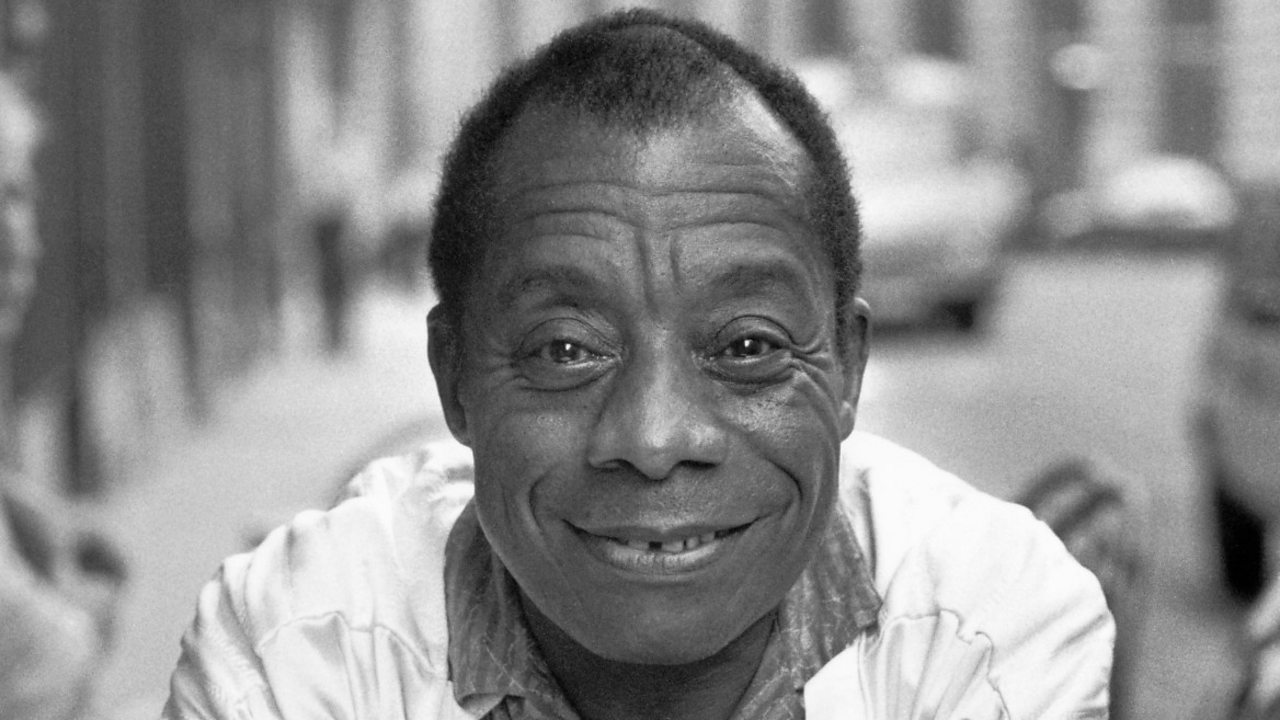
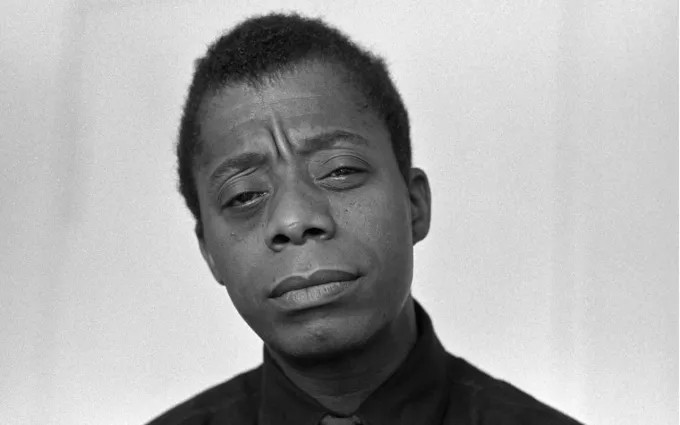
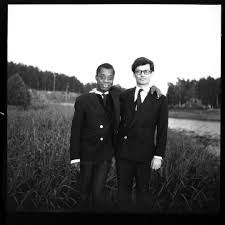
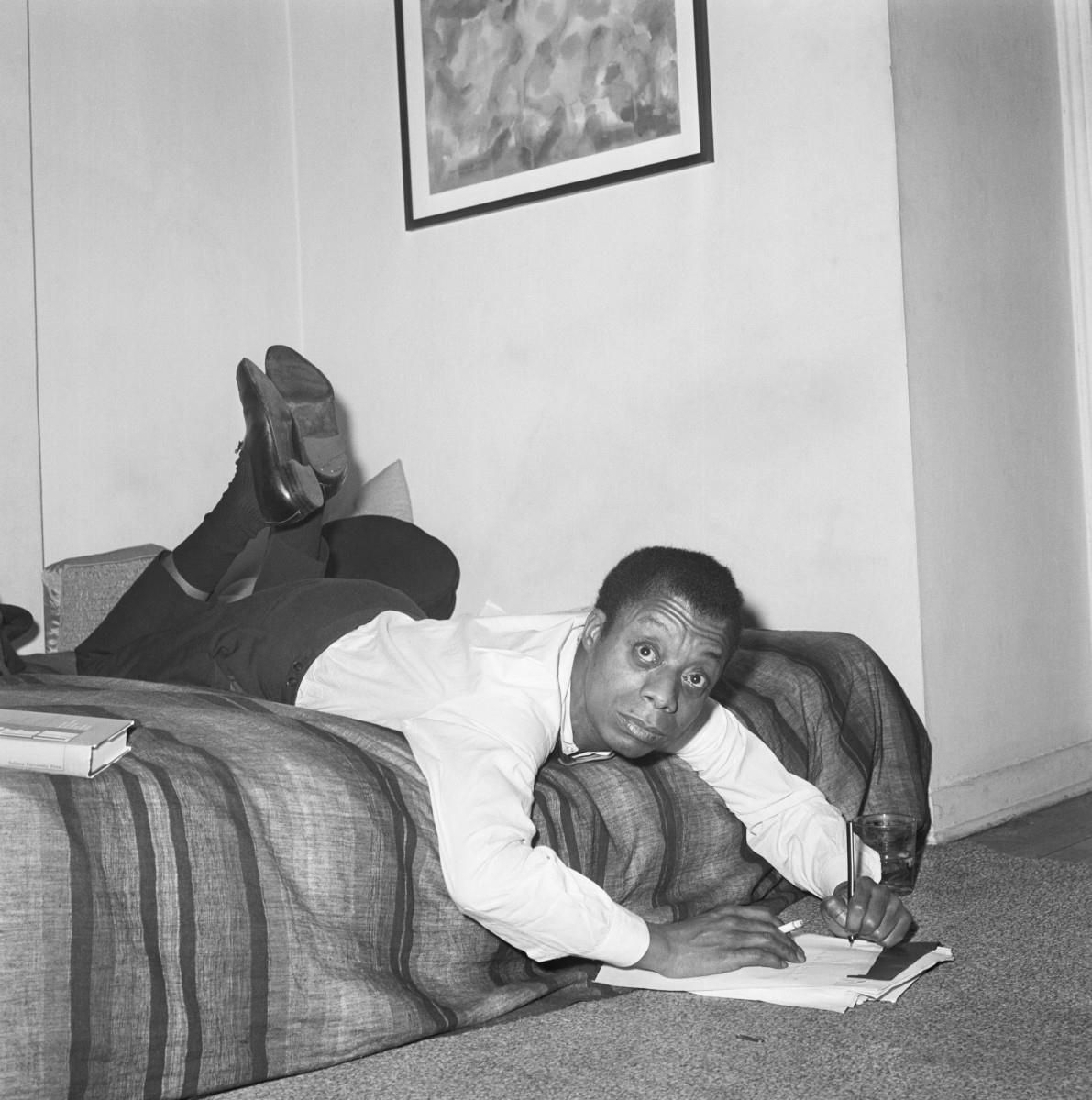
James Baldwin’s letter to his nephew is both personal and national in appeal as a publicly published letter to inspire black Americans and scold white. Likewise, Ta-Nehisi Coates’s letter to his son reveals extremely personal details that may encourage black Americans and spur white Americans to pick up the mantle of struggle alongside their darker brothers. Both letters speak to the lack of equality present for black Americans and the need for white mindset change for improvement to occur.
In “A Letter to my Nephew”, Baldwin moves chronologically through his life telling the tale of his nephew’s origins. He weaves into the personal story of his family’s tale, the historical context that affects them all including the results of geographic constraints, political, economic, legal, etc. that make life harder for African Americans. For example, Baldwin writes, “This innocent country set you down in a ghetto in which, in fact, it intended that you should perish.” He goes on to attempt to explain the thinking of the white “countrymen” that would permit such unfair treatment of their brothers. “They are in effect still trapped in a history which they do not understand and until they understand it, they cannot be released from it.” This calling out of uninformed white people is the way Baldwin throws down his gauntlet. It is up to everyone to become informed and prepare for change. The rest of the letter is encouragement to his nephew to be brave and loving as he continues the fight. And near the end he makes the inclusive statement, “We cannot be free until they are free” (Baldwin). He flips the idea of oppression on its head. The oppressor is the one who is in chains due to their refusal to educate themselves and grow with the changes that terrify them.
Coates’s Between the World and Me tells the tale of significant points in his life, including the birth of his son, but it is not strictly chronological. He jumps around in time, beginning with a recent interview and meanders through different time periods throughout the book. Coates weaves historical incidents like police shootings of unarmed black people, redefines terms to his preferences – terms like race and racism, dreamers, and white – glorifies black culture including music, art, literature, and fashion, and includes interviews with mothers who lost children to police violence. His letter feels at once even more personal in connection to his son and, at the same time, even more broadly an accusation of all Americans complicit in the conspiracy to oppress black people.
As Coates meanders through white on black oppression, he addresses his own fear that grew out of living while black. He admits that he does not want to raise his son with the same fearful perspective but also recognizes that fear might be what has helped him stay alive. He tells stories showing that constant awareness of potential danger is necessary for safety. He also admits that hyper-sensitivity to danger sometimes removes the ability to live in the moment and enjoy the present. Using so many resources to remain in fight or flight mode steals reserves that could have been used for learning, experiencing, connecting, and joy. These are the things that make him angry, that make him feel hopeless and make him realize that there is still much struggle left for all to endure. He encourages his son to struggle but does not seem to call him to love the same as Baldwin. He encourages him to endure but does not provide the same hopeful outlook as Baldwin. It seems like a public shaming of white America. They have continued to oppress, even in the face of countless opportunities to change. Perhaps Coates is hoping to guilt them into an awakening. Coates’s letter ends with witnessing the same crumbling infrastructure that has been the setting for so many black lives – “and I felt the fear” (Coates 152).
Works Cited
Baldwin, James. “A Letter to My Nephew.” The Progressive. 1 Dec, 1962, progressive.org/magazine/letter-nephew/
Coates, Ta-Nehisi. Between the World and Me. Spiegel & Grau, 2015.
TRIGGER WARNING: This essay contains discussion of racism, racial violence, police brutality, and psychological trauma in a literary context.
Baldwin’s writings seem to assert that all people deserve the opportunity to be understood, and barring that, at least given a fair shake to make their way in the world. A self-proclaimed witness to the treatment of his people, he uses story to persuade others to open themselves to the possibility of relationship, or at least the ability to visualize the other. In “Previous Condition”, the main character is a black man having an affair with a white woman. She grew up in poverty and argues with him when he implies that only black people have it hard economically. The argument sounds as though it could have been heard on YouTube with its layers of race, class, gender, and privilege still such hot current issues. However, Ida the white woman, does not get kicked out of a dwelling simply because of the color of her skin, as is the case for the black actor she is debating. Even more horrible is the description in “Sonny’s Blues” of white men running over and murdering Sonny’s uncle just for the fun of it. Evil breeds hatred. Sonny’s father “never really did get right again. Till the day he died he weren’t sure but that every white man he saw was the man that killed his brother” (Going 118). These are examples of the ways in which people as individuals interact in his stories showing the depth of conflict created by race in relationships.
In “This Morning, This Evening, So Soon” Baldwin paints the scene of a black man who has forgotten how to play the game of pacifying the white police officers as is so often necessary to ensure minority safety. The main character says, “I had once known how to pitch my voice precisely between curtness and servility…” (Going 163). He’s been in France so long and interacted with white people under a different social contract for so long that he has forgotten the tricks he used to know to keep himself safe around white people with power who hate him. This speaks to the “armies” of whom Baldwin speaks. The police represent the powers that be and are an ever-present menace to the black characters in his books. In “Going to Meet the Man,” the main character is a white police officer who truly believes he is simply enforcing rules God himself established. He says it wasn’t his fault the black people “fight against God and go against the rules laid down in the Bible” (Baldwin Going 235). This is an example of the way church gets mixed up in all the oppression in people’s minds. All these systems interact to create menaces of themselves.
Yet, somehow, despite all the horrors Baldwin witnessed and wrote about, he continually returns to the theme of love. He seems to believe that love can prevail. I am in awe of his optimism. In “A Letter to My Nephew,” he writes, “love shall force our brothers to see themselves as they are, to cease fleeing from reality and begin to change it” (Baldwin Letter). I hope and pray that he is right.
Works Cited
Baldwin, James. “A Letter to My Nephew.” The Progressive. 1 Dec, 1962, progressive.org/magazine/letter-nephew/
Baldwin, James. Going to Meet the Man. Vintage International, 1948.
TRIGGER WARNING: This essay discusses gender roles, sexuality, cultural expectations, and references to violence and death in a literary context.
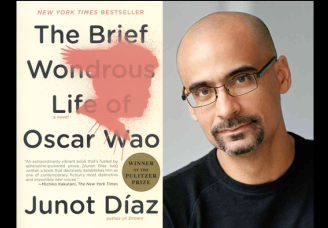
Oscar de Leon, the main protagonist of Junot Diaz’s The Brief Wondrous Life of Oscar Wao, is woefully terrible with the ladies. “His lack of game” is noticed by everyone around him and he often cries “in the bathroom where nobody could hear him” over “his love of some girl or another” (Diaz 23-24). A pickup line he actually uses is, “If you were in my game I would give you an eighteen Charisma” (Diaz 174). Though many people offer advice including Yunior, his uncle, and Lola, none of it sticks. Yunior says “he tried to get him to stop hollering at strange girls on the street…” but Oscar insisted that “nothing else has any efficacy, I might as well be myself” (Diaz 174).
When Oscar finally falls for a woman who seems to accept him, Ybon, she is the wrong woman according to Dominican culture. She is too old, too promiscuous, too “claimed-by-a-cop” already. However, he perseveres and gets himself killed in the process. Whether that is stubbornness, machismo, or crazy (maybe all three) it is certainly along the lines of grabbing “a muchacha, y meteselo” like his uncle advised (Diaz 24). And when he finally gets Ybon to himself for a week, it sounds as though he makes the most of his time enjoying sexual exploits like the best of them. However, even then, what he really loves are the little unanticipated intimacies like “combing her hair”, the way she would “sit on his lap”, or “watching her walk naked to the bathroom” (Diaz 334). He is well-rounded in his appreciation of the entire experience, which is more admirable than simply enjoying the sex. At the end when he says, “The beauty! The beauty!” it sounds like a counter to Conrad’s Heart of Darkness “The horror! The horror!” (Diaz 334, Conrad 12). To him, the sacrifice is worth it.
If the willingness to face violence or defend women against violence is any part of machismo, then Oscar qualifies as a Dominican male at least a few times in his life. He takes a gun and is willing to confront Manny in order to defend Ana (Diaz 47). Thankfully, Manny does not show up and Oscar gets to remain a lover, not a fighter. He knows he could be beaten, but continues spending time with Ybon right up until he is beaten near to death (Diaz 298-299). And he knows he will be killed for his determination to be with Ybon in the end. He faces his death with the fervor of “a hero, an avenger”, and tells his killers he will be waiting for them on the other side (Diaz 320). That takes some guts.
To the degree that the American ideal is “all men are created equal”, Oscar’s lack of “Dominicanness” makes him more American. But, suffice it to say, America does not do a great job with equality either. Both cultures still have a long way to go toward treating all people with the decency and kindness that humans deserve despite gender, sexual orientation, ethnicity, etc. Perhaps that is why Yunior talks about Oscar’s niece Isis as the future hope of breaking the curse. The beginnings of the end of the fuku were in Oscar’s rebellion. But if the original curse was put in place by a machismo man whose ultimate power over women caused death and evil, then a woman will be needed to end it once and for all. Who better than someone named after Isis, the goddess who protected the dead and invented marriage? Nice job, Diaz.
Works Cited
Conrad, Joseph, and D.C.R.A. Goonetilleke. Heart of Darkness. Peterborough, Ont: Broadview, 1999.
Diaz, Junot. The Brief Wondrous Life of Oscar Wao. Riverhead Books, New York, 2007.
TRIGGER WARNING: This essay discusses mental health (including OCD), grief, emotional distress, strong language, and social inequality as they appear in John Green’s novels.
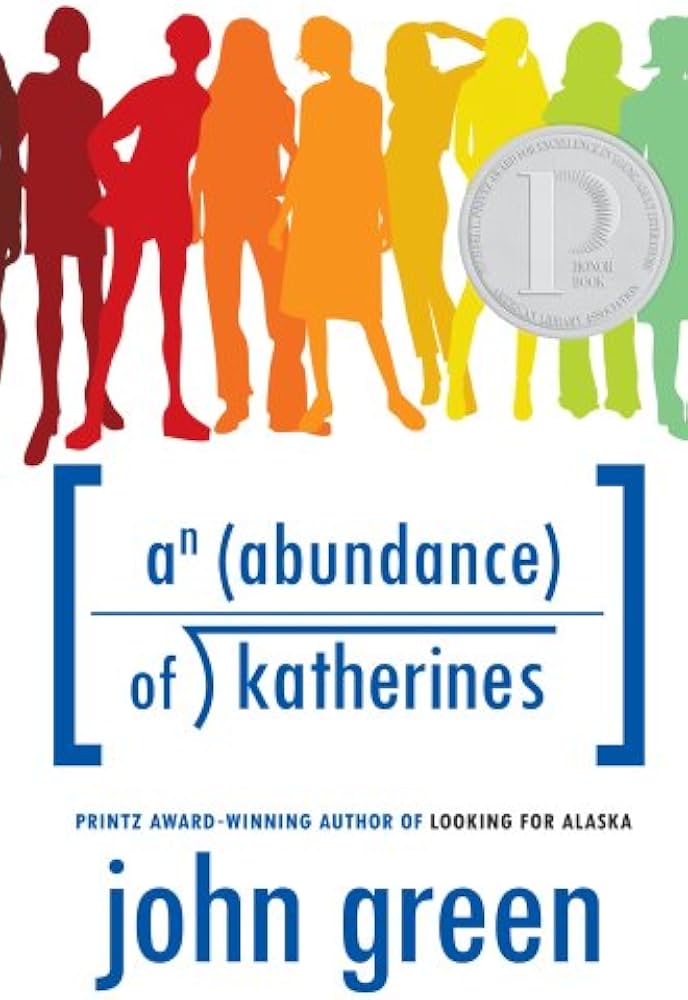
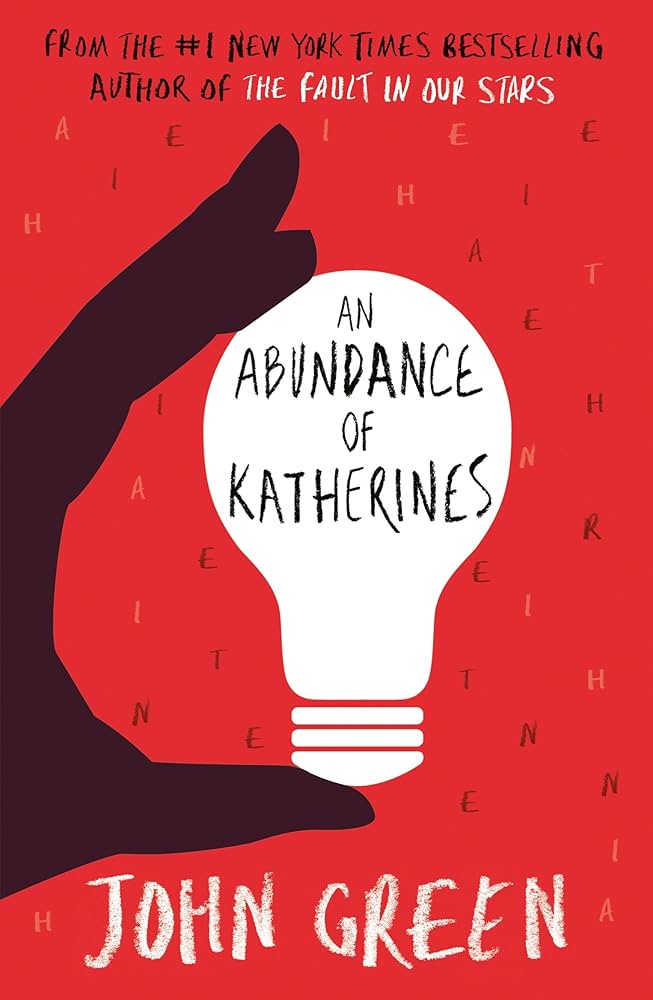
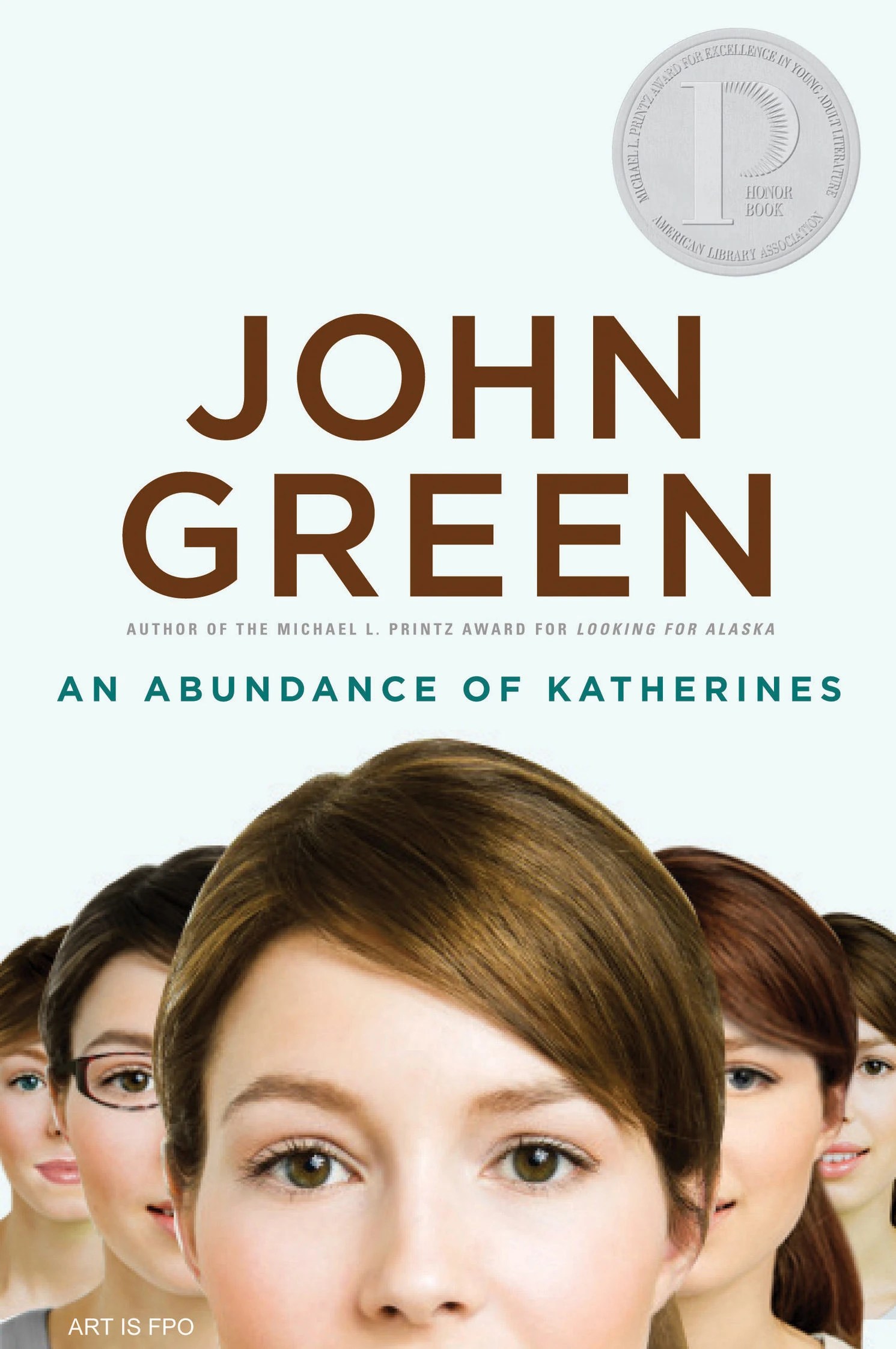
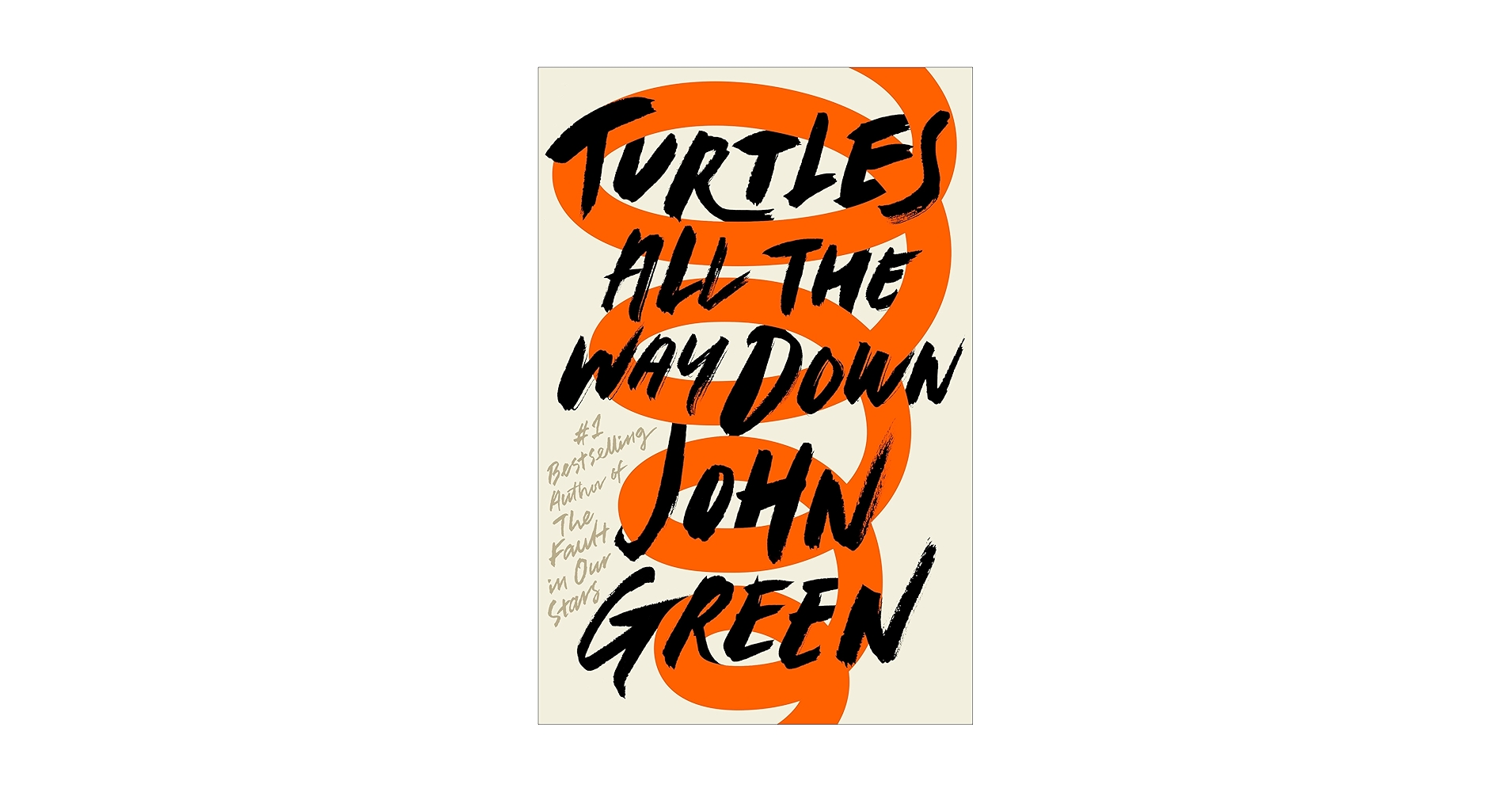
Authors of young adult fiction have the difficult task of creating characters, situations, and dialogue that teenagers will believe. If a novel’s plot is boring, the characters lack development, or the dialogue sounds fake, teenagers are quick to toss the book aside and look for a different author. However, once an author captures their hearts, young adults create a loyal fan-base who will read every book the writer produces and pass them among friends like contraband. John Green has successfully built just such a fan base. An analysis of three of his novels reveals the techniques he uses to create a reality that young adults will believe using language that is authentic to their worldview. Looking for Alaska is one of Green’s earliest books, Turtles All The Way Down one of his newest, and An Abundance of Katherines one of his most unique. Each contains myriad examples of masterful writing to which teenagers connect.
One method is invented vocabulary through methods of functional shifting, combining, reanalysis, clipping, and suffixing. Another is changing syntax by manipulating the expected word order to indicate southern diction, English as a second language, and creative thinking. In the area of semantics, Green creates meaning using a variety of registers within different specializations, word choices with teen-geared connotations, and vague wording to leave meaning ambiguous at times when the characters are being mysterious. He also uses word choices to indicate various socio-economic classes of people and audience-specific dialogue that incorporates youthful diction and slang. John Green utilizes invented vocabulary, syntax, and semantic strategies in his novels to successfully appeal to young adults.
The use of invented vocabulary speaks to youth because people in this stage challenge rules and push boundaries, a sort of “verbal revolution” to quote Walt Whitman (Curzan 120). Green capitalizes on this invention of words to make young adults feel connected to his writing. In Looking for Alaska, Miles says he has come to boarding school “looking for a Great Perhaps” (Alaska 219). Changing perhaps from its usual part of speech as an adverb to a proper noun is a creative way of connecting the main character to a sense of adventure as he begins his search for meaning in life. At another point, Miles says he uses “the friend card” which is a popular phrase taking the noun friend and shifting it to use as an adjective (Alaska 77). Then Alaska calls Miles a “perv”, a clipping of the word pervert (Alaska 41). At the boarding school, Alaska invents the name of their favorite meal “a deep-fried bean burrito, the bufriedo” by combining the words burrito, fried, and beans. Miles goes on to talk about “savoring the bean-y crunch” and creates the word bean-y by suffixing or adding a y to the end of the word (Alaska 22). Some of the most entertaining inventions are the reanalysis of common sayings. At one point when discussing the destruction of Alaska’s books that she bought at garage sales, Miles says, “Ashes to Ashes. Garage sale to garage sale,” rather than stating the oft-quoted ashes to ashes; dust to dust (Alaska 154). At another point Miles mixes the sayings switch conversations and change horses midstream using reanalysis to claim that Alaska tended to “switch conversational horses midstream” (Alaska 53).
John Green plays with syntax in An Abundance of Katherines to show the speech patterns of an elderly man named Starnes from Tennessee who was born and raised in the country. He says, “Hollis…took good care of us every one” (Katherines 81). The usual word order for Standard English is took good care of every one of us. Placing the indefinite pronouns at the end of the sentence is more common among southern dialects of years past. Green also uses changes in word order to indicate broken English. Hassan pretends he is French and tells some girls that Colin has Tourette’s by saying, “He has the disease with the talking…I do not know how you say in English” (Katherines 52). He is trying to be funny but characteristic of English language learners who sometimes rearrange words and leave out words necessary to form complete sentences.
Green also permits characters to order their words interestingly to indicate intellect and creative/poetic thinking. In Turtles All the Way Down, Davis is a creative poet and writes with unique syntax for a teenager. One computer entry reads, “My mother’s footsteps/were so quiet/I barely heard her leave.” Placing the footsteps of his mother at the beginning of the poem creates more poignant imagery at the end when the reader realizes the mother is no longer around. Another says, “Gravity differs from affection: only one is constant” (Turtles 189). This quote could be put simply, Gravity is constant, but affection is fickle. Davis’s wording sets up a contrast that is meant to be pondered prior to providing an open-ended answer following the colon to ponder some more. In another entry, Davis types in response to Shakespeare’s quote Doubtthat the sun doth move, “It dothn’t move…not around us…Who knows what lies I believe…Who knows what we shouldn’t doubt” (Turtles 207-208). This could be written, Our faith may be unfounded. Things we doubt might be true. His method is more creative and permits the reader to play with the words, mulling them over for meaning.
Linguistic social markers are another technique Green uses to indicate different classes of people. In Turtles All the Way Down when a lawyer for a wealthy family is speaking, his diction is crisp and word choice selective. “Your concern is admirable, Ms. Holmes, but I assure you that everything is cared for…Do you have any other questions of pertinence to your situation” (Turtles 127). The attorney says pertinence which could be considered within his legal register of terminology and is a variation as he could have just as easily said simpler synonyms for a teenage audience (he was speaking to a teenager at the time.) Contrast his speech with Daisy’s. She is a poor teenager who hustles to get anything she wants and fills her sentences with slang, cursing, and different grammatical structures. Her vernacular is a stereotype of underprivileged teenagers. “You got a car and a laptop and all that shit, and you think it’s natural. You think it’s just normal to have a house with your own room and a mom who helps with your homework” (Turtles 216).
When demonstrating the intellect of a psychiatrist, Green gives Dr. Singh the ability to recall quotes from a philosopher in Latin. This ability in speech is a social marker of being well-educated in American society. “A fuller formation of Descartes’s philosophy would be Dubito, ergo cogito, ergo sum. I doubt, therefore I think, therefore I am” (Turtles 166). Along the same vein, when a teenager from a rich family is discussing a painting in his mansion, he shortens the name of the artist (Kerry James Marshall) in question to initials. This familiarity with an artist’s work implies wealth and privilege. “I really love KJM’s work” (Turtles 100). He also invites his friends to watch a movie in his home theater. He uses a word most teenagers have never uttered in the context of a home service. “When I was a kid, we had to have a projectionist come out, but now it’s all digital” (Turtles 98). These are indicators that his social experiences are quite different from the other teenagers in the book. In An Abundance of Katherines Hassan’s humor and intellect are demonstrated in the following exchange when he is invited to say “grace” in a Christian home, despite the fact that he is Muslim:
“Hassan cleared his throat. Bismillah. Then he picked up his fork.That’s it? Hollis wondered. That’s it. We are a terse people. Terse, and also hungry” (Katherines 62).
Average teenagers do not tend to use a word like terse. A more common phrase might be we don’t talk a lot.
More examples of slang and teenage diction in Green’s work permit young adult readers to connect with the characters. In An Abundance of Katherines, Hassan says, “Sup?” instead of What is up? (Katherines 128). Lindsey says, “I’m a’ight,” instead of I am alright (Katherines 99). At one point when Colin is being awakened by a rooster crowing Cock-a-doodle-do, Colin responds in typical annoyance. His witty response; however, is less than typical. “Cock-a-doodle-don’t, Motherfugger” (Katherines 77). The connotations of his invented words are obviously negative. In Looking for Alaska Takumi refers to the authorities with the slang term pig that is sometimes used in reference to the police. “The pigs can’t stop the fox” (Alaska 106). The group of teens make up names for each other, their cars, and different locations as young people are known to do. They call McDonald’s “McInedible” (Alaska 76). The leader of their group is called The Colonel, the authority figure who catches them and has the power to expel them is called The Eagle, and the skinny main character is ironically called Pudge. Green uses these name choices to show the way young people play with language and make it their own.
One character in Looking for Alaska named Alaska is described as moody and is meant to be mysterious, her motivations and goals unknown. The reader is left trying to solve her like a puzzle. The 1st person limited narrator Miles makes the interesting point about her, “…the way her mouth curled up on the right side all the time, like she was preparing to smirk, like she’d mastered the right half of the Mona Lisa’s inimitable smile…” (Alaska 30). He alludes to a mesmerizing painting, the subject of which has created generations to guess what that smile is about. The narrator is also perplexed in another scene by Alaska’s mood swings and thinks, “How could the girl who told that joke three hours before become a sobbing mess” (Alaska 86)? During a game, Alaska is supposed to describe the best day of her life. “Best day of my life was January 9, 1997. I was eight years old, and my mom and I went to the zoo on a class trip” (Alaska 115). When a friend tries to get to know her better and find out how she is, Alaska responds, “I’m really not up for questions that start with how, when, where, why, or what” (Alaska 68). When confronted by a confused friend who says, “I don’t get you,” she responds with, “You never get me. That’s the whole point” (Alaska 55). Green uses vague descriptions and non-committal vocabulary to keep the Alaska character a mystery for the other characters and the reader.
The ability to create realistic characters who can play with language as they speak with authentic teen dialogue and about topics young adults care about is what makes John Green’s books relatable. Readers are drawn into the minds and hearts of each person and the relationships they build while they struggle to make sense of the chaos of life. The universal questions tackled by Green are balanced with humor and enough teenage nonsense to keep the books from seeming pretentious. Miles says at the end of Looking for Alaska “I came here looking for the Great Perhaps…maybe the afterlife is just something we made up to ease the pain of loss…Thomas Edison’s last words were: It’s very beautiful over there. I don’t know where there is, but I believe it’s somewhere, and I hope it’s beautiful” (Alaska 220-221). The invented vocabulary, syntax and semantic choices John Green uses in his novels combine to create works that appeal to young adult readers due to authenticity and the ability to connect to teenage concerns.
Works Cited
Curzan, Anne and Michael P. Adams. How English works : a linguistic introduction – 3rd ed. p.cm. Glenview, IL: Pearson Education, Inc., 2012.
Green, John. An Abundance of Katherines. Dutton and Speak, 2006.
Green, John. Looking For Alaska. Dutton Juvenile, 2005.
Green, John. Turtles All The Way Down. Dutton Penguin, 2017.
Hurst, Mary Jane. The VOICE of the CHILD in American Literature: Linguistic Approaches to Fictional Child Language. The University Press of Kentucky, 1990.
Mohamed, Dr. Theresa. “Learning Modules”, Eng-550-Q4588 Grad Studies in English Lang 20TW4, Southern New Hampshire University, 2020, learn.snhu.edu/d2l/home/398756.
Nilsen, Aleen Pace; Donelson, Kenneth L. Literature for Today’s Young Adults, 8th Edition. Pearson, 2009.




















 rebekahjmarshall