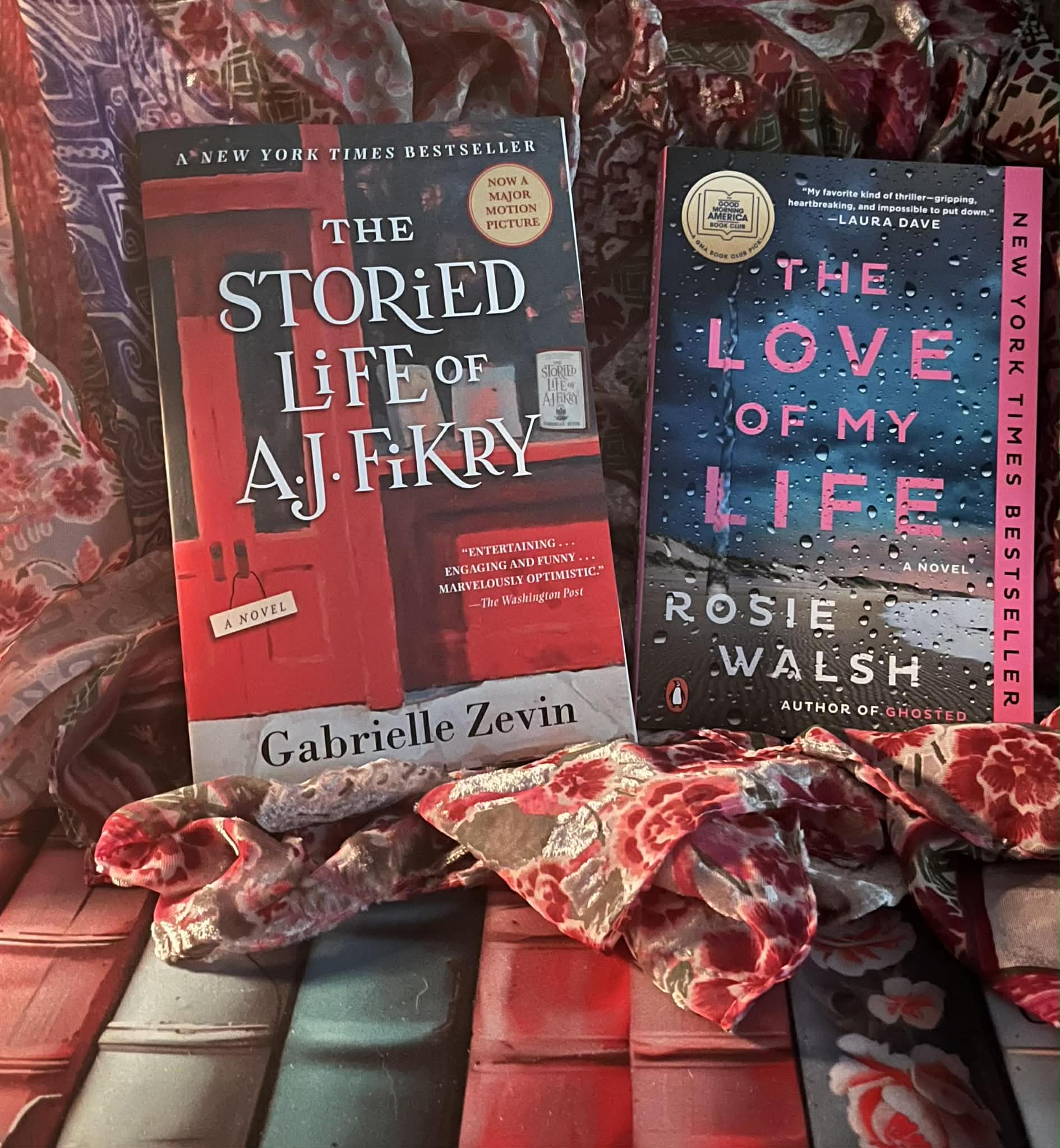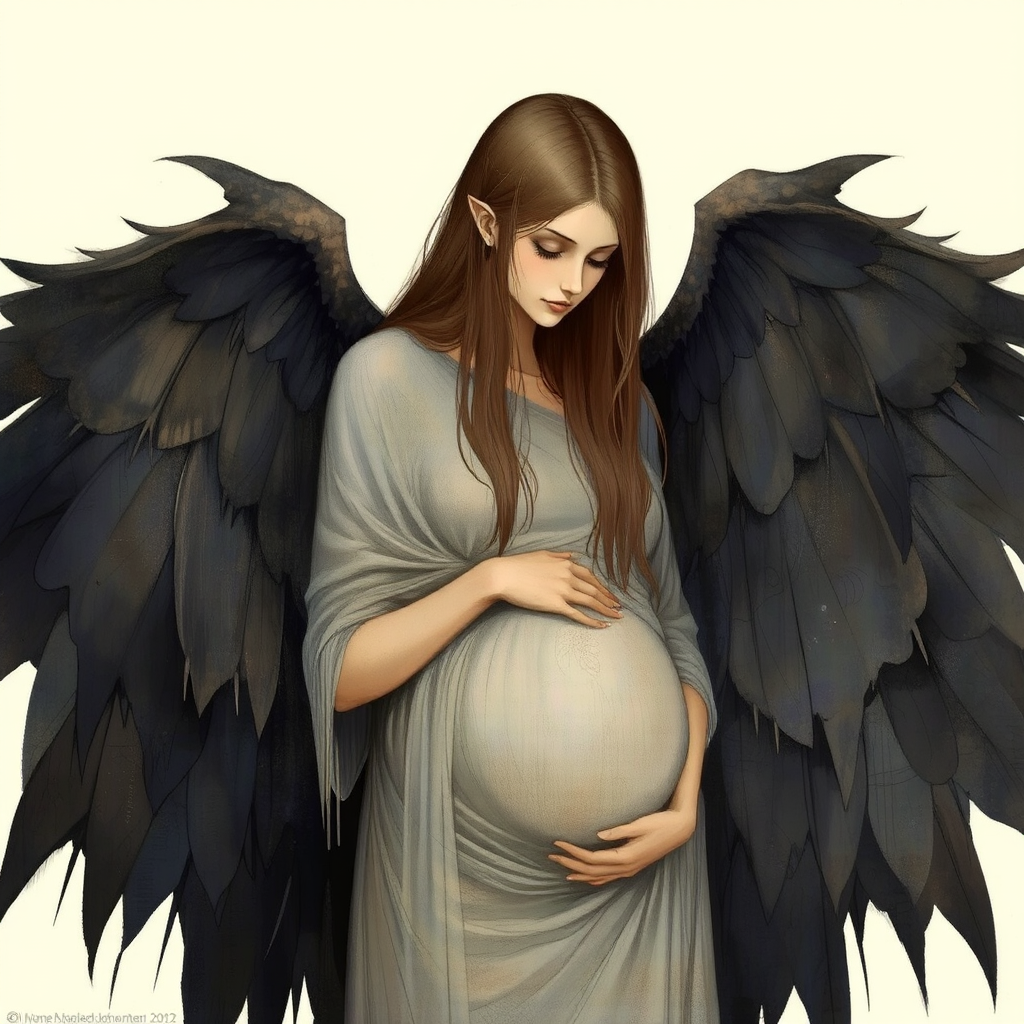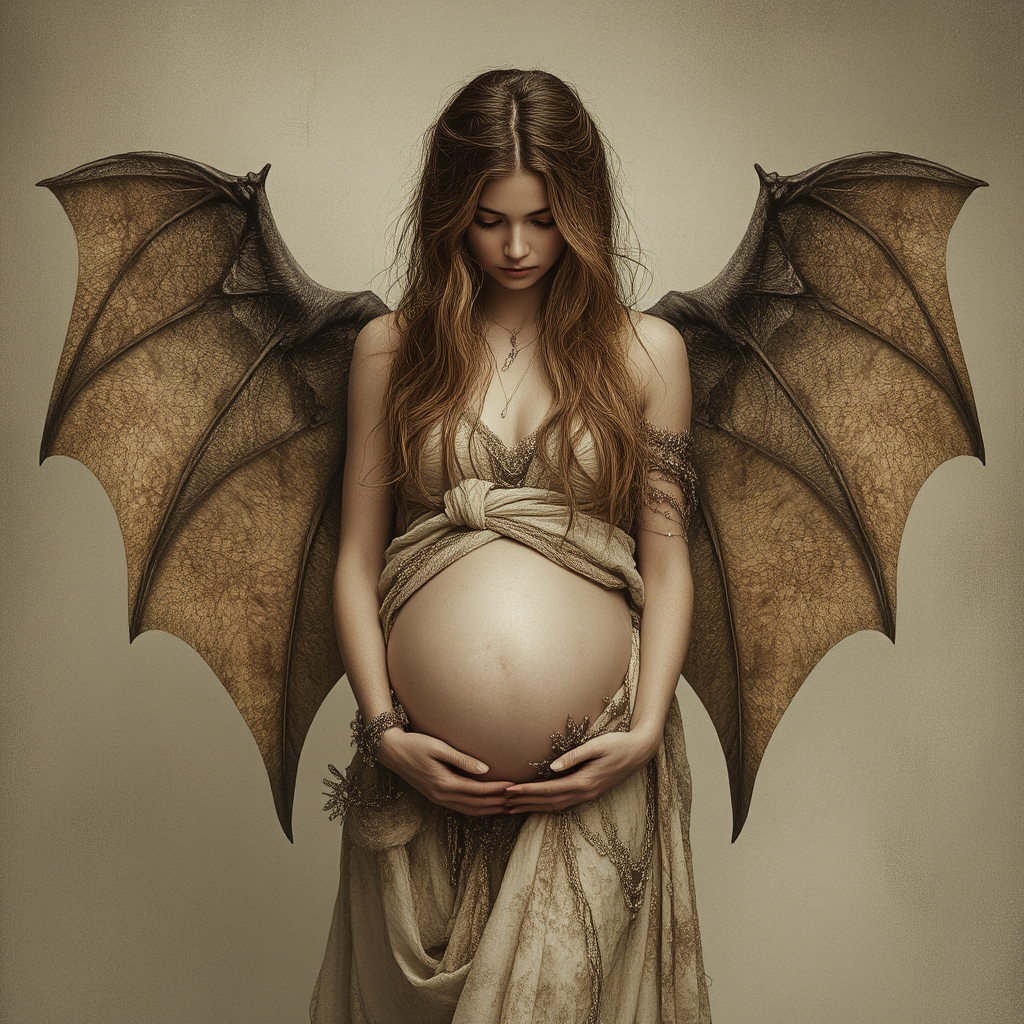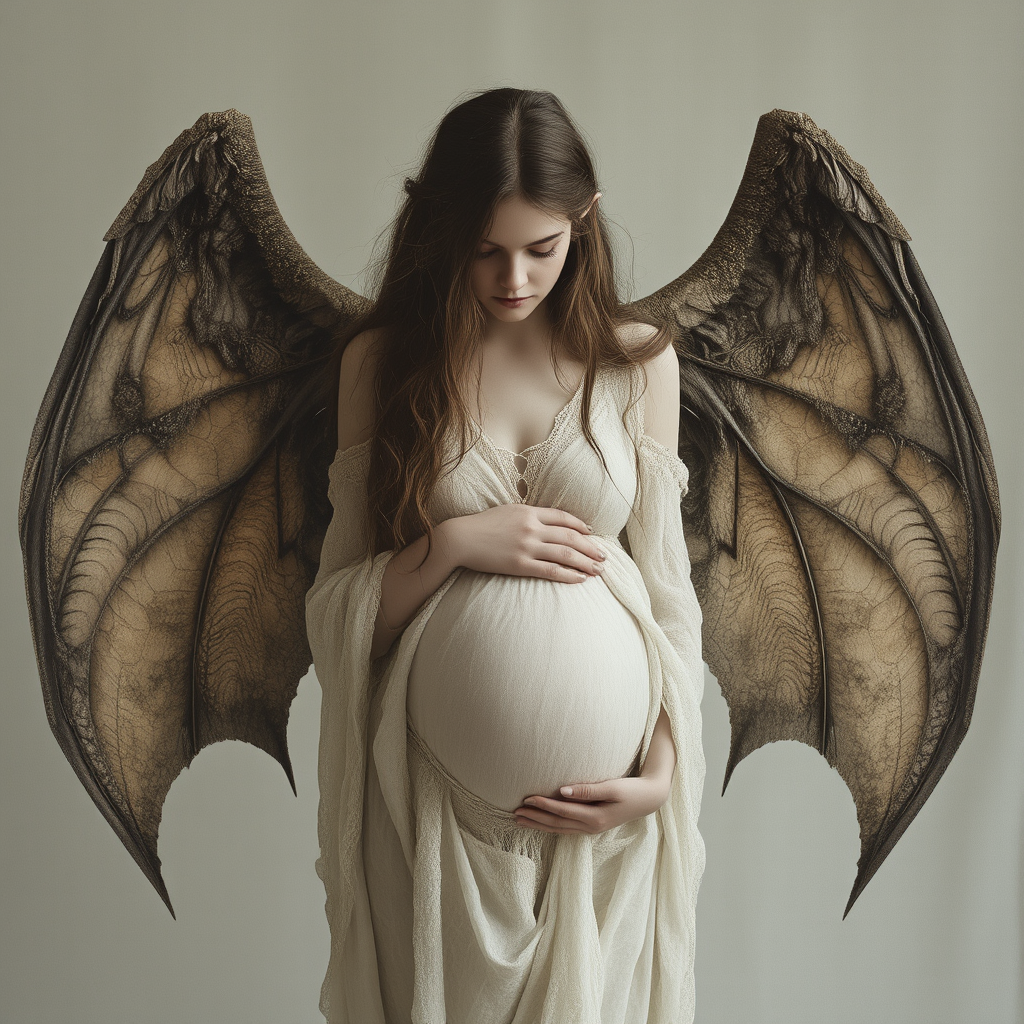
My sweet Valentine David Marshall gave me books and a lovely kimono shawl (behind the books) as Valentine’s Day gifts. I was very surprised and so happy with presents I will wear, read, and enjoy immensely.
The Storied Life of A.J. Fikry is about a grieving bookstore owner who receives a surprise “package” (I think it’s a baby, but I’ll have to read it to see) that changes his life. I want to read it before I watch the movie on Netflix. The Love Of My Life is a suspenseful romance thriller about an obituary writer who finds out his wife has a secret identity. Both of these look fabulous!
TRIGGER WARNING: This book addresses difficult topics including mental illness, suicide, abuse, violence, and trauma. Some scenes and references may be distressing for certain readers.
Gail Honeyman is a master of dry wit and understatement in Eleanor Oliphant is completely fine. Eleanor is so unpleasant and awkward as to render her completely unlikeable at the beginning of the novel. I don’t want to see her bullied by her coworkers or strangers in public, but I could certainly see why they might. She invites side-glances with her oblivious rudeness and is a closed book. She doesn’t want anything to do with anybody and seems perfectly content in her isolation. Of course, it’s all a ruse and protective defenses, but those walls are tall and seem impenetrable.
The chance encounters, unusual incidents, and course of events that occur begin to bring about a soft opening of Eleanor. And the unfolding of her past, the development of some friendships, and her observations and realizations throughout the process are so endearing that I couldn’t help falling in love with her. She and her circle of people are everything that is wonderful about humanity, especially when coping with everything that is horrible with humanity.
Once again, I was disappointed by the rushed feel of the ending. I hoped for the same level of deep introspection at the end of the book that was delved into throughout the rest. What is with these authors rushing their endings? They need to be every bit as perfect as the beginnings and middles. But other than wanting more, I can find no fault with this witty, honest, hilarious look at a lovely woman who is absolutely NOT completely fine, but who will be. The author’s voice is refreshing, hilarious, and wonderful.
Honeyman, Gail, Eleanor Oliphant is completely fine, Penguin Random House, 2017.
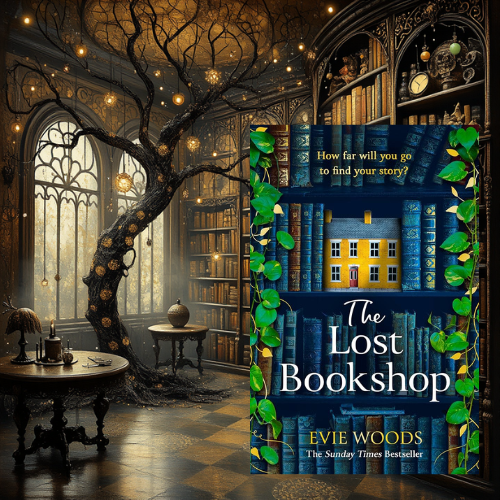
I loved the ideas and interwoven timelines that crossed generations, countries, and realities in The Midnight Library by Evie Woods. It is magical, mythical, fairy tale-ical (I made up that word), and beautiful. It is so beautiful that my main complaint is that I wanted more. The first half of the book is deeply fleshed out, letting us into the characters detailed inner lives and minute by minute adventures. The second half of the book feels rushed, almost like it should have been several more books in a series so the author could have gone deeper into the story lines and better tied together the threads she was so masterfully weaving.
I want to know so much more about the eccentric elderly woman Martha works for. Martha’s childhood is left untapped, so much potential for background to show how she might find herself trapped in such a terrible marriage. Her mother signs and does not speak, which opens the door to so many questions that could be answered and scenes that could be elaborated on. The events that occur around the World War II timeline are barely mentioned and could be so many chapters of fascinating detail. Giant chunks of time are skipped over that could be filled with story. And some of the puzzle pieces like the tattoos, living bookshelves, missing manuscripts, and love affairs feel like fragments that could be such an epic saga were we to have their stories told in many more chapters.
It would make a fabulous series on a streaming service, especially if they fleshed out more of the characters, their backgrounds, motivations, and dynamic growth. One thing is for certain; Woods does a great job of creating protagonists I want to root for, women who never give up no matter how many times they get knocked down.
Woods, Evie, The Lost Bookshop, Harper Collins Publisher, 2023.
TRIGGER WARNING: This novel addresses themes of teen pregnancy, substance abuse, addiction, death, sexuality, religious pressure, body image struggles, and family conflict. Some material may be sensitive for readers.
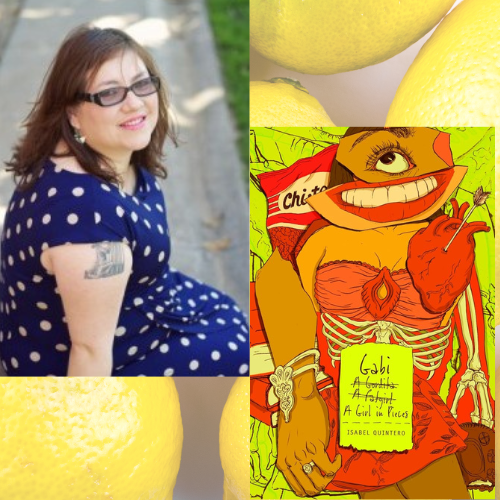
Isabel Quintero does a fabulous job in Gabi, A Girl in Pieces of making us fall in love with a messy, smart, creative, beautiful, real-sounding protagonist. Gabi is sharing her journal with us, along with poetry, artwork, letters to her drug-addicted father, and innermost secrets. We are there for the highs and the lows, and we laugh right along with her, just before we grab a box of tissues to sob along with her. It is her senior year, and she is a pale-skinned Mexican American girl proud of her culture and obsessed with her food. (This gordita can relate.)
She tackles relationships with boys, friendship, teen-pregnancy, religious pressure, family dynamics, sibling issues, senior year stress, college applications, drug abuse, death, sex, body image, and more. Her voice is sarcastic, tender, raw, and heartbreakingly vulnerable. Navigating the minefields of adolescence in the 21st century has never seemed more fraught nor more worth celebrating. It is full of issues that make it a commonly banned book in conservative states’ schools. I feel sad for young ladies who may never get the chance to meet Gabi because there are probably many who could find hope and courage from her example.
Quintero, Isabel, Gabi, A Girl in Pieces, Cinco Puntos Press, 2014.
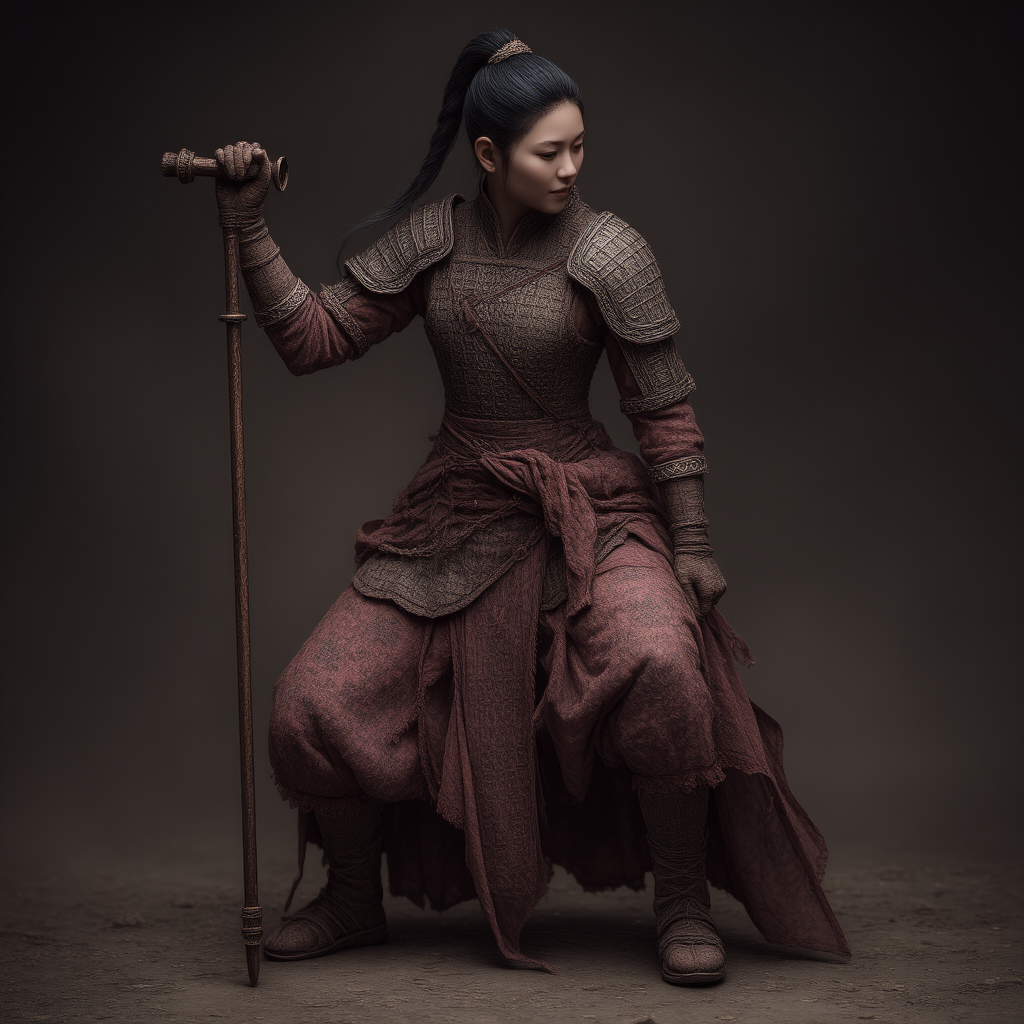
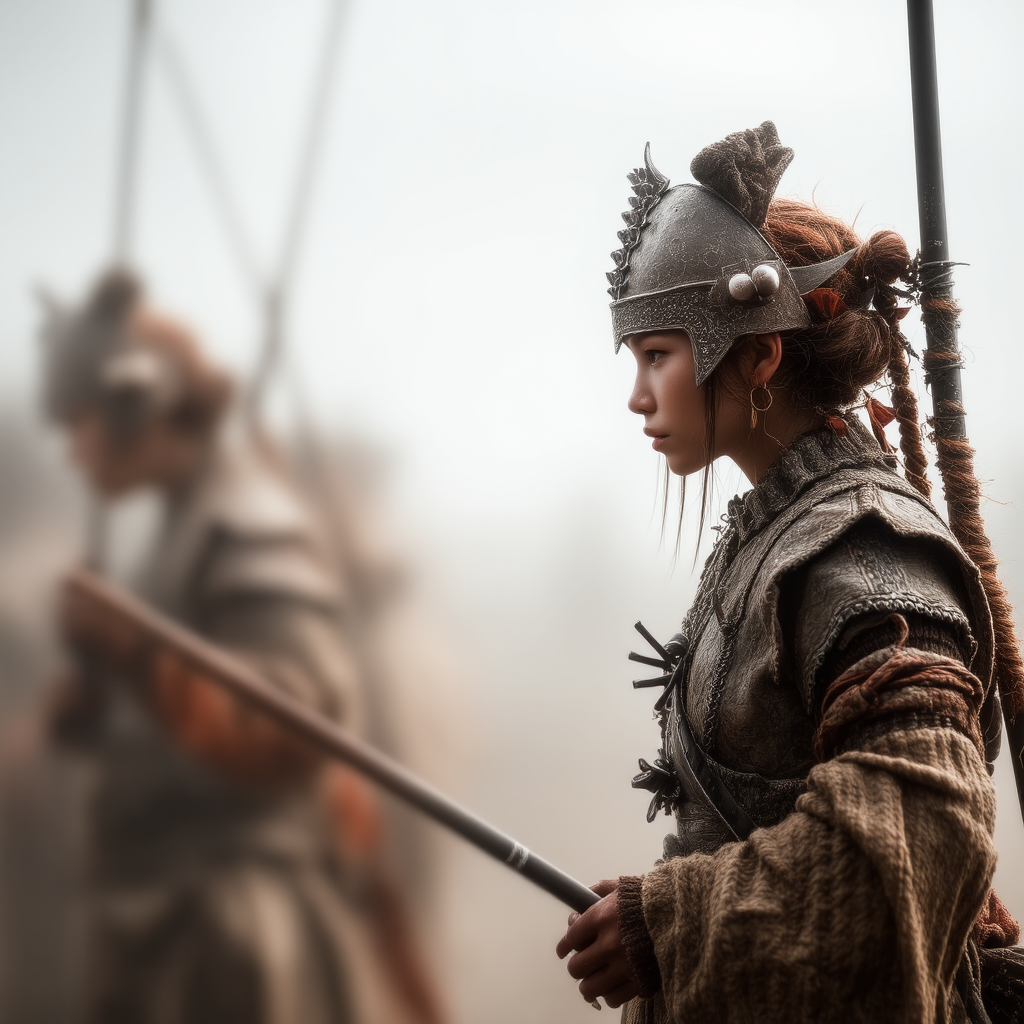
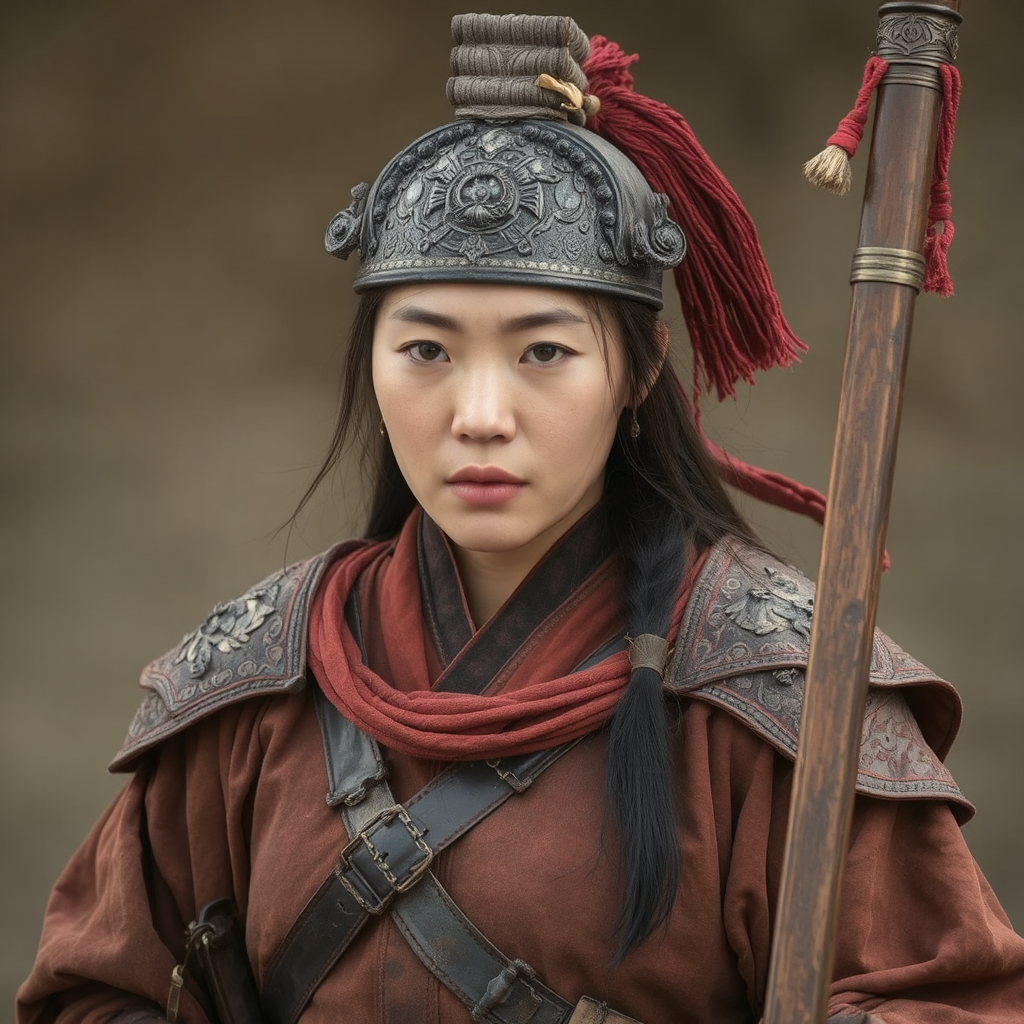
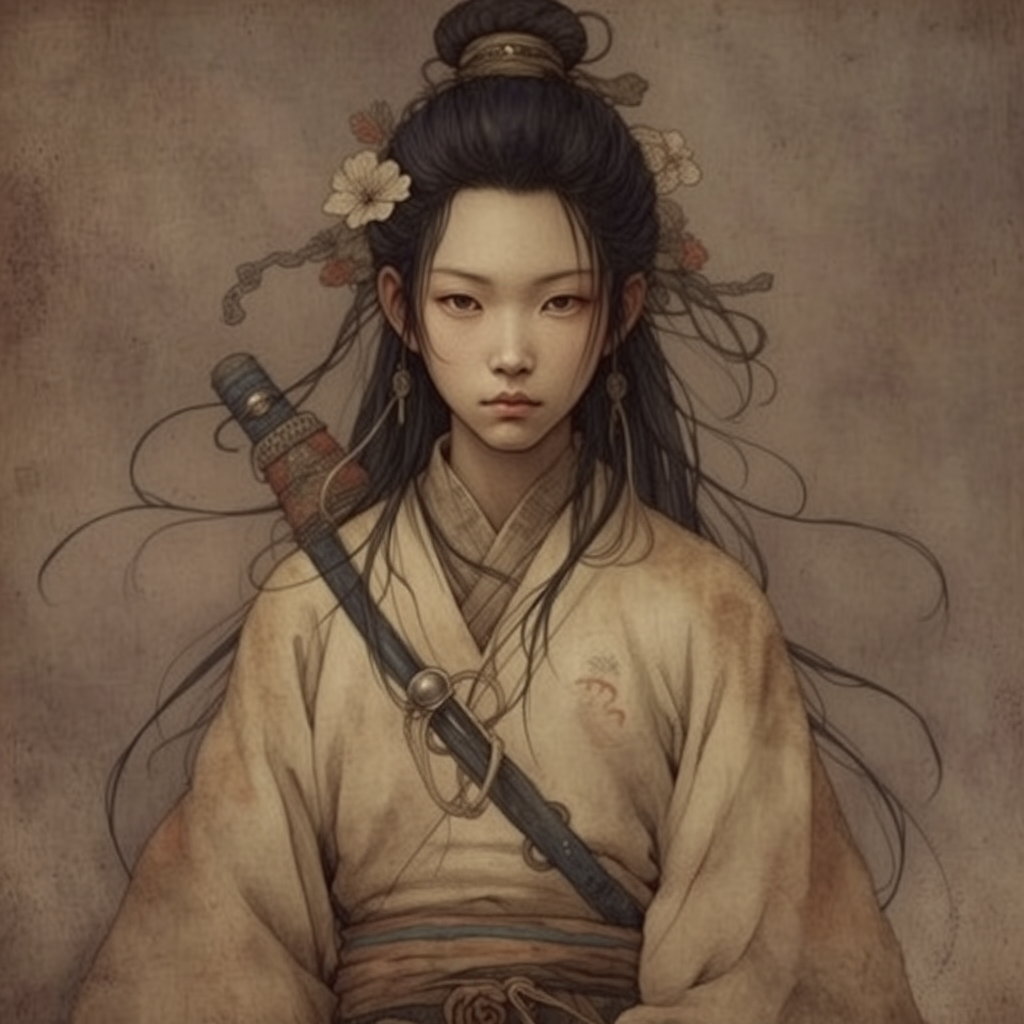
All images created by Rebekah Marshall’s prompts using AI on Gencraft.com website.
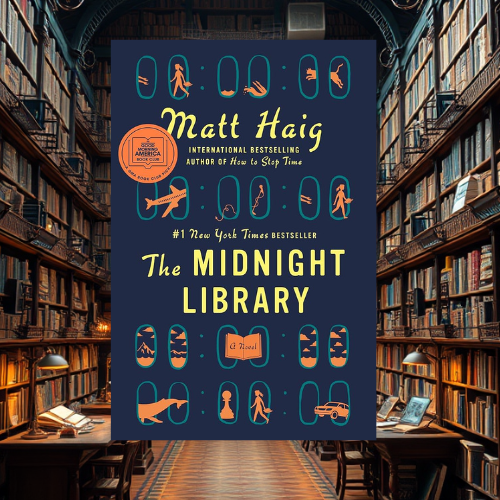
The Midnight Library by Matt Haig is a lovely reality check for anyone struggling with wishing their life could be different. Some quantum theorists think every alternative reality possible happens simultaneously. In one reality, I’m here writing this book review. In another, I’m still in the middle of reading the book. In another, no one gave me this book as a gift, so I haven’t read it at all. And in yet another, heaven forbid, I don’t even like reading fiction.
Our protagonist has reached such a state of melancholy in the beginning of the novel that she cannot see past midnight. She decides to end her life and finds herself in a library containing all the books of every variation of her that exists. It is the chance to see how different versions of life could be if various choices changed the trajectory of her past. It is an adventurous dive into the world of what ifs. I have enjoyed such thought experiments on myself. What if I had not gone into teaching, but had chosen a more lucrative profession? What if I had not married my first husband nor had children? What if I had moved away from Texas and was living somewhere cooler up north?
It is sometimes easy to get lost in those alternate wishful versions of ourselves and forget to appreciate all the little things that make up the lives we are living in the here and now. Though there were many poignant, sad, discouraging revelations in her journey, I was satisfied with the lessons she learned. I recommend this book for anyone who could use a reminder to feel a little more grateful or who sometimes wishes they would have made different choices in life.
Haig, Matt, The Midnight Library, Penguin Books, 2020.
The Argonauts by Maggie Nelson felt like a slap in the face, a comforting hug, an electric shock, and a soothing warm bath. The format was unique and felt experimental—blocks of text, quotes, memories, verbal snapshots, reporting, and textbook-like excerpts all woven into a seamless narrative. The subject matter is raw, often unfiltered, intimate details that feel way more personal than I would ever be comfortable sharing with total strangers. But good for Maggie Nelson for having the chutzpah to attempt such a thing. I love that she finds her own voice by the end by admitting that she is still searching and leaving room for vulnerability in a way that is honest and impressively real.
Her descriptions of pregnancy, sexuality, dealing with loss, giving birth, holding on to self, nursing, her relationship with her partner, gender identity, and expert opinions, *in no particular order, combine to weave almost a stream-of-consciousness-style memoir that defies classification. I think I might have blushed a few times, certainly opened my eyes a bit wider, and definitely wondered why my college courses weren’t quite as shocking as some of hers. But the fact that I felt a connection shows the depth of both her humanity and her fabulous writing talent (since I am a southern, more conservative than her, heterosexual, certainly more comfortable with conventional-vanilla bedroom activities sort of gal. I’ll put it this way—I learned a lot from this book.)
*I jest about the “no particular order” comment because I am sure there is a well-crafted method to her madness that makes it feel like a jumble of thoughts and also a coherent work.
Also, if you are interested in the book, I recommend Googling “Why is Maggie Nelson’s book titled The Argonauts?” It gives a fabulous description of what you are getting yourself into. A brief quote from that Google search using their AI is as follows: “The title reflects the “constantly shifting” nature of queer identity, family-making, and language.”
AI Overview, Google, searched 31 Jan 2026.
Nelson, Maggie, The Argonauts, Graywolf Press, 2015.
All images created by Rebekah Marshall’s prompts using AI on Gencraft.com website.
WARNING – SPOILERS
A Court of Silver Flames, the 5th book in the ACOTAR series, kept me on the edge of my seat. The female-centered, recovery-journey, inner-struggle deep dive is both inspirational and aspirational. I was never made to feel pity for the women fighting to regain their power but something more akin to sisterhood, hope, and absolute celebration. Every step of the way, each woman had to come into her own and claim her strength. Those are the role models girls need today.
This book is definitely some of the steamiest spiciness out of the five books so far. I was fanning myself a few times. It is more concentrated on Nesta’s story, but all the main characters appear hear and there so we can keep up with their lives, as well. We fear for the lives of several main characters whose love has set them on a straight course for death. I won’t give anything away, but the tension and concern are intense. I’ve grown to love these characters and always yearn for happy endings.
The newer characters that have been added to our family hold up their end of making us fall in love with them. When they are endangered multiple times, I am guilty of getting pre-mad at Sarah J. Maas. Creating characters for us to bond with only to kill them off would be the grossest form of manipulation and might lead to reader protests in the streets. I kept hoping she would not break my heart.
Maas, Sarah J. A Court of Silver Flames. Bloomsbury Publishing, 2021.
TRIGGER WARNING: This essay discusses patriarchal oppression, gender-based violence and punishment, sexual shaming, social ostracism, and cultural trauma. These topics are examined in a literary and analytical context.
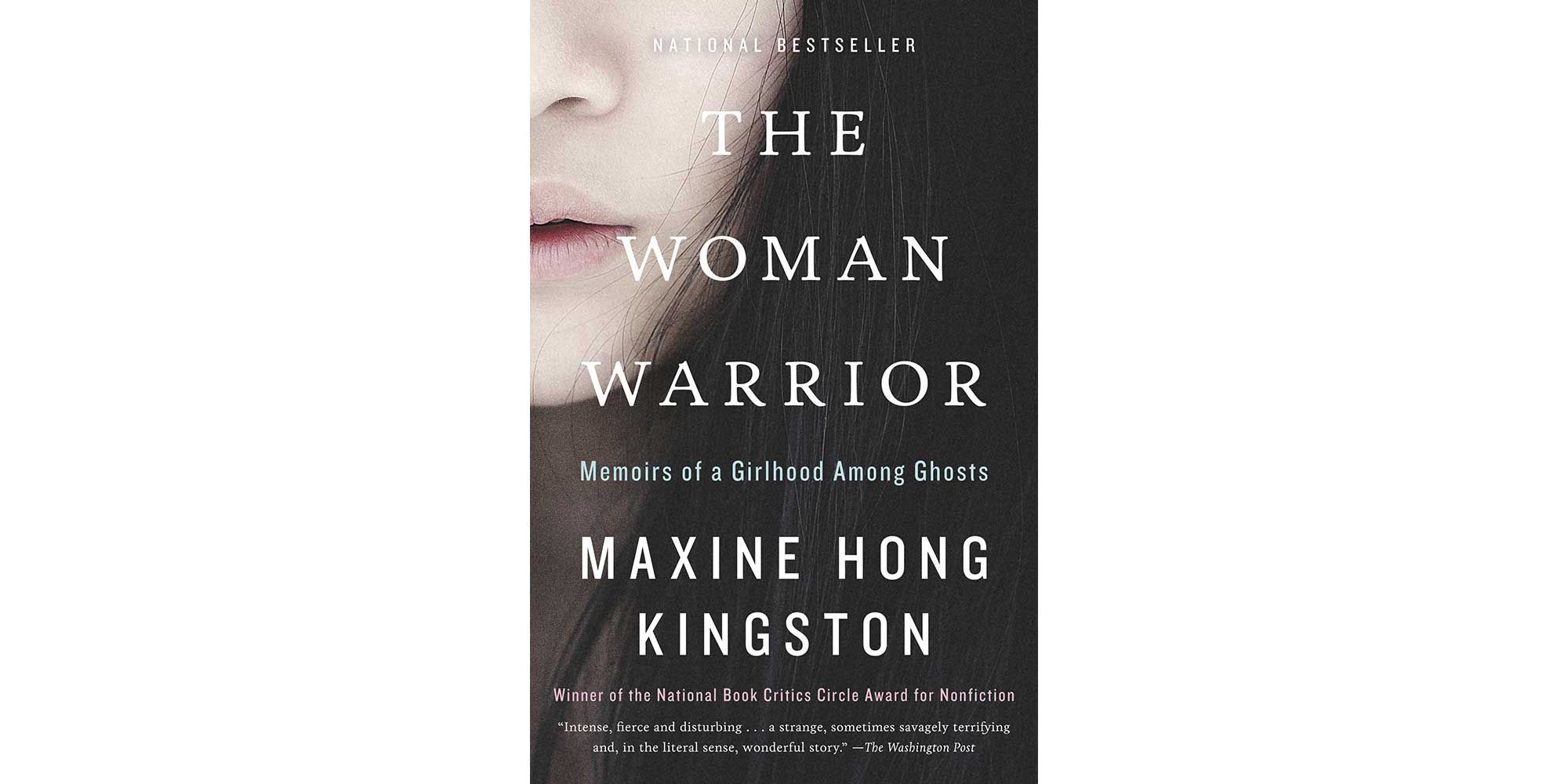
The Woman Warrior by Maxine Hong Kingston paints a picture of harsh expectations placed upon Chinese/Chinese American women. Though the narrator rejects some of the notions and attempts to forge her own path, she still feels duty-bound to uphold some of the traditions. Each section of the book focuses on a different woman and explores the expectations placed upon her specific to the time and place where that portion of the story is set.
For instance, No Name Woman lives in a village in China early in the 20th Century. She is expected to remain “pure” (no sex) until her husband’s return from war. Her sexual desires are not a consideration and her ensuing pregnancy is punished by shaming the family and destroying their crops, livestock, and stored foods. The family then disowns her and never speaks her name again, ensuring she would “suffer forever, even after death” (16). There is no mention of the man who must have impregnated her on the part of the villagers or her family. She must bear the full weight of the “crime” of having sex and becoming pregnant.
Fa-Mulan in the “White Tigers” section of the book becomes the greatest hero in the land saving her family, her village, and her country from evil rulers. She is a warrior, savior, and leader who has trained for 14 years to become the best hero possible. Yet, once her mission ends, she is expected to return to the “appropriate” role of wife, daughter-in-law, mother. There is no option for leadership in her world. This character is thought to have lived sometime around the year 500 in China. Women were not supposed to use their brains or their brawn, except in service to men. Any woman who attempted to pass as male enter the military or school would be executed, “no matter how bravely they fought or how high they scored on the examinations” (19).
The “Shaman” section about Brave Orchid shows the variety of domestic expectations placed on Chinese women. Brave Orchid lives the first half of her life in China and the second half in America spanning the 20th Century. She works as a medical practitioner in China and then in the family laundry business in America. Besides working long hours, she picks tomatoes as a part-time job to make more money, does all the cooking and cleaning, and manages all aspects of the household. She is also expected to carry on the traditions of the culture by keeping the rituals, ceremonies, and talk story alive so that it will pass on to the next generation. She must also protect everyone’s souls by calling them back when they have forgotten their way home. Brave Orchid’s eyes fill with tears as she tells her adult daughter, “I work so hard” (103). Chinese women are unrealistically expected to do more than their fair share of the work.
The section “At the Western Palace” highlights the way Chinese women in the past had little power in marital situations. Their partners were chosen for them and husbands might take multiple wives. The women were expected to tolerate and support these traditions without question. When Moon Orchid comes to America in the 1950’s, she is confronted by a different reality in which women have more rights and her husband rejects their marriage. She is expected to accept his continued financial support without living as his wife. Chinese American women seem to still have parents attempting to meddle with selecting their potential suitors according to the narrator.
In the final section “A Song For a Barbarian Reed Pipe” the narrator implies that a “good” Chinese American girl in America in the 1950’s should be able to speak fluent English and Chinese. She should attend Chinese school and American school. It is an interesting note that “good manners…is the same word as traditions” in Chinese (171). To please the Chinese, she should be obedient and demure, soft-spoken, and graceful, domestically competent – able to cook, clean, serve, and heal, and pleasant in interactions while not making eye contact, use opposites to confuse evil spirits, keep all Chinese traditions, send money to family members in China, lie to Americans so no one can trap her or deport her or trick her somehow, and remember that men are valued more highly than women. To please the Americans, she should be assertive and firm of voice, intelligent, sexy, able to defend herself, and independent making strong eye contact, speaking from a place of science and logic rather than any mention of evil spirits, creating a comfortable lifestyle that is America-focused, be a patriot, and believe that women and men are equal. A Chinese American woman is expected to do all of this and figure out how to be healthy, happy, and prosperous without driving herself crazy over the paradoxes such disparate expectations create.
Works Cited
Kingston, Maxine. The Woman Warrior – Memoirs of a Girlhood Among Ghosts. Vintage Books, New York, 1975.
TRIGGER WARNING: This essay analyzes Jewish American identity in mid-20th-century literature and includes discussion of antisemitism, cultural and gender stereotypes, prejudice, and historical references to World War II. These topics are discussed in a literary and analytical context.
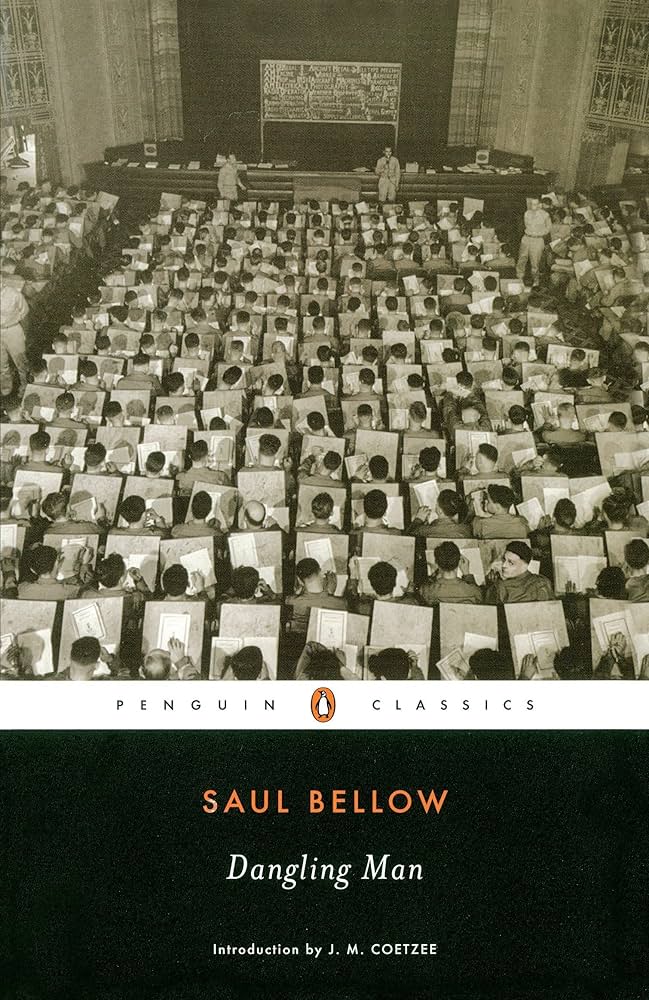
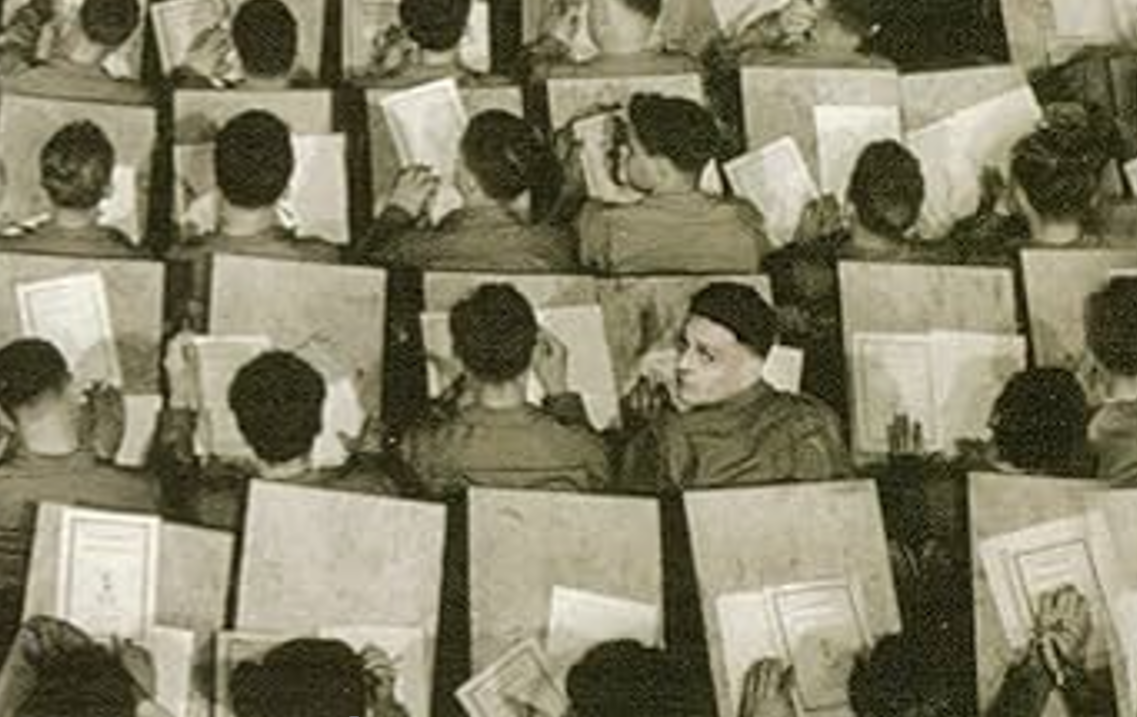
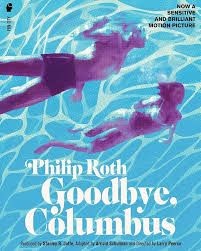
The main characters in Saul Bellow’s Dangling Man and Philip Roth’s Goodbye, Columbus react to Jewish stereotypes by challenging some and confirming others. The writers allow the characters to explore their Jewish identity within the context of the larger American culture of which they are a product.
Joseph in Dangling Man lives in early 1940’s Chicago. Antisemitism was prevalent in American culture. Jews were often characterized as greedy and dishonest. Vandalization of synagogues and Jewish cemeteries were a common occurrence. Literature spouting antisemitic rhetoric and symbols like swastikas were the norm (Freeman). Joseph does not mention any of this, but it is the reality in which he resides. He is not always honest with his wife and has an affair. His hot-headed temper gets him into trouble off and on. And his judgmental views of others reveal hypocrisy. In these ways, he upholds some stereotypes that others may have had concerning Jews. However, his pondering journal entries debate such concepts as materialism, honor, integrity, and truth, inner wrestling that defies the stereotypes of the time while he waits to be drafted to fight in WWII.
In one case he struggles with how to view the world and find his own place in it. “Joseph suffers a feeling of strangeness, of not quite belonging to the world…” (Bellow 17). He mentions the complicated nature of the world with both good and malevolence present to contend with and it bothers him when people try to simplify life to either good or bad. Yet, he has his own standards that he struggles to uphold. He endeavors to be honest with himself. He battles against his brother who wants to give him a handout. He is judgmental of his brother’s family and their materialism, viewing their desire for more than four rationed pairs of shoes per year as vanity. (Bellow 42). And he is disappointed that his wife Iva does not want to improve herself and her way of thinking to become a more enlightened person like him.
Neil in Goodbye, Columbus lives in late 1950’s Boston and is a secular Jew unsure of his position within his culture. He has definite opinions regarding what good Jews should do, like not get nose jobs to hide their Jewishness. He lived in a time “when antisemitism was at an all-time low” compared to the 1940s. However, non-Jews reported worrying about the materialism, excessive amounts of freedom, and lack of values that Jewish youth were perceived as possessing (Prell). Neil verifies that these stereotypes may have been founded concerning some of the more well-to-do Jewish families as he describes Brenda’s family’s wealth. He is amazed and seems critical of their “sporting goods trees”, housekeeper, giant home with guest bedrooms, multiple well-stocked refrigerators, and extra rooms full of outdated furniture (Roth).
This was also the time period when the Jewish American Princess began to be talked about. Brenda is the perfect example of this stereotype, the spoiled, bratty, argumentative Jewish girl who gets her way by manipulating her father. There is also a stereotype of the critical Jewish mother who is difficult to endure. Mrs. Patimkin certainly fits this description quite well. It is as though Neil is painting his experience with Brenda’s family as a lesson in all of the stereotypes Americans believed during the 1950s. Though he does not fit most of these, he is very aware of their presence and is looking in like a non-Jewish outsider observing this family as a case study.
By the end of the book, Neil returns to his world that is not connected to the Patimkins (Roth 135). Despite being the first day of Jewish New Year, he goes to work and resumes his life as the kind of Jew that does not fit into most of the stereotypes he has encountered during his previous summer romance. He may not have it all figured out, but his experience with Brenda’s family has at least provided him with an example of what he doesn’t want in his life.
Works Cited
Bellow, Saul. Dangling Man. Penguin Group, 1944.
Freeman, Lauren. “The US and the Holocaust Project Group: Antisemitism.” Dec 2003, updated H. Marcuse March 26, 2012, marcuse.faculty.history.ucsb.edu/classes/33d/projects/ usholo/LaurenAntisemPage.htm
Prell, Riv-Ellen. “Stereotypes in the United States.” Jewish Women’s Archive – Encyclopedia. jwa.org/encyclopedia/article/stereotypes-in-united-states
Roth, Philip. Goodbye, Columbus. Vintage International Edition, September, 1993.
Cristina Garcia’s novel Dreaming in Cuban paints a portrait of two different Cuban American women and the way exile has helped to shape their identities as American citizens. Lourdes is a wife and mother at the time she flees to America to escape Fidel Castro’s Cuba. She leaves behind her parents and siblings to build her new life with her husband and daughter. Her American ideal is the stuff of movies and 50’s sitcoms. She has no patience for non-believers in the American dream and goes about creating her new identity from scratch. Pilar is a toddler when she leaves Cuba and it is not by choice. She is ripped from the arms of her grandmother and must accompany her parents to the U.S. She is torn between Cuba and America throughout her childhood due to her memories of her grandmother and a yearning to be reconnected with her. She resents the patriotism and blind faith her mother Lourdes places in the American dream and rebels against her mother’s ideals.
Lourdes owns a chain of Yankee Doodle Bakeries and is proud of the business she is building. She is a volunteer for the police force who patrols the neighborhood and believes it to be her “civic duty” (Garcia 136). She does things she believes to be distinctly American like she makes “Jello-O molds with miniature marshmallows” and “barbecues anything she can get her hands on” (Garcia 137). She attends the Thanksgiving Day parade on Fifth Avenue and watches the Rose Parade for New Year’s on television. For the American bicentennial, she plans to sell “tricolor cupcakes and Uncle Sam marzipan” (Garcia 136). She openly opposes anything that hints of communism or Cuban patriotism. “She’s convinced she can fight Communism from behind her bakery counter” (Garcia 136). Her daughter thinks she dreams of sponsoring her own float someday, “maybe a huge burning effigy of El Lider” (Garcia 137).
She only begrudgingly returns for a visit to Cuba in 1980 at the request of her daughter and is miserable the entire time arguing with the locals, complaining about the poor accommodations, criticizing the economy, etc. Garcia shows the contrast of Lourdes’s praise and pride in America with her disdain for Cuba. When she comes within killing distance of El Lider, Lourdes fantasizes about assassinating him, and her final act on the island is helping her nephew escape. She becomes a patriotic American whose love for her new country is partially a reaction to her escape and hatred of her old country. Her exile is her salvation and she is proud of her choice.
In contrast, Pilar struggles to figure out her identity. She takes for granted the country she grows up in because she did not have negative experiences in Cuba. She longs for a return to the island to see her grandmother and views those who bar her way as obstinate for no good reason. Pilar is a product of American society. She is drawn to the rebellious punk culture and uses her art to protest societal norms. She says she likes to “confront people” and that her art says, “Hey, we’re here too and what we think matters!” (Garcia 135). It is not until she returns to Cuba for a visit to her grandmother that she is confronted with the reality of the social, political, and economic unrest of her birthplace. Though she loves Cuba, she belongs in New York. “I know now it’s where I belong – not instead of here, but more than here” (Garcia 236). Her exile becomes real to her and that is when Pilar truly chooses America as her own, ready to claim it as part of her identity.
Works Cited
Garcia, Cristina. Dreaming in Cuban. New York, Ballantine Books, 1992.