All images created by Rebekah Marshall’s prompts using AI on Gencraft.com website.
My grandad passed away this morning peacefully in his sleep. He was 92 years old and loved by 5 generations. He got to spend time with his newest great-great-granddaughter about a week ago and still said the prayer for our breakfast 4 days ago. The last few days, he was lost in his thoughts and seemed to be remembering projects and work assignments from many years past, his mind constantly trying to be productive and wrap up loose ends. We kept reassuring him that he could rest. All his hard work was complete and there were no more deadlines to meet.
His belief to the end was that his next waking moment would be in a resurrected body free of pain, reunited with those who passed before him, like his wife (my Mema) who we lost 2 years ago.
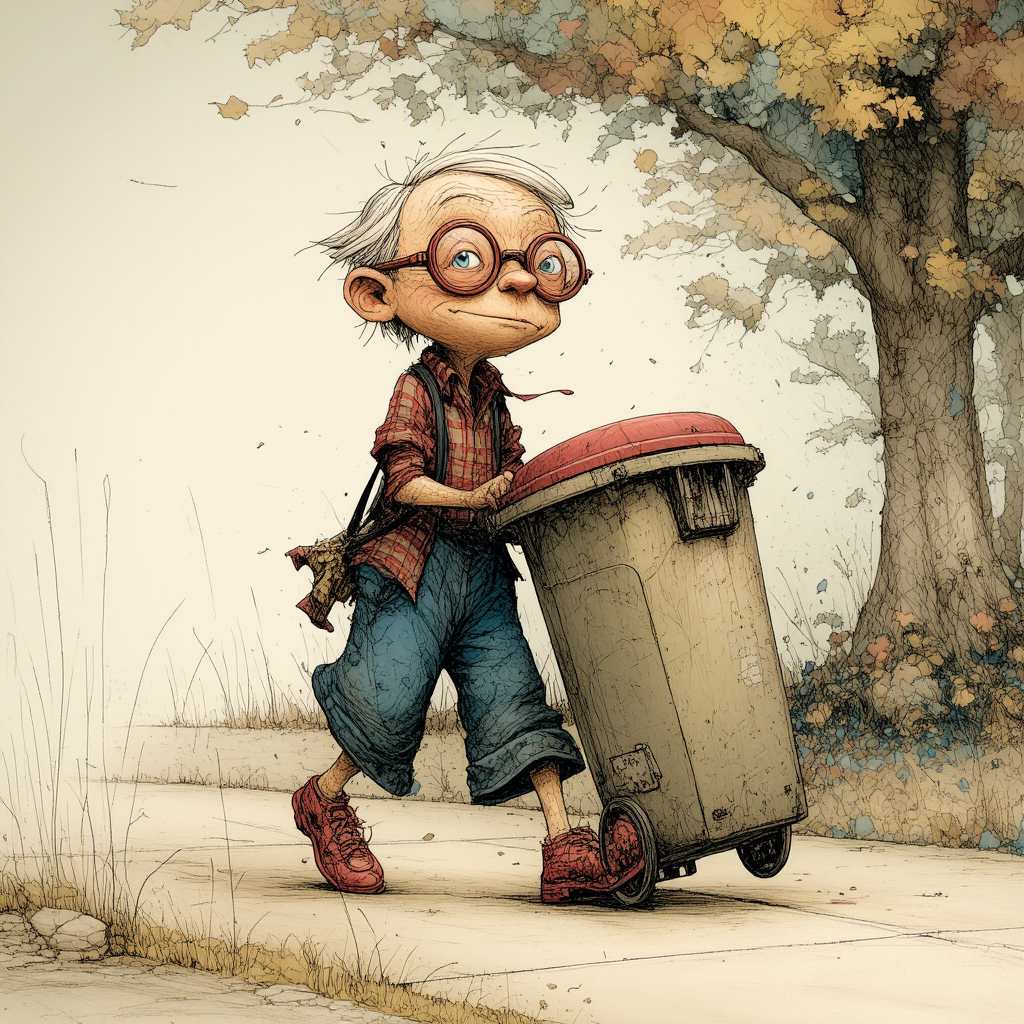
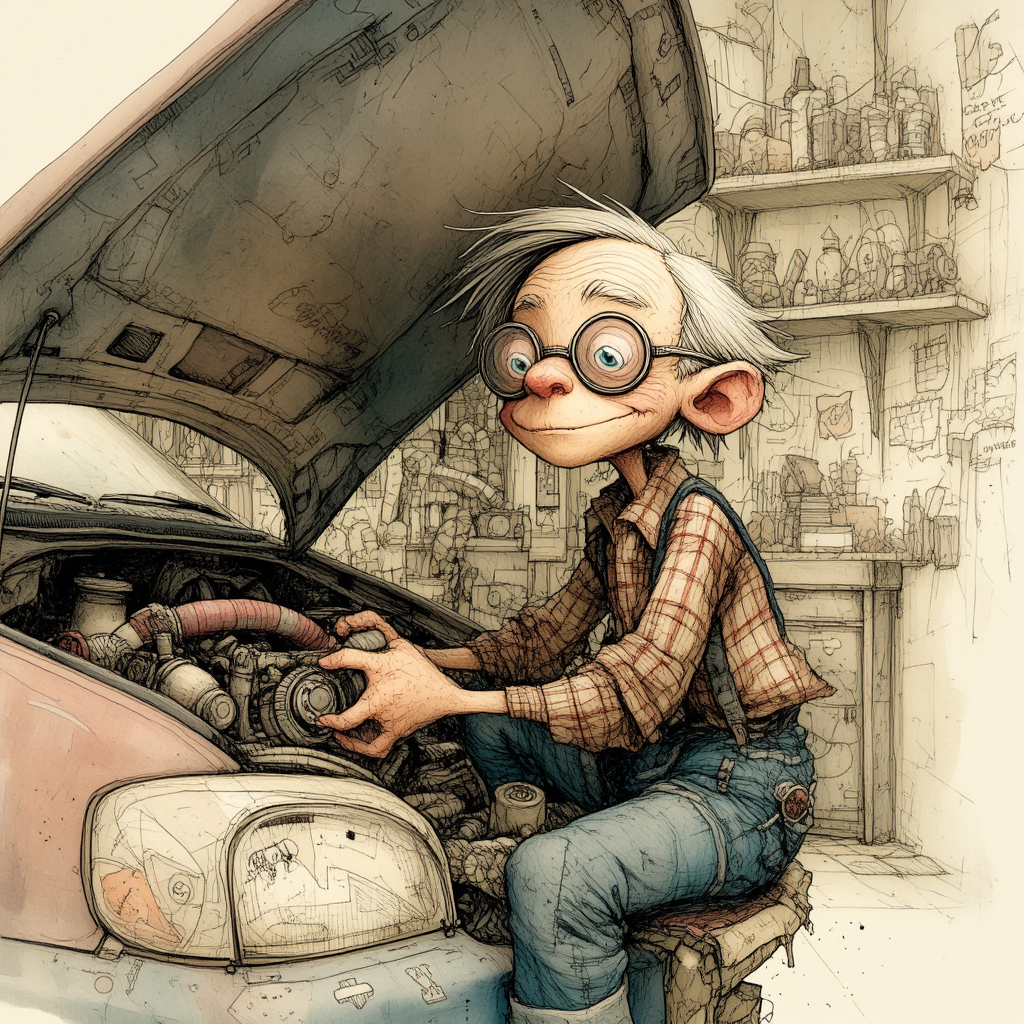
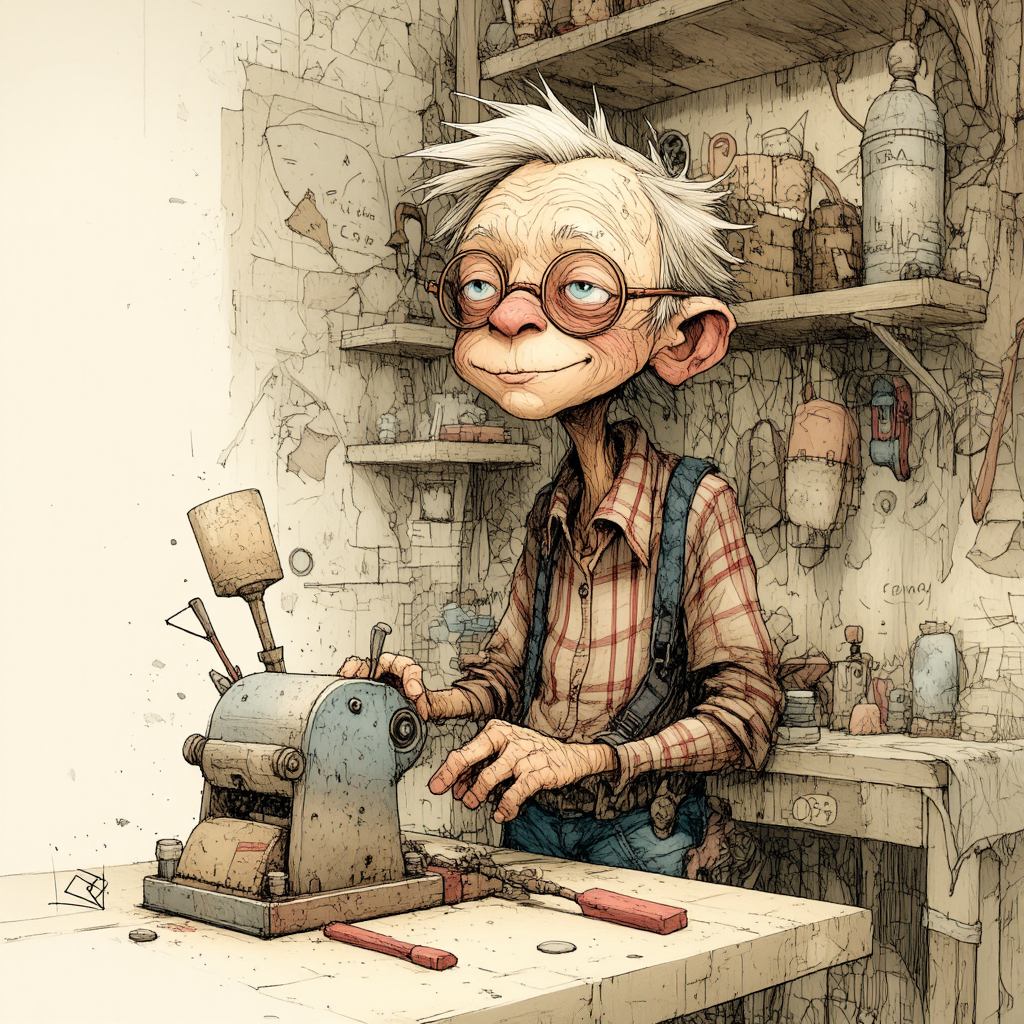
I felt like being creative with my grief and made some AI art in honor of Grandad (and Mema.)
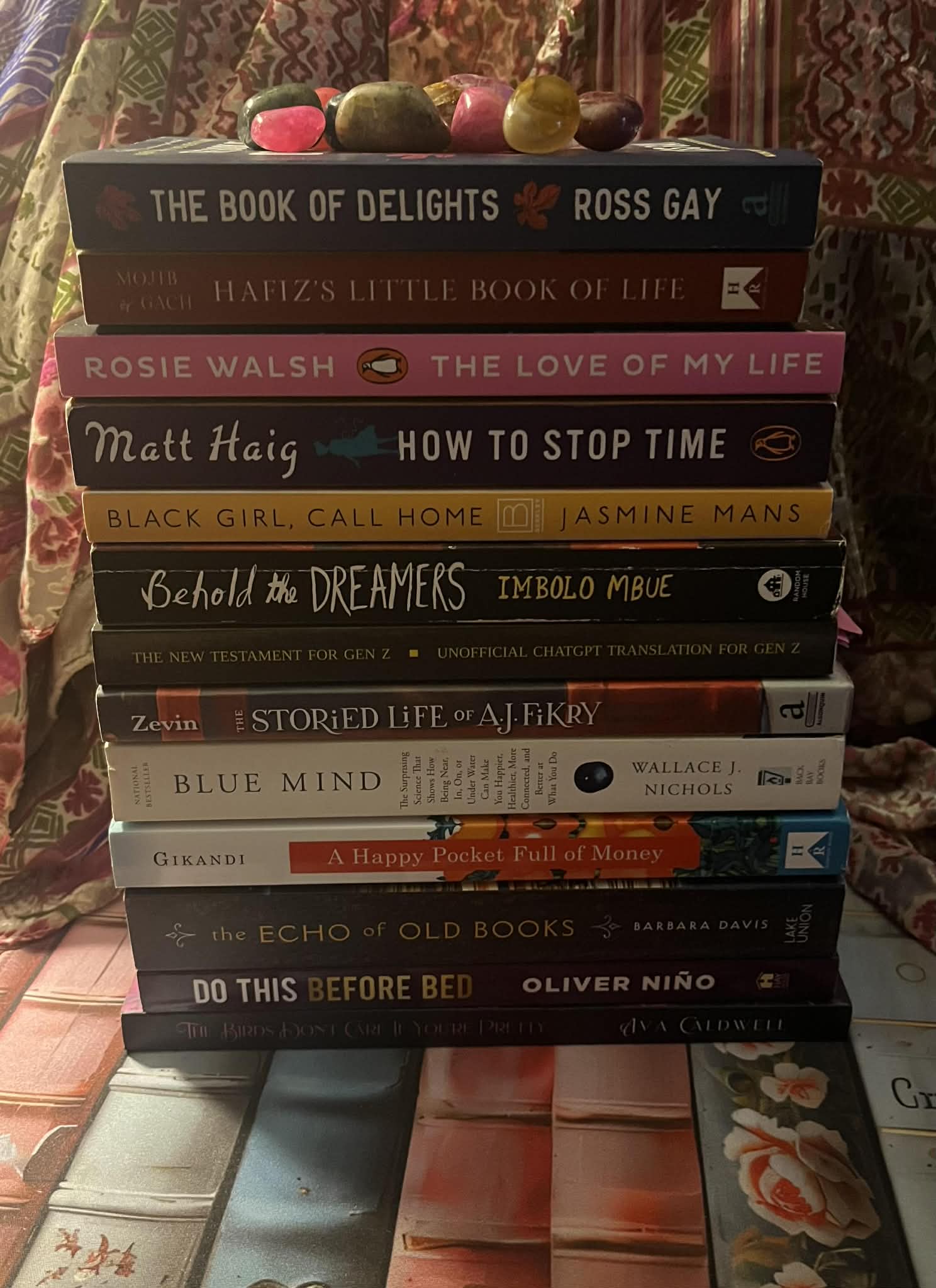
I finished all but 3 of my last stack from the Texas Winter. I’m still working on the following because they are being savored: Hafiz’s Little Book of Life by Hafiz, made new by Erfan Mojib & Gary Gach The New Testament for Gen Z Translated by ChatGPT Behold the Dreamers by Imbolo Mbue
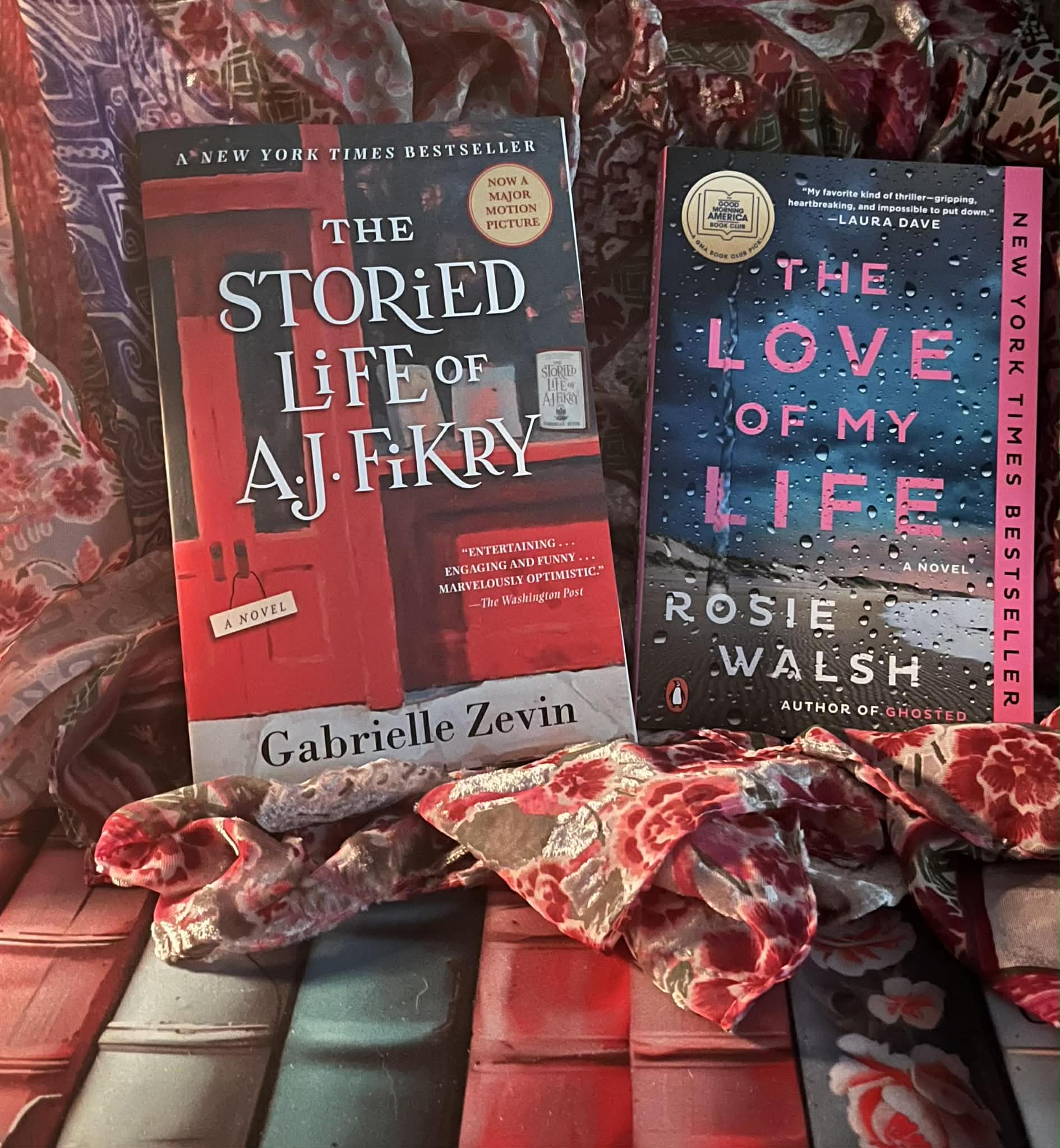
These are the new ones I am starting: The Birds Don’t Care if You’re Pretty by Ava Caldwell Do This Before Bed by Oliver Niño the Echo of Old Books by Barbara Davis A Happy Pocket Full of Money by David Cameron Gikandi Blue Mind by Wallace J. Nichols The Storied Life of A.J. Fikry by Gabrielle Zevin Black Girl, Call Home by Jasmine Mans How to Stop Time by Matt Haig The Love of My Life by Rosie Walsh The Book of Delights by Ross Gay
I have a 3-day weekend due to President’s Day on Monday and am truly looking forward to a little light reading!
My sweet Valentine David Marshall gave me books and a lovely kimono shawl (behind the books) as Valentine’s Day gifts. I was very surprised and so happy with presents I will wear, read, and enjoy immensely.
The Storied Life of A.J. Fikry is about a grieving bookstore owner who receives a surprise “package” (I think it’s a baby, but I’ll have to read it to see) that changes his life. I want to read it before I watch the movie on Netflix. The Love Of My Life is a suspenseful romance thriller about an obituary writer who finds out his wife has a secret identity. Both of these look fabulous!
TRIGGER WARNING: This book addresses difficult topics including mental illness, suicide, abuse, violence, and trauma. Some scenes and references may be distressing for certain readers.
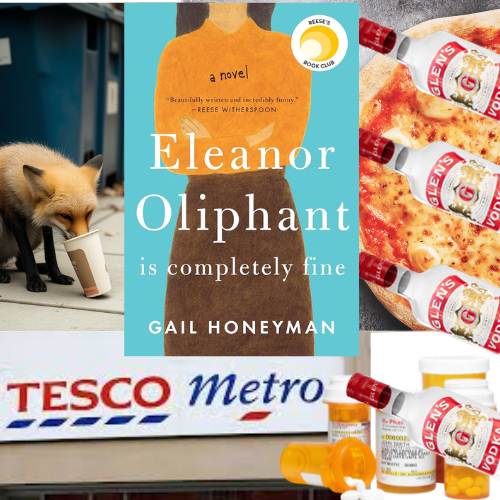
Gail Honeyman is a master of dry wit and understatement in Eleanor Oliphant is completely fine. Eleanor is so unpleasant and awkward as to render her completely unlikeable at the beginning of the novel. I don’t want to see her bullied by her coworkers or strangers in public, but I could certainly see why they might. She invites side-glances with her oblivious rudeness and is a closed book. She doesn’t want anything to do with anybody and seems perfectly content in her isolation. Of course, it’s all a ruse and protective defenses, but those walls are tall and seem impenetrable.
The chance encounters, unusual incidents, and course of events that occur begin to bring about a soft opening of Eleanor. And the unfolding of her past, the development of some friendships, and her observations and realizations throughout the process are so endearing that I couldn’t help falling in love with her. She and her circle of people are everything that is wonderful about humanity, especially when coping with everything that is horrible with humanity.
Once again, I was disappointed by the rushed feel of the ending. I hoped for the same level of deep introspection at the end of the book that was delved into throughout the rest. What is with these authors rushing their endings? They need to be every bit as perfect as the beginnings and middles. But other than wanting more, I can find no fault with this witty, honest, hilarious look at a lovely woman who is absolutely NOT completely fine, but who will be. The author’s voice is refreshing, hilarious, and wonderful.
Honeyman, Gail, Eleanor Oliphant is completely fine, Penguin Random House, 2017.
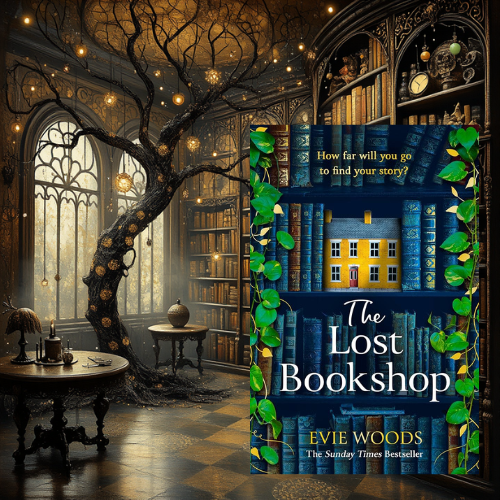
I loved the ideas and interwoven timelines that crossed generations, countries, and realities in The Midnight Library by Evie Woods. It is magical, mythical, fairy tale-ical (I made up that word), and beautiful. It is so beautiful that my main complaint is that I wanted more. The first half of the book is deeply fleshed out, letting us into the characters detailed inner lives and minute by minute adventures. The second half of the book feels rushed, almost like it should have been several more books in a series so the author could have gone deeper into the story lines and better tied together the threads she was so masterfully weaving.
I want to know so much more about the eccentric elderly woman Martha works for. Martha’s childhood is left untapped, so much potential for background to show how she might find herself trapped in such a terrible marriage. Her mother signs and does not speak, which opens the door to so many questions that could be answered and scenes that could be elaborated on. The events that occur around the World War II timeline are barely mentioned and could be so many chapters of fascinating detail. Giant chunks of time are skipped over that could be filled with story. And some of the puzzle pieces like the tattoos, living bookshelves, missing manuscripts, and love affairs feel like fragments that could be such an epic saga were we to have their stories told in many more chapters.
It would make a fabulous series on a streaming service, especially if they fleshed out more of the characters, their backgrounds, motivations, and dynamic growth. One thing is for certain; Woods does a great job of creating protagonists I want to root for, women who never give up no matter how many times they get knocked down.
Woods, Evie, The Lost Bookshop, Harper Collins Publisher, 2023.
All images created by Rebekah Marshall’s prompts using AI on Gencraft.com website.
Astrophysics for People in a Hurry by Neil deGrasse Tyson was simplified enough that I could almost begin to fathom parts of it. The grand scale of the universe or multiverse or whatever hugeness is out there seems like a great imaginary tale. My little, tiny reality does not mesh with the vastness of trillions of miles as a measurement or billions of galaxies, our Milky Way being only one little spiral among many. Tyson says scientists think the gigantic, galactic, humongous universe, as we know it, was at one time smaller than one-trillionth the size of the period at the end of this sentence. It might as well be a magical fairy tale.
Some fascinating science-y things I learned:
Helium was detected in the sun’s corona in the 1800s before it was ever discovered on Earth.
Planets don’t really fly through space orbiting the sun but are carried across the fabric of space-time.
Iridium is the densest element we know of—2 cubic feet of it weighs as much as a car.
Pluto is not a planet. I have finally released my hold on the poor thing. It turns out, this mistake has been made before. Two other “planets” were discovered in the 1800s named Ceres and Pallas. We eventually figured out they were asteroids and now know Pluto is a comet. Sigh. I think we hung on so long because it was the first planet discovered by an American.
About 1,000 tons of Martian rocks rain down on earth each year. Possibly a similar amount reaches us from our Moon. When meteors and asteroids hit them, they send debris flying our way. When we pick up a rock and put it in our pocket, it could be from Mars or the Moon.
Tyson, Neil deGrasse, Astrophysics for People in a Hurry, W.W. Norton & Company, Inc., 2017.
TRIGGER WARNING: This novel addresses themes of teen pregnancy, substance abuse, addiction, death, sexuality, religious pressure, body image struggles, and family conflict. Some material may be sensitive for readers.
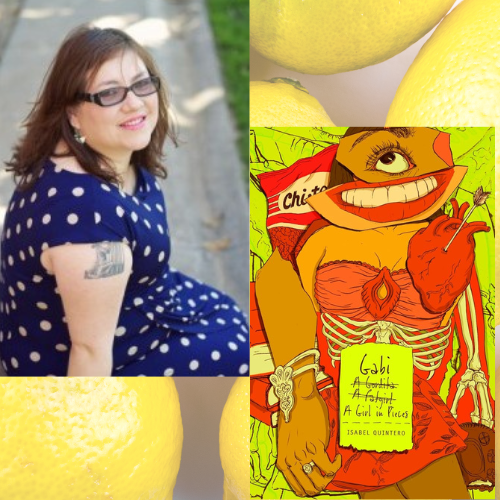
Isabel Quintero does a fabulous job in Gabi, A Girl in Pieces of making us fall in love with a messy, smart, creative, beautiful, real-sounding protagonist. Gabi is sharing her journal with us, along with poetry, artwork, letters to her drug-addicted father, and innermost secrets. We are there for the highs and the lows, and we laugh right along with her, just before we grab a box of tissues to sob along with her. It is her senior year, and she is a pale-skinned Mexican American girl proud of her culture and obsessed with her food. (This gordita can relate.)
She tackles relationships with boys, friendship, teen-pregnancy, religious pressure, family dynamics, sibling issues, senior year stress, college applications, drug abuse, death, sex, body image, and more. Her voice is sarcastic, tender, raw, and heartbreakingly vulnerable. Navigating the minefields of adolescence in the 21st century has never seemed more fraught nor more worth celebrating. It is full of issues that make it a commonly banned book in conservative states’ schools. I feel sad for young ladies who may never get the chance to meet Gabi because there are probably many who could find hope and courage from her example.
Quintero, Isabel, Gabi, A Girl in Pieces, Cinco Puntos Press, 2014.
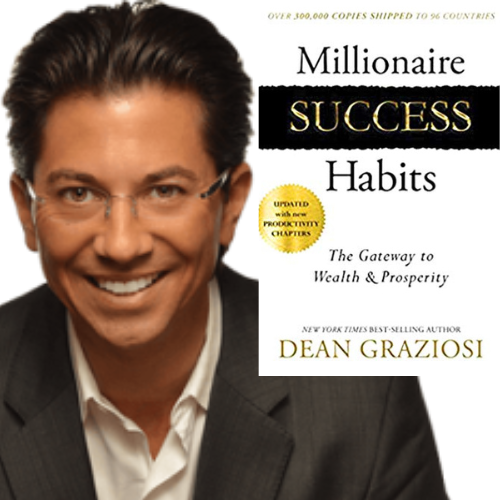
Since starting my trading journey, I have been reading many financial strategy/growth mindset-type books as part of a book club on one of my platforms. I have not been very impressed with many of them. Millionaire Success Habits by Dean Graziosi was a much more enjoyable read. Not only is it written in down-to-earth, simple language, but the anecdotes, advice, and examples are relatable and realistic. Some of his ideas are a little unconventional but make a lot of sense.
One such idea his suggests is to work on strengths rather than weaknesses. So much focus is spent on trying to improve our weaknesses in our competitive culture, but why? What if we put more of our energy into focusing on our strengths and passions? Then we can hire people to do the parts we don’t excel at. It’s a win/win. He has excellent advice on short bursts of intense focus on one task to achieve more than when we multi-task. He develops the idea that relationships with our employees and customers should be better thought out and inclusive of everyone’s needs. And he has wonderful strategies for organization, productivity, and confidence building.
His tone is authentic, experienced, and direct. There is no double-speak or confusing lingo, and each chapter provides actionable steps a person could take to improve their life. He provides insight on vanquishing the inner villain who wants to sabotage us, harnessing our inner hero who wants us to succeed, and creating one clear overarching goal or why that we are working toward. He’s the one who started the whole “What’s your Why?” that every service industry uses.
Graziosi, Dean, Millionaire Success Habits, Hay House, 2019.
All images created by Rebekah Marshall’s prompts using AI on Gencraft.com website.
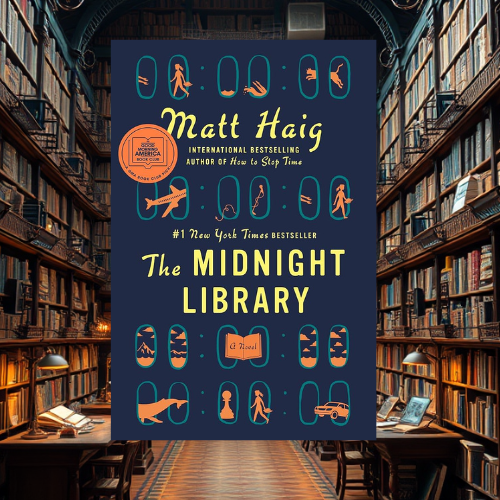
The Midnight Library by Matt Haig is a lovely reality check for anyone struggling with wishing their life could be different. Some quantum theorists think every alternative reality possible happens simultaneously. In one reality, I’m here writing this book review. In another, I’m still in the middle of reading the book. In another, no one gave me this book as a gift, so I haven’t read it at all. And in yet another, heaven forbid, I don’t even like reading fiction.
Our protagonist has reached such a state of melancholy in the beginning of the novel that she cannot see past midnight. She decides to end her life and finds herself in a library containing all the books of every variation of her that exists. It is the chance to see how different versions of life could be if various choices changed the trajectory of her past. It is an adventurous dive into the world of what ifs. I have enjoyed such thought experiments on myself. What if I had not gone into teaching, but had chosen a more lucrative profession? What if I had not married my first husband nor had children? What if I had moved away from Texas and was living somewhere cooler up north?
It is sometimes easy to get lost in those alternate wishful versions of ourselves and forget to appreciate all the little things that make up the lives we are living in the here and now. Though there were many poignant, sad, discouraging revelations in her journey, I was satisfied with the lessons she learned. I recommend this book for anyone who could use a reminder to feel a little more grateful or who sometimes wishes they would have made different choices in life.
Haig, Matt, The Midnight Library, Penguin Books, 2020.
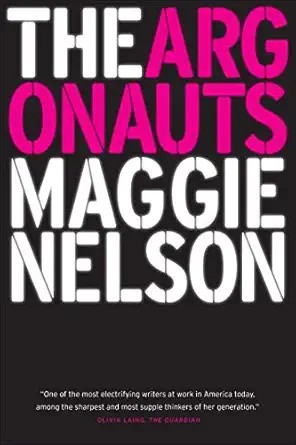
The Argonauts by Maggie Nelson felt like a slap in the face, a comforting hug, an electric shock, and a soothing warm bath. The format was unique and felt experimental—blocks of text, quotes, memories, verbal snapshots, reporting, and textbook-like excerpts all woven into a seamless narrative. The subject matter is raw, often unfiltered, intimate details that feel way more personal than I would ever be comfortable sharing with total strangers. But good for Maggie Nelson for having the chutzpah to attempt such a thing. I love that she finds her own voice by the end by admitting that she is still searching and leaving room for vulnerability in a way that is honest and impressively real.
Her descriptions of pregnancy, sexuality, dealing with loss, giving birth, holding on to self, nursing, her relationship with her partner, gender identity, and expert opinions, *in no particular order, combine to weave almost a stream-of-consciousness-style memoir that defies classification. I think I might have blushed a few times, certainly opened my eyes a bit wider, and definitely wondered why my college courses weren’t quite as shocking as some of hers. But the fact that I felt a connection shows the depth of both her humanity and her fabulous writing talent (since I am a southern, more conservative than her, heterosexual, certainly more comfortable with conventional-vanilla bedroom activities sort of gal. I’ll put it this way—I learned a lot from this book.)
*I jest about the “no particular order” comment because I am sure there is a well-crafted method to her madness that makes it feel like a jumble of thoughts and also a coherent work.
Also, if you are interested in the book, I recommend Googling “Why is Maggie Nelson’s book titled The Argonauts?” It gives a fabulous description of what you are getting yourself into. A brief quote from that Google search using their AI is as follows: “The title reflects the “constantly shifting” nature of queer identity, family-making, and language.”
AI Overview, Google, searched 31 Jan 2026.
Nelson, Maggie, The Argonauts, Graywolf Press, 2015.






 rebekahjmarshall