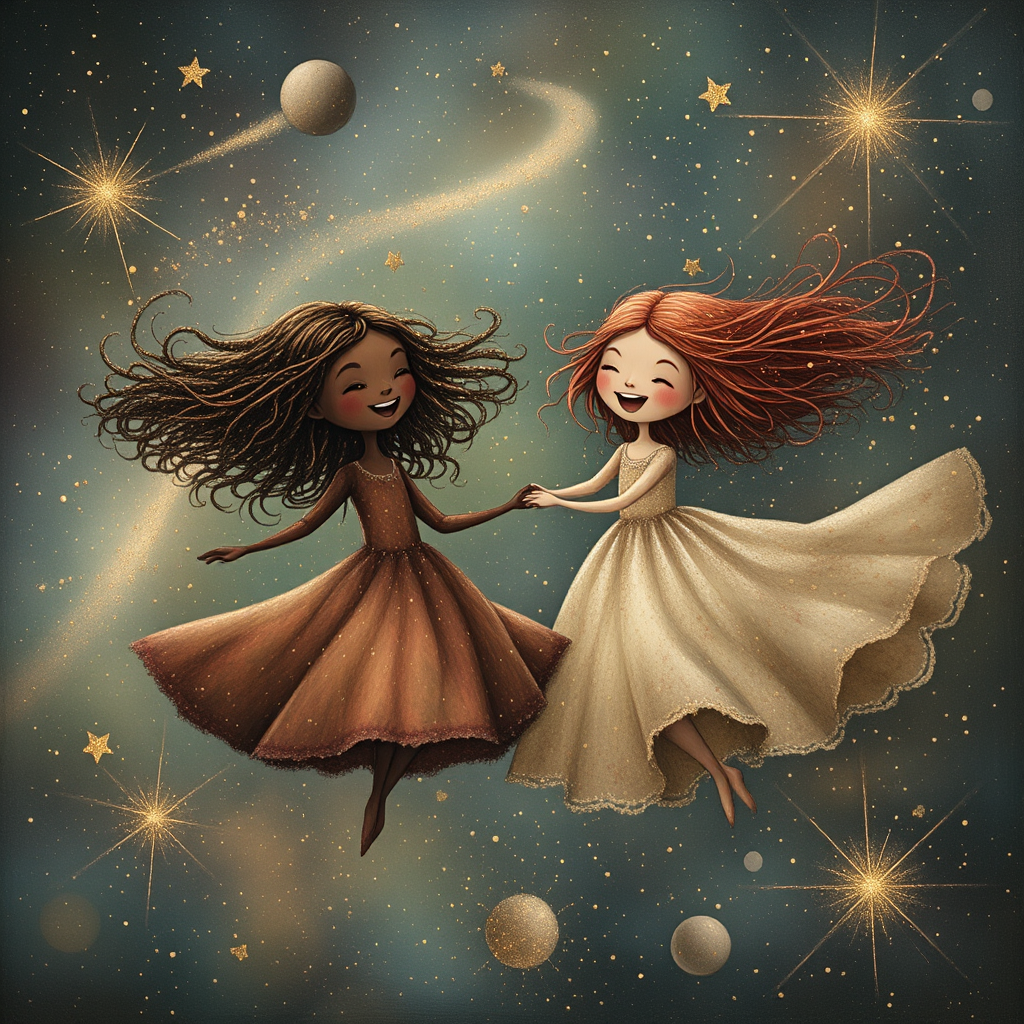
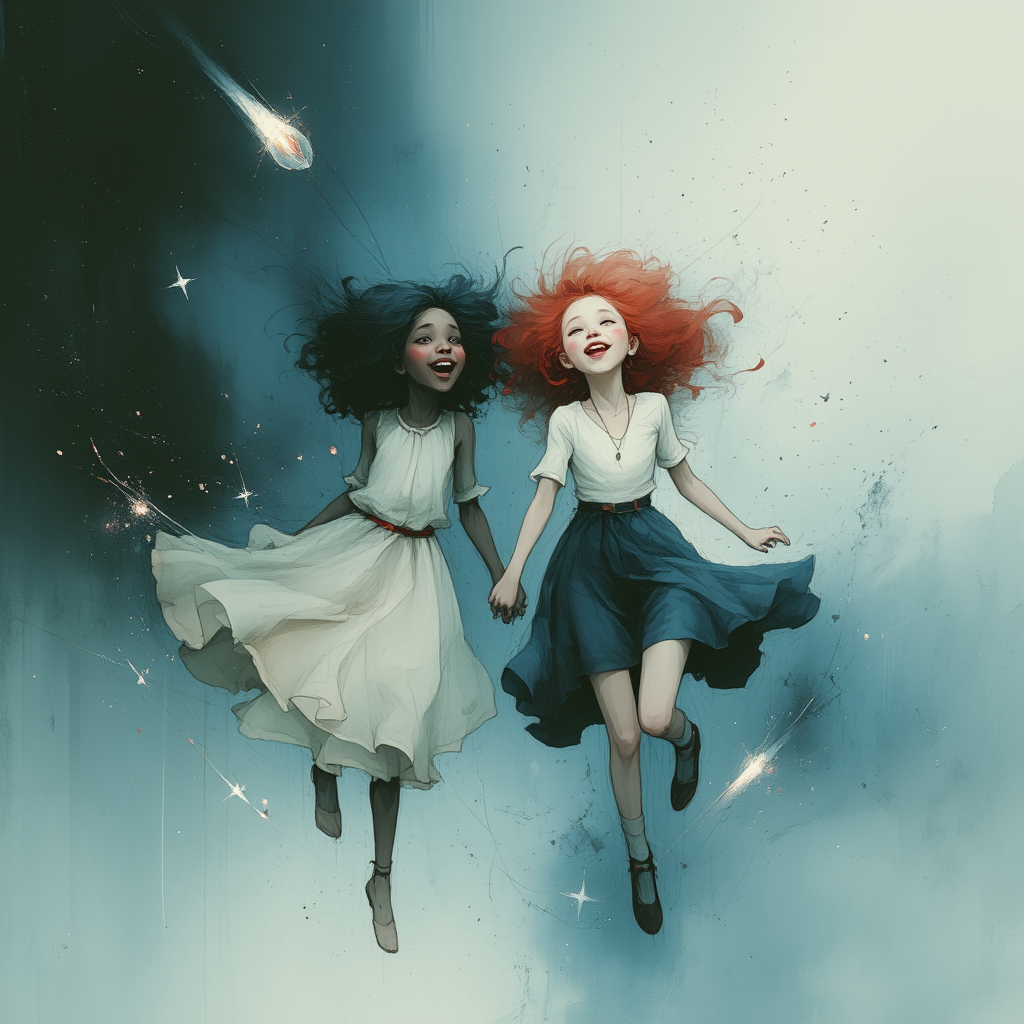
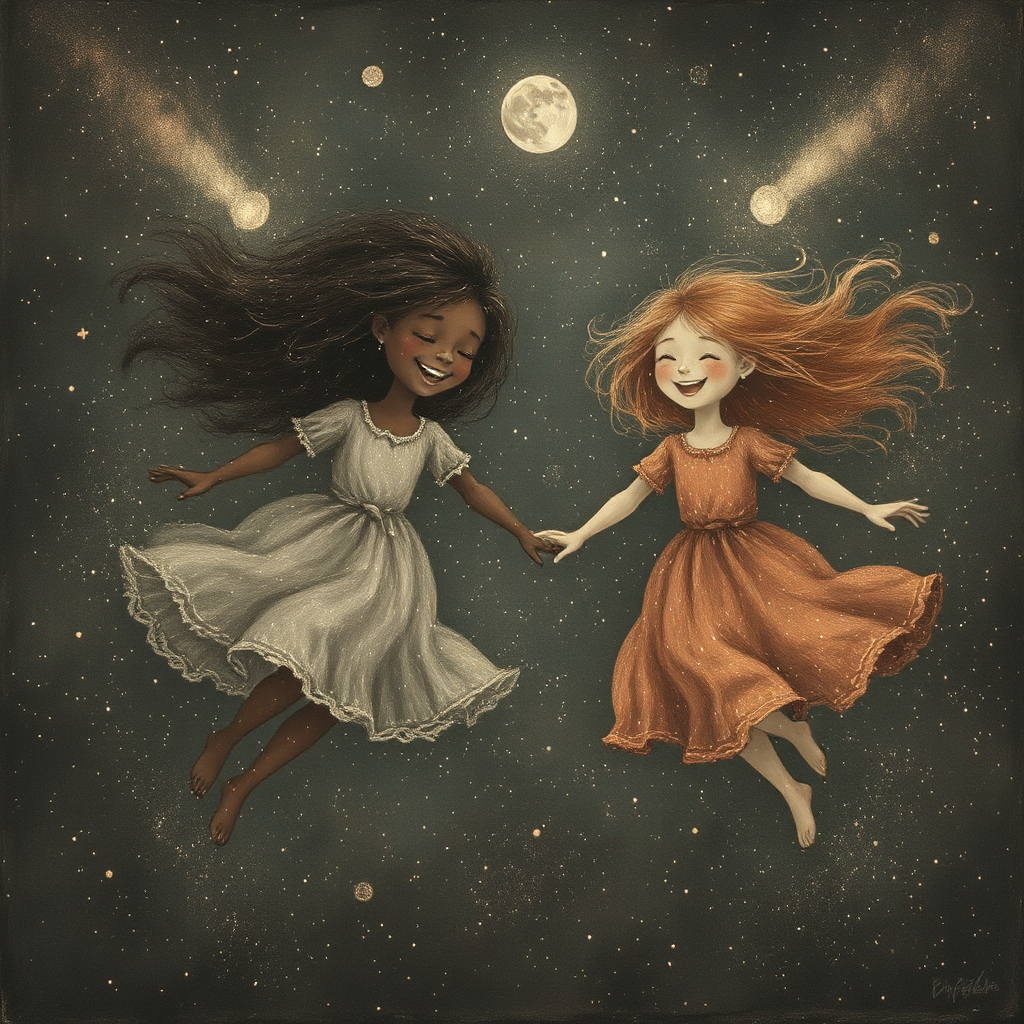
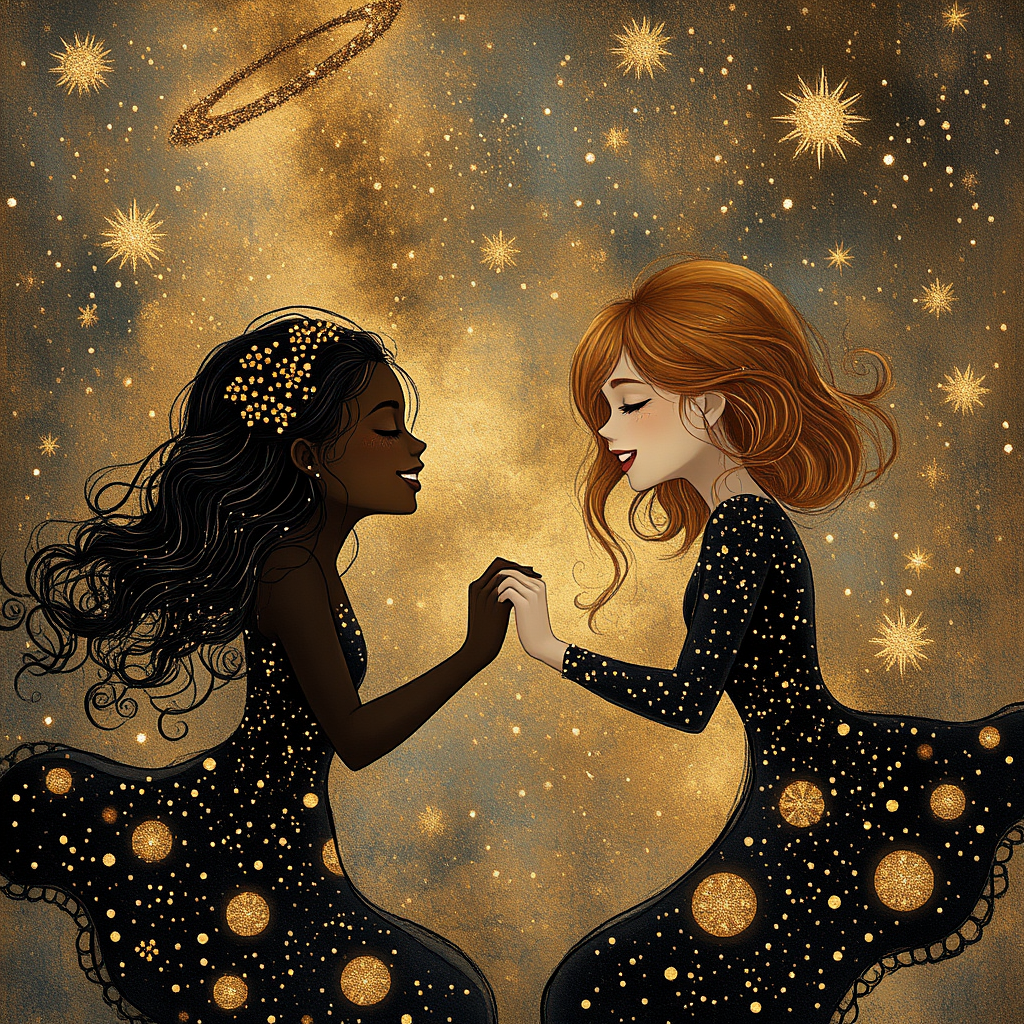
All images created by Rebekah Marshall’s prompts using AI on Gencraft.com website.
My grandad passed away this morning peacefully in his sleep. He was 92 years old and loved by 5 generations. He got to spend time with his newest great-great-granddaughter about a week ago and still said the prayer for our breakfast 4 days ago. The last few days, he was lost in his thoughts and seemed to be remembering projects and work assignments from many years past, his mind constantly trying to be productive and wrap up loose ends. We kept reassuring him that he could rest. All his hard work was complete and there were no more deadlines to meet.
His belief to the end was that his next waking moment would be in a resurrected body free of pain, reunited with those who passed before him, like his wife (my Mema) who we lost 2 years ago.
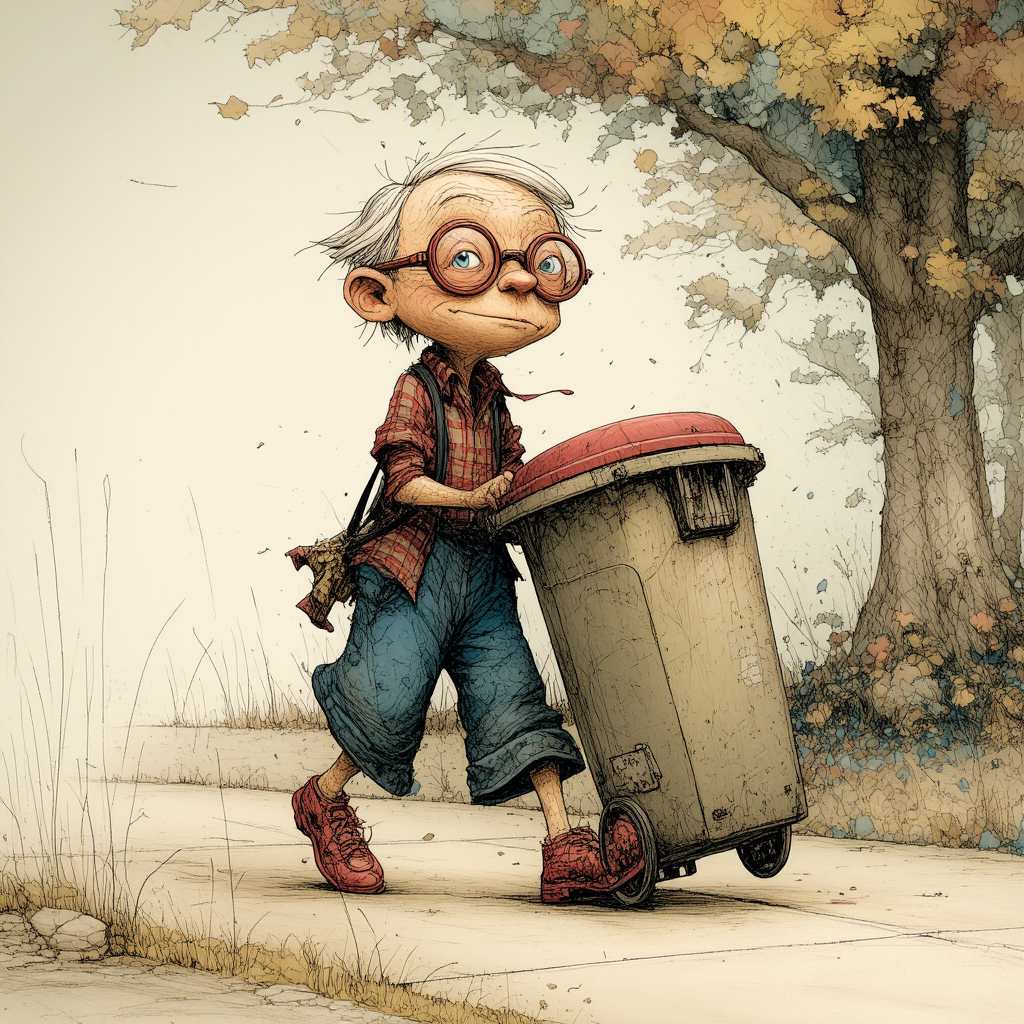
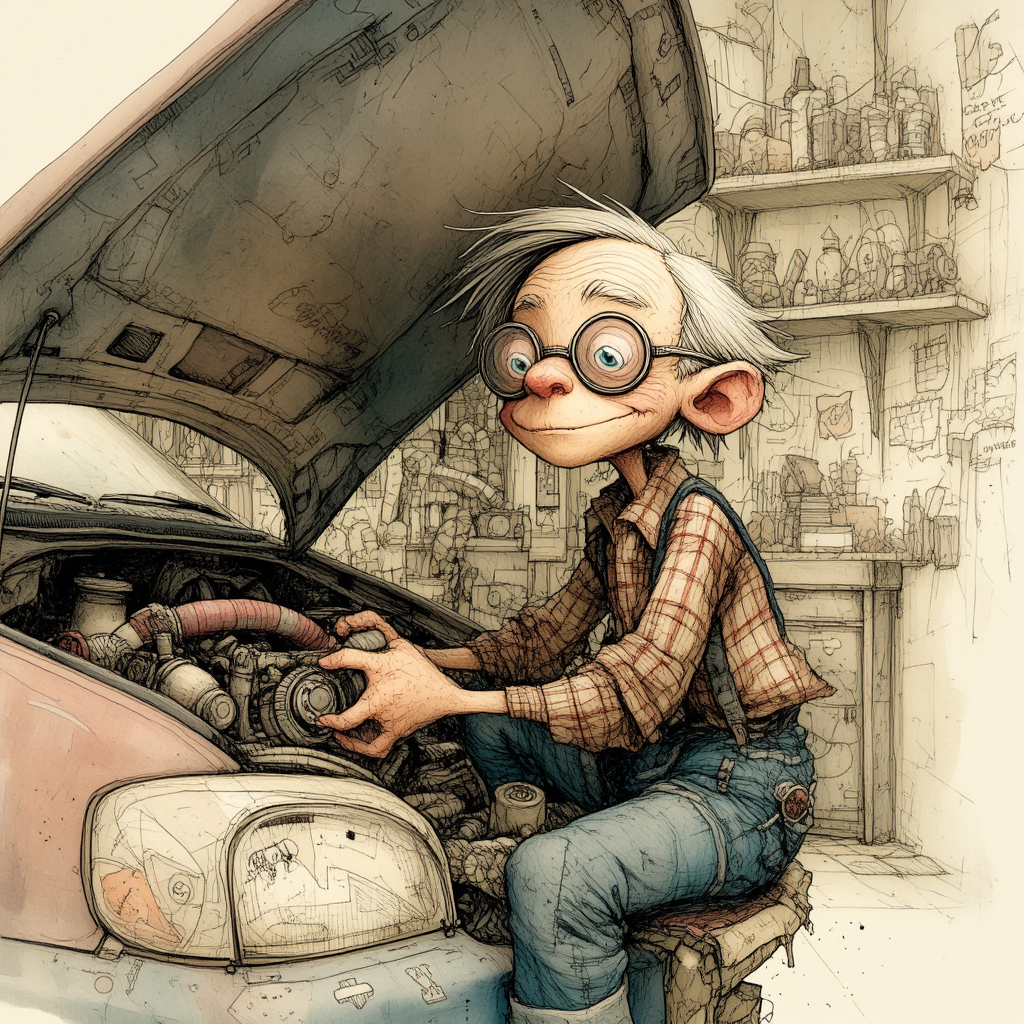
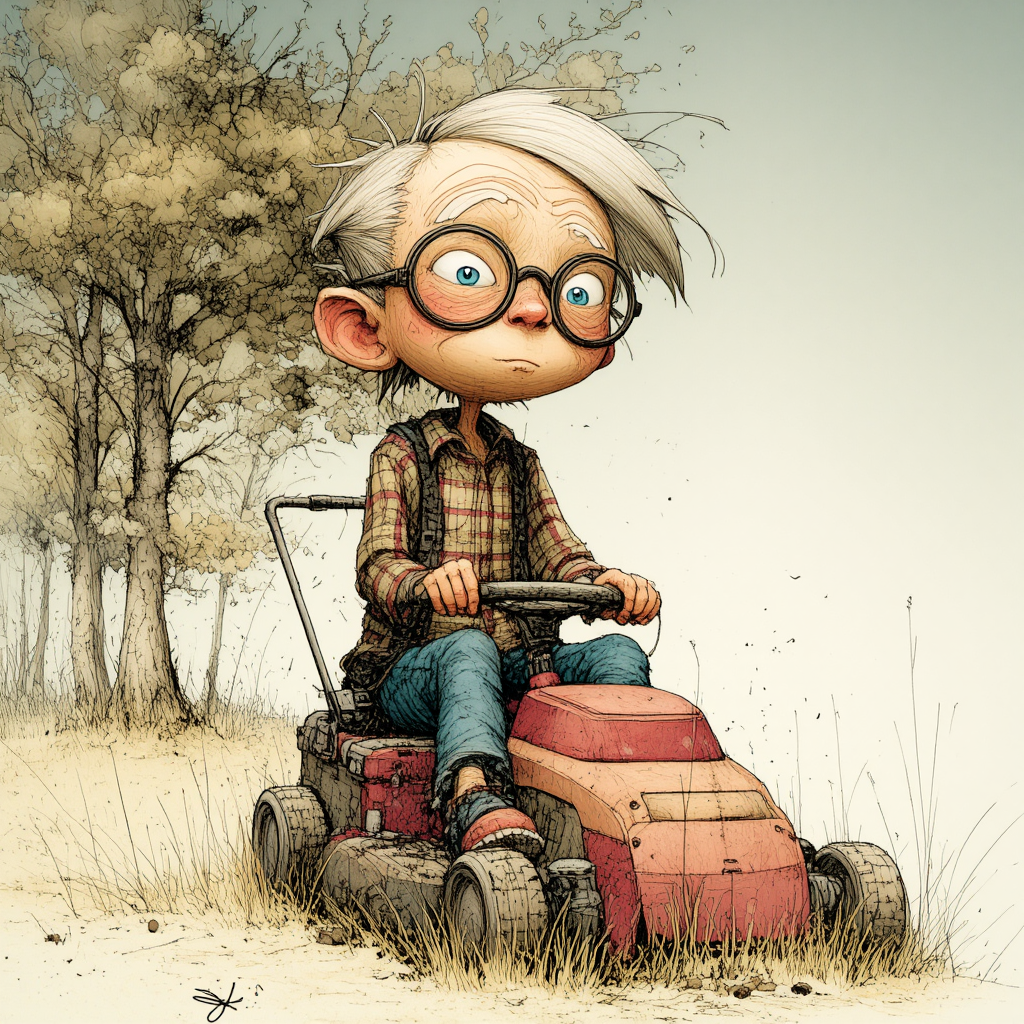
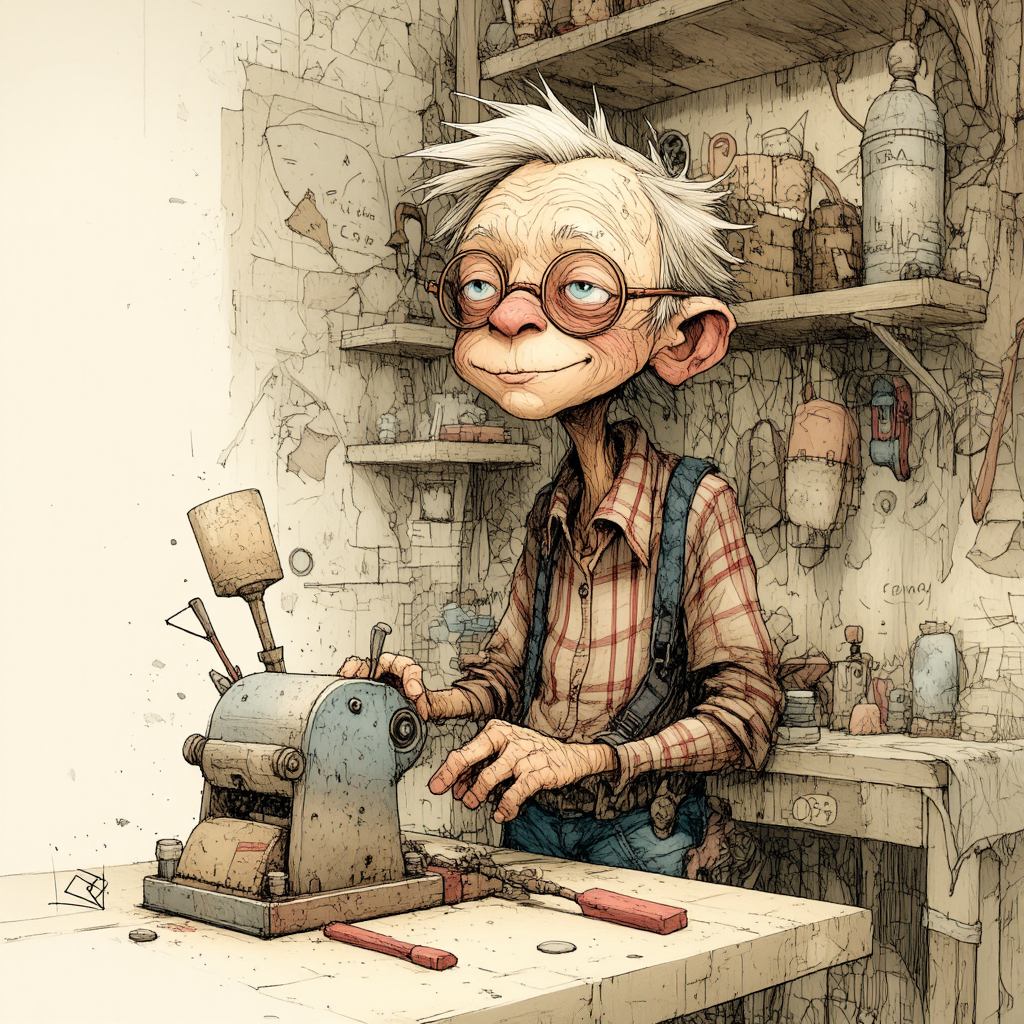
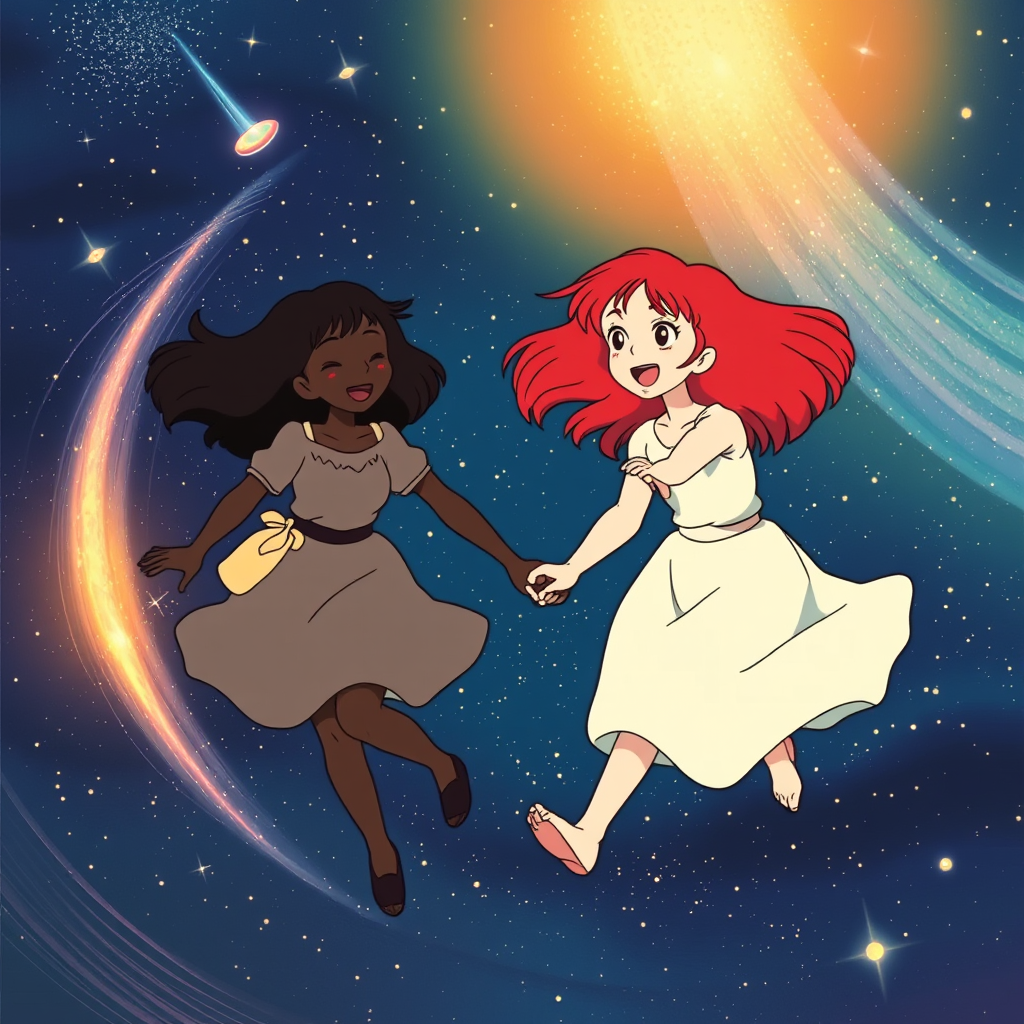
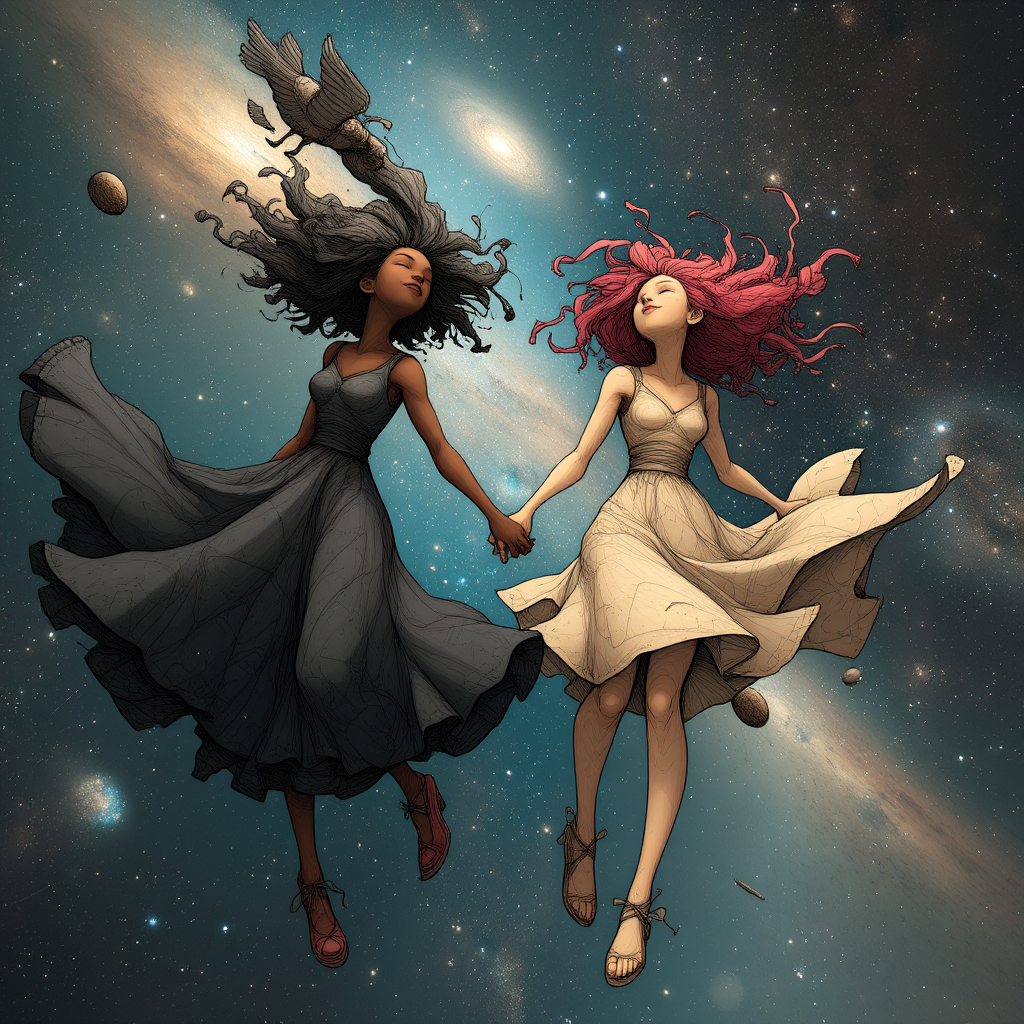
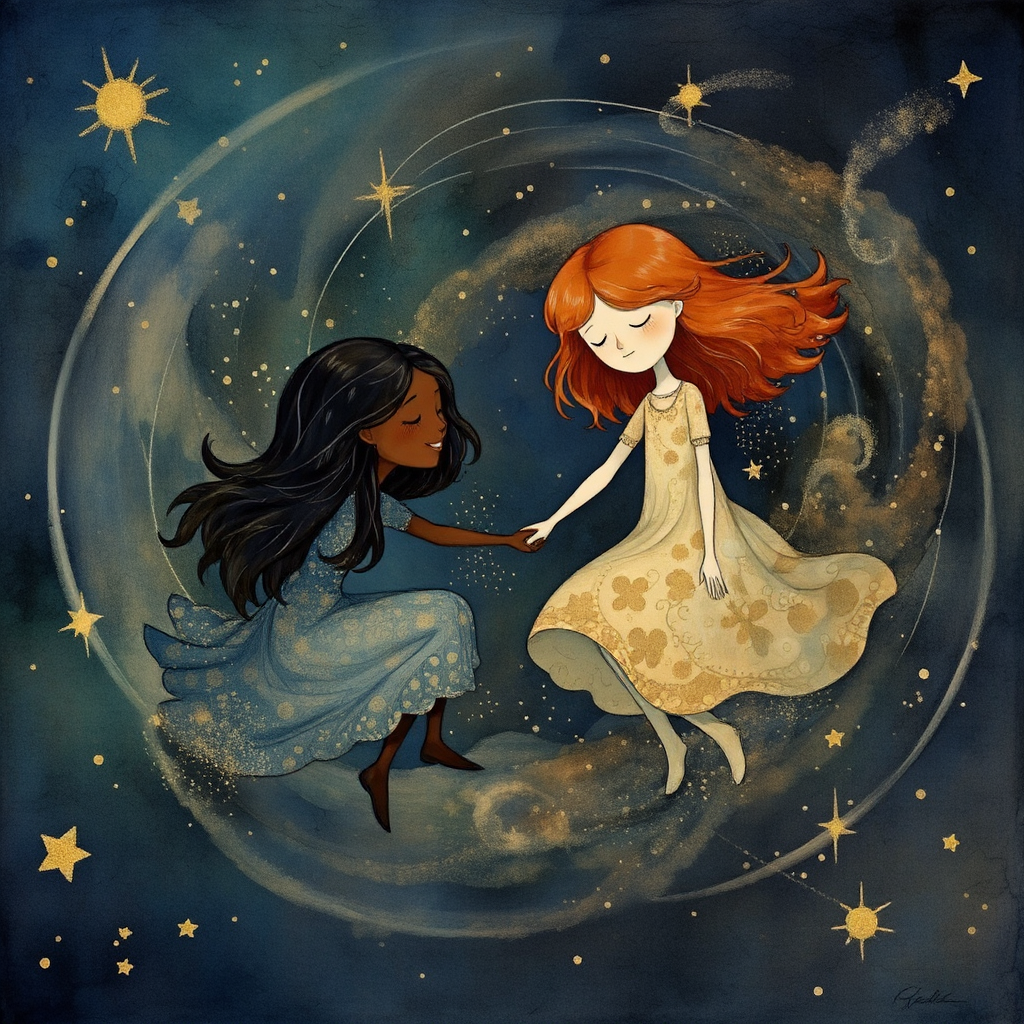
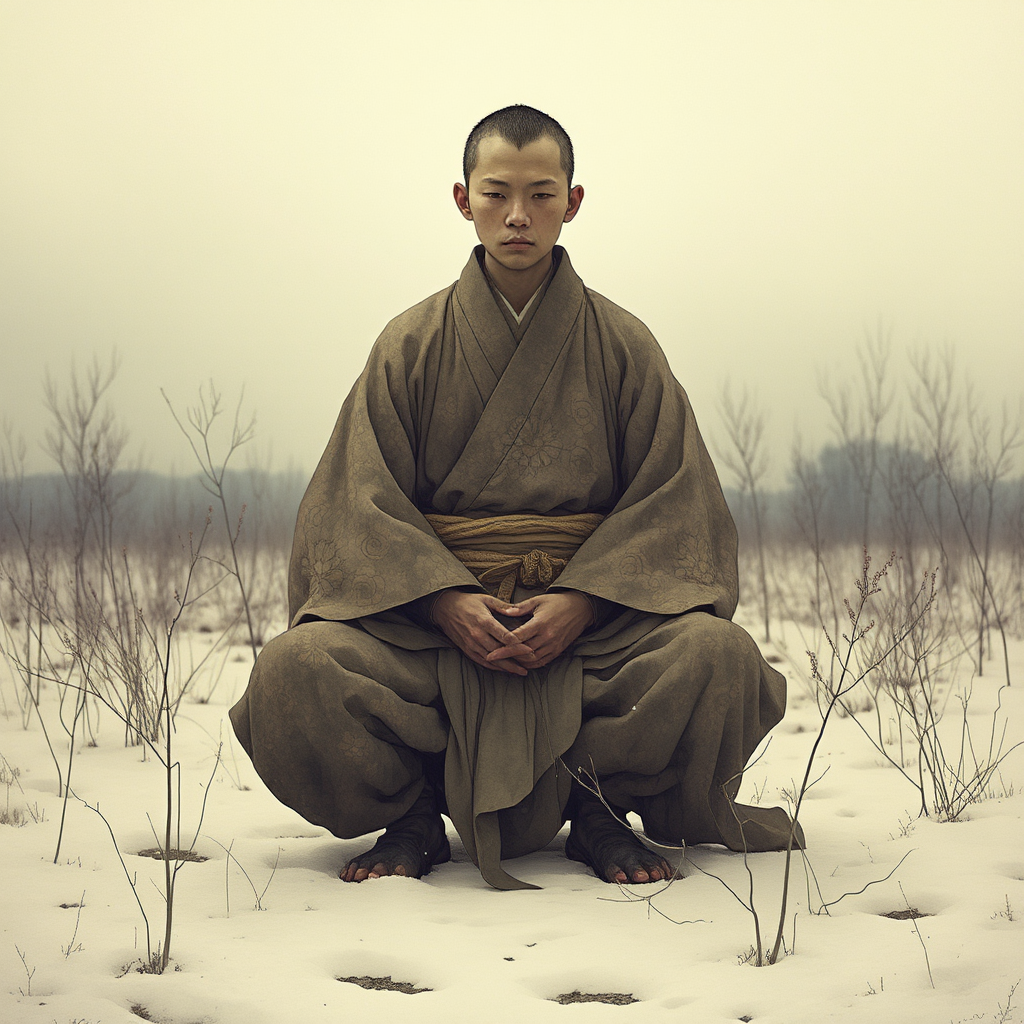
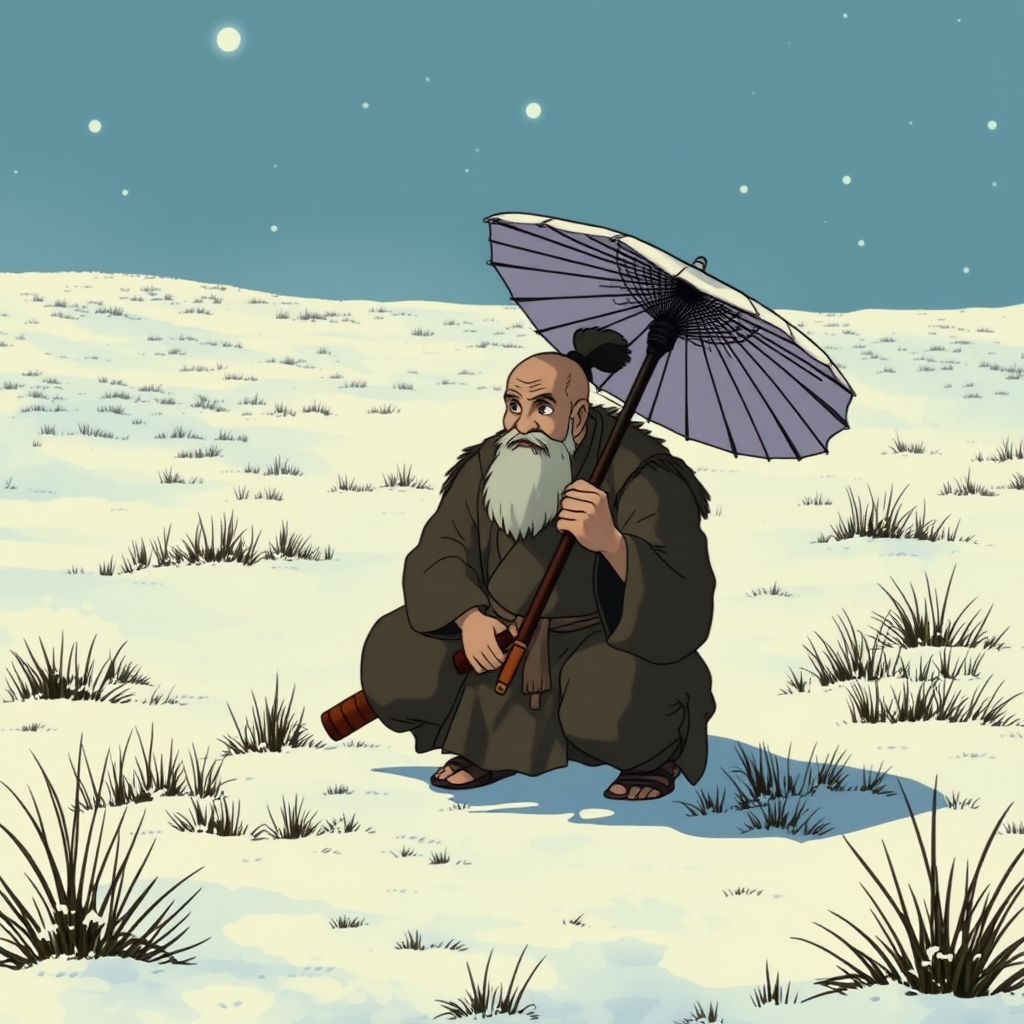
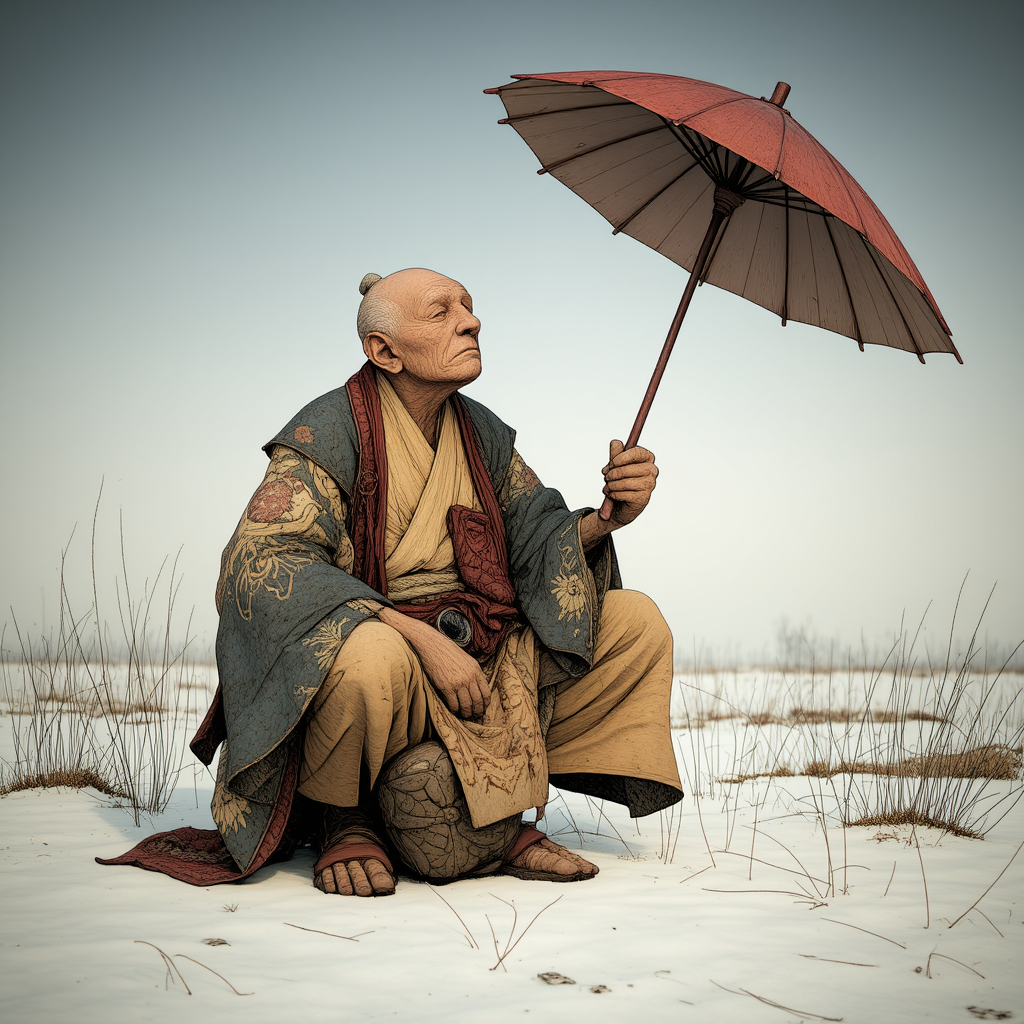
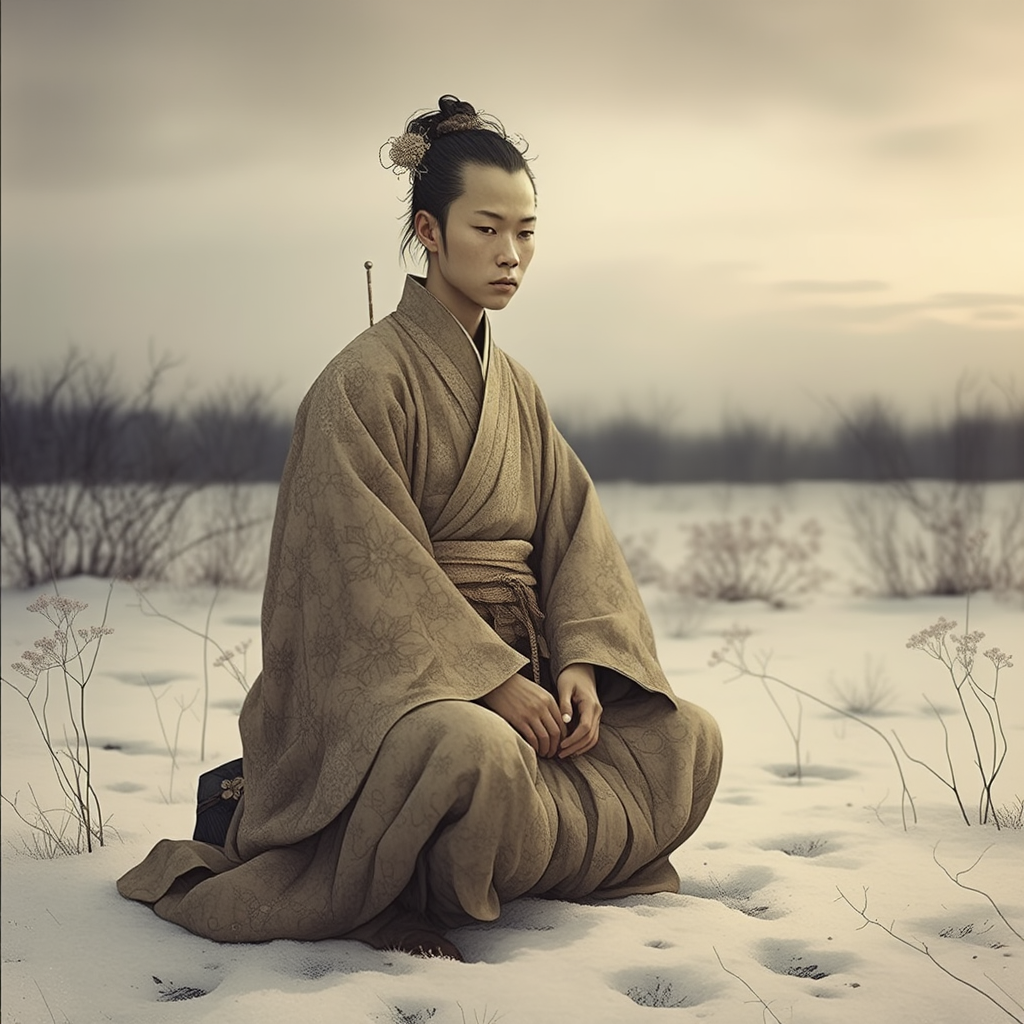
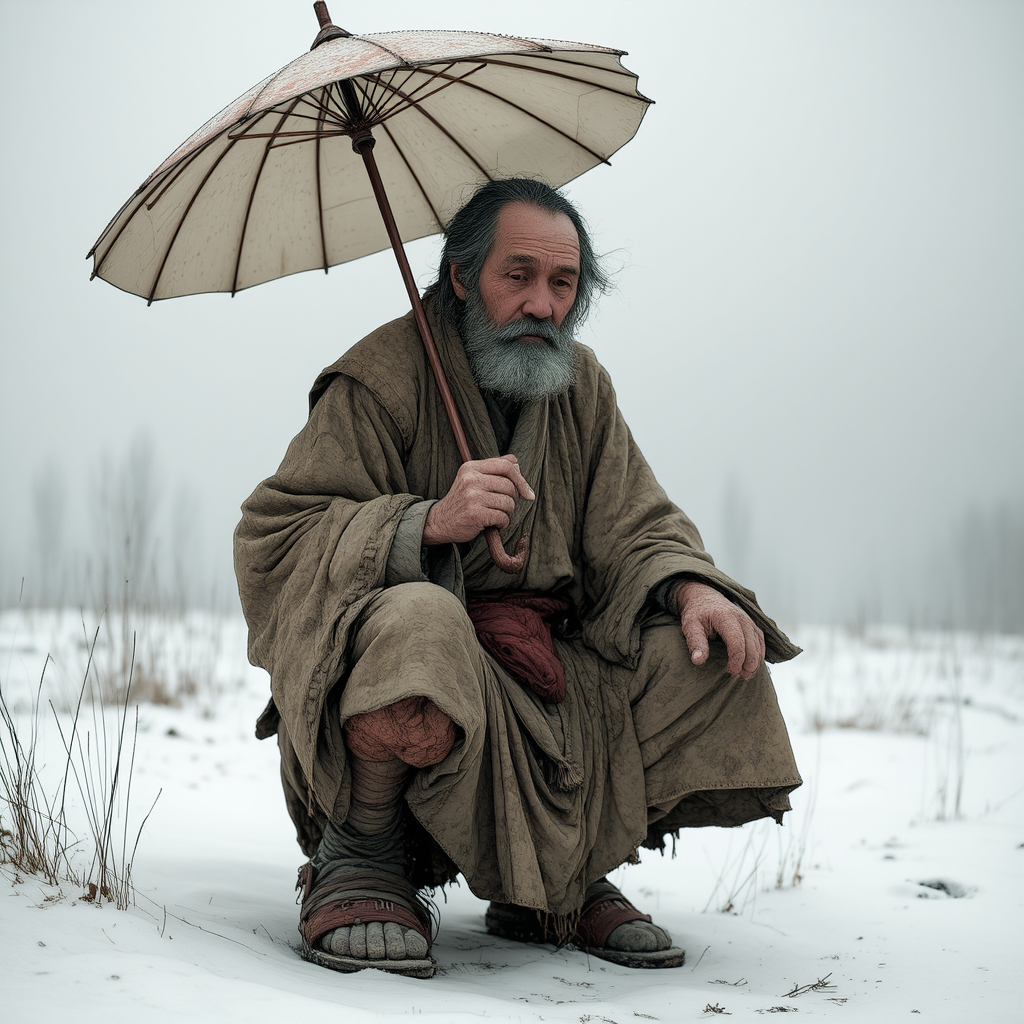
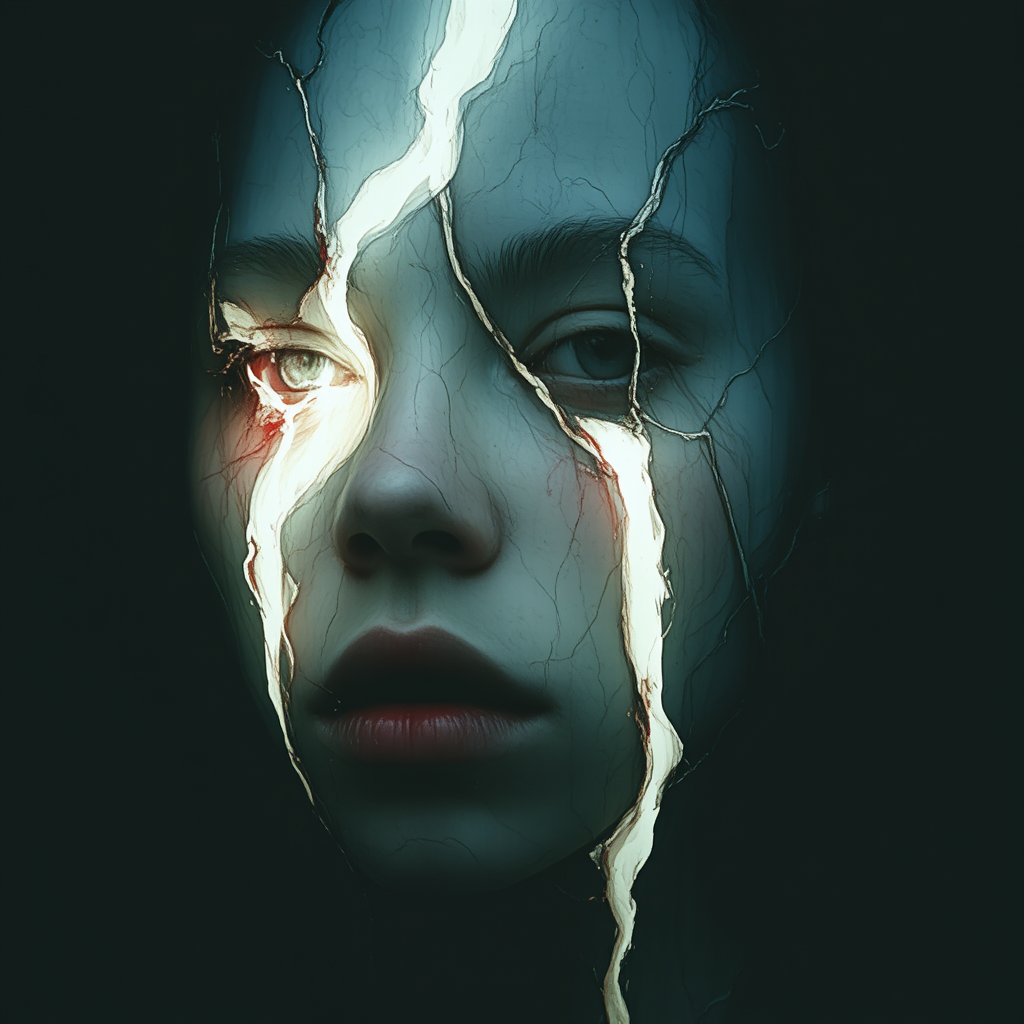
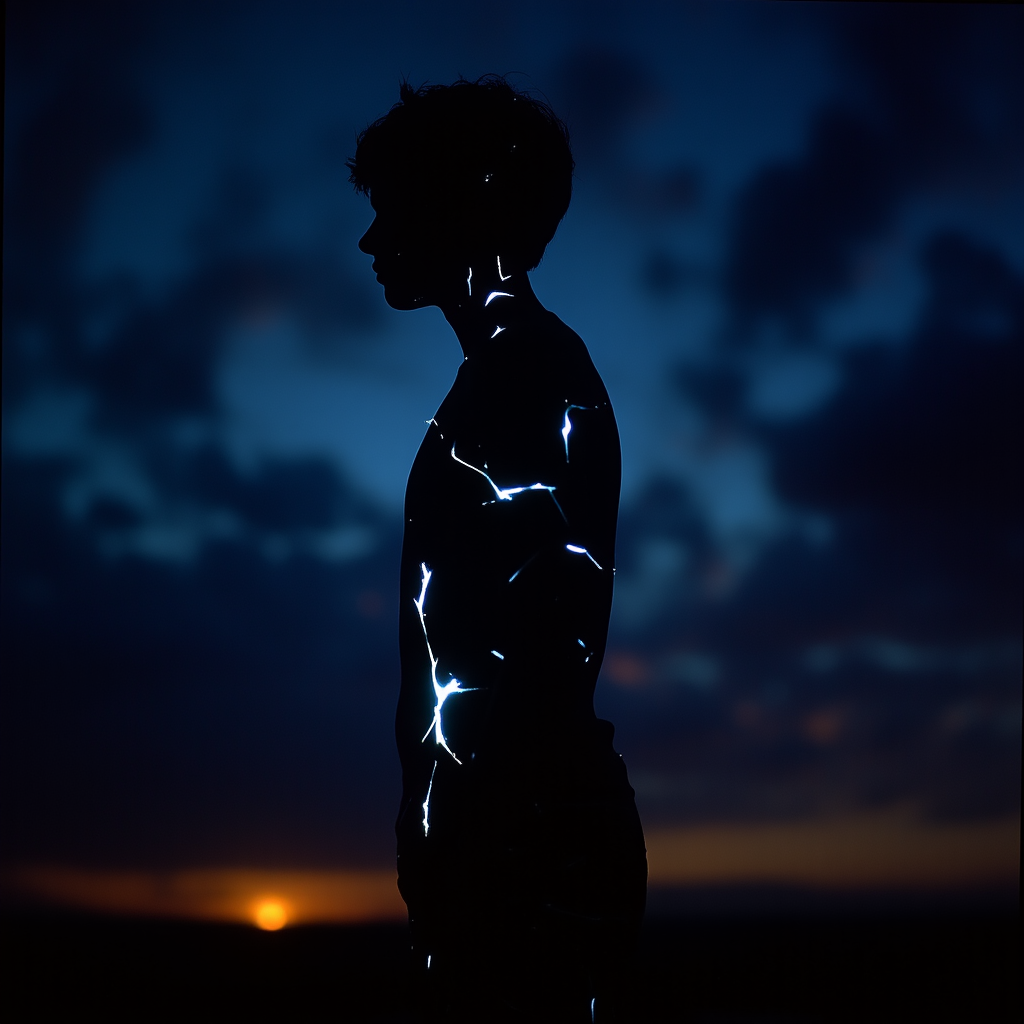
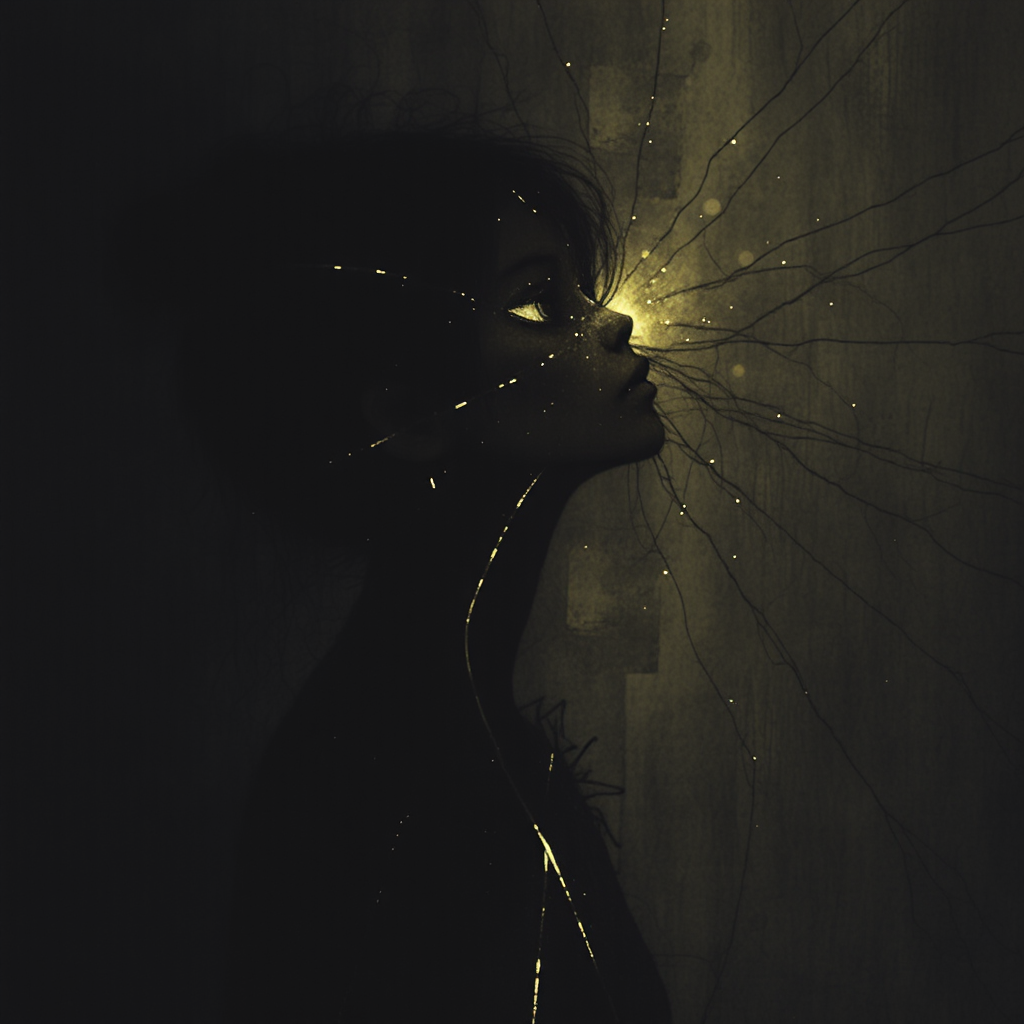
I felt like being creative with my grief and made some AI art in honor of Grandad (and Mema.)
All images created by Rebekah Marshall’s prompts using AI on Gencraft.com website.
I am reading Hafiz’s Little Book of Life, poetry by Hafiz-e Shirazi. He is challenging me to become more comfortable with ambiguity. I will share his poem and some of my thoughts on his poem (sometimes with the help of experts when the concepts are too hard for me), followed by a poem and some art inspired by his poem.
Hafiz’s Poem 35:
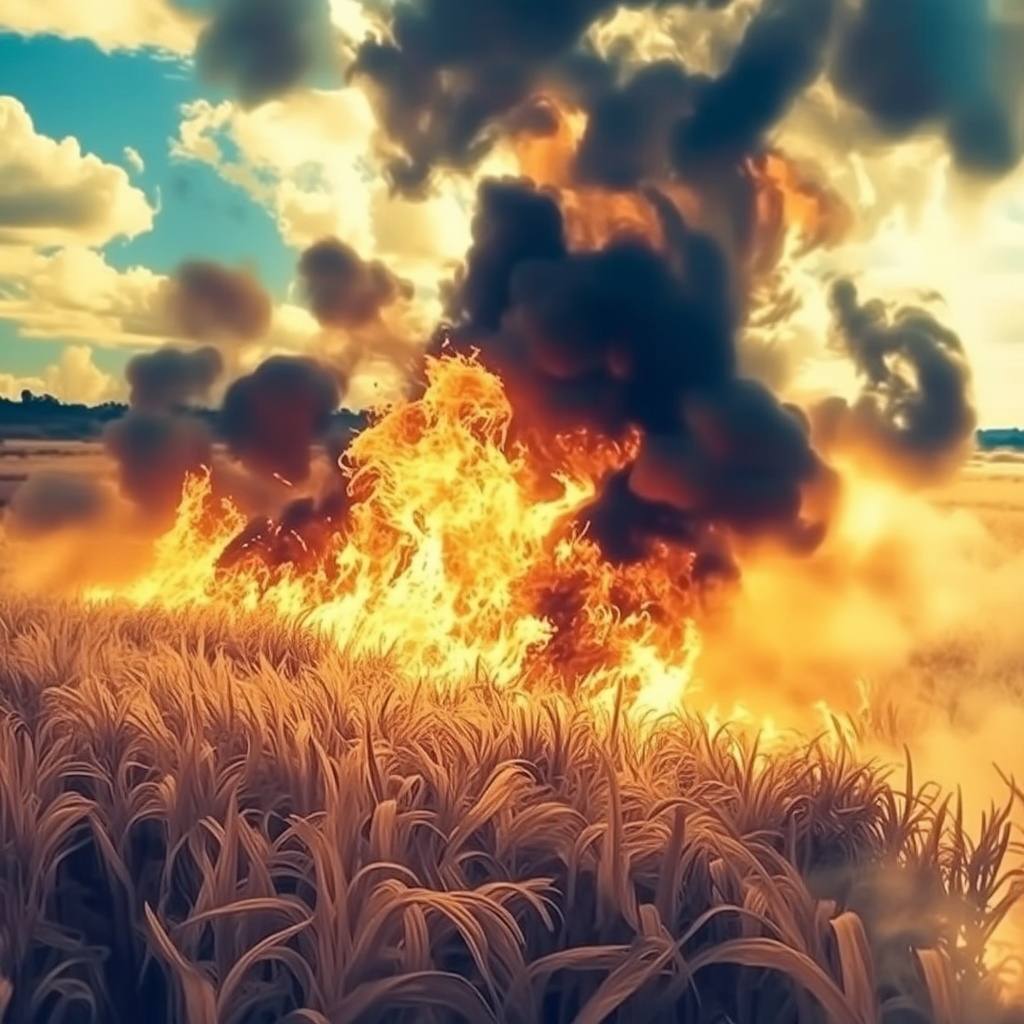
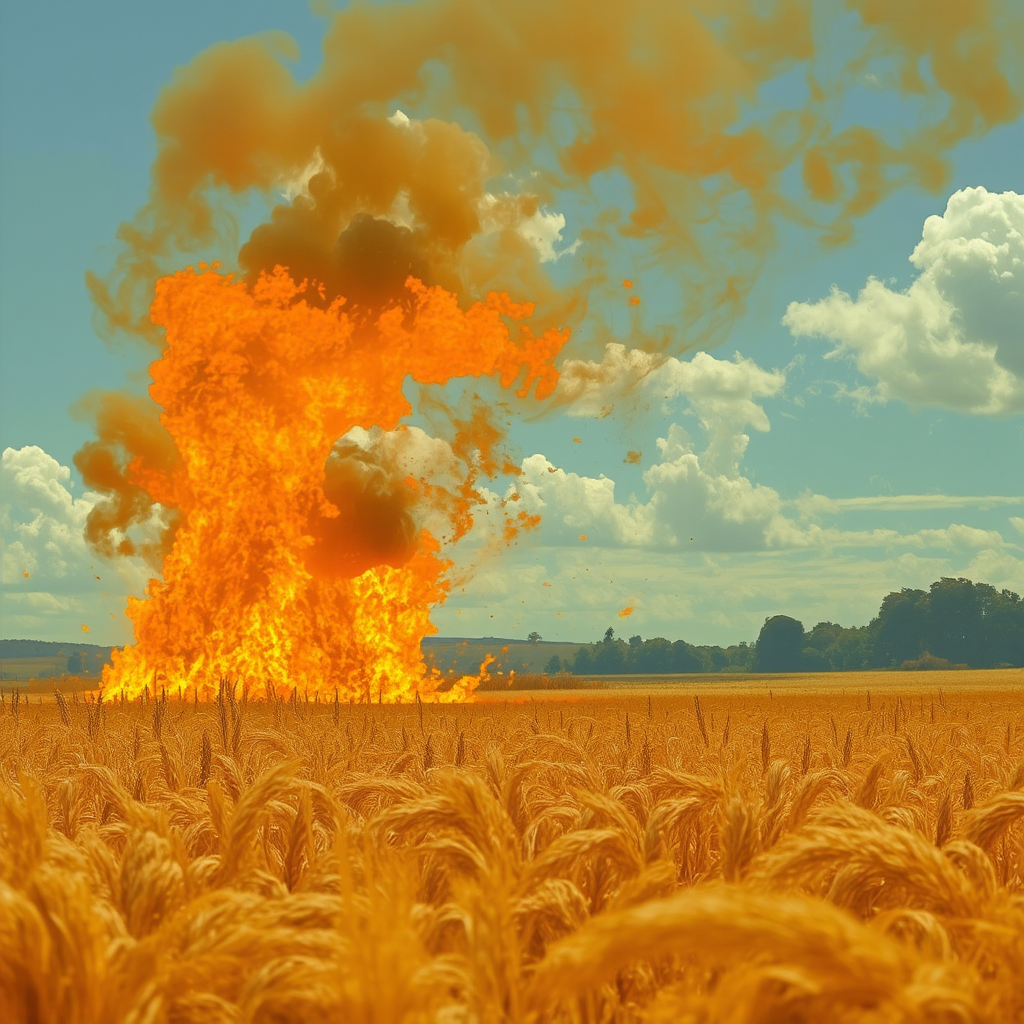
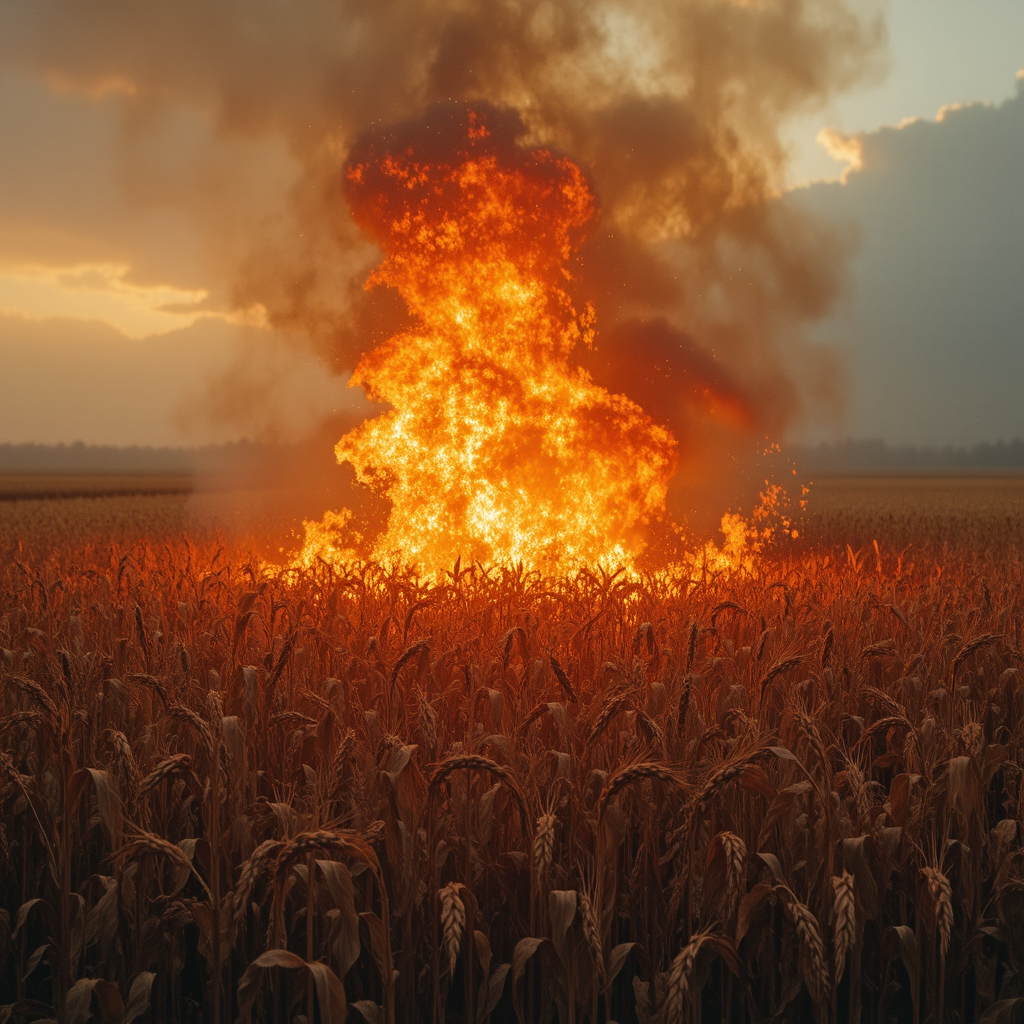
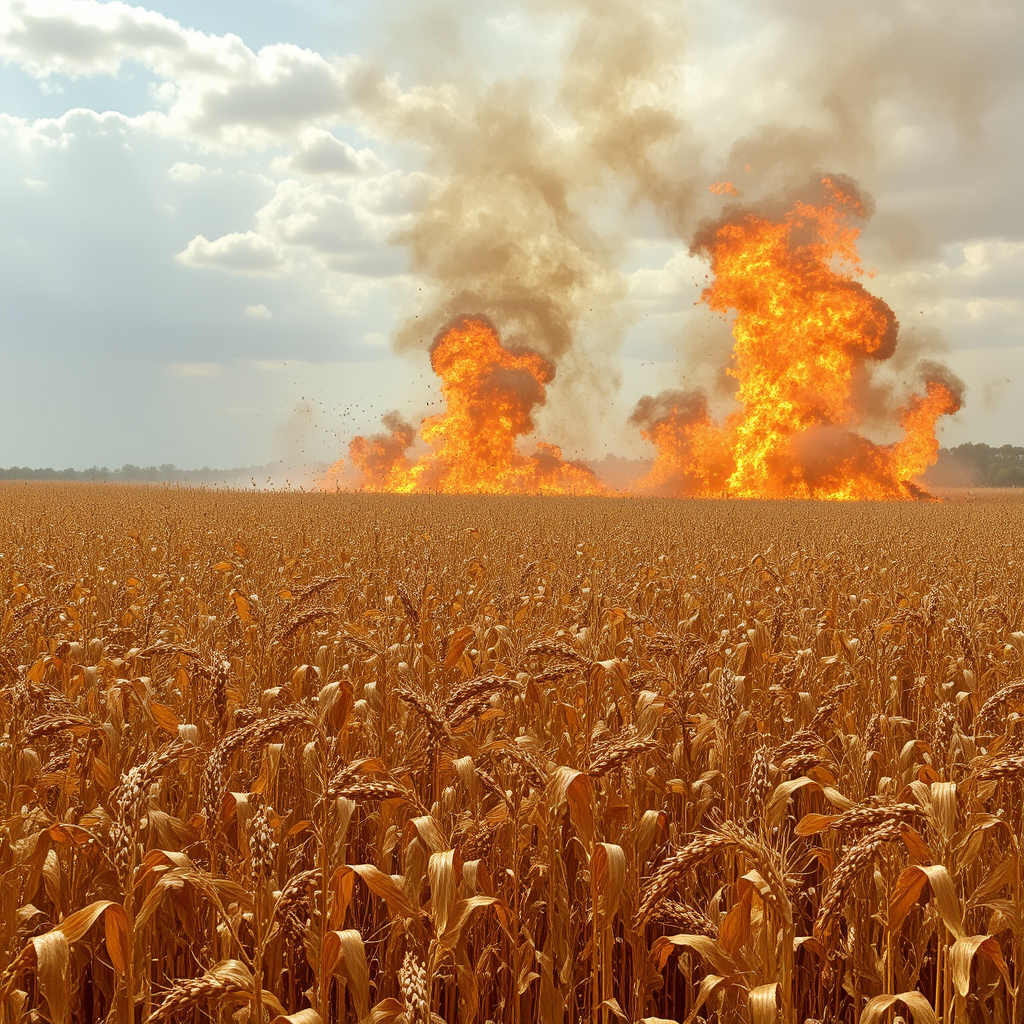
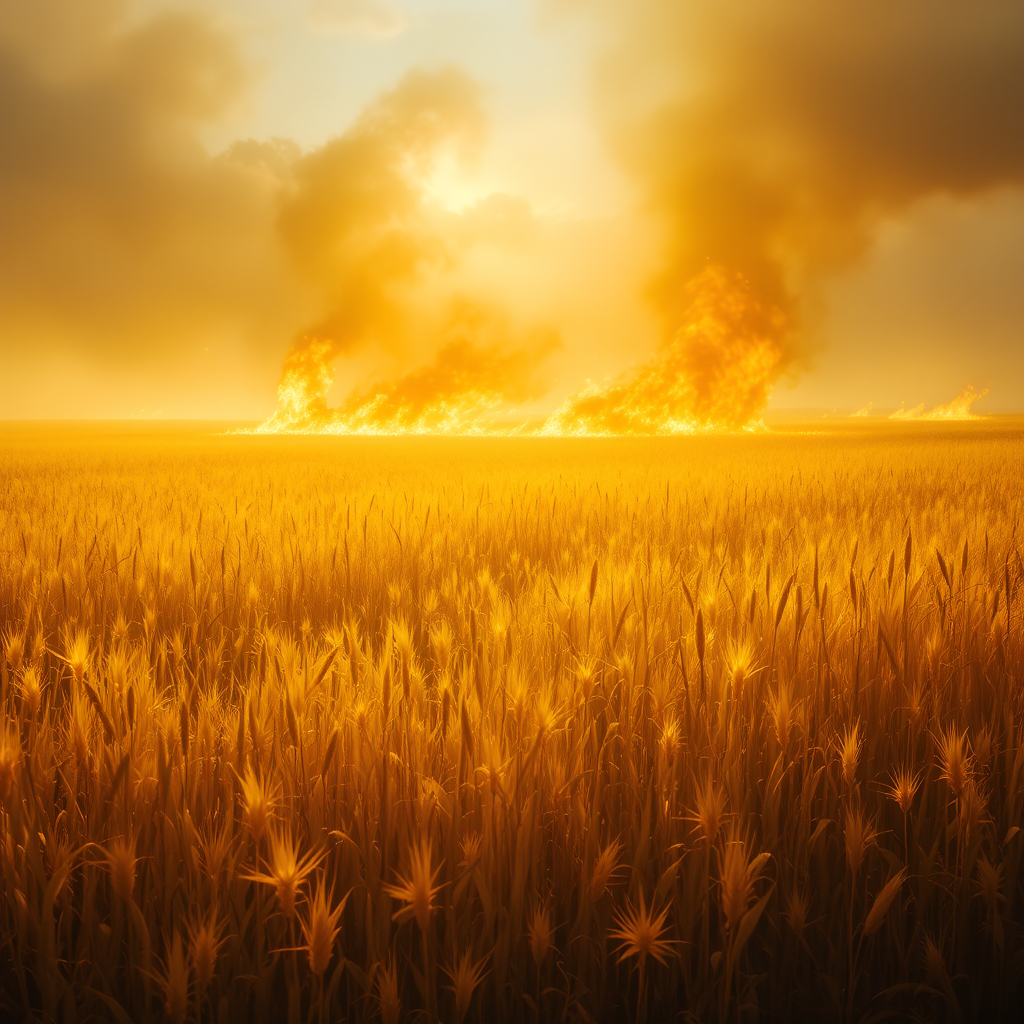
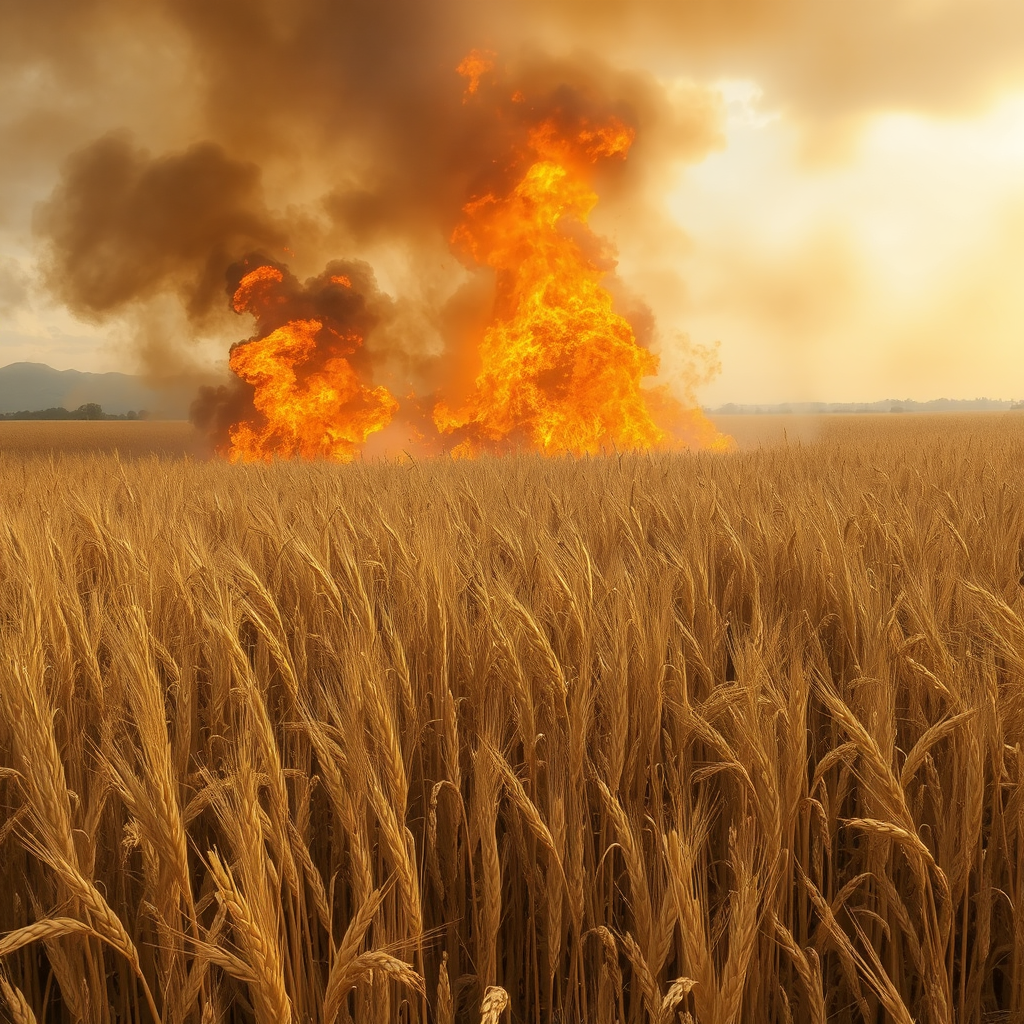
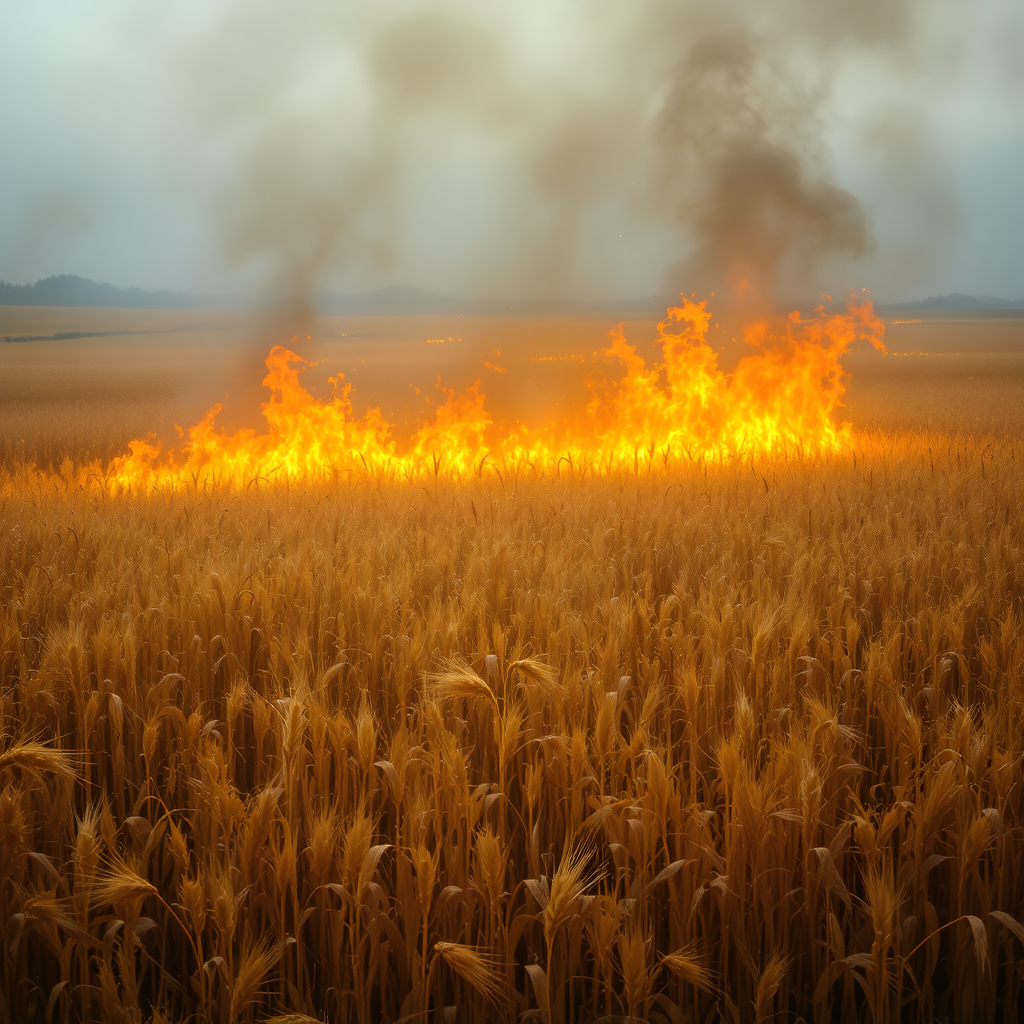
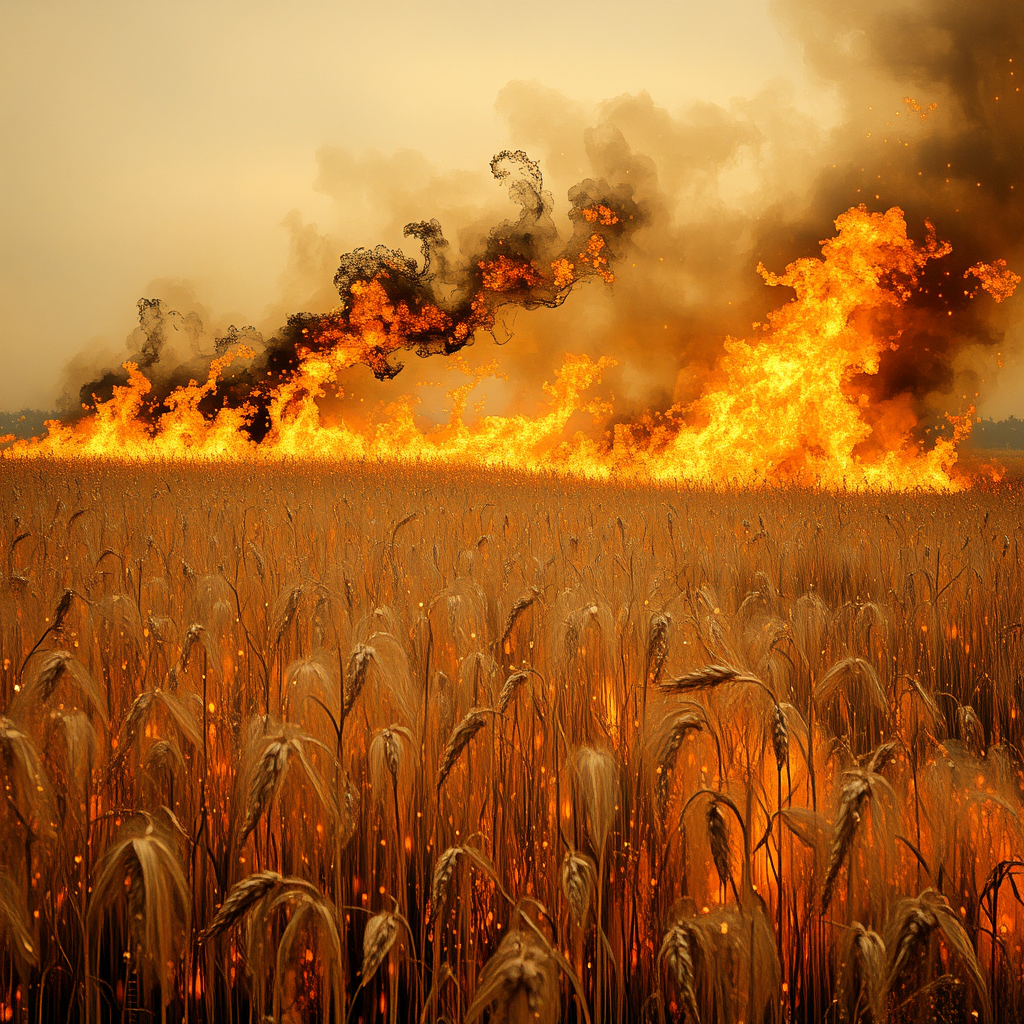
Harvests of spirituality could burn Right on down to the ground In the flames of self-denial & the bonfires of hypocrisy
Some thoughts:
A lot of work comes before the output of a harvest. There is tilling, sowing, watering, weeding, pruning, feeding, and scaring pests away. To reach the point of harvest in spiritual terms means we’ve been doing something right. We’ve been putting in the effort necessary to produce noticeable fruits of the spirit. We are right at the finish line, ready to pluck the bounty from the stems and feast on our reward. Surely, we would never sabotage our own efforts and burn it all to the ground.
But it happens all the time. We become rigid in our ways and begin to try to change aspects of ourselves that we think must be purified even more. In our search for perfection, we become more and more radicalized in our thinking, unwilling to compromise or accept any other ideas. We think we have figured out the truth, the only way, the perfect path, and no one else could possibly be right. We lose humility and set ourselves in the place of judgement as though we know the Will of God. We light the flames of justice and destroy ourselves in the process, hypocrites that we have become in our staunchness.
Maybe we need to go back to the early days of tilling and pruning to be reminded that toiling in the dirt is part of being human. We are made of the stuff. We are not asked to deny our humanness, nor make idols of our belief systems. We are only meant to reap what we sow and give thanks every step of the process. The harvest is no more holy than the weeding. And not allowing ourselves to enjoy the fruits of our labors is a crime against the natural order of things. Hard work deserves to be rewarded and we are worth it.
My Poem 35:
Planting mystery seeds in soil turned twice, watered with tears, and weeded by blistered hands,
the bountiful produce gleams in the sunlight like golden prosperity waiting to be reaped and gathered.
If only, if only…pride goes before, and losing the self in the process hurts nearly as much as the regret.
How many acres of spiritual crops must burn to ashes before we admit we might not know everything?
Hafiz. Hafiz’s Little Book of Life. Translated by Erfan Mojib and Gary Gach, Hampton Roads Publishing, 2023.
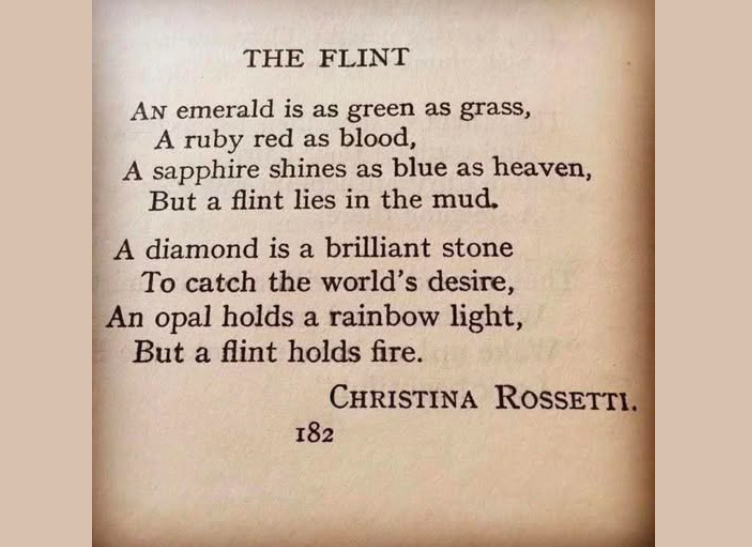
This poem “The Flint” by Christina Rossetti felt connected somehow. Something in the humble nature of the flint, who retains its flintness without flinching, is inspiring.
Rossetti, Christina. Sing-Song: A Nursery Rhyme Book. George Routledge and Sons, 1872.
All images created by Rebekah Marshall’s prompts using AI on Gencraft.com website.
I am reading Hafiz’s Little Book of Life, poetry by Hafiz-e Shirazi. He is challenging me to become more comfortable with ambiguity. I will share his poem and some of my thoughts on his poem (sometimes with the help of experts when the concepts are too hard for me), followed by a poem and some art inspired by his poem.
Hafiz’s Poem 34:
Good were the times Being with the Friend All else – fruitlessness & ignorance
Some thoughts:
I am choosing to interpret the Friend as love/God/integrity/connectedness. Any time spent in that state is Good. Like Adam and Eve in the Garden of Eden, it was very good. They were very good. All was good because they were experiencing that love and connectedness on tap. Everything else that is done with thoughtlessness, anger, a lack of compassion, or without care is probably meaningless. It is only in those times of being online with our higher selves, plugged in to that higher consciousness that comes with being one with the Friend, that our experiences are meaningful and fruitful.
Today, am I connected to the Friend and finding purpose in my thoughts and actions? Or am I disconnected and just going through the motions? Am I present or distracted? Are my choices sincere or performative? We can sense when our self is acting from a place of integrity vs. when we are simply reacting and flailing about uncentered.
My Poem 34:
Good times await the kind of friends who finish each other’s sentences and pick up threads of conversation from years past like it was yesterday.
Days spent apart are meaningless, unable to mark time because no witness can claim shared experience without the presence of the other.
To fill the void with woven energetic nuance recognized by spilt laughter and resonance, they need only make eye contact to collapse the distance.
Hafiz. Hafiz’s Little Book of Life. Translated by Erfan Mojib and Gary Gach, Hampton Roads Publishing, 2023.
All images created by Rebekah Marshall’s prompts using AI on Gencraft.com website.
I am reading Hafiz’s Little Book of Life, poetry by Hafiz-e Shirazi. He is challenging me to become more comfortable with ambiguity. I will share his poem and some of my thoughts on his poem (sometimes with the help of experts when the concepts are too hard for me), followed by a poem and some art inspired by his poem.
Hafiz’s Poem 33:
Adam gave up Paradise
For just one nice ripe apple
What if one world is only worth
One hard stale raisin
?
Some thoughts:
This poem feels a little cheeky. Irony keeps the interpretation in question. If Adam was willing to give up Paradise for an apple, was it worth it? What did he gain? Is Hafiz suggesting that the fall was an opportunity for growth? Most religious leaders of Abrahamic faiths would argue that such thinking is blasphemous, yet Hafiz goes on to ask about the possibility that such a trade could occur for even less of a temptation, a hard stale raisin. Maybe the eating of the fruit was not really of any consequence. Perhaps the development of knowing right and wrong, choosing free will, embarking on an individual hero’s journey was the inevitable event, given the curiosity of the creations who resembled the creator.
Hafiz doesn’t commit to any one view. He simply asks the question, suggesting that perhaps we do not fully understand the exchange that was made, beyond the basic information passed down through the ages. What is one world worth? Did Adam and Eve take their world for granted? Probably. Don’t we take our world for granted most of the time? But what if they also desired more? More than blind obedience. What are we willing to trade for peace? What are we willing to trade for safety? What are we willing to compromise on for those we love? Had Adam not eaten of the fruit, would he have lost Eve? There are so many questions left unanswered that only a fool would claim to know what they would do in the same circumstances.
My Poem 33:
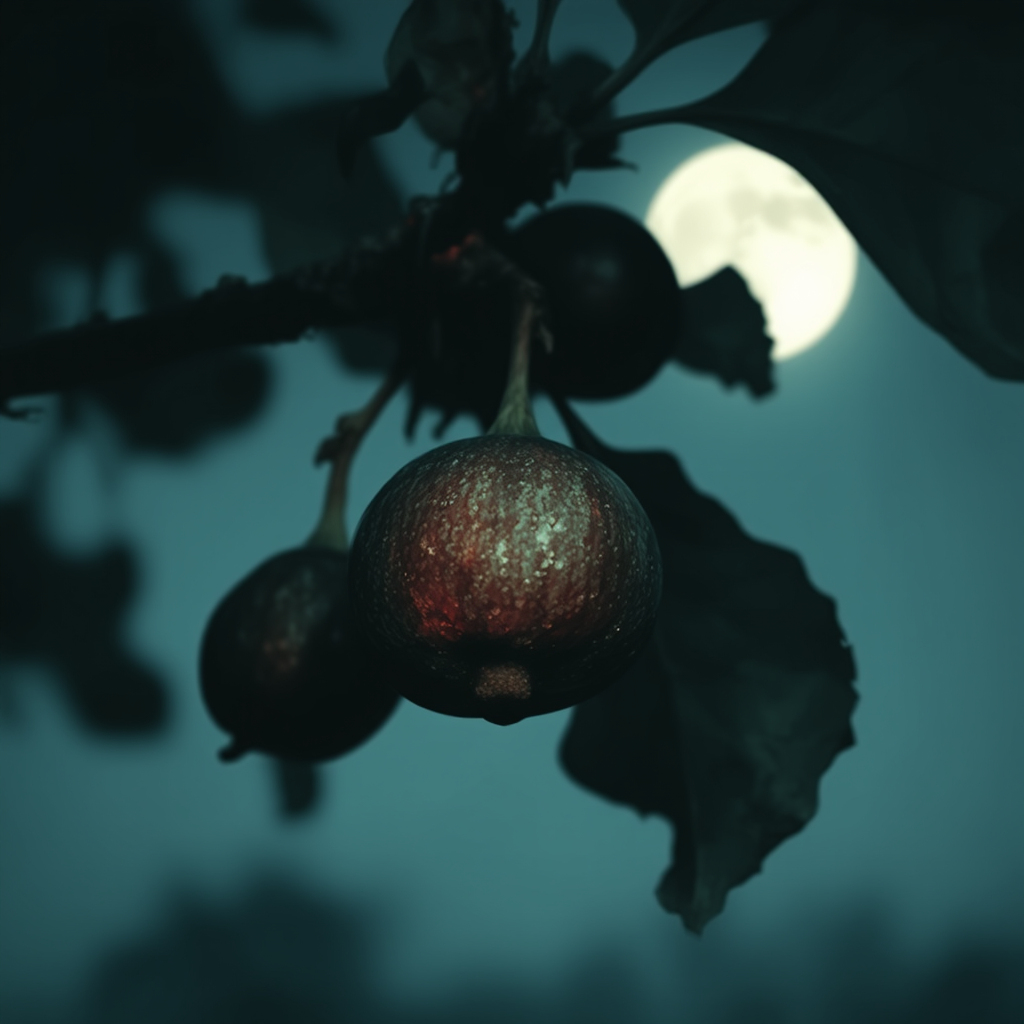
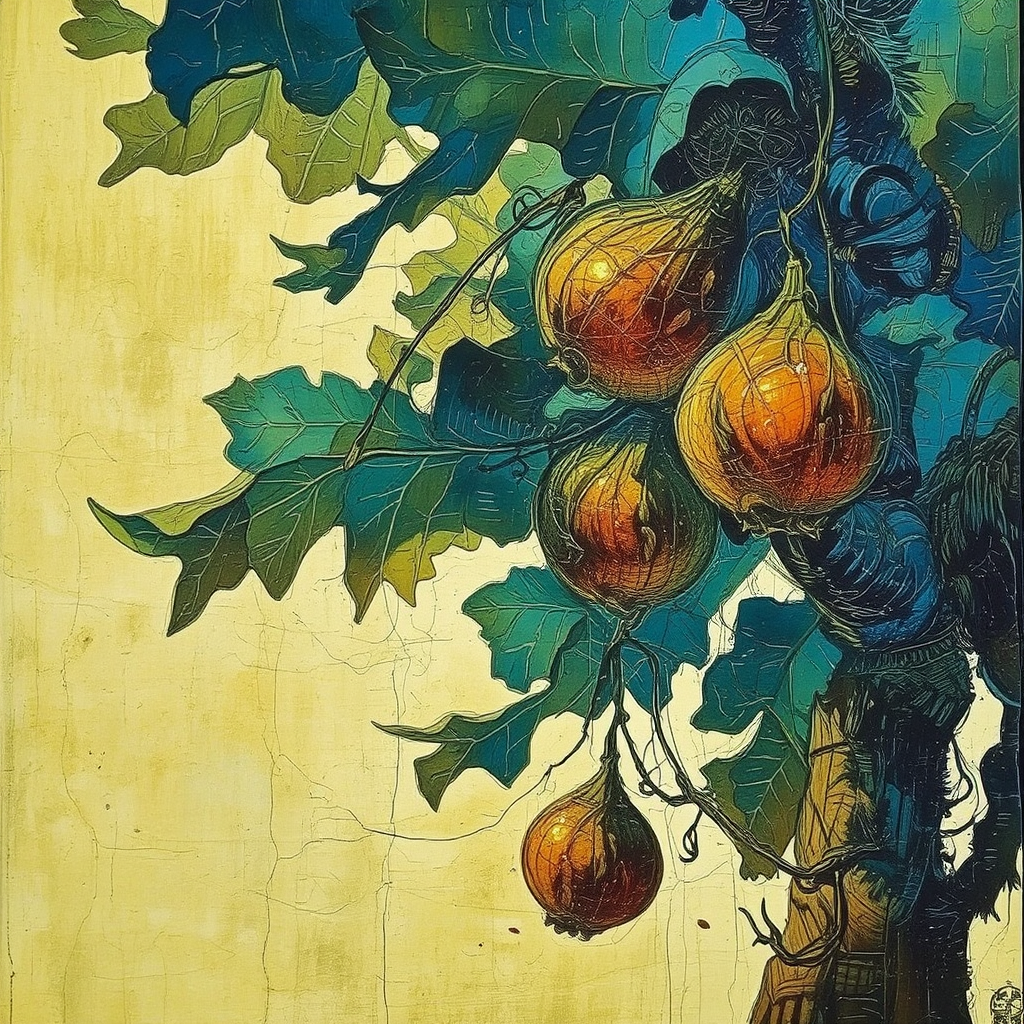
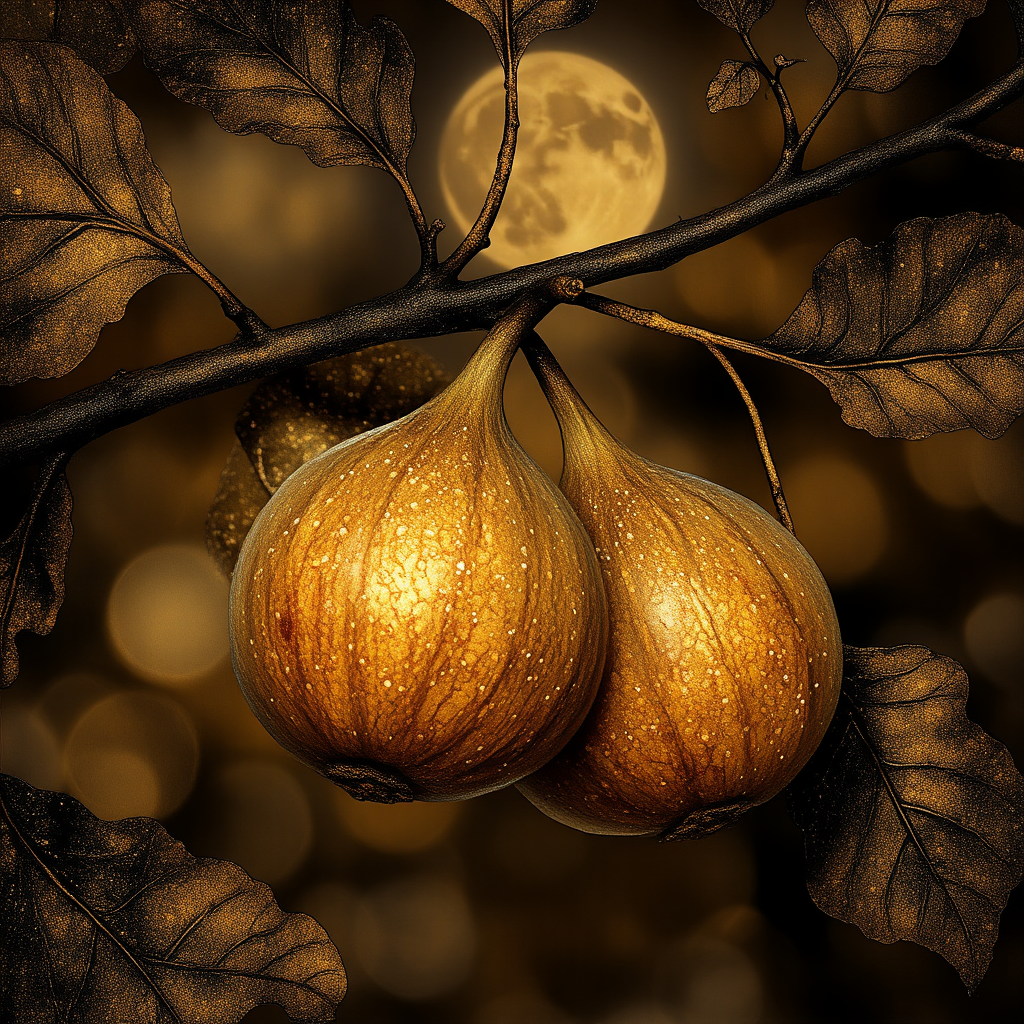
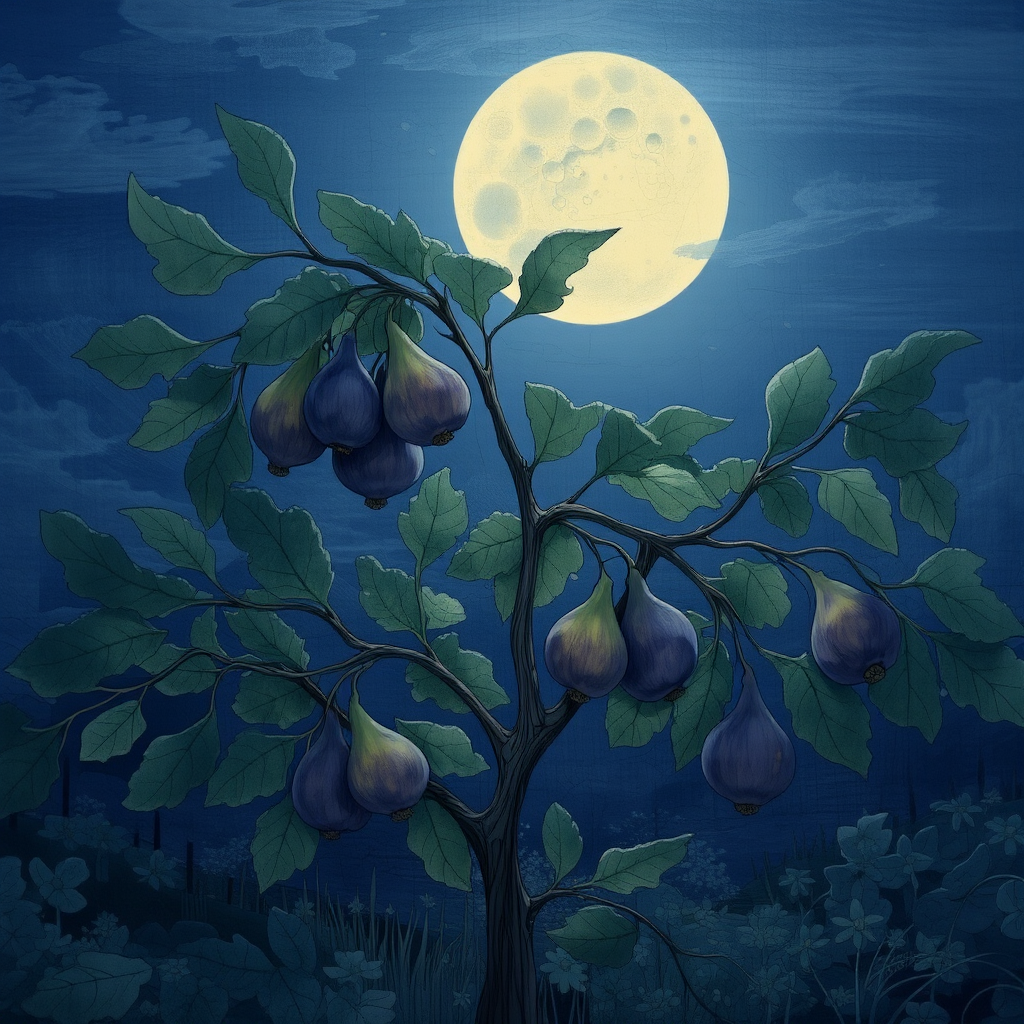
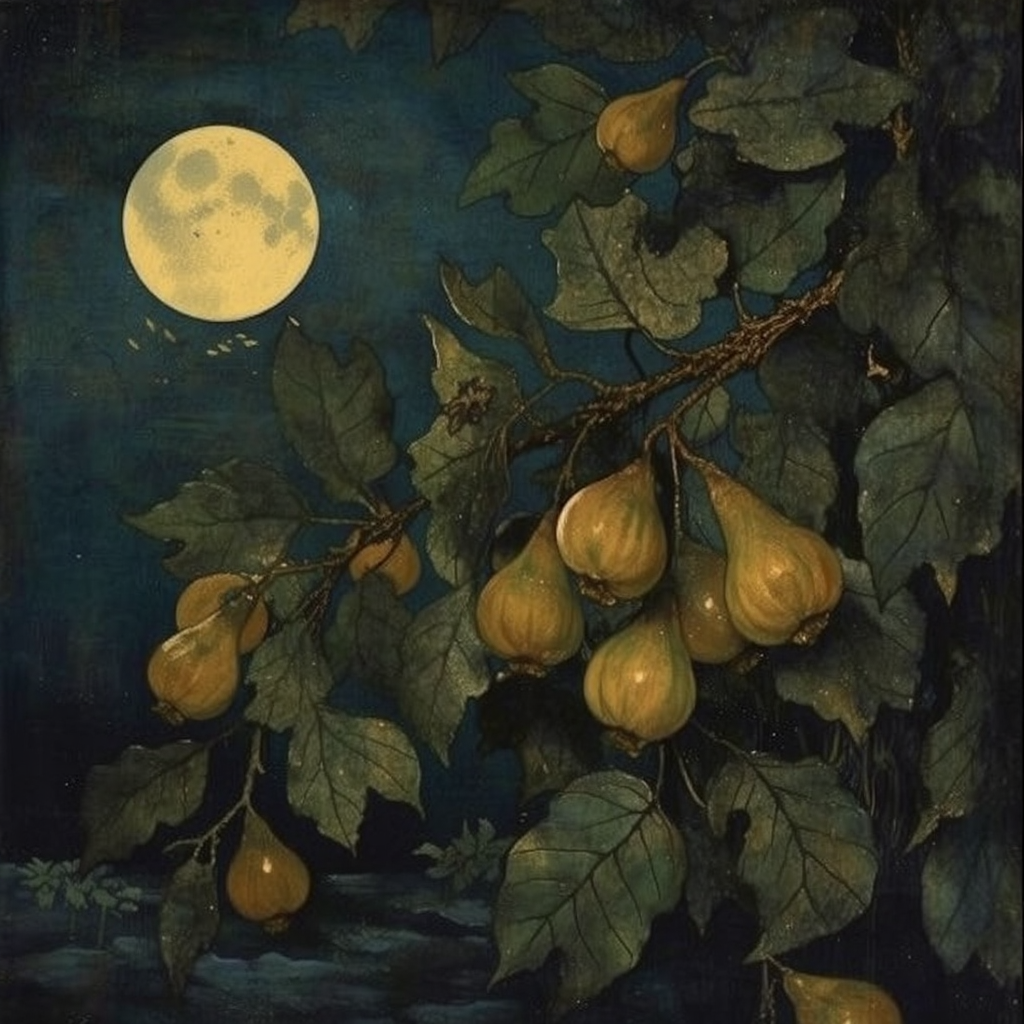
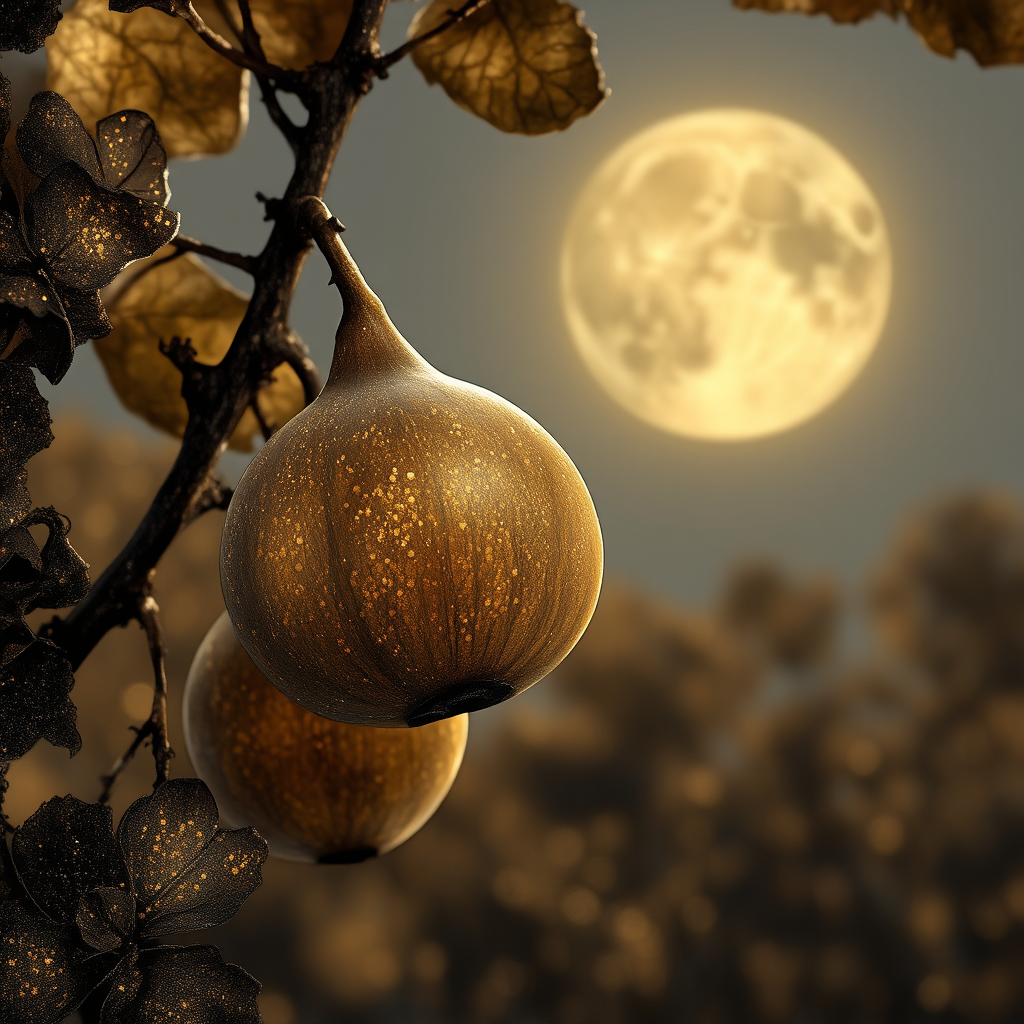
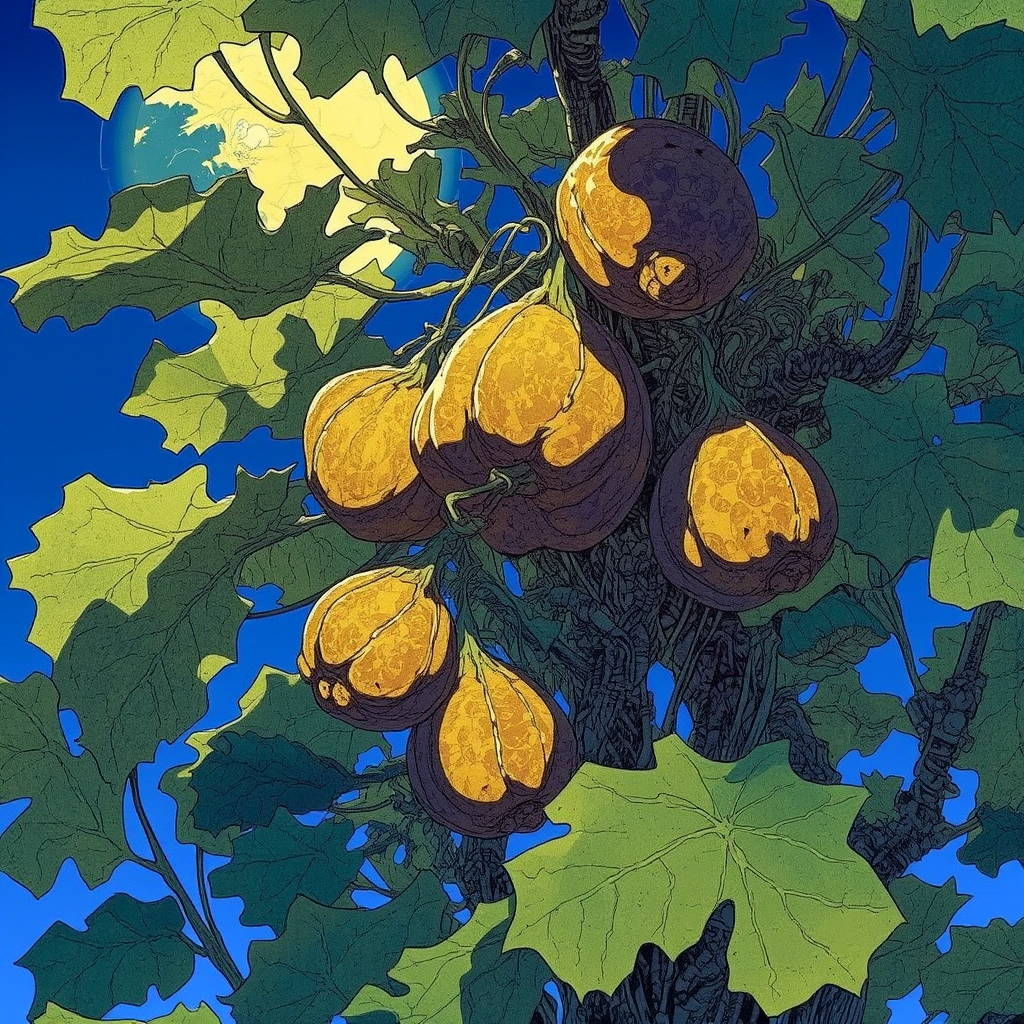
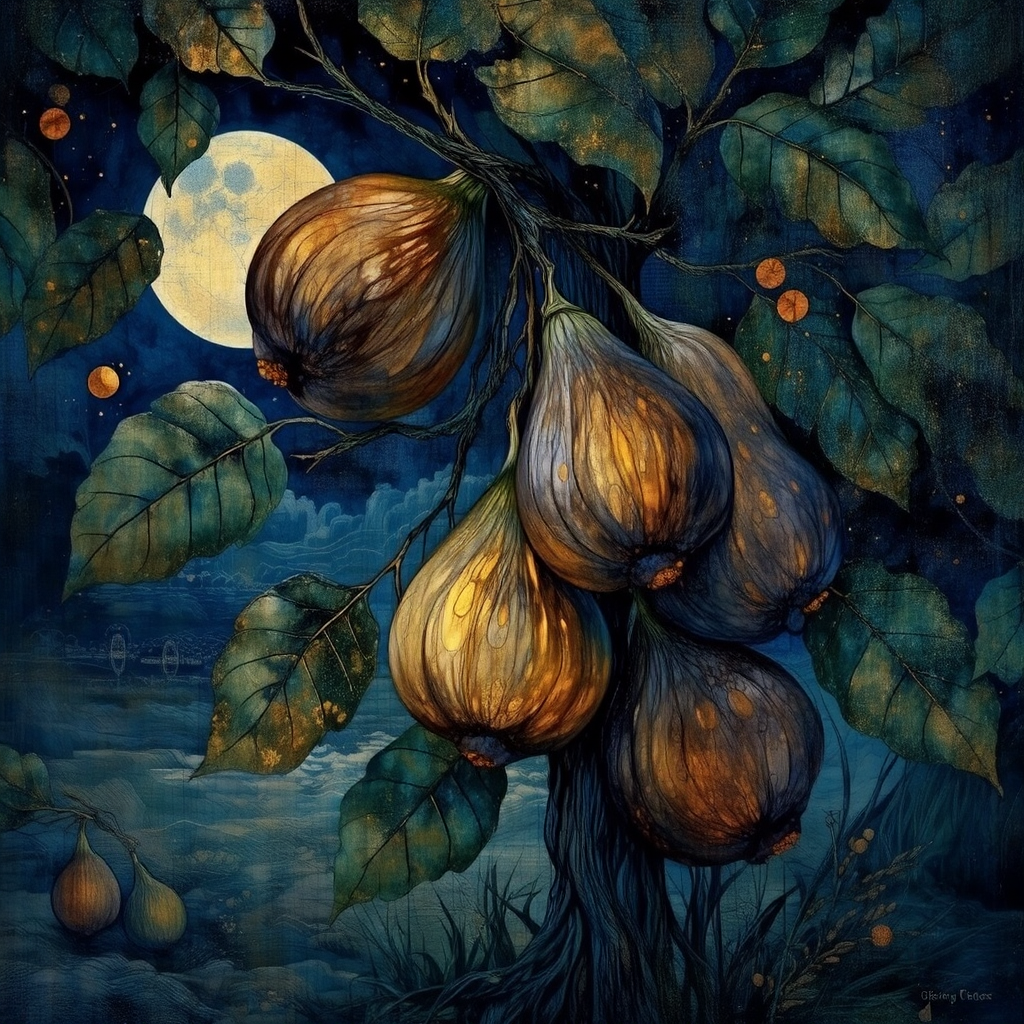
By the light of a mid-month moon, my love gathered figs by the handful. Her plump, ripe lips, a sticky, sweet boon, as I kissed the taste of the tree’s jewel.
That rich ambrosia, nectar of gods, forbidden for reasons unknown. Angels eat the fruit, so I find it odd, that the restriction applies to us alone.
Why was I made and given this mate, if not to experience all and to learn? To know good and evil, not to hesitate, is the knowledge for which I yearn.
The taste of truth, bittersweet and bold, that’s what this is, what I’ve come to crave. The consequence is growing old, and learning pain only taught by the grave.
Hafiz. Hafiz’s Little Book of Life. Translated by Erfan Mojib and Gary Gach, Hampton Roads Publishing, 2023.
All images created by Rebekah Marshall’s prompts using AI on Gencraft.com website.
I am reading Hafiz’s Little Book of Life, poetry by Hafiz-e Shirazi. He is challenging me to become more comfortable with ambiguity. I will share his poem and some of my thoughts on his poem (sometimes with the help of experts when the concepts are too hard for me), followed by a poem and some art inspired by his poem.
Hafiz’s Poem 32:
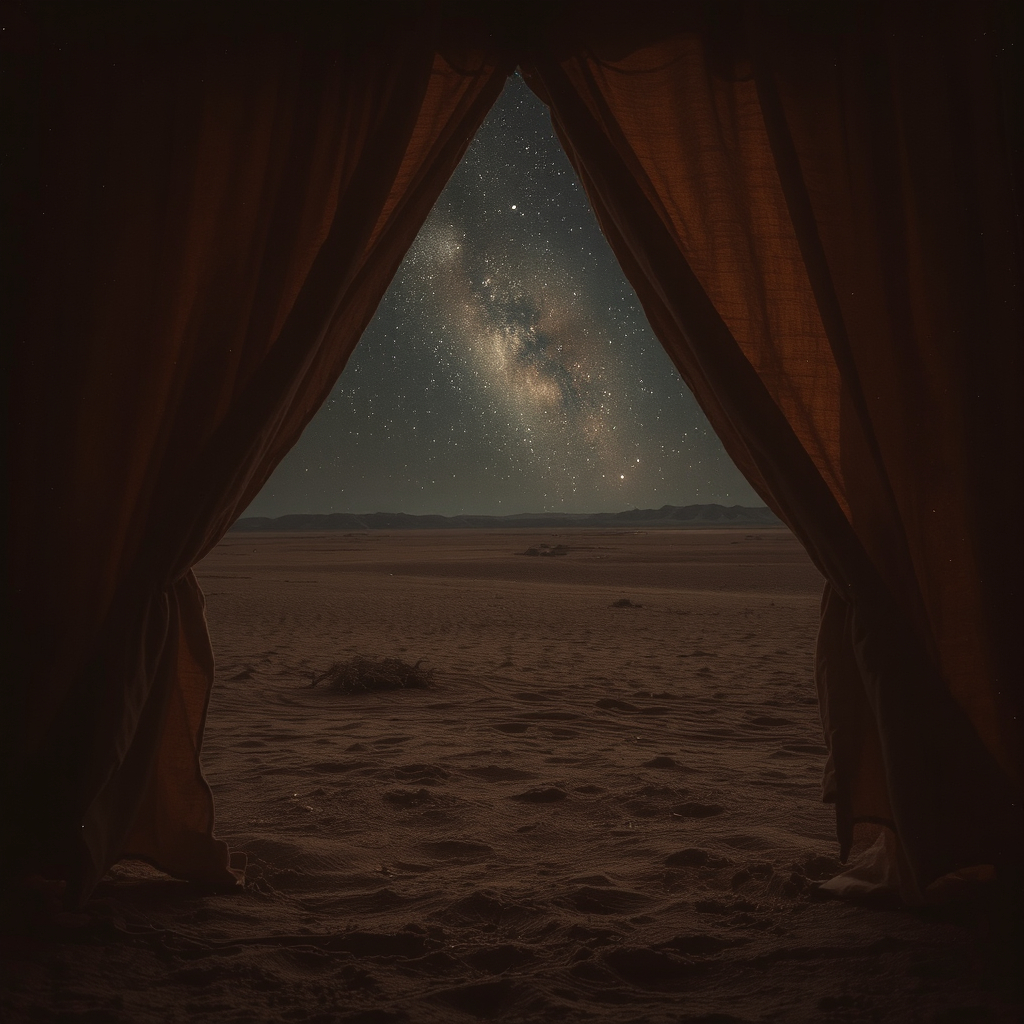
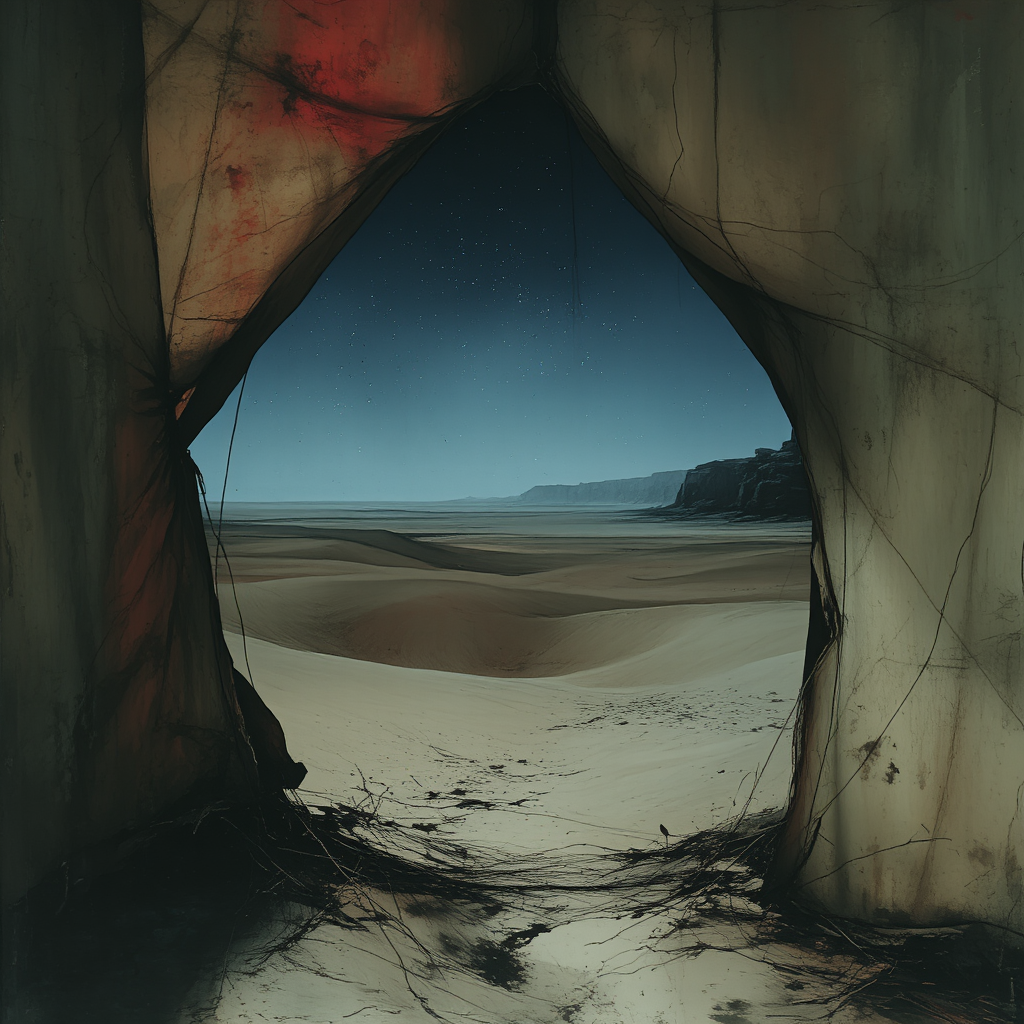
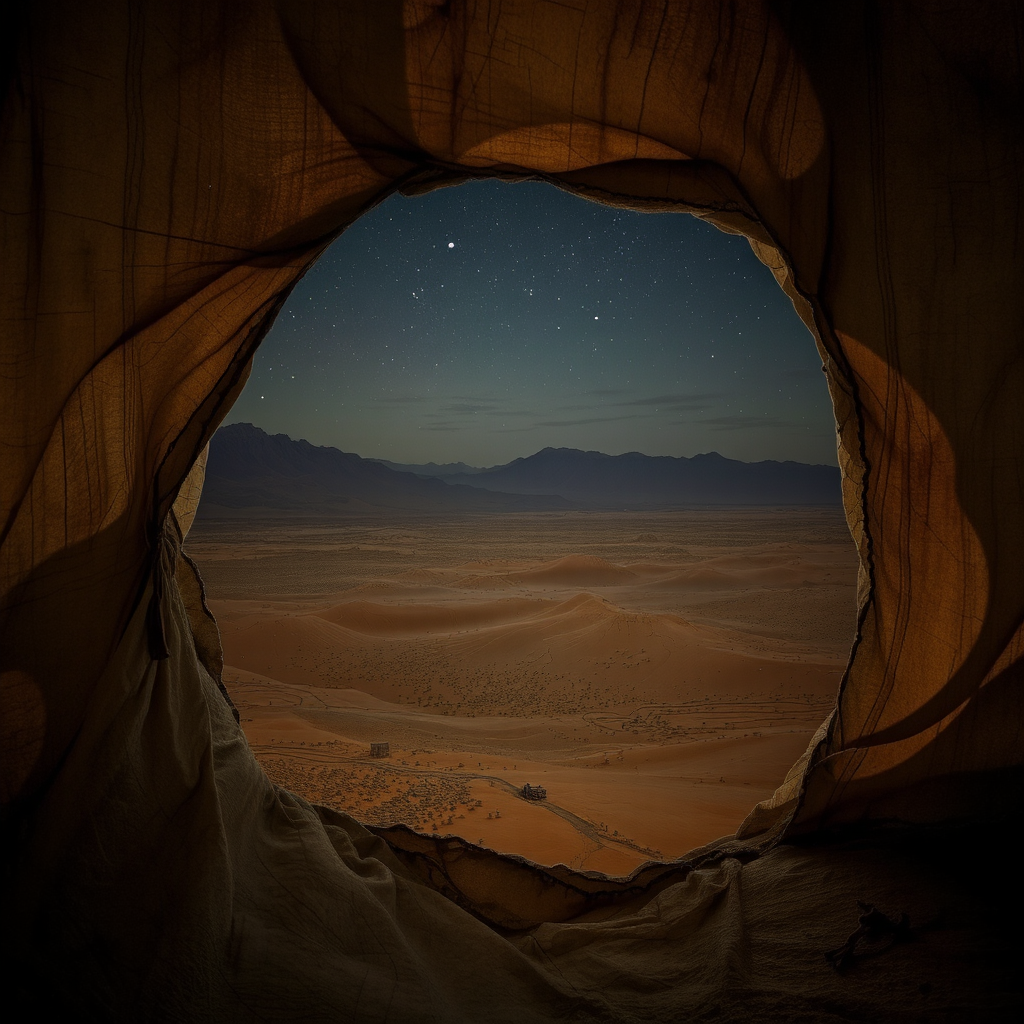
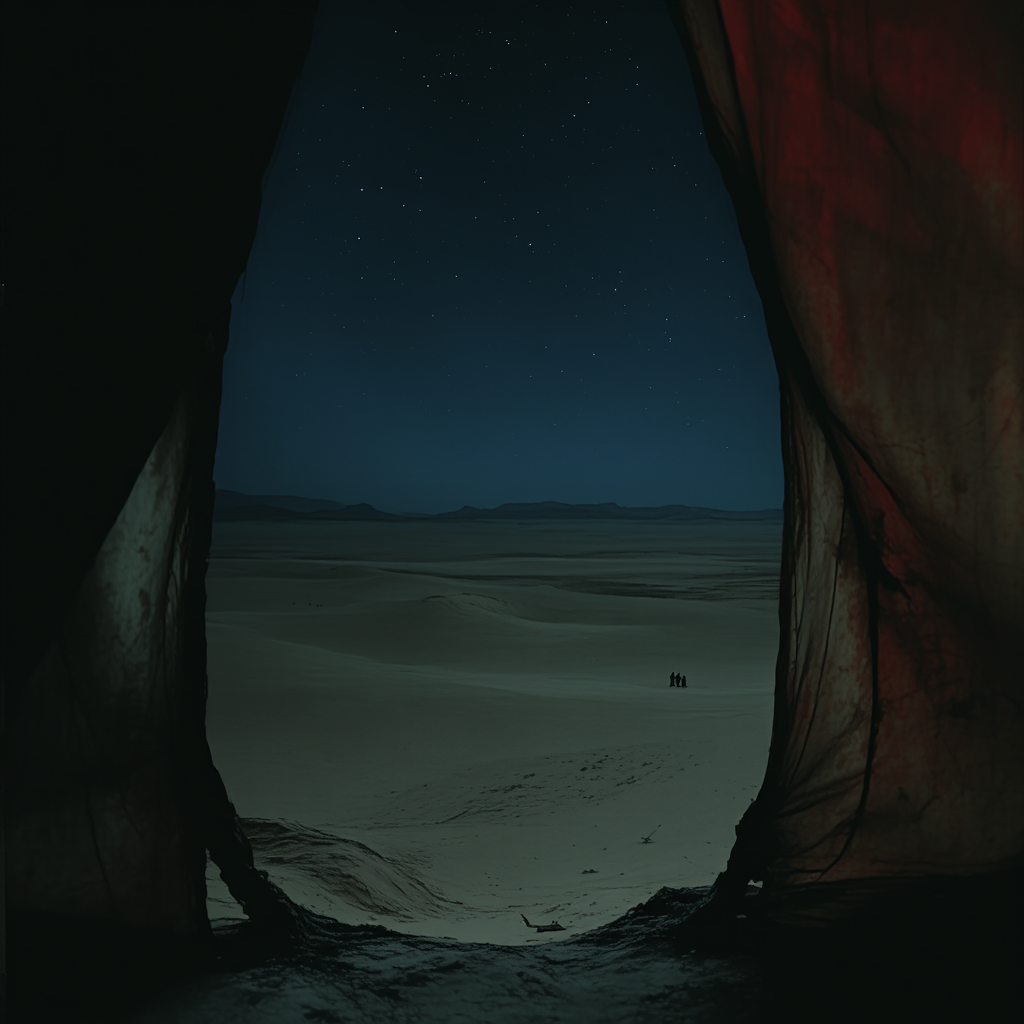
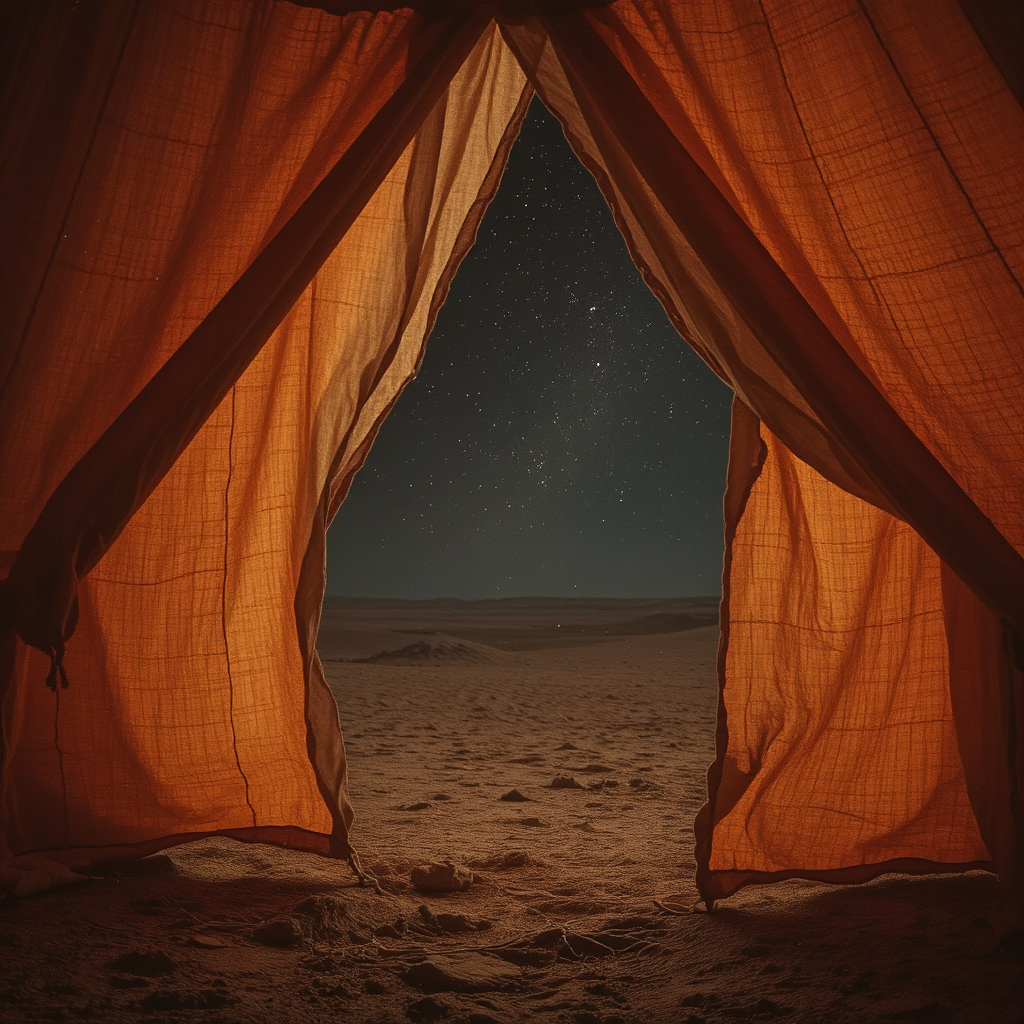
While you slept The caravan has moved on
The desert is up ahead
Some thoughts:
As an intense sleeper in need of a ridiculous amount of sleep, this poem annoys me at the literal level. But if I look at it a bit more metaphorically, I can see what the poet is saying. We all must sleep, rest, withdraw from the world at times for healing and downtime. But isolation can become a habit if we let it. It is peaceful in our own tent, with our soft furnishings, and our quiet comfort zones. Outside is the noisy bunch with their opinions and foibles and, sometimes, annoying ways. But there are important qualities to community that we must remember to consider. It is only through community that we grow as people who can empathize with others, connect for companionship, and be nurtured and remembered. And in Hafiz’s time, there was safety, especially when travelling through the desert. It could be very dangerous to find yourself alone in a wilderness landscape. You might not survive. I suppose it is a good warning/reminder to find balance in our isolative ways if we are prone to such patterns.
My Poem 32:
While we slept, energy continued to transition from typewriters into clouds, from broadcast to streams, from nickels and dimes into crypto, from desktop computers to quantum AI.
While we slept, families continued to transition from mother, father, two children to whoever can cobble a life together, whatever the gender expression or lack thereof, or anywhere in between, from white with white only to beautiful hues of blended shades.
While we slept, societies continued to transition from patriarchal oppressive regimes to the beginnings of equality and inclusion, from workplace discrimination to women in leadership roles, wheelchair ramps, climate change and mental health awareness.
While we slept, religious institutions continued to transition from exclusive to more inclusive, from in person only to online participatory options, from fundamentalist to deconstructionist, from male-only leadership to some women in high places.
While we slept, culture continued to transition from consumerism to minimalism, from the status quo to conversations about privilege, from fat-shaming to body positivity, from nature destruction to environmental consciousness, from acceptance to accountability.
When we wake, will we bury our heads in the sand and demand a halt to change, a return to the past, or will we lift our chins, with eyes wide open, minds alert, mouths slightly agape, and join the caravan?
The desert is up ahead. It is vast and wide, and we will be left behind in our ruts of “we know best” and “tradition is all,” while the great adventure of life moves on without us.
Hafiz. Hafiz’s Little Book of Life. Translated by Erfan Mojib and Gary Gach, Hampton Roads Publishing, 2023.
All images created by Rebekah Marshall’s prompts using AI on Gencraft.com website.
I am reading Hafiz’s Little Book of Life, poetry by Hafiz-e Shirazi. He is challenging me to become more comfortable with ambiguity. I will share his poem and some of my thoughts on his poem (sometimes with the help of experts when the concepts are too hard for me), followed by a poem and some art inspired by his poem.
Hafiz’s Poem 31:
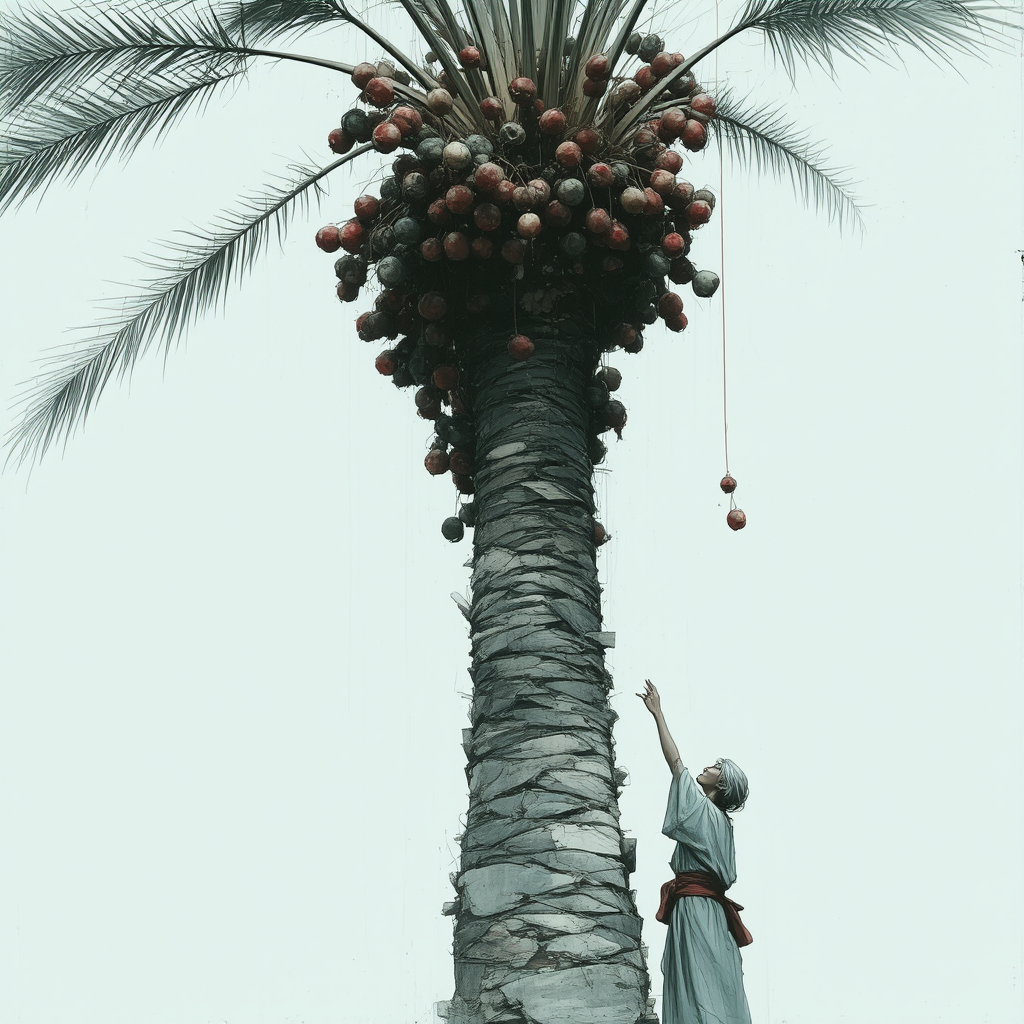
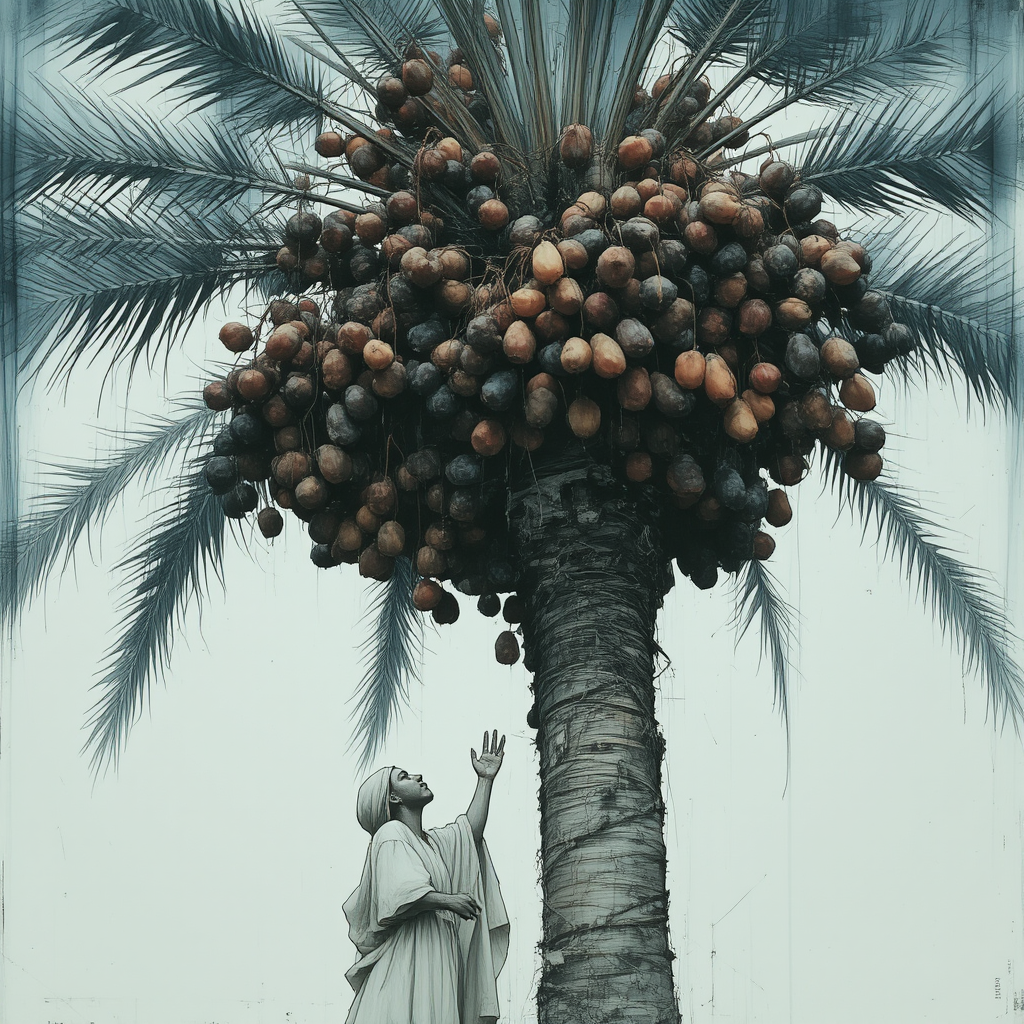
Our hands are short
The dates High up on the tree
Some thoughts:
There are so many different directions this poem could go. The dates, out of reach so high up the tree, could represent a goal, a desire, nourishment, or a promise of sweetness, joy deferred. In Hafiz’s Persian culture, they would have been a staple, part of many recipes as a sweetener. The inability to reach the fruit could represent our human limitations, our need for community, or the recognition that we must learn to think outside the box. There are ways to get to the fruit that don’t involve growing longer arms. We can climb, get a ladder, shake the tree, wait until it gets ripe enough to fall, ask for help from others, etc. Perhaps the poem is asking us to ponder our needs and determine what it is we most need to learn from the situation. Do we need to develop patience and wait for the fruit to fall? Do we need to learn to ask for help and get support from our community? Do we need to develop some initiative and do some problem-solving to get our needs met? Do we need to take a class in date harvesting to gather more information about our dilemma? Like I said, there are many ways to look at this and any of them could be a great lesson, depending on our circumstances.
My Poem 31:
I want to be rich enough to pay my bills on the day they are due, if not early each month.
I want to be so rich, the only thing I worry about is who to help next with the extra money I’ve earned.
I want to be the kind of rich that goes grocery shopping without tabulating a total as I go.
I want to be richer than it takes to retire all the great-grandparents in our family so they can rest.
I want to be the richest person who still drives a Toyota Camry and lives in a multi-generational home.
I want rich written all over my receipts for paying off every school loan for every relative and friend I know.
I want richer than rich opportunities to flow into every household of every human on earth who wishes others well.
I want to richify our schools, hospitals, libraries, daycares, nursing homes, and animal shelters with infinite abundance.
Hafiz. Hafiz’s Little Book of Life. Translated by Erfan Mojib and Gary Gach, Hampton Roads Publishing, 2023.
All images created by Rebekah Marshall’s prompts using AI on Gencraft.com website.
I am reading Hafiz’s Little Book of Life, poetry by Hafiz-e Shirazi. He is challenging me to become more comfortable with ambiguity. I will share his poem and some of my thoughts on his poem (sometimes with the help of experts when the concepts are too hard for me), followed by a poem and some art inspired by his poem.
Hafiz’s Poem 30:
The Alley of Prestige Is not for us
If you don’t like it Try changing Justice
Some thoughts:
Alleys are narrow, hidden, not the usual route the rest of us walk down to get where we’re going. Since Hafiz calls this an Alley of Prestige, I imagine he is talking about a passageway where most would not be welcome. It is probably where the top echelon of society rub elbows on their way to somewhere fancy and exclusive. I don’t think these are the people striving for healthy excellence, but perhaps those competing for fame and admiration. He is saying that people who are walking the Way of Love of taking a different route. We have different priorities.
It doesn’t mean we can’t have success or wealth or any of the other abundant blessings that are meant to come our way, but it should not be the goal of our actions. And if we don’t like the fact that the Way of Love does not chase prestige, our issue is with Justice. Reality is structured such that true pursuit of divine love requires the collapse of ego-seeking. If we spend all our time trying to rig the system, play the game of hierarchy, and resent not being admired, we might not be on the right path. We should not be focused on climbing the social ladder, competing for favor, or performing for prestige. Integrity, humility, and honor may not always get the applause, but they are on the side of Justice.
My Poem 30:
Wouldn’t it be lovely if the people rewarded with the most prestige, the biggest salaries, and the praise and glory were the people who give of themselves every day for the sake of others?
-nurses who lift and check and wipe and console and heal and save and carry our burdens when we are at our weakest and most vulnerable.
-teachers who fill the minds of the next generation and inspire our greatest creators of the future.
-health aids who do the dirty work of managing these failing bodies when they are at their worst.
-classroom aids who sit beside the child who needs the help, patience of a saint corralling the minds least open to knowledge.
-daycare workers who raise the babies while their parents must work.
-librarians who solve and guide and suggest and provide the hope and light of promise books represent for all.
Not that politicians and football players and Wall Street traders don’t have important functions in society, but I’ve never wept in one of their arms as I struggled with fear and pain and been comforted by their wisdom and compassion.
Hafiz. Hafiz’s Little Book of Life. Translated by Erfan Mojib and Gary Gach, Hampton Roads Publishing, 2023.
All images created by Rebekah Marshall’s prompts using AI on Gencraft.com website.
I am reading Hafiz’s Little Book of Life, poetry by Hafiz-e Shirazi. He is challenging me to become more comfortable with ambiguity. I will share his poem and some of my thoughts on his poem (sometimes with the help of experts when the concepts are too hard for me), followed by a poem and some art inspired by his poem.
Hafiz’s Poem 29:
Along the Way of Love
Worldly rule is A parasite
Some thoughts:
I had to ponder this one a while and use resources to check my ideas against. “Along the Way of Love” feels like it is talking about our path or spiritual journey throughout life. My husband’s martial art talks about “Budo,” which means roughly, “The Martial Way.” Some spiritual practices call it “The Walk” or “The Straight and Narrow Path” or “The Hero’s Journey.” Common threads in all of them are ideas of practice, movement, alignment, and surrender. In the Tao Te Ching, Dao is “The Way” and is the underlying current shaping our reality or the natural flow of our existence. The Bible depicts Jesus as “The Way” and a life patterned after his love, sacrifice, and humility is the ideal for Christians. In Hinduism, Marga is the path and Dharma is “cosmic order, right action, and duty aligned with one’s nature.” In Buddhism, The Noble Eightfold Path includes right speech, right action, right livelihood, and right mindfulness. Many Indigenous traditions speak of “Walking in Balance”, in beauty, right relationship, and balance with the land, ancestors, community, and spirit.
Any of these examples works perfectly with the rest of the poem because it is saying that, essentially, any outside force that tries to control “The Way” does so by feeding on us. Outside powers like governments, religious authorities, ego, systems that dominate, or hierarchies that control need someone to rule over. They survive by draining the life and spirit of their hosts. They cannot exist independently from us. Power that depends on control is a parasite. They require dominance, fear, maintaining an image, etc. If we are truly traveling The Way, we are striving for equality, love, surrender, vulnerability, and humility, all things that are opposites of ego-driven constructs.
On a more personal level, if we are trying to walk The Way of Love, it is not in alignment to act parasitic. Are we trying to control people around us? Are we trying to control outcomes, narratives, opinions, or events? Love does not try to control others. Love flows freely. Do we try to dominate conversations when we want to get our way instead of letting the conversation be fair and two-sided? Do we use our emotions to bully others into doing what we want, rather than keeping ourselves balanced and in check and recognizing that we are using manipulation as a tactic? Control clings, fears, threatens, traps, insists, interferes, and demands. Nothing that tries to control is love.
My Poem 29:
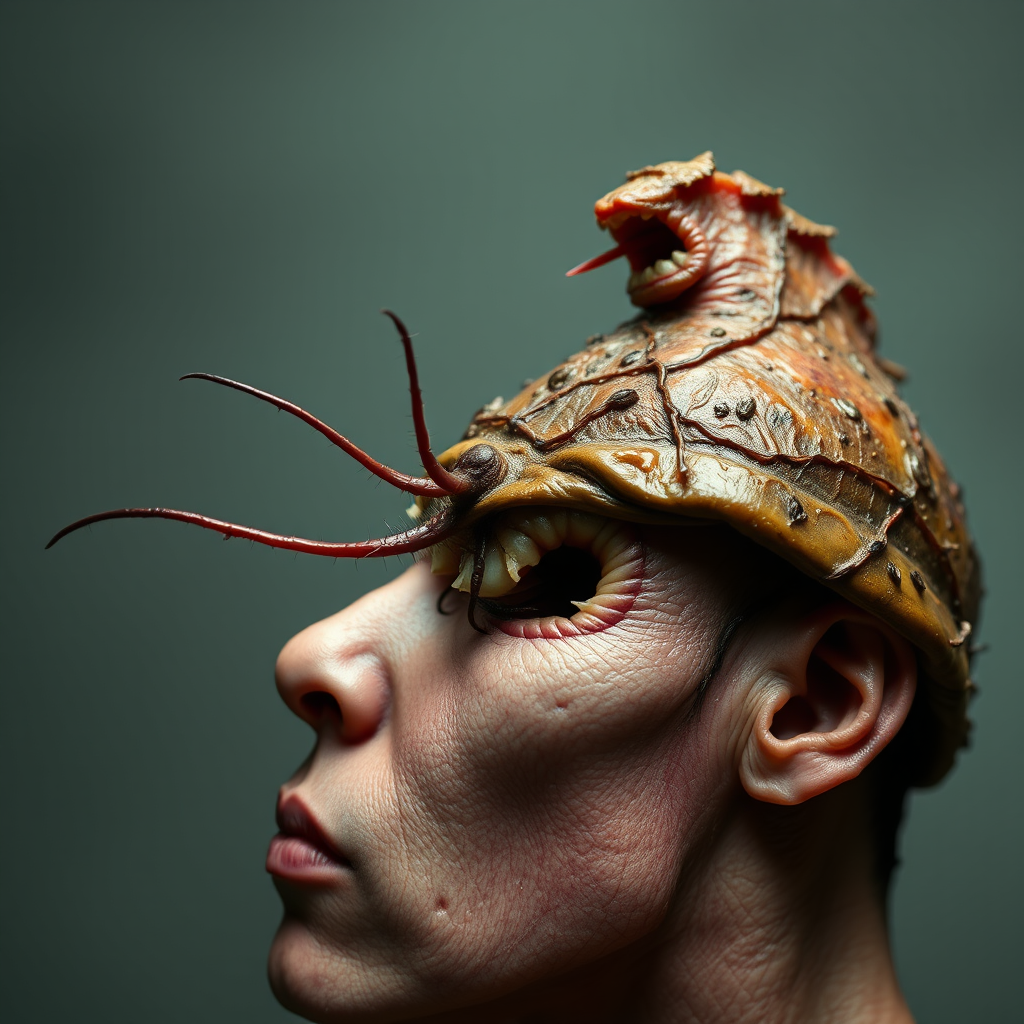
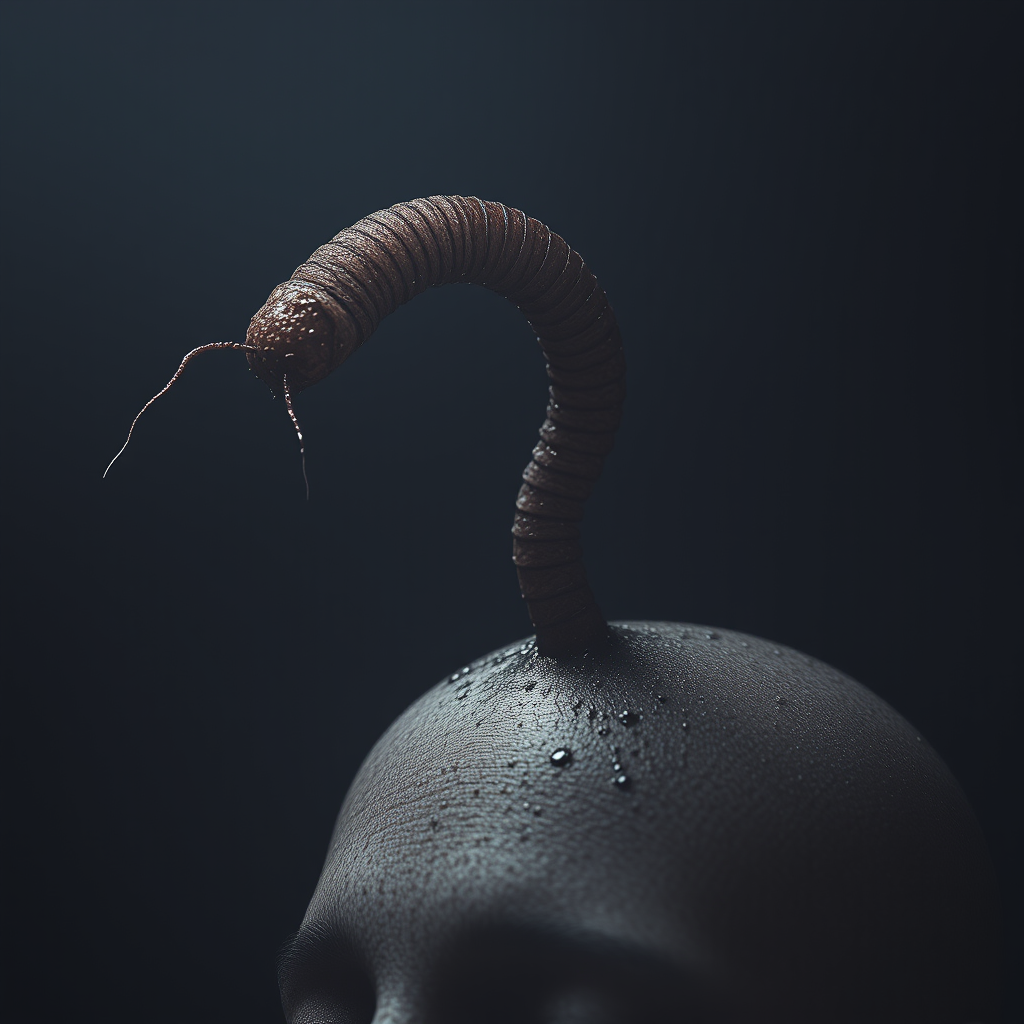
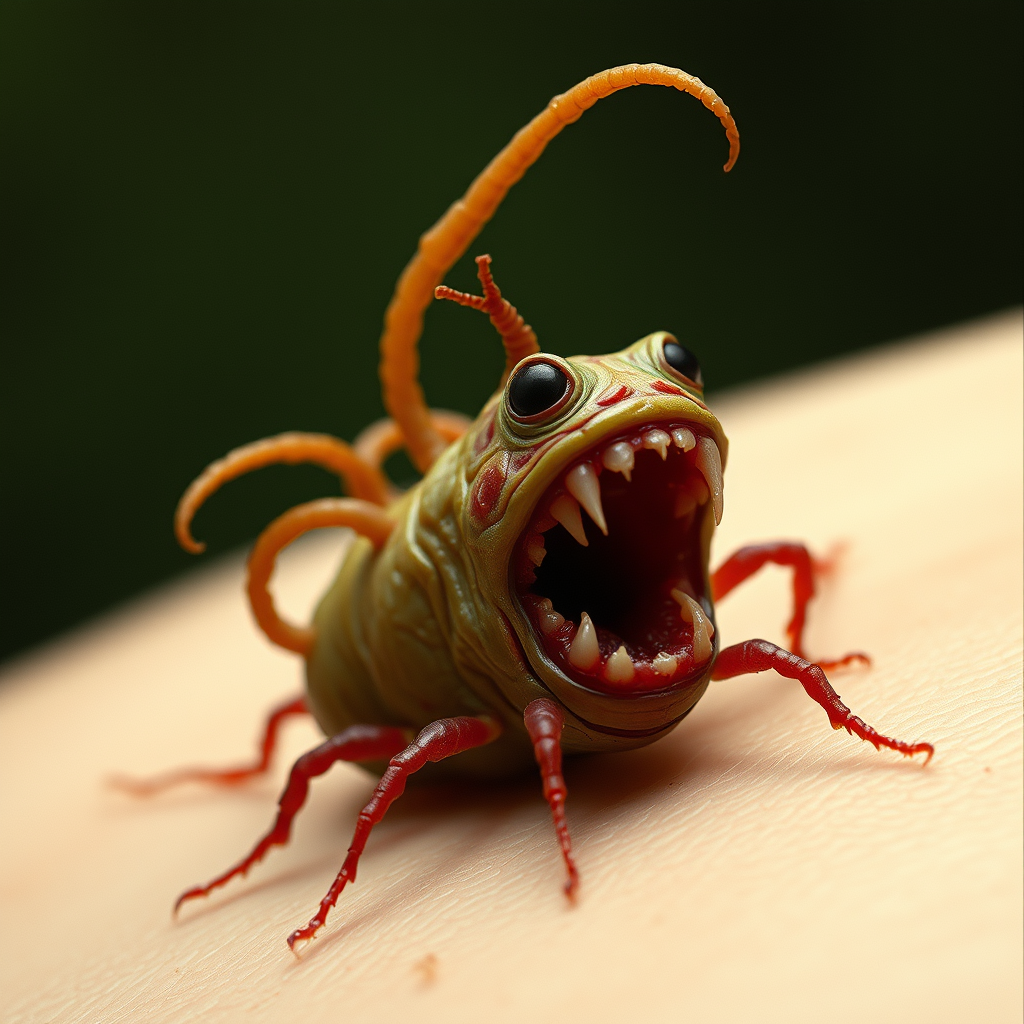
The plasmodium falciparum is the deadliest parasite for humans, as far as we know.
Over 600,000 people die every year from malaria caused by these tiny little one-celled creatures who fly through the air on winged mosquito ladies from one human host to another, multiply in our livers, then burst open our red blood cells, which we would prefer were kept intact.
Their feasting and multiplying is incongruous with our well-being, their only goal multiplication.
For them the glorious bursting of our cells is like fireworks, celebratory blasts releasing new generations into the river of life (our bloodstream) where they hope to be a lucky chosen one that will be sucked into the sky and helicoptered to a new host, where their descendants will begin again.
Hafiz. Hafiz’s Little Book of Life. Translated by Erfan Mojib and Gary Gach, Hampton Roads Publishing, 2023.
All images created by Rebekah Marshall’s prompts using AI on Gencraft.com website.
I am reading Hafiz’s Little Book of Life, poetry by Hafiz-e Shirazi. He is challenging me to become more comfortable with ambiguity. I will share his poem and some of my thoughts on his poem (sometimes with the help of experts when the concepts are too hard for me), followed by a poem and some art inspired by his poem.
Hafiz’s Poem 28:
Last night In the Alley of the Tavern The local imam With his perennial prayer rug on his back Was carried out on somebody else’s back
Some thoughts:
I love this poem. It is a gentle reminder that we are all human. Anytime we put someone up on a pedestal, we are bound to be disappointed because people are flawed. We are weak and faulty, even when we have good intentions. Not only that, we all get sick, have to attend to bodily needs like eating, drinking, sleeping, urinating, and taking a dump. The president, the king, nuns, the most famous movie star you’ve ever admired, Oprah—everyone blows their nose, coughs, sneezes, hiccups, burps, farts, and sweats. No one is immune from the humbling effects of being mortal. If the most religious person out there drinks too much, they are going to get drunk and have to be carried home—them and their religious book, prayer rug, or other holy items they have on them.
This reminds me of some haikus that speak to a similar idea of mortality leveling the playing field a bit if we begin to think people are too far above us:
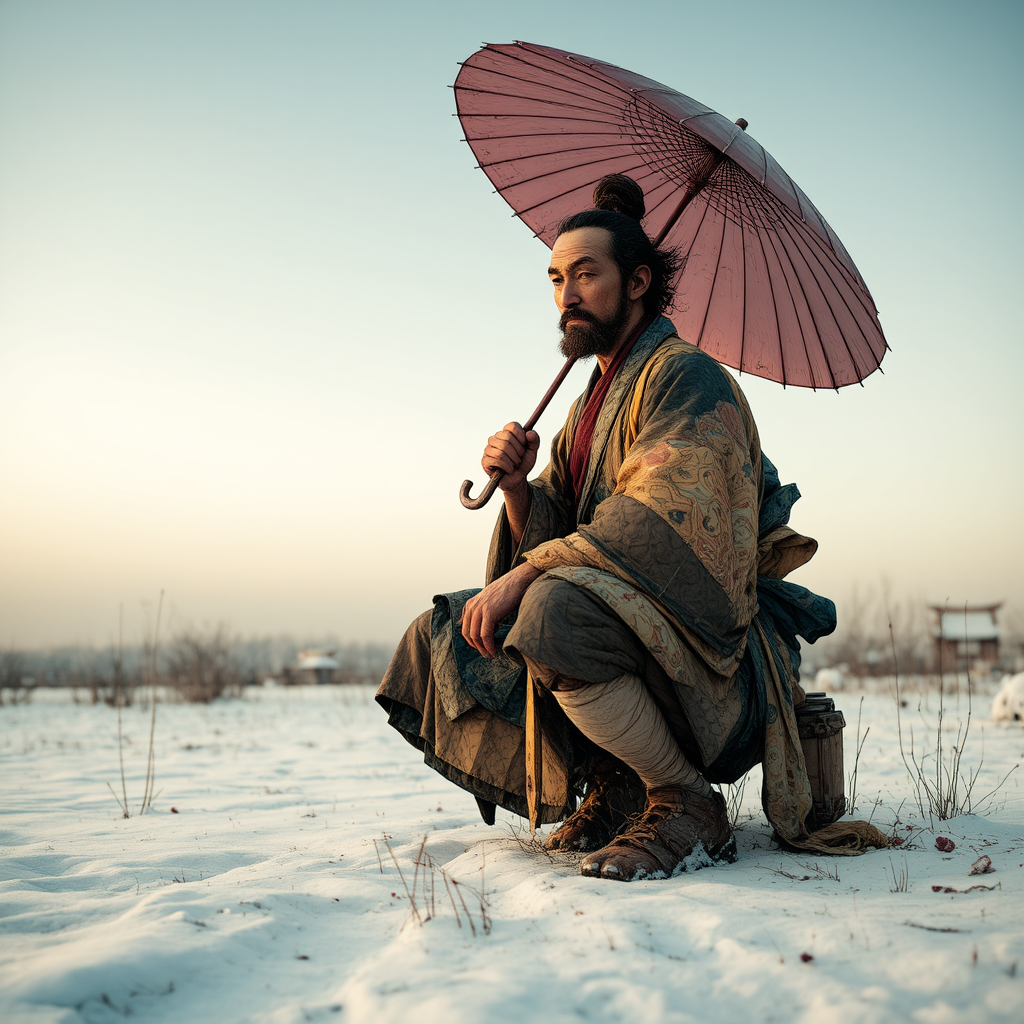
A high priest empties his bowels in the withered fields— —Buson
Ah, the bamboo shoots—a priest from Saga visits the outhouse —Onitsura
sôjô ga no-guso asobasu higasa kana in the middle of the field the high priest’s parasol— taking a dump —Kobayashi Issa
With no underrobes, bare butt suddenly exposed — a gust of spring wind. —Yosa Buson, 18th century Zen poet
Some more sayings I’ve heard that speak to the same concept:
We all bleed the same color.
Death is the great equalizer.
Everyone puts their pants on one leg at a time.
These are also good reminders to us, so we don’t start “thinking our poop don’t stink,” another saying to keep us humble. As a recovering alcoholic, I can never allow my mindset to be, “I can drink now. I can handle it.” If I begin to think that I can somehow control my body’s natural reactions to a chemical I put inside it, all hell will break loose eventually. I must be honest with myself and accept my limitations. And I sure shouldn’t be acting like I couldn’t fall off the wagon, like I’m somehow better than others or impervious to temptation. My “prayer rug” would be the delusion that I’m above all that and would never take another drink, no matter what. What’s that saying, “There but for the grace of God go I?” Ameen.
My Poem 28:
While the president sits on the toilet to poop are they still in charge?
Hafiz. Hafiz’s Little Book of Life. Translated by Erfan Mojib and Gary Gach, Hampton Roads Publishing, 2023.
All images created by Rebekah Marshall’s prompts using AI on Gencraft.com website.
I am reading Hafiz’s Little Book of Life, poetry by Hafiz-e Shirazi. He is challenging me to become more comfortable with ambiguity. I will share his poem and some of my thoughts on his poem (sometimes with the help of experts when the concepts are too hard for me), followed by a poem and some art inspired by his poem.
Hafiz’s Poem 27:
My pain
Best left concealed Than revealed To dubious do-gooders
Some thoughts:
Not everyone has our best interests at heart. Growing up in the south, rather sheltered in a tight-knit family, religious community, and small town, I truly thought most people meant well and could be trusted. My naivete still remains somewhat intact, so this poem is a good reminder for me. I still want to believe that people are kind and honest and compassionate and empathetic. And that may be true about most of the people I have chosen to surround myself with. However, that is not everyone. And we do well to remember that our deepest vulnerabilities should only be shared with individuals who have earned both our respect and fidelity.
I guess in modern days we call this boundaries. A big part of healthy communication in relationships is learning to set boundaries and respect other people’s boundaries. Both can be hard to do consistently but are worth the time and effort. A tight circle of dear friends who I can trust with my life, let alone my pain, are all I need. They know who they are, and for them, I am very grateful.
My Poem 27:
Our deepest wounding we guard diligently access denied until a sliver of light cracks our resolve a trusted witness proves worthy, faithful, capable of holding without judgment keep confidence without being asked and a burden shared becomes lighter.
Hafiz. Hafiz’s Little Book of Life. Translated by Erfan Mojib and Gary Gach, Hampton Roads Publishing, 2023.









 rebekahjmarshall