Tag Archives: book review

The Love of My Life (Book Review)

This image created by Rebekah Marshall’s prompt using AI on Gencraft.com website.

From The Love of My Life by Rosie Walsh:

“I invite you to think about an event in your past you’d do anything to erase.

You’re bound to have one, even if you’re young. And if you’re good at hiding it, it’ll be there on the strandlines of your own story: sand-camouflaged, unremarkable; visible only to those who know what to look for.

I was good at hiding mine.”

Rosie Walsh does an excellent job of making us question everything about the main character in her novel The Love of My Life. What sort of nefarious past has she kept hidden? Whose side should we be on? The quirky, adorable relationship between her and her unsuspecting husband makes us ache for them, wishing their tale could be less complicated. Can’t there be a happily ever after? Must there be ominous uncovering of stalkers, affairs, criminal activities, deception, danger, loss, and more? Why, yes…yes, there must because Rosie Walsh wants to drag her readers kicking and screaming through every revelation as though we are a character in her book.

Who is the love of Emma’s life? Is it her husband? Is it another man she is meeting in secret? Is it someone yet to be revealed? The twists and turns are well-timed, suspenseful in a way that makes the reader distrust nearly everyone and are satisfyingly straightened out by the end. I enjoyed every second of the tension in this book because it made me love the characters all the more for having endured the stress along with them.

Walsh, Rosie, The Love of My Life, Penguin Books, 2022.

Hafiz – Poem 36

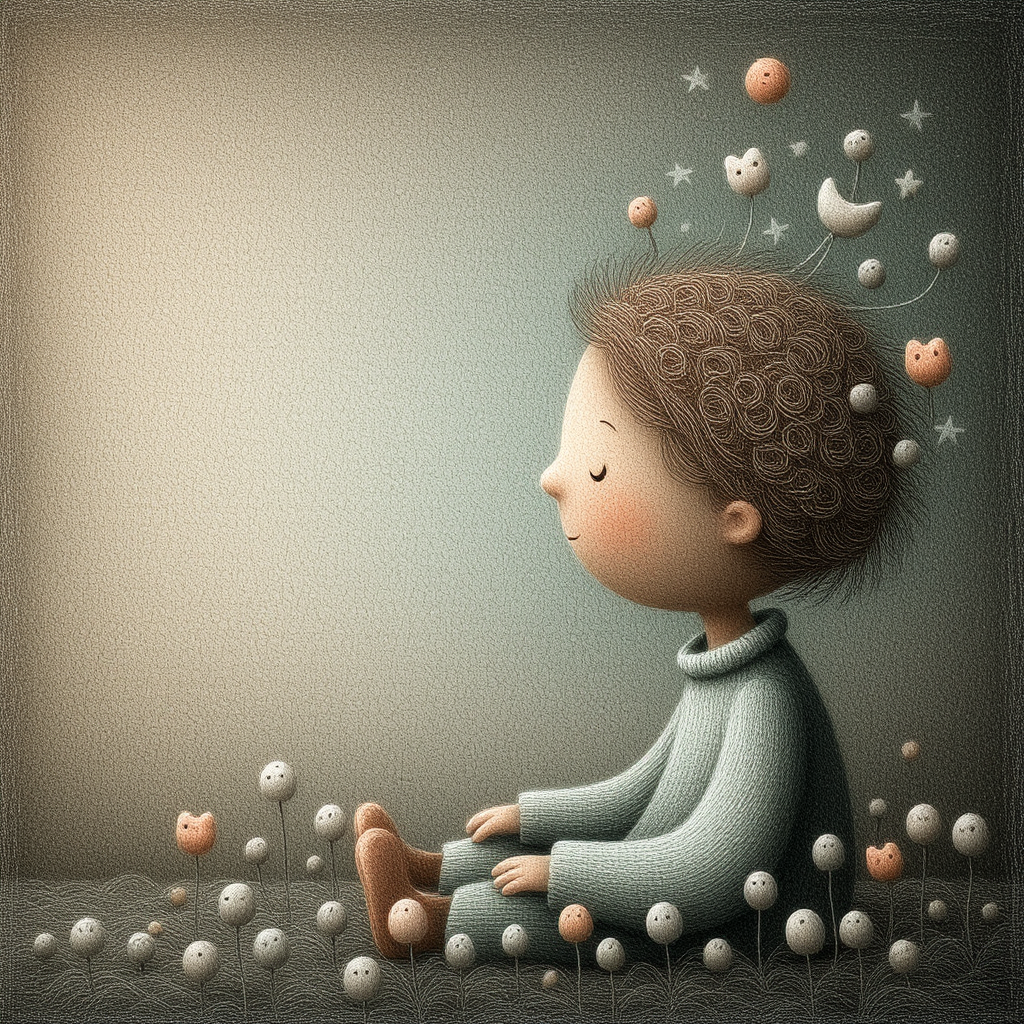
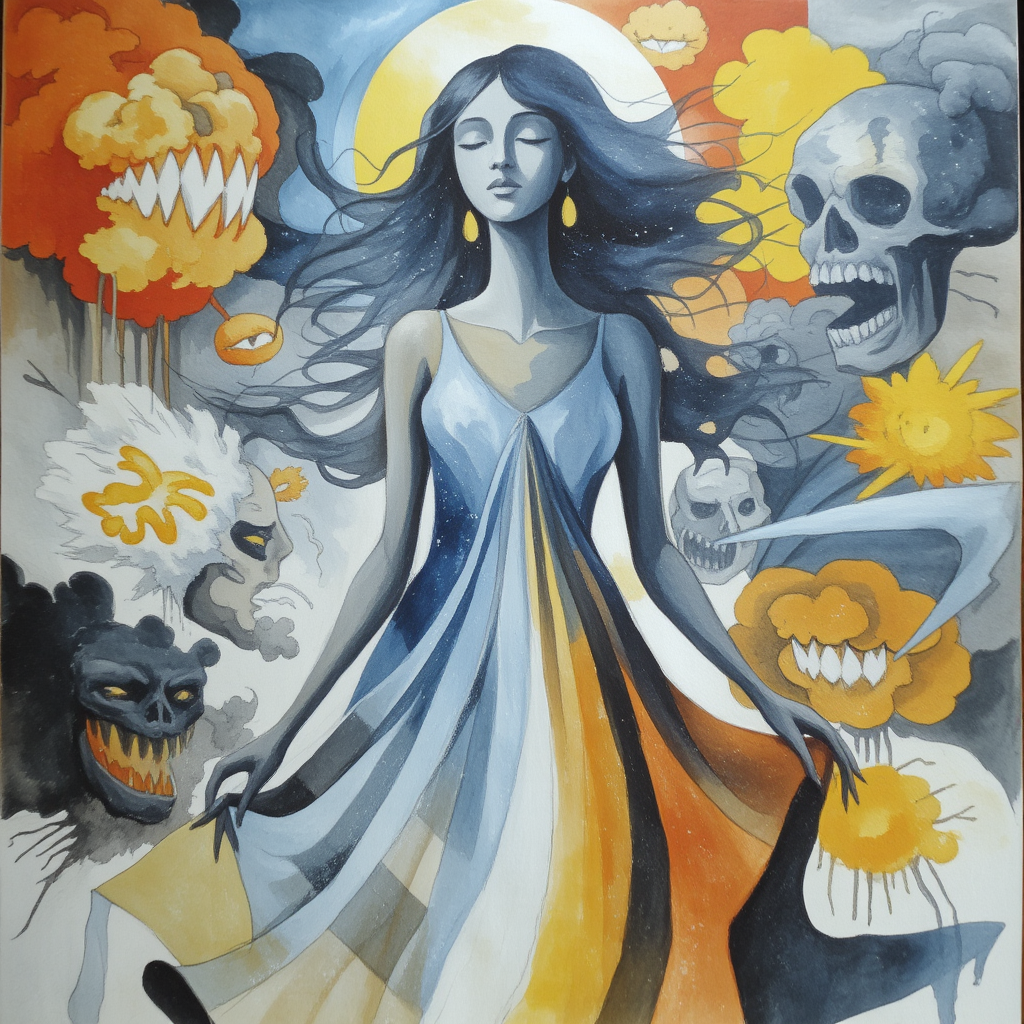
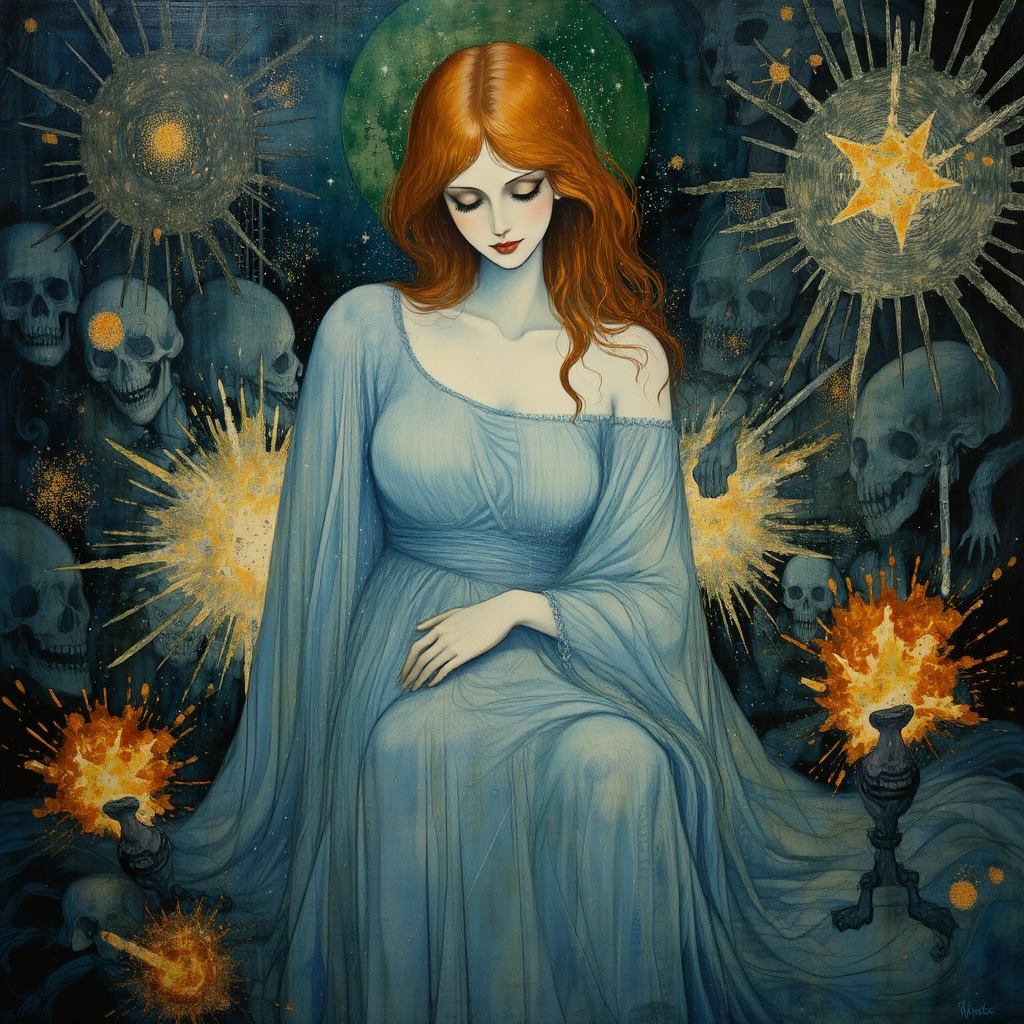
All images created by Rebekah Marshall’s prompts using AI on Gencraft.com website.

I am reading Hafiz’s Little Book of Life, poetry by Hafiz-e Shirazi. He is challenging me to become more comfortable with ambiguity. I will share his poem and some of my thoughts on his poem (sometimes with the help of experts when the concepts are too hard for me), followed by a poem and some art inspired by his poem.

Hafiz’s Poem 36:

Alas for the mockers of those
Who drink life to the very dregs

Only to abandon their own beliefs
At the open door of any tavern
Where their faith will be restored

Some thoughts:

Hafiz supposedly has double meanings in many of his poems, according to various experts. In this one, he could be talking about real drinking/partying, or the spiritual equivalent of feeling everything deeply, including joy, sorrow, and love. The people willing to drink to the dregs are the ones there until closing time. The real Mcoys. The mockers are those who set themselves up in judgment of and ridicule those kinds of people. Whether judgment of the literal drunkards or judgment of the deeply emotional/openly vulnerable/ecstatically connected people. Both can look rather similar to the untrained eye.

Either way, the reversal is the heart of this poem. The very people who judge others for their predisposition to revelry, might be the ones who crave it most. They can’t let themselves go, but when given the chance or suddenly set free to experience something ecstatic, they are the wildest ones you’ve ever seen. So much tightly wound, principled, rigorous defense of faith can sometimes reveal a lot about a person. They are just waiting for that moment to be unleashed, to experience, to feel something. And only then will they get it. The only way to connect is to leap into the unknown and grab for the ring or trapeze or whatever metaphor works.

Now, as a recovering alcoholic, I can’t finish without adding a cautionary note. I am not suggesting real alcoholics go live it up and fall off the wagon. Those of us with the disease of alcoholism and who are in recovery have already had our substance-induced revelry experiences and should have now graduated to the more spiritual/emotional side of celebration. Learning to find the depth of love, sit in grief, experience the full spectrum of emotions life puts us through without altering our brain chemistry IS drinking to the dregs the way Hafiz means it. It is learning to live fully, without needing to escape. And nary a one of us should sit in judgment of anyone going through the same hell of the disease of alcoholism that we have been through.

My Poem 36:

When you get sober
no one explains how much
you’ll miss turning off your brain.
It’s something you discover
when the thoughts won’t stop,
and you have to process the pain.

Hafiz. Hafiz’s Little Book of Life. Translated by Erfan Mojib and Gary Gach, Hampton Roads Publishing, 2023.

The Storied Life of A.J. Fikry (Book Review)

This book was a lovely little slice of life capturing the people of a small island town as they supported one another through the ups and downs we all experience. The quirky characters made me feel reminiscent of the Doc Martin show I used to watch with my husband about characters set in Portwenn, a fictional town on the coast of Cornwall, England. The gruff bookstore owner A.J., certain of never finding love after tragically losing his wife, reminded me of the doctor in Doc Martin with minimal people skills. A.J. loves books. Doc Martin loves practicing medicine. I’ll stop with the comparisons, but I should say that I am a fan of whatever this type of story is—odd outsider becomes an instrumental part of the community. He may be off-putting, but he’s our bookstore owner who is off-putting, sort of thing.

When a special gift is left for him in his bookshop, the life-changing effects are as dramatic and satisfying as one could expect. There is mystery, romance, tragedy, and comedy. And it is all wrapped in a heartwarming tale of people taking care of people. Now I will allow myself to watch the movie, since I finally read the book. I hope it is just as satisfying as the book was. I also enjoyed comparing notes with A.J. about his favorite short stories. I felt quite accomplished that I had read some of the ones he mentions at the beginning of the chapters.

Zevin, Gabrielle, The Storied Life of A.J. Fikry, Algonquin Books of Chapel Hill, 2014.

Behold the Dreamers (Book Review)

TRIGGER WARNING: This novel contains themes related to immigration challenges, economic hardship, race and class dynamics, and complex family relationships. It also touches on substance use and addiction, overdose, and instances of domestic conflict and violence. Some readers may find these topics emotionally intense.

All the rest of these images created by Rebekah Marshall’s prompts using AI on Gencraft.com website.

Behold the Dreamers by Imbolo Mbue provided a peek into the lives of some families quite unfamiliar to me—those of immigrants from Cameroon living in New York, trying to make a living in less than ideal conditions, and those of the privileged Wall Street rich executives with fancy cars and vacation homes in the Hamptons. I found the descriptions and complex relationships between the characters fascinating and believable.

The character I connected with the most was Neni, the wife of Jende, who follows her husband to New York from Cameroon with their toddler in tow when she is able. She is hard-working, persistent, hopeful, and resourceful. She jumps into every challenge with grit and is determined to become a pharmacist to help support her family. In one scene, she finally finishes her chores at midnight and must now study until at least 3:00 AM. Her toil is such a different pace in America than when she lived in Cameroon. I felt such empathy with her plight.

“She rested her head in her right hand, closed her eyes, and exhaled…Her mind was always active, it seemed—what needed to be done, by when, how long it would take to get done. Even when she sang during her chores, she was mindful of the next chore. And the one after that. Life in America had made her into someone who was always thinking and planning the next step.”

If only life could be different for all of us. Why must every step forward be two steps back, no matter how hard people try? So many in this world are giving the best they have to offer of their hearts, minds, and bodies, but all the wishful thinking, determination, prayer, and planning in the world does not always bring about success. There are no perfect answers or happily ever afters in this novel, but the spirit of survival, family, learning from our mistakes, and perseverance are inspiring nonetheless. And it is a wonderful reminder to treat everyone we meet as though they could be an angel, like the weary men Abraham offered hospitality to in the Bible. What a wonderful world we would live in if that were our perspective.

Mbue, Imbolo, Behold the Dreamers, Penguin Random House, 2016.

Hafiz – Poem 32

All images created by Rebekah Marshall’s prompts using AI on Gencraft.com website.

I am reading Hafiz’s Little Book of Life, poetry by Hafiz-e Shirazi. He is challenging me to become more comfortable with ambiguity. I will share his poem and some of my thoughts on his poem (sometimes with the help of experts when the concepts are too hard for me), followed by a poem and some art inspired by his poem.

Hafiz’s Poem 32:

While you slept
The caravan has moved on

The desert is up ahead

Some thoughts:

As an intense sleeper in need of a ridiculous amount of sleep, this poem annoys me at the literal level. But if I look at it a bit more metaphorically, I can see what the poet is saying. We all must sleep, rest, withdraw from the world at times for healing and downtime. But isolation can become a habit if we let it. It is peaceful in our own tent, with our soft furnishings, and our quiet comfort zones. Outside is the noisy bunch with their opinions and foibles and, sometimes, annoying ways. But there are important qualities to community that we must remember to consider. It is only through community that we grow as people who can empathize with others, connect for companionship, and be nurtured and remembered. And in Hafiz’s time, there was safety, especially when travelling through the desert. It could be very dangerous to find yourself alone in a wilderness landscape. You might not survive. I suppose it is a good warning/reminder to find balance in our isolative ways if we are prone to such patterns.

My Poem 32:

While we slept,
energy continued to transition
from typewriters into clouds,
from broadcast to streams,
from nickels and dimes into crypto,
from desktop computers to quantum AI.

While we slept,
families continued to transition
from mother, father, two children to
whoever can cobble a life together,
whatever the gender expression
or lack thereof, or anywhere in between,
from white with white only to
beautiful hues of blended shades.

While we slept,
societies continued to transition
from patriarchal oppressive regimes
to the beginnings of equality and inclusion,
from workplace discrimination to
women in leadership roles, wheelchair ramps,
climate change and mental health awareness.

While we slept,
religious institutions continued to transition
from exclusive to more inclusive,
from in person only to online participatory options,
from fundamentalist to deconstructionist,
from male-only leadership to some women in high places.

While we slept,
culture continued to transition
from consumerism to minimalism,
from the status quo to conversations about privilege,
from fat-shaming to body positivity,
from nature destruction to environmental consciousness,
from acceptance to accountability.

When we wake,
will we bury our heads in the sand
and demand a halt to change, a return to the past,
or will we lift our chins, with eyes wide open, minds alert,
mouths slightly agape, and join the caravan?

The desert is up ahead.
It is vast and wide, and we will be left behind
in our ruts of “we know best” and “tradition is all,”
while the great adventure of life moves on without us.

Hafiz. Hafiz’s Little Book of Life. Translated by Erfan Mojib and Gary Gach, Hampton Roads Publishing, 2023.

Hafiz – Poem 31

All images created by Rebekah Marshall’s prompts using AI on Gencraft.com website.

I am reading Hafiz’s Little Book of Life, poetry by Hafiz-e Shirazi. He is challenging me to become more comfortable with ambiguity. I will share his poem and some of my thoughts on his poem (sometimes with the help of experts when the concepts are too hard for me), followed by a poem and some art inspired by his poem.

Hafiz’s Poem 31:

Our hands are short

The dates
High up on the tree

Some thoughts:

There are so many different directions this poem could go. The dates, out of reach so high up the tree, could represent a goal, a desire, nourishment, or a promise of sweetness, joy deferred. In Hafiz’s Persian culture, they would have been a staple, part of many recipes as a sweetener. The inability to reach the fruit could represent our human limitations, our need for community, or the recognition that we must learn to think outside the box. There are ways to get to the fruit that don’t involve growing longer arms. We can climb, get a ladder, shake the tree, wait until it gets ripe enough to fall, ask for help from others, etc. Perhaps the poem is asking us to ponder our needs and determine what it is we most need to learn from the situation. Do we need to develop patience and wait for the fruit to fall? Do we need to learn to ask for help and get support from our community? Do we need to develop some initiative and do some problem-solving to get our needs met? Do we need to take a class in date harvesting to gather more information about our dilemma? Like I said, there are many ways to look at this and any of them could be a great lesson, depending on our circumstances.

My Poem 31:

I want to be rich enough to pay
my bills on the day they are due,
if not early each month.

I want to be so rich, the only thing
I worry about is who to help next
with the extra money I’ve earned.

I want to be the kind of rich
that goes grocery shopping
without tabulating a total as I go.

I want to be richer than it takes
to retire all the great-grandparents
in our family so they can rest.

I want to be the richest person
who still drives a Toyota Camry
and lives in a multi-generational home.

I want rich written all over my receipts
for paying off every school loan
for every relative and friend I know.

I want richer than rich opportunities
to flow into every household of every
human on earth who wishes others well.

I want to richify our schools, hospitals,
libraries, daycares, nursing homes,
and animal shelters with infinite abundance.

Hafiz. Hafiz’s Little Book of Life. Translated by Erfan Mojib and Gary Gach, Hampton Roads Publishing, 2023.

Hafiz – Poem 28

All images created by Rebekah Marshall’s prompts using AI on Gencraft.com website.

I am reading Hafiz’s Little Book of Life, poetry by Hafiz-e Shirazi. He is challenging me to become more comfortable with ambiguity. I will share his poem and some of my thoughts on his poem (sometimes with the help of experts when the concepts are too hard for me), followed by a poem and some art inspired by his poem.

Hafiz’s Poem 28:

Last night
In the Alley of the Tavern
The local imam
With his perennial prayer rug on his back
Was carried out on somebody else’s back

Some thoughts:

I love this poem. It is a gentle reminder that we are all human. Anytime we put someone up on a pedestal, we are bound to be disappointed because people are flawed. We are weak and faulty, even when we have good intentions. Not only that, we all get sick, have to attend to bodily needs like eating, drinking, sleeping, urinating, and taking a dump. The president, the king, nuns, the most famous movie star you’ve ever admired, Oprah—everyone blows their nose, coughs, sneezes, hiccups, burps, farts, and sweats. No one is immune from the humbling effects of being mortal. If the most religious person out there drinks too much, they are going to get drunk and have to be carried home—them and their religious book, prayer rug, or other holy items they have on them.

This reminds me of some haikus that speak to a similar idea of mortality leveling the playing field a bit if we begin to think people are too far above us:

A high priest empties his bowels in the withered fields—
—Buson

Ah, the bamboo shoots—a priest from Saga visits the outhouse
—Onitsura

sôjô ga no-guso asobasu higasa kana
in the middle of the field
the high priest’s parasol—
taking a dump
Kobayashi Issa

With no underrobes,
bare butt suddenly exposed —
a gust of spring wind.
Yosa Buson, 18th century Zen poet

Some more sayings I’ve heard that speak to the same concept:

  • We all bleed the same color.
  • Death is the great equalizer.
  • Everyone puts their pants on one leg at a time.

These are also good reminders to us, so we don’t start “thinking our poop don’t stink,” another saying to keep us humble. As a recovering alcoholic, I can never allow my mindset to be, “I can drink now. I can handle it.” If I begin to think that I can somehow control my body’s natural reactions to a chemical I put inside it, all hell will break loose eventually. I must be honest with myself and accept my limitations. And I sure shouldn’t be acting like I couldn’t fall off the wagon, like I’m somehow better than others or impervious to temptation. My “prayer rug” would be the delusion that I’m above all that and would never take another drink, no matter what. What’s that saying, “There but for the grace of God go I?” Ameen.

My Poem 28:

While the president
sits on the toilet to poop
are they still in charge?

Hafiz. Hafiz’s Little Book of Life. Translated by Erfan Mojib and Gary Gach, Hampton Roads Publishing, 2023.

Hafiz – Poem 26

All images created by Rebekah Marshall’s prompts using AI on Gencraft.com website.

I am reading Hafiz’s Little Book of Life, poetry by Hafiz-e Shirazi. He is challenging me to become more comfortable with ambiguity. I will share his poem and some of my thoughts on his poem (sometimes with the help of experts when the concepts are too hard for me), followed by a poem and some art inspired by his poem.

Hafiz’s Poem 26:

How may

Fresh poetry

Come

To a heart heavy with sorrow

Some thoughts:

Some poets find great inspiration in the “depths of despair,” but Hafiz does not seem to be one of them. He, like me, questions how inspiration can flow when the heart is weighed down, when creativity is struggling to breathe. He yearns for something fresh, new, insightful, but is so filled with pain that there is nothing but old blood, recycled phrases, and stale thoughts. Fresh poetry represents the best words in the best order that arrive like an honored guest, flow through the poet, and onto the page. This kind of poetry he seeks cannot be forced or coerced into existence.

I don’t have the answer for Hafiz, since I, too, struggle with this question. But it feels affirming to sit in this space and ponder, with my fellow wordsmith, the slipperiness of inspiration and the heaviness of sorrow. We poets love juxtaposition and imagery. I wonder if Hafiz was inspired to write this little gem while in the depths of sorrow. If so, he has answered his own question by writing, despite the pain. I suppose the only way to know for sure is to experience it for myself.

My Poem 26:

How heavy is a heart?

Google says less than a pound,
but it depends on gender, age
cardiovascular health, and body size.

I say it depends on how much
what is lost meant to the heart
that must continue to beat.

Hafiz. Hafiz’s Little Book of Life. Translated by Erfan Mojib and Gary Gach, Hampton Roads Publishing, 2023.

Hafiz – Poem 25

All images created by Rebekah Marshall’s prompts using AI on Gencraft.com website.

I am reading Hafiz’s Little Book of Life, poetry by Hafiz-e Shirazi. He is challenging me to become more comfortable with ambiguity. I will share his poem and some of my thoughts on his poem (sometimes with the help of experts when the concepts are too hard for me), followed by a poem and some art inspired by his poem.

Hafiz’s Poem 25:

Dear Hafiz

Drink up
Be a free soul
Make merry
But don’t make the Qur’an
Bait for hypocrisy
As others have done

Some thoughts:

Is it so wrong to “Eat, drink, and be merry?” Some religious people act as though being spiritual or loving God means having to be a stick in the mud and forego all fun. Hafiz is addressing this poem to himself as a reminder that he has the freedom to enjoy the abundance the world has to offer. He is not restricted and litigious about his beliefs. But on the other hand, freedom with grace is not license to debauchery either. There is a balance that must be walked like a tightrope if one is to maintain a life of love and spiritual connection.

His belief in freedom must not be taken to excess, which could make his faith seem like a farse. There must be some level of respect for the holiness of the prescribed religious doctrines and those who adhere to them meticulously. There is no need to flaunt the merry making in the face of someone who is weeping. Finding a path that respects personal spiritual autonomy and still honors the traditions and beliefs of the ancestors is not always easy. But being in community means grappling with these truths and finding a balance that works.

My Poem 25:

I think dusting intentionally
can be meditative,
spiritual,
removing the layers of past ancestors
to reveal
a shiny surface
uncluttered
by so much static noise.

Dimming the lights
and lighting a candle,
watering a plant,
petting a cat.

I’ve yet to wipe
my dog’s weeping eye
and feel nothing
because she stares
into my soul,
communing,
as if with the source
of love.

Hafiz. Hafiz’s Little Book of Life. Translated by Erfan Mojib and Gary Gach, Hampton Roads Publishing, 2023.

Eleanor Oliphant is completely fine (Book Review)

TRIGGER WARNING: This book addresses difficult topics including mental illness, suicide, abuse, violence, and trauma. Some scenes and references may be distressing for certain readers.

Gail Honeyman is a master of dry wit and understatement in Eleanor Oliphant is completely fine. Eleanor is so unpleasant and awkward as to render her completely unlikeable at the beginning of the novel. I don’t want to see her bullied by her coworkers or strangers in public, but I could certainly see why they might. She invites side-glances with her oblivious rudeness and is a closed book. She doesn’t want anything to do with anybody and seems perfectly content in her isolation. Of course, it’s all a ruse and protective defenses, but those walls are tall and seem impenetrable.

The chance encounters, unusual incidents, and course of events that occur begin to bring about a soft opening of Eleanor. And the unfolding of her past, the development of some friendships, and her observations and realizations throughout the process are so endearing that I couldn’t help falling in love with her. She and her circle of people are everything that is wonderful about humanity, especially when coping with everything that is horrible with humanity.

Once again, I was disappointed by the rushed feel of the ending. I hoped for the same level of deep introspection at the end of the book that was delved into throughout the rest. What is with these authors rushing their endings? They need to be every bit as perfect as the beginnings and middles. But other than wanting more, I can find no fault with this witty, honest, hilarious look at a lovely woman who is absolutely NOT completely fine, but who will be. The author’s voice is refreshing, hilarious, and wonderful.

Honeyman, Gail, Eleanor Oliphant is completely fine, Penguin Random House, 2017.